BOOK REVIEW: Piriformis Syndrome by Loren Fishman, M.D.

Piriformis Syndrome: Diagnosis, Treatment, and Yoga: Pain in the ButtPiriformis Syndrome: Diagnosis, Treatment, and Yoga: Pain in the Butt by Loren Fishman
My rating: 4 of 5 stars

Amazon page


This short book (<50pp.) describes piriformis syndrome, what causes it and how it’s diagnosed and treated. Piriformis Syndrome is a malady in which a nerve is pinched by the piriformis muscle. Because of the way pain (and other sensations) radiate, it’s not necessarily easy to differentiate this syndrome from a low back injury. However, the descriptions of the specifics of this condition, and the test used to diagnose, it may give one insight as to whether one is looking in the right direction for the cause of one’s butt and leg pain.

One nice feature of this book is that it explains how yoga can be used both as part of the treatment regimen and as a preventive measure. The yogic treatment consists of just four classical postures of Hatha Yoga: Janu Shirshasana (head to knee pose), Parivrtta Trikonasana (twisted triangle pose), Matsyendrasana (a simple twisting pose named for a sage), and Parivrtta Parsvakonasana (twisted side angle pose.) However, yoga teachers who have students who’ve been diagnosed with this condition will find it nice that the book gives modifications and clarifications pertaining to use of the postures to help such people.

There are seven chapters in the book. The first describes the condition and its cause. The second chapter explains the connection between the condition of piriformis syndrome and the symptom of sciatica. Chapter three clarifies the ways in which this condition may be misdiagnosed, and this is followed up by the chapter that shows how it is diagnosed by both physical examination and by imaging technology. Chapter five gives a basic overview of the available treatment options including injections, drugs, physical therapy, surgery, and yoga. The next chapter talks about the state of research. The last chapter explores the yoga asana that can be used to help treat or prevent piriformis syndrome. There are a few graphics. These include line drawings such as of the diagnostic physical exam, and photos of modified versions of the yoga postures.

I’d recommend this book for those who’ve been diagnosed with this ailment, who believe they might have it, but also for yoga teachers who are interested in expanding their understanding of the afflictions of which their students may suffer—so as to be prepared to help them or, at least, not hurt them.

View all my reviews

BOOK REVIEW: Being Mortal by Atul Gawande

Being Mortal: Medicine and What Matters in the EndBeing Mortal: Medicine and What Matters in the End by Atul Gawande
My rating: 5 of 5 stars

Amazon page


This may be the scariest, saddest, and most necessary book that I’ve read in some time. In it, Dr. Gawande discusses how medicine has proven increasingly effective at extending life, but—at the same time–we are less able to care for the elderly. The traditional approach, in which the elderly move back in with their families (or live independently near them,) often proves untenable. And it’s not necessarily because people are too busy, lazy, or indifferent to put up with granny, but rather that granny is likely to end up with needs that require a professional caregiver—in some cases for virtually every aspect of her daily life. In short, we’ve done a great job of extending life, but often with a sharp dip in the quality of life at the end.

The nursing home was the solution that the health care community came up with when this problem first became apparent. While the nursing home is both necessary and effective for many, for those of sound mind and sound-ish body, the move can be highly demoralizing. People revert from being independent and autonomous adults into a child-like status in which they have little freedom or privacy. Again, if grandpa has dementia or needs to be tube-fed, there’s no way around this, but if he’s just at risk for a fall that might break his hip, then it can be humiliating.

When it comes down to the end, fear of death has led to an unwillingness to ask important questions or even consider what might be just around the corner. This has led patients to keep asking for that one treatment that just might extend their lives—and doctors have been more than willing to allow this. This may be fine in the early days of a terminal illness, but once one has gone through—say–a couple of courses of chemotherapy, the treatment one is likely to get is some trial phase experiment that is as likely to kill one cruelly as extend one’s life—and to the degree that it does extend one’s life one may suffer a set of complications far more miserably than one would in letting the disease kill one. One of the most intriguing study results cited showed that people who took up hospice palliative care (making one comfortable) were found on average to live a little longer than those who kept seeking whatever treatment they could find.

This all sounds like bad news, but the author devotes much of the book to exploring the options that have been put forth in the face of these problems. One of these is the assisted living facility as an alternative to a traditional nursing home. These facilities work for people who are of sound mind and who aren’t too bad off physically. They allow the individuals to live as they might in a condo or apartment, but there are on-sight caregivers and assistance with all the tasks around the house that might prove too challenging for an older person. The other major solution is hospice care. Not that palliative care is new, but it’s increasingly being show to be a preferable option for all concerned. Another important outcome resulted from a major insurance provider’s decision to allow individuals to pursue palliative care while they were still being treated. [Historically, one only had the option of hospice once one had given up on treatment.] At any rate, the intriguing finding was that the insurance company actually ended up paying less because more people signed up for palliative care and those individuals used expensive health care elements like emergency rooms and intensive care units (ICU) less.

While I can’t say that I enjoyed reading this book, I would recommend it for everyone. It’s very readable. The approach is case-based. Dr. Gawande talks not only about his own patients and the patients and caregivers that he interviewed (his practice is not geriatric in nature, so he spoke with several experts), but also about the end of his own father’s life. It’s a short book of about 300 pages arranged into eight chapters. There are no graphics, and endnotes are the only ancillary matter, but nothing else is necessary for this book.

Read it.

View all my reviews

BOOK REVIEW: Hallucinations by Oliver Sacks

HallucinationsHallucinations by Oliver Sacks
My rating: 5 of 5 stars

Amazon page


Hallucinations are among the most captivating, yet misunderstood, phenomena of the mind. In the popular imagination, they are synonymous with losing one’s grip on reality and are considered evidence of a full-blown psychosis. However, there are a great variety of causes and forms of hallucination, many of which occur among the sane. What Sacks provides in this book is a survey of the forms of hallucination through exploration of cases and anecdotes. To emphasize the point that hallucinations aren’t just for the insane, Sacks doesn’t arrange the book around the idea sanity and insanity. Cases of mental illness are peppered throughout, but there are even more cases of people who fully realize that their hallucinated sensory experiences aren’t real. In fact, he starts with Charles Bonnet Syndrome, hallucinations among blind individuals who are often scared to discuss the phenomena for fear they will be labeled insane even though they know they aren’t really seeing anything. (The brain’s abhorrence of under-stimulation is a recurring theme in the book.)

As mentioned, the approach of the book is to discuss cases of hallucination, and not so much to delve into the research on causes and treatments. This anecdotal approach makes the book readable and offers a unique and intimate insight into hallucination, but it doesn’t drill down into the brain science as much as some might like. This will no doubt be a positive for many, and a negative for others. The author describes several of his own hallucinatory experiences related to drug use, drug withdrawal, and migraine headaches. As I understand it, that level of candor was par for the course for Sacks (though this is the first of his books that I’ve read.) At any rate, his personal experience offers a particularly vivid portrait, and moves the book beyond the sterile feel often found in scientific works.

The book consists of 15 chapters, organized by types / causes of hallucination. After an introduction and the aforementioned chapter on Charles Bonnet Syndrome, there’s a chapter on sensory deprivation hallucinations that’s aptly entitled “the prisoner’s cinema.” Chapters three and four are on olfactory and auditory hallucinations, respectively. The fifth chapter focuses on cases of hallucination experienced by those with Parkinson’s Disease. Chapter six is entitled “Altered States,” but it deals largely with drug-induced hallucinations (it should be pointed out other “altered states” of consciousness, notably sleep, are dealt with in other places), and it’s where Sacks’ personal story begins to be detailed. The next chapter deals with migraine headache related phenomena, and—as the author suffered from such headaches—his story is also imprinted on this chapter.

Chapter eight deals with epilepsy, and, like the Sam Kean book that I reviewed yesterday, is entitled “The Sacred Disease.” That name derives from the fact that those who develop temporal lobe epilepsy are sometimes known to become spontaneously hyper-spiritual in the process. In fact, many scientists now believe that Joan of Arc, Saint Paul (the Apostle), and [for my Indian readers] Ramakrishna were afflicted by this ailment. (Not based on their high degree of spirituality, but rather on accounts of sensory phenomena they were said to have experienced.)

Chapter nine examines cases related to hemianopia—a situation in which one occipital lobe is damaged resulting in a kind of “blindness” in half one’s visual field. While people think of blindness as being a problem with the eyes, it’s possible to have perfectly good eyes and optic nerves and be blind (on a conscious level) due to brain’s incapacity to process the input it is receiving. (Incidentally, in his book “Subliminal” Leonard Mlodinow describes engrossing cases of people who were blind due to brain damage, but–owing to a redundant subconscious systems–they could walk around without running into obstacles.)

Chapter ten describes cases associated with delirium, a common cause of hallucinations that can be the side-effect of any number of physical problems including fever, blood sugar imbalance, and liver failure.

The next two chapters are about sleep-related sensory imaginings. Chapter eleven details cases of hypnagogic and hypnopompic imagery, which are what we see as we are on the edge of falling asleep or awaking, respectively. Hypnagogic hallucinations may be as simple as shifting shapes, or more elaborate. If you’ve gotten this far in the book without any experience that corresponds to what Sack’s is describing, you’ll almost certainly have some experience with hypnagogic images. If not, you should stop consciously counting sheep (or whatever other daydreaming you do as you fall asleep) and just watch what your mind projects. You’ll know it when you see it because you won’t be able to control the imagery (though you can distract over it with conscious thought) and—as in dreams—it probably won’t make a lick of sense. Hypnopompic images are quite different, less widely experienced, and often more disconcerting. Chapter twelve presents cases dealing with narcolepsy (random spontaneous falling asleep) and sleep paralysis, a common experience on the trailing edge of sleep in which one can’t move and which often comes with imagined sensations of a more nefarious variety—hence the widespread lore of night hags and the like.

Chapter thirteen scrutinizes cases that are associated with traumatic events from one’s past. These can involve sightings of ghosts of departed loved ones or replays (flashbacks) of the traumatizing event. This chapter, in a discussion of dissociation, also foreshadows the phenomena of out-of-body (OOB) experience that’s dealt with in more detail in chapter 14. The theme of that penultimate chapter is seeing oneself. Beyond OOB, it deals with a variety of hallucinations of oneself, including those in which one’s body appears distorted (i.e. so-called “Alice in Wonderland” Syndrome.)

The last chapter discusses hallucinations in the tactile domain, and, specifically, the most widely investigated form of these phenomena—the phantom limb. Phantom limb syndrome is experienced by amputees, many of whom can still feel the lost limb. This has resulted in nightmarish scenarios in which an awaking patient complains of an itch on the sole of his or her foot only to be shown that they have no legs from the knee down.

There are no graphics in the book, but, because it’s based around cases, it doesn’t need them for clarification of complex ideas. There are footnotes, as well as a bibliography.

I found this book to be absorbing, and I learned a great deal from it. I’d recommend it for anyone who seeks greater insight into hallucinations or unusual mental phenomena more generally.

View all my reviews

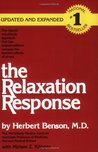
BOOK REVIEW: The Relaxation Response by Herbert Benson

The Relaxation ResponseThe Relaxation Response by Herbert Benson
My rating: 4 of 5 stars

Amazon page


I read the 25th anniversary edition of this seminal work on stress reduction, which was released in 2009. Obviously, that makes this an oldie, but it’s clearly a goodie as well. The new addition has a substantial introduction, providing updated information.

The body’s “fight or flight” response to stressful conditions has long been recognized and it’s virtually a household term. However, despite the equally alliterative name and the fact that Dr. Benson’s original book came out well over 30 years ago, the relaxation response remains a lesser known phenomena. Decades ago, Herbert Benson, a Harvard physician, recognized that patients’ coping ability influenced their health outcomes–specifically with respect to hypertension (a.k.a. high blood pressure.) This led him to investigate how a state of reduced stress could be achieved, and whether this could have a positive impact on health outcomes.

Benson and his co-investigators found that Transcendental Meditation (TM) could trigger the relaxation response, and from that they further uncovered specific aspects of TM that were generalizable in achieving this state (i.e. an object of concentration and a passive / non-judgmental attitude.) From this it followed that activities such as yoga, chi gong, walking, and some types of exercise could achieve the same physiological state as meditation. There was scholarly pressure to establish that the relaxation response was more than a placebo effect. In proving that the relaxation response didn’t hinge on a patient’s beliefs and that it had a predictable effect (and hence it was inconsistent with the placebo effect) Benson also realized that maybe doctors shouldn’t be so dismissive of the placebo effect—people were getting better, after all, and there was some mechanism by which that wellness was achieved that would be worth understanding.

In the first chapter, Benson describes an epidemic of hypertension, the fight or flight response, and its opposite number: the relaxation response. The next chapter delves into the specifics of hypertension and related topics like cholesterol consumption. Chapter 3 makes a connection between stress and the proclivity to develop hypertension. The following chapter lays out various approaches to achieving a more relaxed physiological state, including: biofeedback, yoga, zen, progressive relaxation, and hypnosis. Chapter 5 is about altered states of consciousness, and, specifically, the meditative state. Various age-old methods of achieving a meditative mind are examined. That’s followed by a chapter which lays out the results of relaxation response training in reducing hypertension and drug use. Chapter 7 is an explanation of how to achieve the desired state that generalizes beyond the specific approach of TM. The last chapter is a brief summary.

I found this book to be both interesting and informative. It’s useful both as a practical guide to practice and an explanation of related information.

I’d recommend “The Relaxation Response” for anyone who is interested in learned to de-stress. It’s a classic, and the new edition offers substantial updates.

View all my reviews

BOOK REVIEW: Discovering the Power of Self-Hypnosis by Stanley Fisher

Discovering the Power of Self Hypnosis: The Simple, Natural Mind-Body Approach to Change and HealingDiscovering the Power of Self Hypnosis: The Simple, Natural Mind-Body Approach to Change and Healing by Stanley Fisher
My rating: 4 of 5 stars

Amazon page


For many, hypnosis is the domain of stage artists who make people cluck like chickens. As with the feats of stage magicians, few give much consideration to wherein the trick lies, but they assume there’s a trick. In scholarly circles, hypnotic practices have been on a roller-coaster ride. Hypnosis was once mainstream psychology but then fell into disrepute but now there’s a resurgence of interest as neuroscience answers questions about what is happening in the brain during a trance state. Doctor Fisher’s book is an attempt to demystify the subject, and to explain how a personal practice can be used to achieve a wide range of benefits.

Fisher’s book culminates in a description of how to build one’s own self-hypnosis exercise to work toward change in one’s own life. However, there’s a lot of track that needs to be laid in anticipation of that final chapter (Ch. 9.) The first chapter counters seven of the most common myths about hypnosis. Given the aforementioned misapprehensions about hypnosis, this seems like a wise place to start to get readers on board. Chapter 2 starts where Fisher’s personal involvement with self-hypnosis began, with the use of it to prepare patients for surgery and surgical recovery. Here we get our first look at the technique of self-hypnosis as well as a discussion of cases of self-hypnosis used for surgical patients. Cases are central to Fisher’s approach, and are used throughout the book to inform the reader about how self-hypnotic methods worked for particular individuals in the pursuit of various goals. Chapter 3 explains what the trance state is and how it’s achieved.

Chapter 4 explains the process by which we make choices with an eye toward helping to disrupt destructive impulse behavior. In the next chapter the reader learns about how the state of mind can contribute to physical illnesses, and how changing the state of mind can help improve one’s health. Chapter 6 is about reevaluating ingrained beliefs that don’t serve us well. This includes the notion that one can’t change one’s behavior because it’s just how one feels, as well as the belief that one can simply quash one’s emotions through force of will. Chapter 7 examines cases involving a number of common problems resulting from stress and the pressures of everyday life.

The penultimate chapter offers comparison and contrast with a range of alternative methods that are used to achieve the same goals—some more advisable than others. The alternatives include: therapy, meditation, biofeedback, exercise, somatic desensitization, and drug use.

As indicated, the final chapter offers an outline for building one’s personal self-hypnosis practice to achieve one’s own goal. There are three sections to this chapter. The first is a simplified set of exercises to evaluate one’s capacity to enter a trance—including both a survey and physical methods (e.g. degree of eye roll.) Susceptibility to hypnosis varies widely. The subjects one sees at a stage show tend to be those rare specimens who are highly suggestible. Often, part of the act is separating them from the crowd. There are also those who can’t be hypnotized under any circumstance. Most of us are in the meaty middle, having some, limited capacity to be hypnotized. The second section offers advice about how one might go about setting up the suggestive part of one’s exercise, i.e. the core of the exercise carried out once one has induced a trance. The final section lays out three different methods of inducing a trance. The first of these is the eye roll-based method one is introduced to in Chapter 2, and the others are variants that may work better for some.

I found this book to be informative and useful. It gives the reader both the necessary background to understand how one’s subconscious mind can influence one’s life and how positive ideas are introduced through it, as well as a practical guide to setting up one’s own personal practice.

I’d recommend this book for anyone who wants to learn about self-hypnosis.

View all my reviews

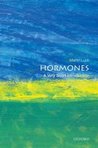
BOOK REVIEW: Hormones: A Very Short Introduction by Martin Luck

Hormones: A Very Short IntroductionHormones: A Very Short Introduction by Martin Luck
My rating: 4 of 5 stars

Amazon page

Let’s face it; the word “hormone” is usually reserved for questions of why a male is so horny (e.g. “His hormones were raging.”) or why a female is so moody (e.g. “She’s hormonal.”) Yet, the endocrine system is about much more than horniness and moodiness. It’s the body’s lesser known communication system, transmitting signals more slowly than the nervous system, but over a broader area and with longer-lasting results. Yes, it’s instrumental in sex, but it’s also involved in regulation of almost everything else the body does. Though we associate hormones with sex, when it comes to mass appeal it’s clearly not the sexiest of systems.

Dr. Luck’s book allows one to rectify one’s ignorance of hormones without a major investment of time or money. This is one volume in a series put out by Oxford University Press that’s designed to convey the fundamentals of a subject in about 100 pages or so (in this case it’s more like 130pgs.) I’ve done several reviews of books in this series, and will likely do more. These “Very Short Introductions” are a good way to get the gist of a topic quickly and painlessly, and they are reasonably priced on Amazon Kindle and in hard-copy at my local discount bookseller. (FYI: Your results may vary. i.e. Hard-copies at some bookstores may be pricey for what these books are—i.e. subject summaries that are optimized for concision and not for entertaining reading.)

The book has nine chapters. The first is a history of the science related to hormones and the endocrine system. (It took a while to figure out that there even was a system because of the nature of hormonal action.) The second chapter hits the basics, such as what hormones are and how they work. Chapter three tells us about the role hormones play in reproduction. The next chapter is about how hormones regulate the body’s levels of water and salt (and the effects on blood pressure.) Next, there is a discussion of the calcium cycle and how calcium is banked in bone and borrowed for the purposes of other cells. There’s a chapter that educates one about diabetes and how hormones (notably insulin) regulate blood sugar. Chapter seven is devoted to the thyroid. Chapter eight describes the role of hormones in circadian rhythms and the cycles of the body. The final chapter is about where science is going with its knowledge of hormones and the advances that are being pursued.

There are few graphics in this book. Most of them are chemical diagrams in dialogue boxes that many readers will skip because of their ominous appearance. The lack of graphics isn’t a problem. Luck does use a narrative approach on occasion (such as his telling of the story of the giant William Rice of Sutton Bonington.) This enhances the book’s readability, and is noteworthy because it’s a rarity among books in this series, which—again—are written to shotgun information and not to be entertaining reads.

I’d recommend this book for those who want to learn (or brush up on) the basics of the endocrine system. It does what it’s supposed to do, and does it quickly.

View all my reviews

BOOK REVIEW: Emperor of All Maladies by Siddhartha Mukherjee

The Emperor of All Maladies: A Biography of CancerThe Emperor of All Maladies: A Biography of Cancer by Siddhartha Mukherjee
My rating: 5 of 5 stars

Amazon page

Dr. Mukherjee describes his Pulitzer Prize winning book as a biography of cancer. If so, it’s like the biography of a master thief or a gangster. One reads it not because one finds the character in any way endearing, but one can’t help but admire the resourcefulness and indomitable spirit of the culprit. Humanity has been at war with cancer for decades, but it remains alive and well–losing ground in specific domains but gaining overall.

The book covers a period from when our technology was too crude to see at the tiny levels necessary to recognize the commonality between various forms of cancer to the present-day attempts to find treatments that can target cancer cells without attacking good cells—a challenging prospect. The implication of that last sentence is that the cure might be as damning as the disease, and this has often proven to be the case. It’s often a race to see whether the cancer can be killed before the treatment kills the patient. This has been the case with radiation, radical surgeries, and various forms of chemotherapy that are toxic to good cells as well as bad. While the book ends on a hopeful note about more targeted treatment, cancer has not gone gently into that good night.

While the book covers a broad period, the bulk of its pages are devoted to the latter half of the 20th century. That’s when the war on cancer got serious and the science became advanced enough to move beyond crude approaches like radical mastectomies. Our understanding of chemistry, pharmacology, and biology reached a point at which cures were no longer pie-in-the-sky notions. But it wasn’t just the medical science that was more advanced, statistical methodology also reached a point at which it could answer questions that had previously been elusive. Such questions include whether smoking caused cancer—a fact that seems self-evident today, but which wasn’t as straightforward as one might think. There is also the issue of whether various treatments were actually extending the lifespans of those afflicted, which was also not as simple as one might think.

While the above discussion of science and statistics might make this book seem dreadfully boring, this isn’t the case. Mukherjee didn’t get the 2011 Pulitzer Prize for Nonfiction by being dull. The author knows the value of a story, and uses stories successfully throughout the book. There are the stories of individual patient cases, but also the story of the mass movement to raise dollars, awareness, and Congressional support to fight cancer. These true stories sometimes show the roller coaster ride that we associate with fiction—such as the apparent cure of a form of childhood leukemia that seemed promising until the kids once in remission started coming back with symptoms (the leukemia crossed the brain-blood barrier and found fertile ground on the other side of a biological wall that was meant to keep such ne’er-do-wells out.)

As one might expect of a book that covers so much ground, it’s not thin. The book’s 600 pages are arranged in 43 chapters divided into six parts. I’m sure there’s a lot more one could learn about cancer, but Mukherjee covers a lot of ground in an interesting package.

I won’t say I enjoyed the book (it’s unavoidably depressing, if hopeful) but I did find it both interesting and readable. While it might not be the sunniest and most joyous of reads, it’s one that many people should read. I’d recommend it for anyone. I would say “anyone who has been touched by cancer,” but I think that’s the same thing at this point.

View all my reviews

BOOK REVIEW: The Harvard Medical School Guide to Tai Chi by Peter M. Wayne & Mark Fuerst

The Harvard Medical School Guide to Tai Chi: 12 Weeks to a Healthy Body, Strong Heart, and Sharp MindThe Harvard Medical School Guide to Tai Chi: 12 Weeks to a Healthy Body, Strong Heart, and Sharp Mind by Peter Wayne
My rating: 5 of 5 stars

Amazon page

This book provides an overview (and a laymen-friendly literature review) of the scientific findings about tai chi, and it helps a beginner get started in his / her own practice. (Tai chi, short for tai chi chuan, is a Chinese martial art that is called an internal–or soft–style.)

The authors achieve an impressive tightrope act. And they manage to do it in a way that reads sincerely, while at the same time providing useful information for all readers. Often books on the science of Eastern health-enhancing activities (e.g. tai chi, chi gong, or yoga)–even if they are positive on the results of such activities—take digs at people’s beliefs about ideas like chi, prana, meridians, or chakra as the authors attempt to distance themselves from such beliefs. On the other hand, books that cater to the spiritually inclined—even when they are couched in scientific terms—may resort to third-hand anecdotes about the supernatural powers of some ancient master or report methodological train wrecks that support their views alongside sound studies, as long as the latter don’t present any evidence contrary to their belief system. In short, such books often talk in scientific lingo while showing a complete lack of understanding of the scientific method. In this book, Wayne manages to navigate these rocky shores because he’s both a scientist and a longtime tai chi practitioner who genuinely accepts that there may be more at work in the practice than science fully understands. Thus, he knows the importance of testable hypotheses and when a study needs to be validated by more a robust follow-up study, but he also reports on the traditional beliefs and isn’t adverse to writing about studies evaluating the benefits of spirituality (note: showing that being spiritual has benefits doesn’t mean that the benefits result from anything spiritual or supernatural.)

The book has 14 chapters divided into three parts. The first part introduces the reader to tai chi, describes the dimensions along which tai chi has been shown to offer benefits (the authors call these “the 8 active ingredients of Tai Chi,” relating them to pharmacological medicines), and explains how tai chi can be simplified for beginners (even the short form sequences take a while to be memorized—let alone building any grasp of the intricacies of said forms.) The second part consists of six chapters that report the findings of studies on the health effects of tai chi, as well as discussing the possible mechanisms of those benefits. The topics discussed in this section include: increased balance, bone density, pain mitigation, cardiovascular health, mental performance, psychological well-being, and sleep quality. The book’s last part suggests ways in which the reader can build a tai chi practice. The five chapters in this section deal with the interactive practices of tai chi (tai chi isn’t just the solo forms that you’ve seen elderly people do in the park), integrating tai chi with other health and fitness practices, the potential for practicing tai chi at work, the role of tai chi in creative practices, and tai chi as a practice of lifelong learning (this last chapter gives beginners tips about how to start a practice.) There is also an afterword about how tai chi might play a part in building improved health and well-being in the present era.

I found the book to be well-organized to achieve its objective. It’s packed with food for thought. Neophytes will find a lot of benefit in this book, but I suspect even advanced practitioners can glean insights—particularly if said advanced practitioner hasn’t been reading up on the scientific findings. Humor, quotes, and stories are used to lighten the tone and illustrate key points. There are some photos and other graphics where needed (mostly in chapter 3), but they are relatively sparse for a book on a practice like tai chi. (That’s not a complaint. I think there are far too many attempts to teach movement arts through books—an impossible task—and not enough effort put into conveying the kind of ancillary information that is transmissible in book form.)

I’d recommend this book for anyone who’s interested in knowing more about the health benefits of tai chi, and moving beyond the platitudes often heard but seldom evaluated.

View all my reviews

BOOK REVIEW: Why Zebras Don’t Get Ulcers by Robert Sapolsky

Why Zebras Don't Get UlcersWhy Zebras Don’t Get Ulcers by Robert M. Sapolsky
My rating: 4 of 5 stars

Amazon page

Sapolsky’s book examines why stress and stress-related illnesses are rampant in humans. As the title suggests, prey on the Serengeti Plain, animals that are chased by fierce and fast predators, aren’t nearly so likely to suffer the ill effects of stress—despite living in a harsher world than most of humanity. To oversimplify, this has a lot to do with the fact that one downside of our big brains is an ability to obsess about what has happened and what might happen, and our sympathetic nervous system (i.e. the fight or flight mechanism) can be triggered even when there is no immediate threat in reality. In short, humans can uniquely worry themselves to death. Sapolsky gets into much great detail and lets the reader know what is known and what remains to be uncovered with respect to stress.

In almost 600 pages, arranged into 18 chapters, Sapolsky covers human stress in fine detail. While it’s a book written for a lay audience, it’s not a quick and easy read. The book discusses topics like the action of neurotransmitters and hormones, and, while it assumes no particular science background, it does assume a broadly educated and curious reader.

The chapters begin by looking at the stress mechanism from a physiological perspective. It then considers stress with respect to specific illnesses, the relationship between stress and various other topics in human being (e.g. sleep, pain, and memory.) The final chapter offers insight into how one can reduce one’s bad stress and one’s risk of stress-related illness. Among the most interesting topics are what personalities are particularly prone to stress-related illness and why psychological stress (as opposed to stress based in immediate real world stressors) is stressful.

Sapolsky has a sense of humor and knows how to convey information to a non-expert audience, but this isn’t the simplest book on the subject. It’s an investment of time and energy to complete reading this book, but it’s worth it if one’s interest in the subject is extensive enough. One of the strengths of the book is that it stays firmly in the realm of science. Because stress has been wrongly considered a fluff subject, many of the works on the topic—even those by individuals with MD or PhD after their names—have been new-agey or pseudo-scientific. This book stays firmly in the realm of science. Sapolsky explains what the studies have shown, and he tells the reader clearly when there is a dearth of evidence or contradictory findings.

If the reader has a deep interest in stress-related health problems, I’d highly recommend this book.

View all my reviews

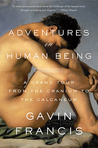
BOOK REVIEW: Adventures in Human Being by Gavin Francis

Adventures in Human Being: A Grand Tour from the Cranium to the CalcaneumAdventures in Human Being: A Grand Tour from the Cranium to the Calcaneum by Gavin Francis
My rating: 5 of 5 stars

Amazon page

Dr. Francis’s book of essays takes one on a fascinating anatomical cook’s tour—literally from head to toe. The book uses patient case histories, tales from med school, great moments in medical history, and even references to art and pop culture to intrigue the reader with the awesome nature of the human body. This isn’t the kind of book that tries to tell one everything there is to know on a subject. Rather it drills deep on specific subjects, but with humor and readability. While the book examines specific issues pertaining to the body part under consideration, it gives the layman reader the necessary background to comprehend even the most complex topics, often through interesting factoids.

In 18 chapters divided into seven parts by regions of the body, one will learn about topics such as: electroconvulsive therapy (ECT), the almost ancient art of cataract surgery, botoxing of Bell’s Palsy patients, how the Epley manoeuver is used to seemingly miraculously cure vertigo through snappy head movements, why Renaissance thinkers thought the soul resided in the lips, why having one’s blood circulated pulselessly causes problems, how a “Brachial stun” immobilizes an arm, why suicidal wrist slashers rarely succeed, where the nail goes in a proper crucifixion, how kidneys became the gift that keeps giving, how a scratch on the hand almost cost a gardener her life and what her liver did to save her, why your bowel movements matter, how fetoliths (i.e. “stone babies”) come to reside in the abdomens of older women, why–in some cultures–it’s necessary to eat the afterbirth while others insist on burying it under the house, why the hip’s blood supply is lacking, and how the foot is really more specialized and consequential to human existence than our hands and their well-publicized opposable thumbs.

My wife got me this book after seeing it on the list of the best books of 2015 put out by “The Economist” magazine. It was an excellent choice and it moved it quickly to the front of my reading list. I’d highly recommend it for anyone interested in science, medicine, anatomy, physiology, or the human body.

View all my reviews