BOOK REVIEW: Only the Impassioned by H. C. Turk

Only The ImpassionedOnly The Impassioned by H.C. Turk
My rating: 4 of 5 stars

Amazon page


The blurb offers readers the gist of the story. In a nutshell: an American soldier, Andrew Bower, experiences some horrific happenings during the Second World War and the subsequent liberation of a Nazi concentration camp. Nearing being sent home at the end of the European campaign, he’s severely wounded. In his wound- and drug-induced stupor, a dream world story unfolds. He imagines he’s fled to a tiny, neutral country that’s been unaffected by the war. Bowers’s deathbed dream mixes insights into the absurdity and insecurity of war with a fantasy about the adult family life it looks as though he will be denied.

The dream world story explores an interesting theme, particularly involving the notion that to be human means to be a mixed bag of drives and desires and not a mechanistic unified actor. Andrew wants to flee to a place untouched by the war, but even there he (and the people who populate his mind space) finds he can’t escape the anxiety. To be in an unaffected country means only to be in the looming shadow of war. It doesn’t mean one will feel safe. Bowers thus faces the dilemma of whether to go back to war or to stay in war’s shadow. This split is commonly seen in the real world. Soldiers despise being in a war, but are often drawn to it in part because they feel they owe it to their peers, in part because of guilt, and in part because acting is better than sitting around stewing in one’s fear and torment.

The surrealism of the dream sequence gradually unfolded. By this I mean one doesn’t sense an immediate shift in tone and imagery from the real to the metaphysical. This may have been on purpose, and some portion of readers will like it that way, but I suspect another portion of readership would like a clearer / cleaner shift in the feel. There does come a point at which there is a weirdness going on that one can’t reconcile with the real world, but that comes fairly well into the part of the story that isn’t rooted in the real world. It’s a hard line to capture that mental world surrealism without becoming distracting. Adding to the challenge in this case, there’s meant to be a haziness in which real world elements intrude into the mental world.

I found this book to be entertaining and insightful, and would recommend it for readers of war fiction.

View all my reviews

10 Great Quotes from “The Prophet” by Kahlil Gibran

10.) “But let there be spaces in your togetherness.

“And let the winds of the heavens dance between you.”

-on Marriage


9.) “He who wears his morality but as his best garment were better naked.”

-on Religion


8.) “And you would accept the seasons of your heart, even as you have always accepted the seasons that pass over your fields.”
-on Pain


7.) “What of the ox who loves his yoke and deems the elk and deer of the forest stray and vagrant things?

“What of the old serpent who cannot shed his skin and calls all others naked and shameless?”

-on Laws


6.) “If he is indeed wise he does not bid you enter the house of his wisdom, but rather leads you to the threshold of your own mind.”

-on Teaching


5.) “For if you should enter the temple for no other purpose than asking you shall not receive.”

-on Prayer


4.) “And if it is a fear you would dispel, the seat of that fear is in your heart and not in the hand of the feared.”

-on Freedom


3.) “For what are your possessions but things you keep and guard for fear you may need them tomorrow?”

-on Giving


2.) “Only then shall you know that the erect and the fallen are but one man standing in the twilight between the night of his pygmy self and the day of his god self.”

-on Crime and Punishment


1.) “Or have you only comfort, and the lust for comfort, that stealthy thing that enters the house as guest, and then becomes a host, and then a master.”

-on Houses

BOOK REVIEW: Treasury of Greek Mythology by Donna Jo Napoli

Treasury of Greek Mythology: Classic Stories of Gods, Goddesses, Heroes & MonstersTreasury of Greek Mythology: Classic Stories of Gods, Goddesses, Heroes & Monsters by Donna Jo Napoli
My rating: 4 of 5 stars

Amazon page


This book consists of 25 biographical sketches of figures from Greek Mythology. It’s one of those books that grew on me, and the reason it grew on me was a few of the chapters toward the end were engaging, such as those about Heracles, Jason, and Helen. This also means that the number of stars I gave it is fairly meaningless. It was in no danger of getting 5 stars nor 1, but could’ve been anywhere in between at various points in my reading.

The problem with the book is that the unit of interest isn’t the myth, i.e. not the story, but rather the mythical figure, the various gods and heroes of ancient Greece. Because of this organization, some of the chapters have a tight and memorable story, such as that of Heracles and his 12 labors, while others are just piles of genealogical facts mixed with odd mythical happenings (e.g. who burst from whose forehead) and tossed with that mythical figure’s bit parts in larger myths. The book is a good, solid reference book for schoolkids doing research on Greek Mythology, but much of it’s not very engaging to read.

The graphics are beautiful and colorful, if a bit artsy (not always instantaneously clear in subject.) There are maps, a timeline describing happenings of ancient Greece — real and mythical, a bibliography, and a quick guide to the characters that would make more sense if the book wasn’t a collection of relatively brief biographical sketches to begin with (but repetition has its merits, particularly for children.)

If you’re looking for a collection of biographies of mythical Greeks (i.e. a reference for children,) then this is a good book for you. If you’re looking to get your kids intrigued by the Greek myths, then you might want to shop around. Put another way, if you’re looking for a version of what Neil Gaiman did with this “Norse Mythology,” only for the Greeks, this isn’t it.

View all my reviews

BOOK REVIEW: The Complete Poetical Works of Edgar Allan Poe

Complete Poetical WorksComplete Poetical Works by Edgar Allan Poe
My rating: 5 of 5 stars

Amazon page

Gutenberg page


The title is self-explanatory with respect the book’s content. However, if one is just expecting all of Poe’s poems bound together, one may be pleasantly surprised by some relevant bonus material in the form of scenes from plays and a few essays on poetry.

The works included are divided into seven sections. The first is entitled “Poems of Later Life” and includes many of the author’s most famous works such as: “The Raven” and “Annabel Lee.” The book then follows an inverse chronological order with the section entitled “Poems of Manhood” coming next. Next there are scenes from a drama entitled “Politian” that emulates classic Greco-Roman plays. Then there are the poems written in Poe’s youth. There are two more sections of poetry with only a few pieces each. The first is the “doubtful poems’’ – i.e. poems that may or may not have been penned by Poe. The last chapter of poetry consists of Poe’s prose poems. Finally, there is a section consisting of three essays about poetry. This is a nice inclusion as it offers the reader insight into Poe’s thoughts on poetry. For example, Poe believed in a poetry Goldilocks zone. That is poems that were too long would not be able to maintain the emotional experience, but one’s that were too short would not be able to convey meaning.

I enjoyed this book. Not all the poems are of the caliber of “The Raven” by any means, but the book is insightful nonetheless, and there’s a mix of Poe’s trademark darkness with pieces that might strike the reader as decidedly uncharacteristic. As I said, it’s fun to have Poe’s essays on poetry next to his poems so that one can consider his verse in that light. The inverse chronological order provides an interesting way to view the evolution of a poet – Benjamin Button style. (Plus it offers one some strong momentum by starting the reader off with some of Poe’s most exceptional work.)

There’s a brief biography in the front of the book, and there are a surprising number of detailed notations for a collection of poetry. That’s all the ancillary matter. There are editions with illustrations, but the edition that I read didn’t have them (i.e. the version on offer from Gutenberg Project .) Amazon seems to have editions both with and without illustrations. (I don’t think they would offer much value-added.)

I’d recommend this for poetry readers and poets interested in Poe’s approach to the art.

View all my reviews

BOOK REVIEW: Gagamba by F. Sionil José

Gagamba The Spider ManGagamba The Spider Man by F. Sionil José
My rating: 5 of 5 stars

Amazon page


This short novel revolves around a real world event, the devastating earthquake that struck Luzon, wreaking havoc on Manila, in July of 1990. The novel is written in an unusual format. The chapters could be described as character sketches offering insight into various people who were in (or next to) the Camarin building when it collapses in the earthquake. Rather than the usual narrative approach, F. Sionil José offers captivating slices of the lives of these individuals that include insight into what brought each of them into the doomed building.

In the book, the Camarin Building houses a popular Spanish food restaurant called “the Ermita” that attracts wealthy movers and shakers both for its cuisine and for the ladies-of-the-evening who ply their trade there. The book presents an interesting contrast between the powerful military officers, businessmen, politicians, and expats who came there to dine and the common folk who work or live in the shadow of the building. The latter includes the character for which the book is named. Gagamba means spider in Tagalog, and it’s the nickname of a beloved man who sells lottery tickets outside the Ermita (because his deformity gives him an appearance reminiscent of a spider.) We see how all become equal in the cross-hairs of Death.

What makes these stories about the victims all the more intriguing is that we know from the book blurb that two of the characters (in addition to Gagamba) will survive the building collapse. The author does a good job of creating characters who are intriguing and who we want to know more about. There is the military officer who is aide to a high-ranking General but who is made a lucrative proposal from a superior officer to mule drugs (this being pre-911 days in which VIPs and their assistants might plausibly be exposed to little to no screening.) There’s a Filipino-American who is taking a priest and family friend out for a fancy dinner. The priest’s ominous discomfort with the setting of the meal – a feeling that we can’t tell is (as he says) because he’s uncomfortable with the cost or because he has an unspoken discomfort with the vice know to occur there – makes one wonder. There’s a homeless couple who lived in the alley beside the Camarin with their infant child.

I enjoyed this book. I think it offers some insight into Filipino culture and the chaotic nature of disaster. I’d highly recommend the book for readers of literary fiction, particularly if one also has an interest in foreign literature.

View all my reviews

BOOK REVIEW: A Christmas Carol by Charles Dickens

A Christmas CarolA Christmas Carol by Charles Dickens
My rating: 5 of 5 stars

Amazon page


There’s a famous quote that has been attributed to various individuals, including both Mark Twain and Blaise Pascal. The wording varies, but the gist is: “Sorry for writing you a long letter, I didn’t have time to write a short one.” While it’s a witty comment, the humorous subversion of expectations doesn’t mean there’s not an underlying truth. It takes work and / or brilliance to convey an idea persuasively with few words. “A Christmas Carol” is an outstanding example of a tight story that powerfully conveys its theme.

Ebenezer Scrooge is a cranky banker who wants nothing to do Christmas. He won’t give his employee, Bob Cratchit, time off so that Cratchit can spend the holiday with his family—including his ailing son Tiny Tim. He chases off charities. He won’t even accept an invitation to attend the Christmas party thrown by his nephew, Fred. Then one night, he’s visited by the ghost of his recently deceased business partner—Jacob Marley. Marley, who was as cheap and crotchety as Scrooge, is burdened with horrifying chains, and the ghost warns Scrooge that if the old man doesn’t change his ways, he—too—will end up wandering through eternity in a similar set of chains. Before disappearing, Marley tells Scrooge to expect visits from three more ghosts.

The three subsequent visits with the famous ghosts of Christmas past, present, and future don’t require much discussion. First of all, the names of the ghosts (e.g. Ghost of Christmas Past) are self-explanatory. Secondly, this story is iconic in pop culture and it’s been remade in every medium in every way imaginable from modern adaptations (e.g. “Scrooged”) to “Simpsons” episodes. At any rate, the first ghost shows Scrooge that there was a time when he wasn’t such a curmudgeon while reminding him that he once had an employer, the beloved Mr. Fezziwig, who was a much better to Scrooge than Scrooge is to Bob Cratchit. The second ghost takes him to see the Cratchits and their meager but blissful Christmas festivities and then to his Nephew’s party as well. The final apparition, The Ghost of Christmas Future, takes Scrooge to the end of his own line. In the wake of the four ghost visits, Scrooge makes some changes to avoid the fate he’s been shown.

The Puffin Classics version that I read has an introduction by Anthony Horowitz and some artwork. That said, I don’t think it matters much what version one reads. It’s about the story.

I’d highly recommend this book for all readers.

View all my reviews

BOOK REVIEW: Milk and Honey by Rupi Kaur

Milk and HoneyMilk and Honey by Rupi Kaur
My rating: 5 of 5 stars

Amazon page


This collection of poems is quite similar in format and subject to Kaur’s more recent work “The Sun and Her Flowers” (which I reviewed recently.) This book also gathers short free-verse poetry (with the occasional prose poem) together with line-drawn artworks by the author. The subject matter includes: sexual abuse, parental relationships, love relationships, and self-image problems. My likes and dislikes for this collection are much the same as they were for the more recent work, as the two books feel like volumes in the same work.

The book is divided into four parts: “the hurting,” “the loving,” “the breaking,” and “the healing.” One will notice the roller-coaster effect implicit in that organization—like alternately drowning and bobbing up for air.

Kaur is bold in her poetry. It’s daring in its confessional nature and courageous in her willingness to be so intensely feeling in a society that gets cynical of emotionality fairly quickly. (It almost feels like a JP Sears caricature of itself sometimes–particularly it the lulls of melancholy.)  It also has the condensed effect that comes from a sparing approach. Both the art and verse take a minimalist approach, avoiding getting lost in complexity of form and presentation, and they are all the better for it. This simplicity doesn’t mean that Kaur doesn’t offer some clever turns of phrase. On the contrary, it gives it all the more punch. The words and drawings frequently form a synergy.

Both the poet’s courage and her sparse and simple cleverness overwhelm the collection’s downsides. Said weaknesses include frequent bumper-sticker truisms that feel a bit preachy and / or banal. As I hinted, sometimes the book feels a little bit like the “No, I just have a lot of feelings” girl from the movie “Mean Girls.”

I enjoyed this collection for its poetry, its art, and—perhaps most interestingly—the interplay between the two. I’d highly recommend it.

View all my reviews

BOOK REVIEW: Great Short Poems ed. by Paul Negri

Great Short PoemsGreat Short Poems by Paul Negri
My rating: 5 of 5 stars

Amazon page


I like short poems, and not just because I’m attention-span challenged. Short poems have punch. They are condensed emotion, and it’s rare to be able to keep beautiful sound resonating throughout long verse. So, it’s not a surprise that I would enjoy this anthology of brief poems from over 80 poets ranging from the sixteenth through the twentieth centuries.

There are between one and four poems from most of the poets included. I’ll list some of the poems that are particularly popular, personal favorites, or some combination thereof.

– William Shakespeare: Sonnet 18 [Shall I Compare Thee to a Summer’s Day]
– Robert Herrick: “To the Virgins, to Make Much of Time”
– Anne Bradstreet: “To My Dear and Loving Husband”
– William Blake: “The Tiger” [often written “The Tyger”]
– Robert Burns: “A Red, Red Rose”
– Lord Byron: “So We’ll Go No More a-Roving” and “She Walks in Beauty”
– Percy Bysshe Shelley: “Ozymandias”
– Elizabeth Barrett Browning: “How Do I Love Thee? Let Me Count the Ways”
– Henry David Thoreau: “I Was Born Upon Thy Bank, River”
– Walt Whitman: “I Hear America Singing”
– Emily Dickinson: “I Heard A Fly Buzz When I Died”
– Emma Lazarus: “The New Colossus”
– Francis William Bourdillon: “The Night Has A Thousand Eyes”
– Ella Wheeler Wilcox: “Solitude” [Laugh and the World Laughs with You…]
– A.E. Housman: “When I Was One-and-Twenty”
– Gelett Burgess: “The Purple Cow”
– Stephen Crane: “In the Desert”
– Robert Frost: “Stopping by Woods on a Snowy Evening” and “The Road Not Taken”
– Carl Sandburg: “Fog”
– Wallace Stevens: “The Emperor of Ice Cream”
– William Carlos Williams: “The Red Wheelbarrow”
– Joyce Kilmer: “Trees” [I think that I may never see…]
– Edna St. Vincent Millay: “First Fig”
– Langston Hughes: “The Negro Speaks of Rivers”
– Dylan Thomas: “Do Not Go Gentle Into That Good Night”

If you like short verse, you’ll enjoy this Dover Thrift Edition. It’s all works in the public domain, so don’t expect to find present day poets in the anthology. Also, probably all of these poems are available on the web for free, but the price is minimal to get them collected together.

View all my reviews

BOOK REVIEW: Selected Early Poems by Robert Frost

Selected Early PoemsSelected Early Poems by Robert Frost
My rating: 5 of 5 stars

Amazon page


This is a collection of collections. It gathers the first three of Robert Frost’s books into one volume. “A Boy’s Will,” “North of Boston,” and “Mountain Interval” are all part of Frost’s early work and they came out in a relatively short span: 1913, 1914, and 1916, respectively. However, one can see definite shifts in the nature of the poems across these collections. The poems of the first collection feature many shorter poems that are rhymed and metered. The middle poems are longer, are largely unrhymed and of varied meter / unmetered, and are often written as extended dialogs that convey a story or a bit of tension from one. The last collection features Frost’s most famous poem, “The Road Not Taken,” and contains many poems that are similar to that one in that they have more of the lyric quality of “A Boy’s Will” but take the form of a short meditation.

The theme that cuts across these poems is rural New England life. Apple-picking, wall mending, visiting someone in a snowy scene– these are the kind of events that transpire in this work. Nature features in Frost’s poems, but is largely secondary to the human element—a setting not a subject.

I enjoyed this collection, and would highly recommend it for poetry readers.

View all my reviews

5 Gripping Works of Fiction I Read in 2017

NOTE: I previously did posts on books written in 2017 and nonfiction books I read this year.  These are fiction books I read this year that were written in previous years, and which are all awesome in some way. The hyperlinks in the titles are to my reviews on GoodReads.


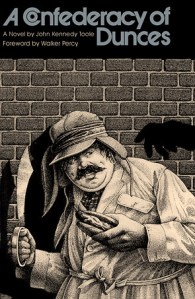
5.) A Confederacy of Dunces by John Kennedy Toole: A pretentious and lazy man-child is forced to get a job to help out the mother who treats him as though he’s twelve.  Hilarious.


4.) Challenger Deep by Neal Schusterman: A young man is institutionalized with mental illness and the reader is granted glimpses into both his real life and his delusions.  Evocative.


3.) The Guide by R.K. Narayan: An ex-convict is mistaken for a spiritual guru. Thought-provoking.


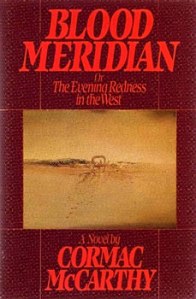
2.) Blood Meridian by Cormac McCarthy: Men of violence being violent the borderlands of Texas. Visceral.


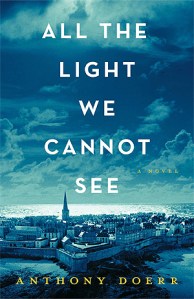
1.) All the Light We Cannot See by Anthony Doerr: The fates of a blind French girl and a bright German boy intertwined during the Second World War. Gripping.