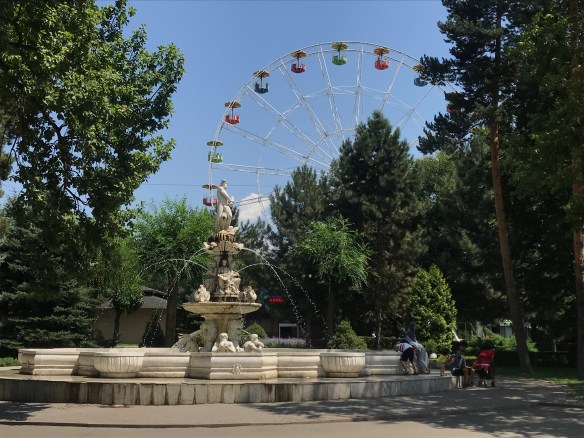
Taken in August of 2019 at Panfilov Park, Almaty.



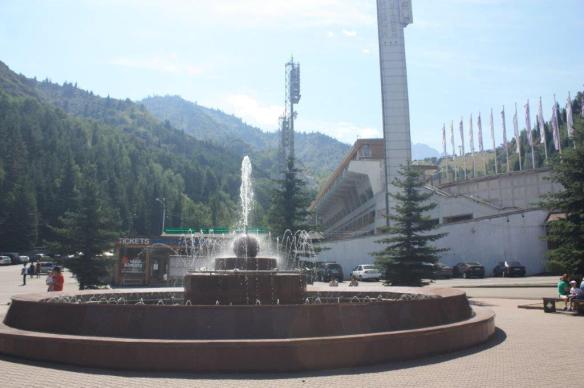
Taken in August of 2019 at Big Almaty Lake
 Book of Words by Abay Kunanbayev
My rating: 4 of 5 stars
Book of Words is a collection of 45 short essays by Abay Kunanbayev (1845 – 1904), one of Kazakhstan’s preeminent men of letters. Abay is known both as a poet and philosopher. This book includes more prose philosophy than poetry, though it does contain a few lines in verse.
I picked this book up while traveling in Kazakhstan. It should be noted that much of the book is a rant against the Kazakhs of Abay’s day. The book advocates for individuals to be both more scholarly, more virtuous, and more piously religious, and it skewers Kazakhs as simpletons who only care about the size and state of their livestock herds and the wealth that said herds can bring them. It’s eloquently written, but there’s not much more to it than that. With his Book of Words, Abay is trying to goad the Kazakh’s into being more virtuous and well-read. Judging from both the prominence of his name in Almaty (a huge statue, a major road, and one of the Metro stops named for him) and the success seen in Almaty, many Kazakhs probably took his words to heart.
There was a forward by someone named Nursultan Umbetov who is living, but far less famous (internationally, at least) than Kunanbayev. However, that front matter is the only ancillary matter for the edition I read. It does have explanatory footnotes where necessary to clarify something that wouldn’t make sense to non-Kazakhs.
If you want to gain insight into Kazakh culture, and how it’s changed since the 19th century, this book is worth reading. Much of the book may be viewed as trite truisms rather than earth-shattering wisdom, but it’s concise and well-articulated.
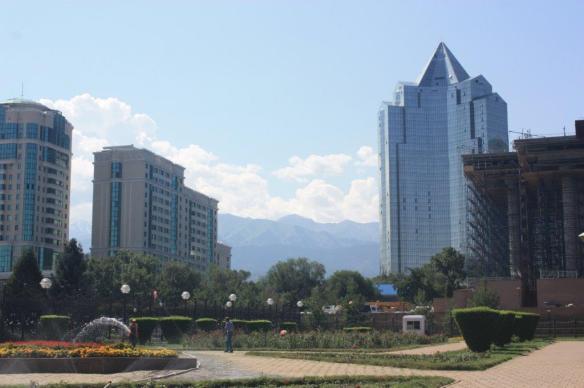
Taken in Almaty in August of 2019
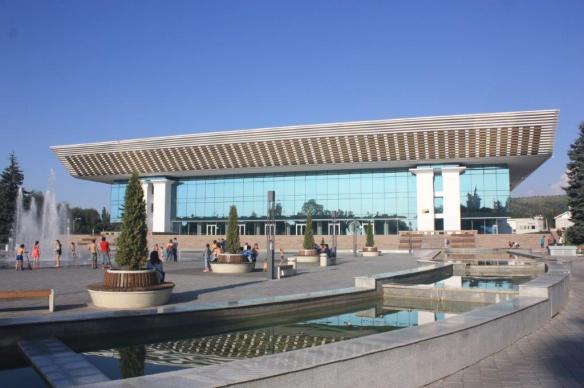
Taken in Almaty in August of 2019
 Kulager by Ilias Jansugurov
My rating: 5 of 5 stars
This narrative poem was written by Ilias Jansugurov about the life of another poet, a man named Akan who lived from 1843 to 1913. More accurately, it’s about Akan’s horse, the eponymously named “Kulager.” The story revolves around a horse race that is takes place in Kazakhstan. An important, if unloved, man passed away, and as part of the wake there is a massive get together of people from far and wide, and it features a horse race.
Kulager is a crowd favorite, and in the cut-throat Kazakh steppe, that love seals the animal’s fate. The opening chapters acquaint us with setting, with Akan, and with Kulager, and then proceed into the story of the Akan’s arrival, the pre-race braggadocio that confronts him, and the race, itself. There is another favored horse who isn’t so beloved as Kulager but who has an owner willing to do anything to secure a victory. The tragedy that ensues is one in a long line that have confronted Akan.
It’s worth mentioning the tragedy of the author’s own life. Jansugurov was killed in 1938 in Stalin’s purges. He was considered too outspoken, and his criticisms were not so well veiled to keep him from drawing the ire of the state.
The book includes monochrome artwork and a glossary that comes in handy for those who aren’t acquainted with the Kazakh language. There are two forwards and a translator’s post-script, but it’s not the case (as is sometimes the case for poetry and thin volumes, more generally) that the ancillary matter exists to pad the book out to a publishable length. The ancillary matter is of reasonable length, contains useful information, and the bulk of the page count consists of the poem.
I found this book interesting and readable and would recommend it for those interested in life on the steppe. I picked “Kulager” up because I try to read indigenous literature from each country I visit, and this was the only Kazakh literature I could find translated to English. That said, it seems to be the first work to be put out by Kazakhstan’s National Bureau of Translations, and so – hopefully – there will be more to follow.








 Tiger Riding for Beginners