BOOK REVIEW: Sorry I Ruined Your Orgy by Bradley Sands

Sorry I Ruined Your OrgySorry I Ruined Your Orgy by Bradley Sands

My rating: 3 of 5 stars

Amazon page

Contrary to the title, this isn’t an etiquette primer on how to make amends for a poor performance at a friend’s sexual soiree. It’s a collection of absurdist flash fiction that takes its name from a its introductory story in which a man shows up to an orgy wearing a bear costume and proceeds to behave badly.

Most of these stories are under a page long and few are longer than three pages. The stories don’t make sense, and are not intended to. (If they do make sense, the author has failed.) Instead, they are designed to subvert expectations to the maximum extent possible. Subverted expectations being the foundation of humor, there will be chuckles. However, it’s not just humor. It’s about defying one’s ability to judge what’s around the next corner by resisting any temptation to observe socio-cultural conventions about what could possibly and properly come next. Like spoken word acts, these stories are meant to invoke a response in the reader by surprises of language—often jarring surprises—more than by way of meaning.

If you are the type who doesn’t take words too seriously and take to absurdity like it’s a Zen koan, you might enjoy this brief work for the tickling it gives one’s mind. If you’re the type who takes words very seriously and are prone to get bent out of shape by “inappropriate” or loose word use, you will hate it and should avoid the trauma of reading it.

I’ll elaborate on my last statement. Irreverence, impiety, and a proclivity for the shocking are a few of the characteristics that go hand-in-hand with subverting expectations and conventions. Because of this, there’s a fair amount of profanity and jarring concepts included in the mix. I’ll offer one example of such a jarring concept that’s included in the book: “rape camp.” If you’re prone to be offended by the loose use of the word “rape,” then probably the only more reprehensible phrase than “rape camp” would be “rape fiesta” (though, to be fair, in the book a rape camp is more like a concentration camp than a summer camp.)

As a litmus test of how you’ll respond to this work, imagine opening a Hallmark card and reading the following sentence as contained in this book, “Sorry your grandma died! She molested me when I was eight.” If—despite realizing that it’s so wrong—you can’t help but grin, you’ll like this book. If your impulse is to write the author hate mail, you should avoid reading it.

It should be noted that the book is not all rape, molestation, and orgies. The book mostly consists of less prurient attempts to achieve the unexpected and/or shocking.

View all my reviews

BOOK REVIEW: Understories by Tim Horvath

UnderstoriesUnderstories by Tim Horvath

My rating: 4 of 5 stars

Amazon page

Two traits of Tim Horvath are rapidly revealed in reading the collection of stories entitled, Understories. First, he’s an academic to the core. Second, he loves words and the way they can be jigged around to create not only meaning but feeling. Combined, these characteristics yield both positive and negative outcomes.

On the positive side, Horvath writes what he knows, and this can be seen in tales like: The Understory, The Discipline of Shadows, Tilkez, and even Circulation. Horvath paints a vivid picture of life in academia with The Understory and The Discipline of Shadows in particular, replete with scholarly rivalry and interdepartmental politics. While that may make the book sound stunningly boring, those two stories are among the strongest–in part because the author knows how to build tension and character in this domain. His bookish characters are constructed with wit and depth.

On the other hand, this book is for the ones who love language more than they love story. The readability isn’t high. Horvath peppers the text with words that many of us memorized to take our GRE test but never used after receipt of our acceptance letter. Many avid readers never learned such words in the first place. This is where the Kindle edition, and its capability for instantaneous word lookup, comes in handy. (Though, the author does manage to stymie Kindle’s internal dictionary on a number of cases.) The shorter pieces tended to leave me wondering if Horvath had a point other than to dazzle with verbiage. To be fair, it’s not just monosyllabic and pretentious words that Horvath loves. He has a taste for all sorts of words that are evocative and powerful, be they whimsical, sexual, or emotional.

Understories consists of 21 short stories, but I use the term “story” loosely. Some of the chapters are stories in a conventional sense. That is, they have a beginning, a middle, and an end, and a character who takes some sort of personal journey. Other pieces are the literary equivalent of the masturbatory orgasm; they’re pleasant to experience but beg the question of what the objective is. The contents of the book are below. I’ll restrict my commentary to the more substantial pieces, and leave the reader to figure out what Horvath was trying to get at with the others.

1. The Lobby: This is really an artistic introduction and rules for reading the book.

2. Urban Planning: Case Study #1: This is the first of 8 such “case studies.” With the exception of one, they’re all flash pieces.

3. Circulation: If I had to pick a best story of the anthology, it would be this one. It’s about a man whose eccentric father is in the hospital with mind and body that aren’t what they used to be. The man is Director of Circulation for his hometown library, and the father has one published book and spent much of his life working on an unfinished Atlas of the Voyages of Things. The sub-story about the books as a reflection of the man is what gives this something extra beyond the usual “Cats in the Cradle” (Harry Chapin reference) narrative.

4. Urban Planning: Case Study #2: Another brief piece.

5. The Understory: This is one of the full length stories, and is one of the best pieces. It’s about the bringing together and falling apart of a platonic relationship between two scholars. Set in pre-war Germany, the story opens with a scholarly rivalry between two professors who become good friends. However, one of the men is a Jew and the other is promoted to a Deanship because he has appeal with the Nazis.

6. Urban Planning: Case Study #3

7. The Discipline of Shadows: This is the story of a professor in the Department of Umbrology. What’s Umbrology? It’s the study of shadows. An interdisciplinary department with a unifying theme of shadows provides and intriguing background for a story that’s not so out of the ordinary. The story delves into scholastic politics and a sordid intradepartmental love triangle.

8. Urban Planning: Case Study #4

9. Planetarium: This is story proper. It’s about the reunion of two high school buddies, and their differing recollections of a seminal event of their youth involving shenanigans at a planetarium. The story is an odd sort of confession.

10. The Gendarmes: This story will appeal to lovers of the surreal. It’s about a man who discovers that a team of scientists are playing baseball on his roof.

11. A Box of One’s Own: An eloquent tale of the curiosity inspired by boxes.

12. Internodium: This is another short piece.

13. Urban Planning: Case Study #5: This one probably ties for my favorite flash piece. It’s about a city that evolves into all restaurants.

14. Runaroundandscreamalot!: There’s a lot of humor sprinkled throughout this book, but this is the one story one might put in the humor genre. It’s funny from the title onward, which is the protagonist’s pet name for a generic Chuck-E-Cheese-esque place called “Playalot”—which is a medieval-themed kid’s play palace. The protagonist, a divorced man, takes his daughter there and meets a woman that he proceeds to try to get to know better despite only knowing her as “Hanh’s Mom” for most of the story.

15. Urban Planning: Case Study #6: This is the other tie-holder for best flash piece. It’s about a city in denial.

16. Pocket: A flash piece on, well… pockets.

17. Altered Narrative: A short and experimental piece.

18. Urban Planning: Case Study #7: This is the only one of these “Urban Planning Case Studies” that is a short story in the usual sense. It’s about a [grown man] film projectionist who abandons his post after seeing his wife with another man.

19. The Conversations: There’s a fair amount of surrealism sown throughout this book, but this is one of the more speculative pieces. That said, it’s really just about the death and resurrection of the conversation—along with “mint.” The sci-fi component revolves around speculation about precisely caused it and what the difference is between a “Conversation” and a “conversation.” The latter being what we normally think of (i.e. and informal discussion), and the former being the subject of the story.

20. Tilkez: The protagonist is a creepy little man who writes down everything and the story is about his relationship with both a female and language (I think. The female might be symbolic.)

21. Urban Planning: Case Study #8: One last flash piece.

View all my reviews

FLASH FICTION: Bob Newhart with a Gun

Attribution: Jim Wallace (Smithsonian Institution) Bob, Bob! Why do you want to kill me? Bob.

Attribution: Jim Wallace (Smithsonian Institution)
Bob, Bob! Why do you want to kill me? Bob.

In my dream I remember running, running away from Bob Newhart, a revolver gripped tightly in the comedic actor’s hand. I don’t know whether it was supposed to be Bob Newhart the person, or if my subconscious thought that Bob Newhart was the best actor to convey life’s dark comedy. I knew why Newhart was chasing me.  I worked in a machine shop and had a less than reliable partner who had apparently made a wild promise that our little shop could never deliver upon. It must have been important to Newhart. So I understood why Bob Newhart was mad and I accepted it. If it was me, I might be homicidal too—because I just rage that way sometimes. Still, I didn’t want to die because I was associated with a dodgy rogue. I guess that’s what the dream was about.

There was a kid with me–not my kid–at least I don’t think the dream ran that far afield. I’m willing to accept that my subconscious would see me as a machinist—a career unlike any in my bookish résumé. Furthermore, I can fathom that my subconscious imagining Bob Newhart wanting to kill me with a snub-nosed revolver—even if for something that was not my fault. However, I can’t imagine my subconscious thinking I would have a kid.

Anyway, Newhart saw us as he was maniacally driving a car toward the machine shop. We, the kid and I, were walking down the sidewalk away from the shop, having just closed up for a glorious summer afternoon in the way of slackers everywhere. I don’t know where my shady partner was, the unreliable always escape unscathed—maybe that’s what the dream was about.

I saw the murderous gleam in Newhart’s eye, and turned to run back to the shop. I grabbed the kid by the arm and tugged him in that direction—maybe I do have some paternal instinct. My plan was to get into the shop, lock the door, and call the unreliable person to come and get shot by an enraged Bob Newhart. However, in the panic of thinking that Newhart, who had done a bootlegger-180 with his car and was now driving straight for us, was going to crush us under the car, I forgot to lock the door behind us. (Or maybe there are no working locks in dreamland.) Locking the door was, after all, the one good part of the plan. (I don’t know what I had been thinking about calling the unreliable person, unreliable people never show up when you call them–they show up at 2:30am on a Sunday morning wanting to borrow $20 and a condom.)

Anyway, Newhart parked legally, but when he got out I saw the snub-nosed revolver in his hand, framed perfectly in the window in a way that can only happen in dreams. I ushered the kid around a partition wall that separated the small storefront from the shop beyond.

Newhart was walking like one of those geriatric mall-walkers, or like a man who’d drunk a 32 oz. cola and driven six hours only to get to a rest-stop restroom that was probably locked. When Newhart threw open the door, the little bell tinkled cheerfully—the bell clearly didn’t know what was about to go down. As I rounded the partition wall, pushing the kid into the darkened shop, I picked up a steel pipe. Despite the perennial advice that one should never bring a steel pipe to a gunfight, I felt a cool calm wash over me. (Maybe it was that I knew gun-toting men Newhart’s age usually shot blanks in their dreams.) Anyway, I hid in wait.

Then I woke up. I’ll never know whether Newhart shot me or whether I bludgeoned one of America’s beloved comedic elder statesmen to death with a steel pipe. Maybe both would have happened. Maybe neither. I know if I go back to sleep, the dream won’t resume. They never do. I’ll never know. Maybe I don’t want to know. Maybe that’s the point of the dream.

Evangelists Meet Max Their Match

BING-BONG.

Without even looking up from his computer, Max knew it was church people. They came around trying to sell him a religion now and again. No one sold aluminum siding, encyclopedias, or ice cream door-to-door anymore. Evangelic proselytizers were the last bastion of door-to-door salesmanship. The sect varied; the approach did not. They were the only ones who ever disturbed his peace.  Well, the only ones who didn’t use the phone.

He went to the door. It was a zaftig woman and a clean-cut young man–both dressed in funeral-like attire.

“Hello!” the pair said with practiced exuberance.

“Hello,” Max parroted with a decided lack of exuberance. Then he added, “May I help you?”

Max didn’t feel like being helpful, but there was the off-chance that it was  a couple of his neighbors who were just looking to borrow a cup of sugar so they could bake cookies for whatever wake they were attending. If so, he’d help them out, but as far as he knew such a request hadn’t happened since 1955. Then he saw their name tags, and not the paper kind. These were black plastic bordered in gold with white letters.

“We’d like to talk to ya ‘bout the Bible,” the woman said.

“Unless it’s the racy bits, I don’t think you’ll hold my interest,” Max said.

“Excuse me?”

“Never mind.”

“Have you ‘cepted Jesus as your personal Lord and Savior?” the woman asked. The young man was silent, apparently just there in case the woman knocked on the door of a Jeffery Dahmer-type.

Max was distracted by the words “personal lord”, and how odd the phrase seemed. Can I get my Messiah in Mocha with a burgundy robe?

After an awkward pause, he said,  “No, I’m an atheologist.”

They gave a coordinated grimace as if he’d dropped a deuce at their feet. “You’re an atheist?”

“No. I said atheologist. An atheist is one who does not believe in God. I believe in God. I just don’t believe in religion.”

“You cain’t have Gawd without religion.” The woman said.

“I beg to differ.”

“How’d ya know Gawd, elsewise?” The woman continued.

Max swept his hand outward in a gesture meant to draw the pair’s attention to the flowering dogwood in his front yard and the sky beyond. Their forehead creases indicated that they were both perplexed. The meaning of his gesture was lost on them.

“You cain’t know Gawd without religion,” the woman repeated, as if Max just hadn’t heard her the first time and if she said it more emphatically he would get it.

“You can repeat a gratuitous assertion ad infinitum, and it will remain an assertion,” Max said.

Neither evangelist gave any indication that they understood what Max was saying.

He sighed, stepped out onto the porch with them, and said, “Look. First, let’s ask what God gives us.” He leaned out under the eaves to look at an azure sky feathered by white wisps of cirrus clouds. This time they followed his gesturing arm and looked out with him at the bounty of nature. “Now, let’s consider what religion offers us. May I?”  He said as he reached for the thin little magazine that they had prepared to leave with him.

Max was taking a risk. He couldn’t know exactly what it the magazine would contain, but he’d seen enough of them to make an educated guess. There it was, right on the cover. He didn’t even have to flip through in search of it. The cover artwork was a dark sketch of a treeless city with brooding clouds drifting at the tops of buildings. The buildings were in ruins, and there were human-shaped lumps on the ground –meant to be either corpses or homeless people. It was a story about the fall of man or the coming apocalypse or some doom upon whose cusp humanity sits.

“Here we have it. Religion doesn’t show us beauty. It wants me to be afraid. It wants to scare me. It wants carnage and chaos to be my lodestar. It shows me horrors so that it can be my life-preserver. It wants to be my life-preserver so that I’ll substitute its will and wisdom for my own. It wants me to believe its leaders are infallible so that I’ll feel good about giving up control. It wants me to behave as its people behave. Most insidiously, it wants me to hate the people who it hates… This is why I don’t believe in religion. Thank you for your time,” Max said as he handed the Doomsday Gazette back to the woman and walked back into his house, leaving the two slack-jawed proselytizers in his wake.

Sharing Stories of the Plaguepocalypse

[I’m recycling this from a Figment competition that I once entered–and lost.]
Day 100, Post-Apocalypse

Day 100, Post-Apocalypse

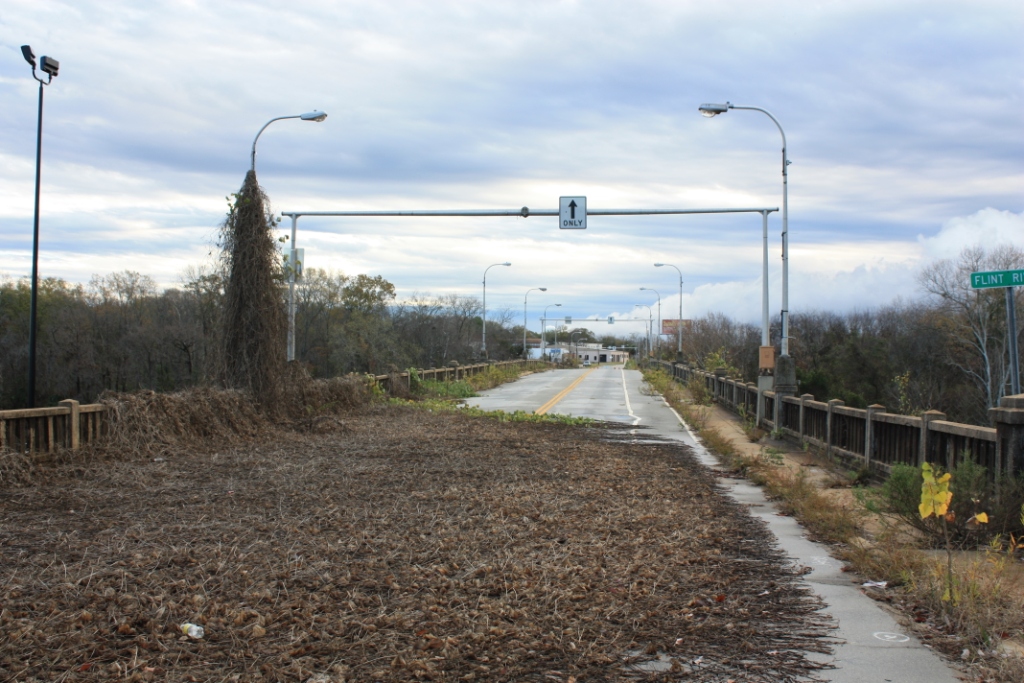
JB and I worked tediously to find and repair damaged insulation on the main from the solar farm down to our bunker. Breaks or cracks in the insulation meant lost energy that we could not afford, but we had to bury the cheap cable available to us because the Mojave sun degraded it too rapidly otherwise. Burying the line invited a whole new problem because burrowing critters then began to gnaw on it. Whenever there was a power drop, two of our trio had to come out and do line maintenance.  Output should have been at its maximum given it was mid-day during the hottest time of year, but, instead, we were experiencing a sixty percent drop in power.

We wore white from head to toe except for a slit in our ninja-like masks where sunglasses covered the unclothed region and protected our eyes from the harsh rays and glints.  This had always been a harsh land, but changes experienced in recent decades made it far hotter.  I sucked a mouthful of water from the bladder that lay next to my body under my baggy white clothes. The water was hot, like a freshly brewed cup of tea—sans the tea.

“Son-of-a…, sweat is stinging my eyes,”  JB said as he removed his sunglasses, and blotted his eyes with his sleeve.

“Put the shades back on. We can’t have you getting burned retinas,” I said.

“Yeah, yeah, if I go blind who’ll come out here with you to dig up line?” JB’s reply dripped sarcasm.

“Exactly, now you’re getting it,” I said.

JB wiped his eyes once more, and then put the glasses back on. Without the shades, the surroundings looked like the Mars of old movies – cast in a reddish hue.

“I think I’ve got it,” JB called out.

“Looks like it,” I replied, leaning over to look in JB’s newly-excavated hole.

A mole rat skeleton had its teeth buried in the insulation.

After removing the rodent, patching the insulation, and putting the sand back, JB and I walked back to the hatch of our bunker.

JB crouched over the opening. He touched the metal lip of the hatch and immediately yanked his hand away while screaming an expletive. The gloves were not thick; they were for keeping the sun off the skin while holding in as little heat as possible.

JB called down the shaft, “Brit!”

“What ‘cha want,”  Brittany replied.

“How’s our power level, we pulled a fried mole rat off the line,” I asked.

“Yum!…,  The power is back to normal,”  She called back.

I followed JB down the long ladder into the bunker. I pulled the hot hatch closed behind me and secured it against some unlikely foe.

“We need to protect that line somehow,” I said

“I’m just glad we didn’t have to hump out to the transmitter. The last time it broke down I was loopy with dehydration by the time I got back. You sure this is the only place for us to live?” JB said.

Brit came in with two cups of water and handed them to JB and myself.  She said, “I’ve got the loop broadcasting again and the receivers are turned up loud.”

“If you can come up with someplace else where we can tap into the energy necessary to keep broadcasting, I’m all ears,” I responded.

“That’s just it. We’ve been broadcasting all this time, and we’re not getting any reply,”  JB said.

“We also don’t know whether this climate is responsible for our good fortune,” I said.

JB had no response.

“Good fortune? Oh, my, I feel like such a princess.” Brit said curtseying with her fingertips bunched up and wrists kinked as if she were holding up a skirt.

“I mean being alive,” I clarified.

There was a silence.

Brit spoke up, “Remember people?… I love you guys, but I’d give anything to meet a stranger. Remember the last time you saw a crowd of strangers.”


I did, indeed, remember.

I was planning on going to Union Station to get out the Los Angeles. Before I left my apartment, I saw a news story showing the train station among all the other avenues of disembarkation that were thronged with people.  The streets outside the station were flooded with a throbbing, undulating mass of humanity. As in the mosh-pit of a rock concert, there were two primary classes of people: those who were screaming and those who were suffocating. Mixed in among these were glassy-eyed souls who had the good sense to realize they were the walking dead, and to behave accordingly.  There were images from packed train-less platforms, and the grandiose cavernous waiting area.

I packed my gear and donned boots so as to be prepared to hike out of town if necessary. It proved to be a wise move, because I when I arrived at the train station the wall of humanity was impenetrable.

I hated crowds. Crowds were noisy, hot, and chaotic.  My hatred of crowds saved my life. Nature has its weird ways. I had once read about ants that could take down a fully grown cow. They did this by covering the animal benignly, and then, upon a release of a pheromone from the ants on the creature’s head, they all stung at once. This malady, a hemorrhagic fever of some sort, was similarly impossibly intelligent and geared toward wiping out the entire species. It seemed to know when its victims were within a crowd, by what mechanism I cannot imagine, and it would then send them into sneezing and coughing fits that propelled droplets of virulent blood in a fine mist to those all around.

Now I missed crowds, because they were a sign that one’s species wouldn’t die with oneself.

JB and Brit had taken to telling each other their own last crowd stories, which we’d heard before. We’d heard all of each other’s stories.

Well there was one story that I kept for myself. It was the story of the day before I met up with Brit and JB. It was my nadir.

I had been hiking east from the city. My path merged with the I-40 corridor, and it was the most horrific day of my life. I’d always been an avid hiker and had spent long periods on my own before, but these times of solitude were without signs of humanity. As I came upon I-40, there were people all around -in cars and on the ground, but they were all stiff and had rivulets of brown or red running from their noses, mouths, ears, eyes, and presumably the unseen orifices.

When I saw a monastery on a hillside, I thought I was saved.  Surely the isolated monks or nuns were safe and would help out a weary uninfected traveler? I found an old stone church that was post and beam on the inside. Anyway, my hope faded when I found the pews had been used as hospital beds, and all, patient and caretaker alike, were bled out. The only signs of life were rats on the floor, weeds in the mortar joints, and birds in the rafters. That was my moment of greatest loneliness, for if God had abandoned his own house, what hope was there for me.