BOOKS: “Sweet Tooth, Vol. 3: Animal Armies” by Jeff Lemire

Sweet Tooth, Vol. 3: Animal ArmiesSweet Tooth, Vol. 3: Animal Armies by Jeff Lemire
My rating: 5 of 5 stars

Publisher Site – DC Comics

This is an action-packed entry in Sweet Tooth saga. It’s also a very satisfying story arc for a serialized comic book such as this. We see important events in the character development of Jepperd as well as a secondary character, Johnny (brother to Abbot — the lead antagonist.) Dr. Singh gains some important information as well, though that largely serves to advance the story and extend the mystery, rather than to conclude this segment of the story. That said, this episode is brought to a solid conclusion while leaving one waiting to see what happens next.

I’d highly recommend this series for comic book readers.

View all my reviews

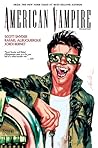
“American Vampire, Vol. 4” by Scott Snyder

American Vampire, Vol. 4American Vampire, Vol. 4 by Scott Snyder
My rating: 5 of 5 stars

Publisher’s Site

The American Vampire saga enters the 1950’s, at least with two of the three storylines presented in this volume. The central arc takes place in Glendale, California in 1954 and features Fonzi-like vampire hunter, Travis Kidd, against the series’ central villain — Skinner Sweat. But the main story is bookended by two shorter stories. The opener is a cowboys v. indians tale, set in New Mexico Territory in 1871, that provides backstory on Skinner Sweat and James Book. The closing story is also set in 1954 but takes place in Alabama and features a black vampire hunter in the Deep South.

I found all three stories to be compelling and have greatly enjoyed this series.

View all my reviews

BOOKS: “The Sandman, Vol. 3: Dream Country” by Neil Gaiman

The Sandman, Vol. 3: Dream CountryThe Sandman, Vol. 3: Dream Country by Neil Gaiman
My rating: 5 of 5 stars

DC Site

If you love a good story, you really can’t go wrong with Gaiman. This volume consists of four standalone pieces of short fiction set in the Sandman universe.

“Calliope,” like Greek Mythology, envisions an anthropomorphized muse, but takes the idea into a dark and modern twist as said muse is held captive and violated.

“A Dream of a Thousand Cats” imagines dreams do shape the real world and asks what if animals dreamt as big as humans.

“A Midsummer Night’s Dream” is built around the premise that Shakespeare had a patron, none other than Morpheus, a.k.a. Dream, himself.

“Facade” is about a supernatural woman who can only go out in public by taking risky measures to look “normal,” and explores her lonely existence.

All of these stories are clever and compelling, and I’d highly recommend this collection for readers of speculative fiction.

View all my reviews

BOOKS: “DC vs. Vampires, Vol. 1” by James Tynion IV & Matthew Rosenberg

DC vs. Vampires, Vol. 1DC vs. Vampires, Vol. 1 by James Tynion IV
My rating: 4 of 5 stars

Publisher’s Site

In this opening volume in a series that pits a set of the DC pantheon of superheroes against a shadowy vampire cabal, we learn that the vampires are preparing for attack and that they’ve infiltrated all levels of society to degrees unknown — even the Justice League. This volume focuses heavily on the extended “Bat-Family” along with Oliver Queen’s smaller Green Arrow team, but includes many more superpowered characters in varied roles. Though it also ignores some of the most powerful characters, a big risk for such a huge ensemble cast. (One wants to save some big guns, but it begs the question of whether Superman is fiddling while the world burns.)

I like how tension was built in this story, and how information is revealed to the reader, allowing one to be gripped by questions of how the characters will learn what one already knows and with what consequences. The volume ends with a big reveal, though not with any kind of resolution. So, it’s not a standalone story in my view.

I found the volume engaging, but feel it suffers from the unavoidable problems of having too many characters, particularly characters of the god-tier variety.

View all my reviews

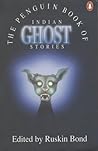
BOOKS: “The Penguin Book of Indian Ghost Stories” ed. by Ruskin Bond

Penguin Book of Indian Ghost StoriesPenguin Book of Indian Ghost Stories by Ruskin Bond
My rating: 5 of 5 stars

Publisher’s Website

This is an anthology of stories of the supernatural set in India or built around characters and contexts of India. About half of the stories are by writers of non-Indian ancestry, though some were born or lived extensively in India (e.g. Rudyard Kipling and C.A. Kincaid.) Not all of the pieces are “ghost stories” in a technical sense, but they all revolve around the supernatural or surreal experience.

I enjoyed all the stories in this collection, but among my favorites were: “The Brown Hand” by Arthur Conan Doyle; “The Strange Ride of the Morrowbie Jukes” by Rudyard Kipling; “The Fire-Jogi” by A.C. Renny; “Fritz” by Satyajit Ray; “Anath Babu’s Terror” by Satyajit Ray; “The Yellow-Legged Man” by Sudhir Thapliyal, and “Topaz” by Ruskin Bond.

If you enjoy scary stories, I’d highly recommend this book.

View all my reviews

BOOKS: “American Vampire, Vol. 3” by Scott Snyder

American Vampire, Vol. 3American Vampire, Vol. 3 by Scott Snyder
My rating: 5 of 5 stars

Publisher site

The third volume of the American Vampire series advances the story into the 1940’s — World War II to be precise. The book contains two distinct storylines, both involving missions behind enemy lines. The first, “Strange Frontier,” is set in the Pacific theater and centers on the character of Henry Preston (the non-vampire husband of benevolent American Vampire, Pearl Jones.) In it, Preston is assigned to an elite fighting squad dispatched to investigate an island that turns out to be infested with a new strain of vampire.

The second story, “Survival of the Fittest,” takes vampiric vampire-hunter Felicia Book as its lead as she is dispatched (in partnership with agent “Cash” McCogan) to Nazi-occupied Romania to investigate claims of a “mad” scientist’s vampire-related research, only to find herself in a completely unexpected and daunting scenario.

I’m enjoying this series. The stories are satisfying and well-crafted, and the books somehow manage to not be just another set of vampire stories. Moving through time allows the stories to be self-contained while making it possible to continue with ever fresh material. (A tactic that works owing to the long lifespans of vampires.) The books also use genre mixing brilliantly, be it detective noir or — in the case of this volume — the war story. Snyder has breathed new life into the vampire story, and I’d highly recommend this series for comic book readers.

View all my reviews

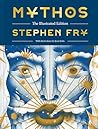
BOOKS: “Mythos: The Illustrated Edition” by Stephen Fry

Mythos: The Illustrated Edition: The Illustrated Edition (Stephen Fry's Greek Myths)Mythos: The Illustrated Edition: The Illustrated Edition by Stephen Fry
My rating: 5 of 5 stars

Publisher Site

This book offers a humorous telling of many stories from Greek Mythology. One gets the well-known tales such as Prometheus, Sisyphus, and Pandora, but also the myths involving a number of lesser-known characters: god, demi-god, and mortal. As these myths are being told, there is also a substantial amount of nonfiction information presented by footnotes and such — e.g. how later authors (Shakespeare, for example) presented these myths or tales built upon them, how the myths inform popular culture and language to this day, and how Greek and Roman mythology related.

The art is nice, though I can’t say that it added much to the reading experience for me, personally. The art is done in a consistent style throughout and is colorful and visually interesting, though I couldn’t say much else about it in an intelligent fashion. It somewhat reminded me of William Blake’s art and somewhat of Soviet posters.

I enjoyed this book. It is light-hearted and even humorous without detracting from the tone of the myth and is a highly readable way to learn more about Greek Mythology.

View all my reviews

BOOKS: “American Vampire, Vol. 2” by Scott Snyder

American Vampire, Vol. 2American Vampire, Vol. 2 by Scott Snyder
My rating: 5 of 5 stars

Publisher site

This six-issue volume, just like the first, intersperses the story of two American vampires, Skinner Sweet and Pearl Jones. For those who haven’t read Vol. 1, the American Vampire is mutated to have advantages of strength, speed, and UV resistance, but in vampire mode they are much more monstrous. The first four issues focus on a detective noir story set in 1930’s Las Vegas. Skinner Sweet could be said to be central to events in that arc, though not to be the lead character. (That would be the police detective trying to solve a string of gruesome murders.) The last two issues put the Pearl Jones story front and center. That arc is set during the same timeframe, but in Northern California. The first arc is tied up more successfully, but I suspect this has to do with the challenges of interspersing stories (the first arc also has twice as much space with which to work.)

There’s an interesting contrast between the stories. Skinner Sweet is villainous, was villainous before he became a vampire, and is even more so afterwards. The Pearl Jones story is more of a love story between Pearl and her human husband, Henry Preston — albeit a love story in which the couple is being hunted by nefarious forces and must fight to survive. She is trying to be free of the monster life as best she can.

I am enjoying this series. The journey through time and landscapes of America makes this not just another vampire story. If you enjoy comics that mix genres, I’d highly recommend this volume.

View all my reviews

BOOKS: “Best Literary Translations 2024” ed. by Jane Hirschfield, et. al.

Best Literary Translations 2024Best Literary Translations 2024 by Jane Hirshfield
My rating: 5 of 5 stars

Publisher Site

This “best of” annual celebrates the unsung translator. Many of the original works are recent but some are old or even ancient; it is these translations to English that are in all cases recent. Spanish and Arabic translations are well-represented, but with respect to the twenty or so languages included, almost all are the sole representative for that particular source language. Poetry makes up the bulk of the collection (including prose poems,) but there are several pieces of short fiction and a piece of creative nonfiction or two.

Among my favorites were: “Grazing Land” (Greek,) “The Snail’s Spiral” (Spanish,) “The Lion” (Kurdish,) “Deterioration” (Persian,) “Graceless” (Chinese,) “Our Village” (Tigrinya,) and “The Sea Krait” (Tagalog.) But, as one would expect of a carefully curated “best of” collection, there were no stinkers in the batch.

If you enjoy literature in translation, this book is well worth investigating.

View all my reviews

BOOKS: “Gothic Tales” by Marquis de Sade [Trans. by Margaret Crossland]

Gothic TalesGothic Tales by Marquis de Sade
My rating: 5 of 5 stars

Amazon.in Page

Release Date: September 3, 2024

This collection of short fiction is an excellent entry point for the reader wishing to be introduced to the philosophy and literary stylings of the Marquis de Sade. It is less visceral and explicitly violent than the works for which Sade is most famous (i.e. Justine, 120 Days of Sodom, and Philosophy in the Boudoir.) While it does deal in libidinal issues throughout and has a few stories that are explicitly erotica (notably the last couple pieces,) it never ventures up to or over whatever thin line separates erotica from pornography.

While all the pieces share Sade’s signature philosophy and interests, it is in other ways a quite diverse collection of writings. The first piece, “Eugenie De Franval,” is a novella that takes up about half the book, and it is followed by a piece that, in today’s parlance, might be called flash fiction, “The Horse-Chestnut Flower.” Pieces such as “Eugenie De Franval” and “Florville and Courval” are tragedies while the comedies include: “Emilie De Tourville,”[granted with grim elements] “The Husband Who Played Priest,” “Room for Two,” and “The Self-Made Cuckold.” Those last three – as well as “The Horse-Chestnut Flower”– are comedic in a modern sense, not just the literary sense.

I can’t say how much of the difference in tone and intensity of these pieces from Sade’s other stories is owed to the selected source material and how much is owed to translation and editorial decisions, but it makes for a read that is more intriguing in story and less shocking and disturbing than many other translations of Sade’s work.

I enjoyed these stories. They had many clever twists and turns that I don’t recall experiencing in Sade’s novels. Several stories rely on a great deal of deus ex machina coincidences, but I think that works just fine — particularly in the more humorous stories. I’d highly recommend this for readers looking to ease into the work of the Marquis de Sade.

View all my reviews