DAILY PHOTO: Gas Station Cambodia-style

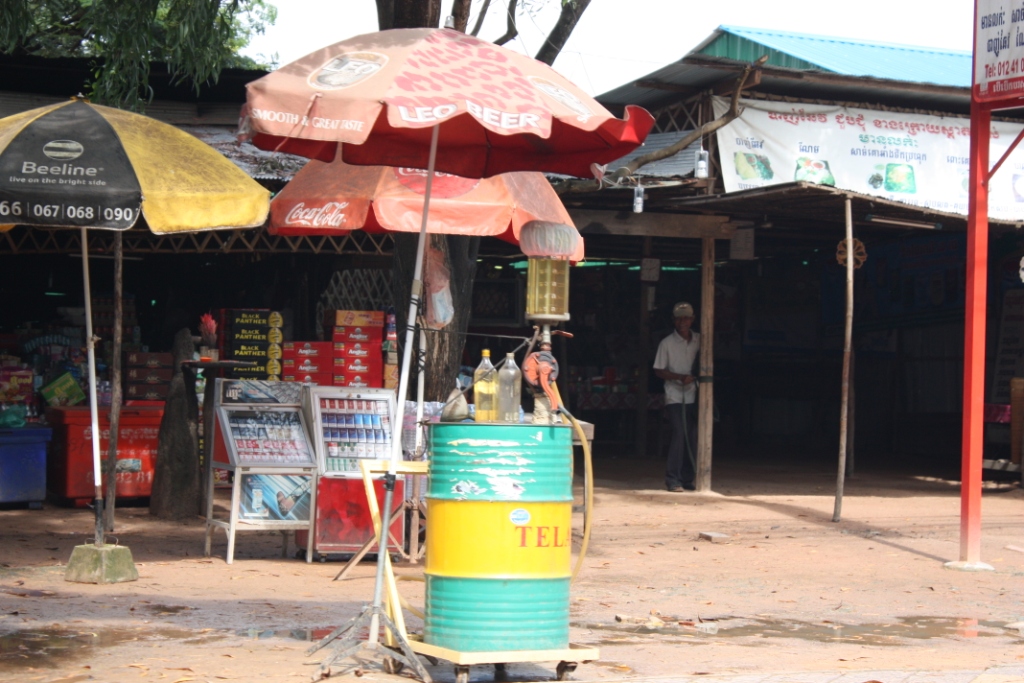
Taken in October of 2012 in Siem Reap.

Taken in October of 2012 near Siem Reap.

The world runs on petrol, but not all gas stations are alike. In rural Cambodia, where motor scooters are seconded by small  stretch rice-tiller tractors  as the primary means of conveyance, the petrol station may be a rack of soda or wine bottles or a 55 gallon drum like this one.

Was the Fukushima-Daiichi Incident the Final Nail in Nuclear Energy’s Coffin?

Today is the two-year anniversary of the tsunami that swamped parts of eastern Japan. Among the ongoing effects of this event was a re-chilling of attitudes toward nuclear energy–undoing a thaw that some swore was imminent. The tsunami hit the Fukushima-Daiichi plants and knocked out generators that were needed to run the coolant pumps with the power lines down. In the days after the disaster, the release of radioactivity and explosions of built up hydrogen presented some of the most prominent news stories.

Japan obtained about a third of its energy from nuclear prior to the event. All reactors were shut down in subsequent months, at no small cost to their economy. Eventually, a couple of plants were brought back on-line, providing only a fraction of the electricity of the country’s full fleet of 50+ nuclear plants.The Japanese had plans to add another 15 plants to their reactor fleet at that time, plans that have since vanished.

Even China, the world’s most prolific builder of nuclear plants as of late, had a brief moratorium on nuclear power plant (NPP) construction. However, China seems to have regained its ardor for nuclear power. France, of course, won’t be dissuaded either. However, for much of the rest of the world, doubts remain.

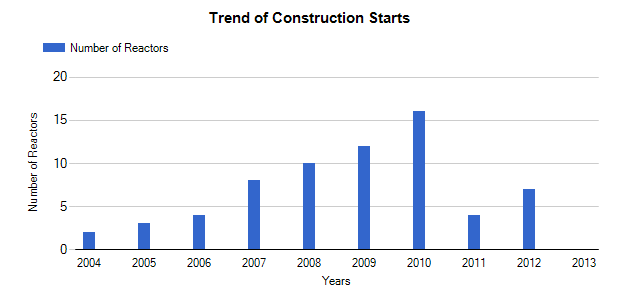
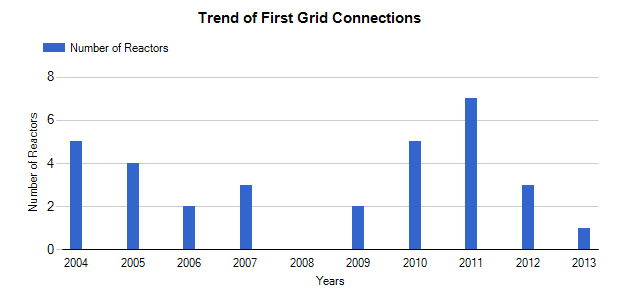
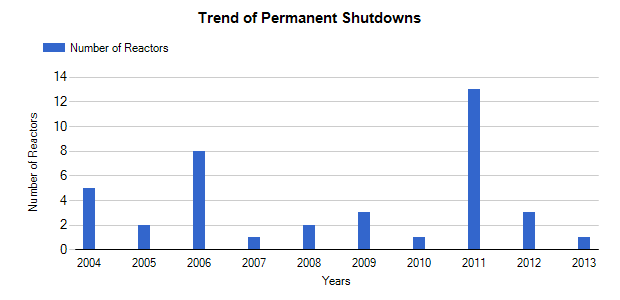
Pictures may be worth a thousand words.

Source: International Atomic Energy Agency (IAEA) Power Reactor Information System (PRIS)

Source: International Atomic Energy Agency (IAEA) Power Reactor Information System (PRIS)

Source: IAEA PRIS

Source: IAEA PRIS

Source: IAEA PRIS

Source: IAEA PRIS


The Nuclear Renaissance and International Security

Edited by Adam N. Stulberg and Matthew Fuhrmann

2013, Available Now

Buy this book

ONLINE RESOURCES
Contents

Contributors

Introduction

BOOK PLUG: The Nuclear Renaissance and International Security

The Nuclear Renaissance and International Security 

Edited by Adam N. Stulberg and Matthew Fuhrmann

2013, Available Now

Buy this book

This is not so much a book review as a shameless plug (I have a chapter in this book.)

Nuclear energy has had a checkered past. From the 1950’s to the 1970’s, there was a massive build up of nuclear power reactors– granted among a fairly small number of nations. Recent decades have seen a drop off in the pursuit of nuclear power among all but a few diehards. This decline resulted from both accidents and unfavorable nuclear power economics (the former exacerbating but not entirely responsible for the latter.) With increasing desire to combat global climate change, there has been renewed interest in nuclear energy as part of a strategy to slow carbon emissions without crippling energy output. However, to date this interest has not turned into large-scale development of nuclear power anywhere except China. After the Fukushima Daiichi accident, even some diehards (e.g. Japan) are reconsidering nuclear power.

This book considers whether there will be a resurgence of nuclear power, if there is what shape it will take, and what the security ramifications of future nuclear power development might be.

Among the many questions addressed in the book are:

1.) Will the future bring more nuclear energy states, or will any expansion take place only within existing nuclear power states?
2.) Why do states supply other countries with nuclear energy technologies, and what are the ramifications of such supply efforts?
3.) Can an International Fuel Bank be successful in reducing the threat posed by proliferation of dual-use fuel cycle technologies?
4.) Will climate change drive a renaissance of nuclear power?
5.) What effect will an expansion of nuclear energy have on non-state nuclear trafficking?
6.) Are states with nuclear power more, less, or equally likely to get into wars?

If you are interested in these questions, this book is for you.