
Taken in July of 2016 in Kolkata (Calcutta)
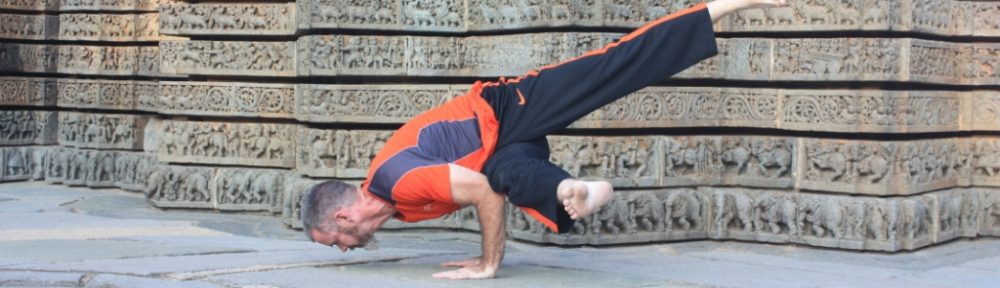
Taken in July of 2016 in Kolkata (Calcutta)
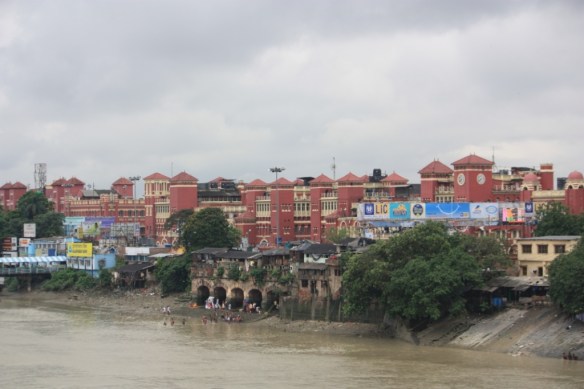
Taken in July of 2016 in Kolkata (Calcutta)
For scale, this is the ghat that one can see below the station.
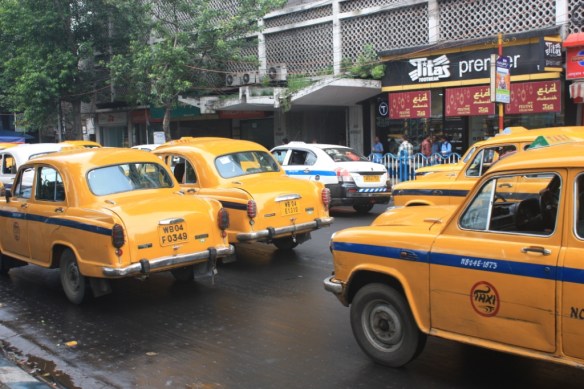
Taken in July of 2016 in Kolkata
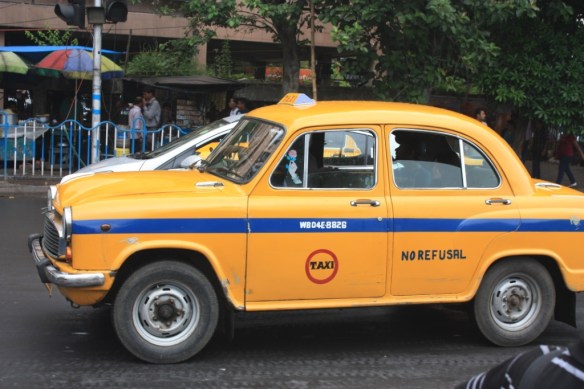
Kolkata (Calcutta) has some distinctive taxicabs. They’re yellow Ambassadors, a model made by Hindustan Motors, featuring a solitary blue racing stripe.
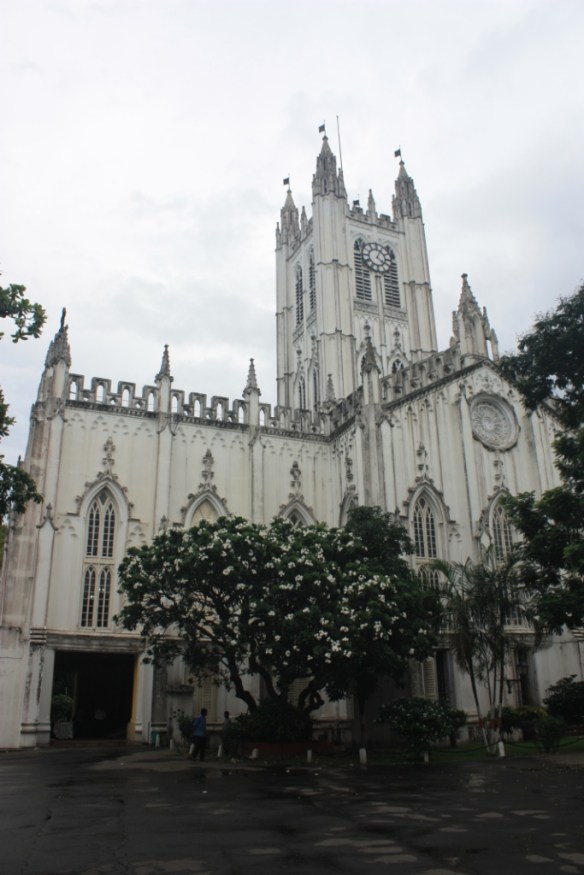
Taken on July 2, 2016 in Kolkata

This cathedral is located due East of the Victoria Memorial in Kolkata (Calcutta.) It’s an Anglican church that dates to 1847.
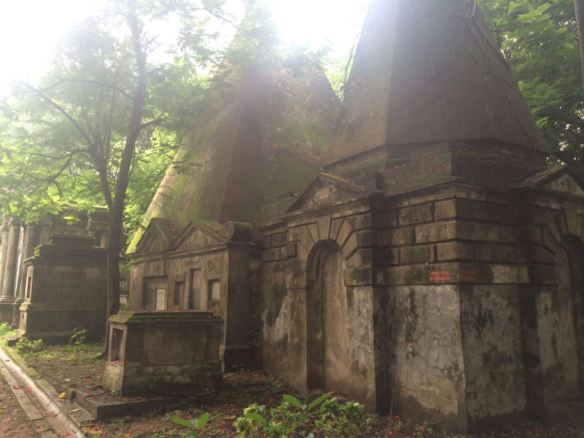
Taken on July 4, 2016 in Kolkata
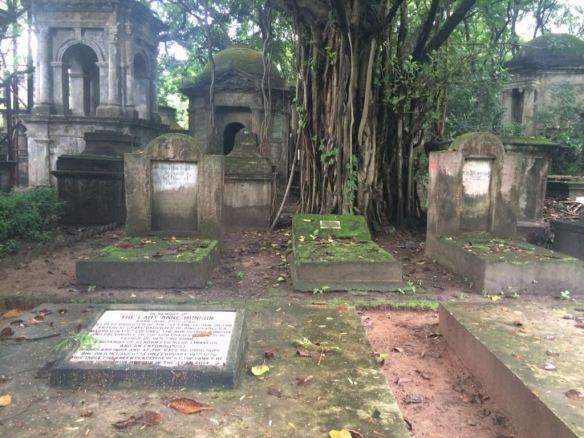
Walking through this cemetery, which dates to the late 18th and early 19th centuries, was a trip. I didn’t realize that there was an entire scale of grandiosity between your run-of-the-mill cemetery and places like the Ming Tombs or the Pyramids at Giza. While there were a few normal-sized monuments (as seen in the picture below, tombs under a banyan tree), most of the mausoleums were gigantic.
It would be interesting to know what led to this trend at that time. I know these were all wealthy British gentry, but, still. Possibly because the mausoleums were so huge, the cemetery filled up in a narrow time span. (i.e. Most of the tombs I saw were dated in the first decade of the 1800’s, but there were some from the late 1700’s as well.) It’s like the occupants learned of the Pyramids and were like, “I’ll be damned if some Pharaoh is going to outdo me.”

Taken on July 3, 2016 in Kolkata


This square in Kolkata was previously named Dalhousie square for the British Governor General of that name. B.B.D. is short for Benoy-Badal-Dinesh, three gunmen who assassinated the Inspector General of Prisons in a gunfight in a prominent building nearby (i.e. the Writers’ Building.) All three of the men committed suicide rather than be captured (Badal via Potassium Cyanide and the others by self-inflicted gunshot wound.)


Taken on July 2, 2016 in Kolkata; Taken by Lilla Gourley

Taken in Kolkata on July 4, 2016

Taken on July 2, 2016 in Kolkata
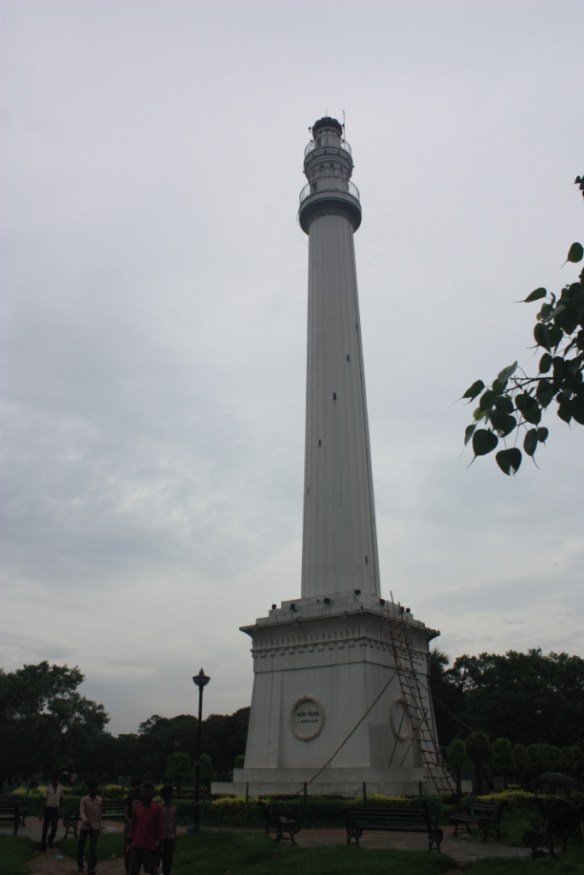
Interestingly, while this monument looks like the minaret of a mosque (and combines elements of Egyptian, Syrian, and Turkish architecture) it was originally a memorial to the commander of the British East India Company, Sir David Ochterlony. Ochterlony was instrumental in the defense of Delhi in 1804 against Marathas and a British victory in the Anglo-Nepalese war.
In 1969, it was re-purposed to serve as a monument for those who died in the Indian independence movement. The current name, Shahid Minar (or Shaheed Minar) means “martyrs’ monument.”
The Shahid Minar dates to 1828 and sits in the north of the Maidan, Kolkata’s central park.
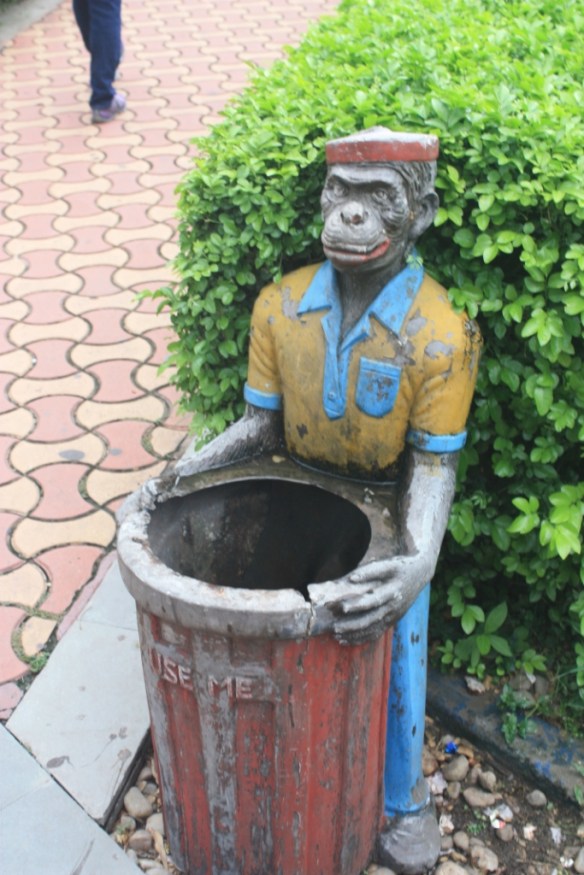
Taken on July 3, 2016 in Kolkata
Above: Is This Racist?
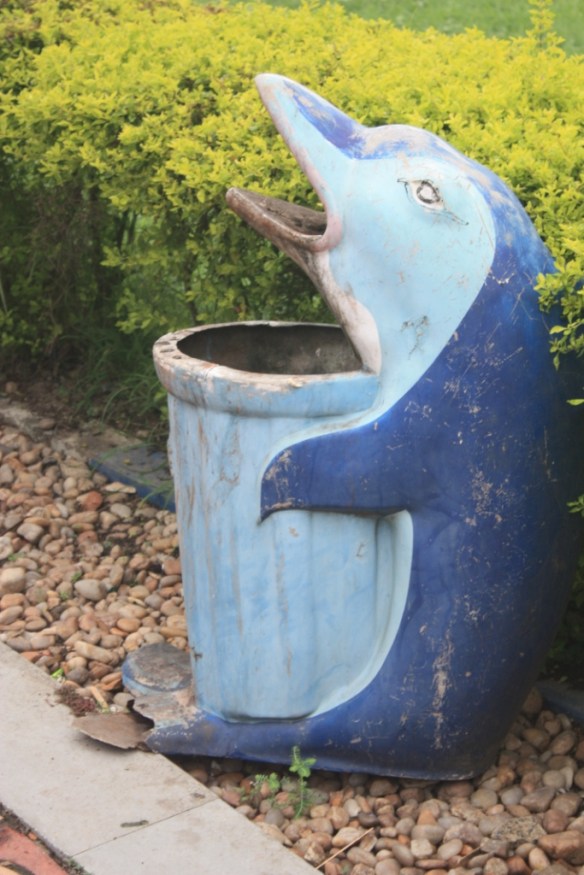
Below: Orgasmic Dolphin


 Tiger Riding for Beginners