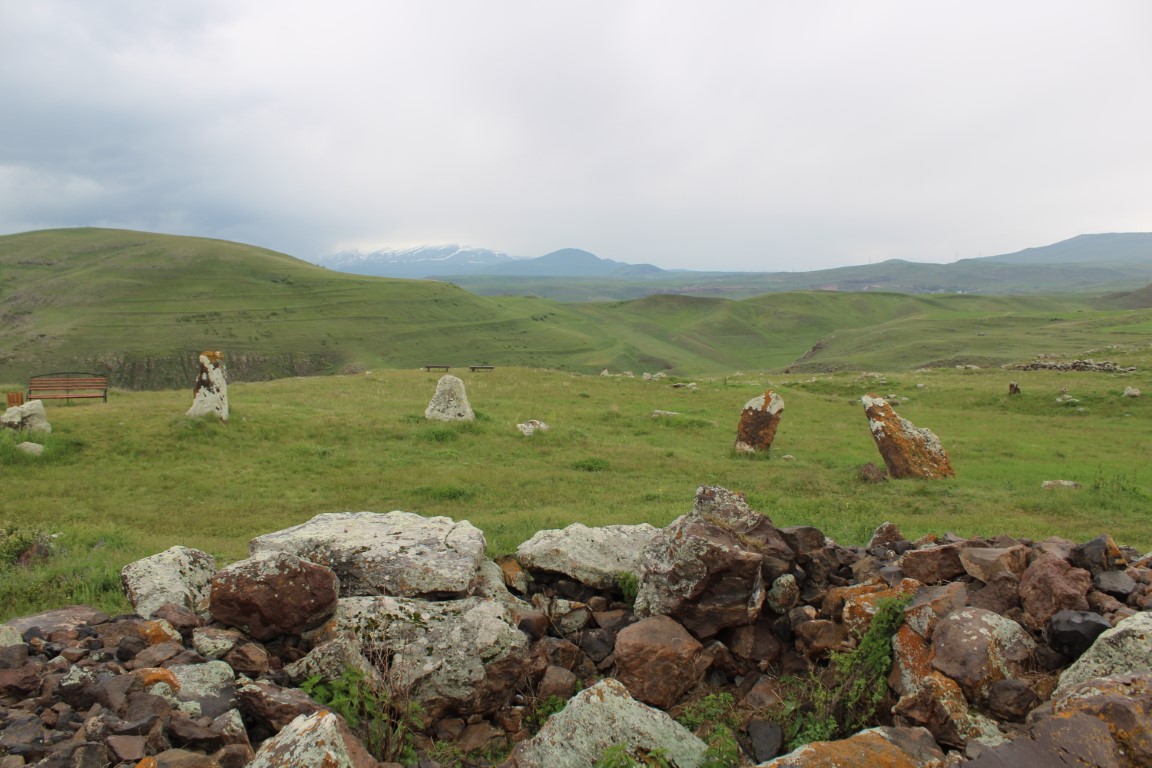
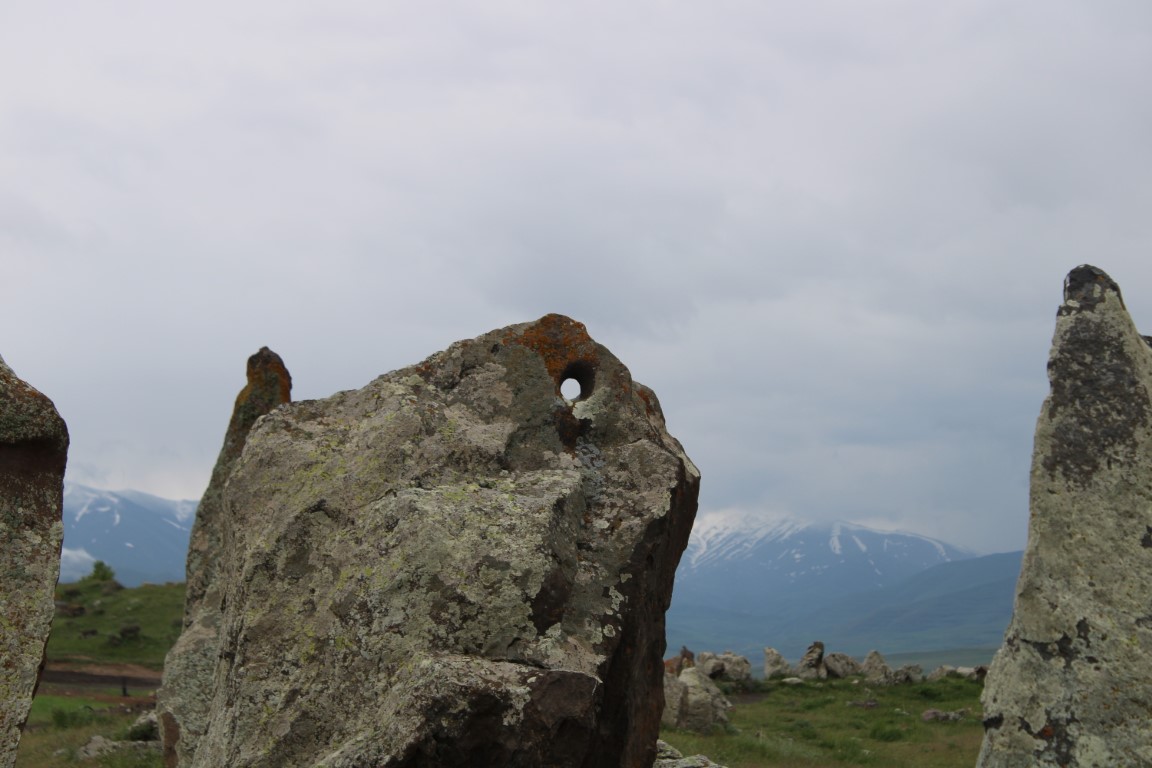
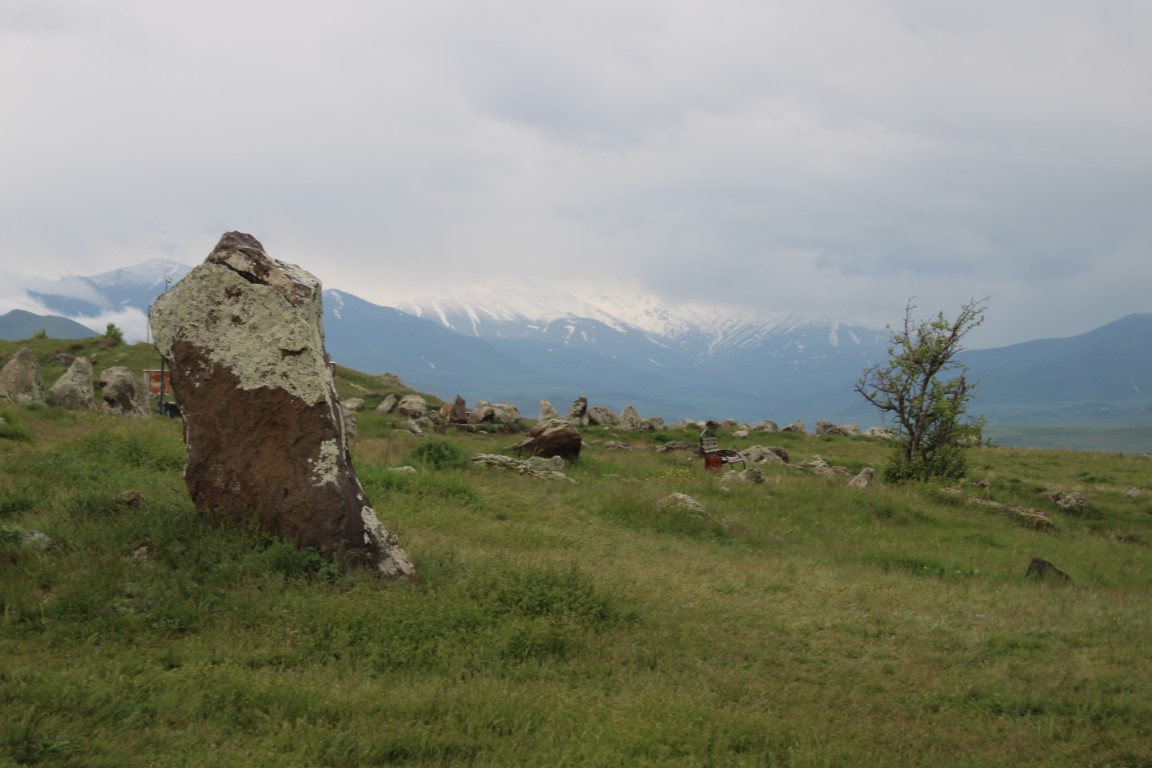
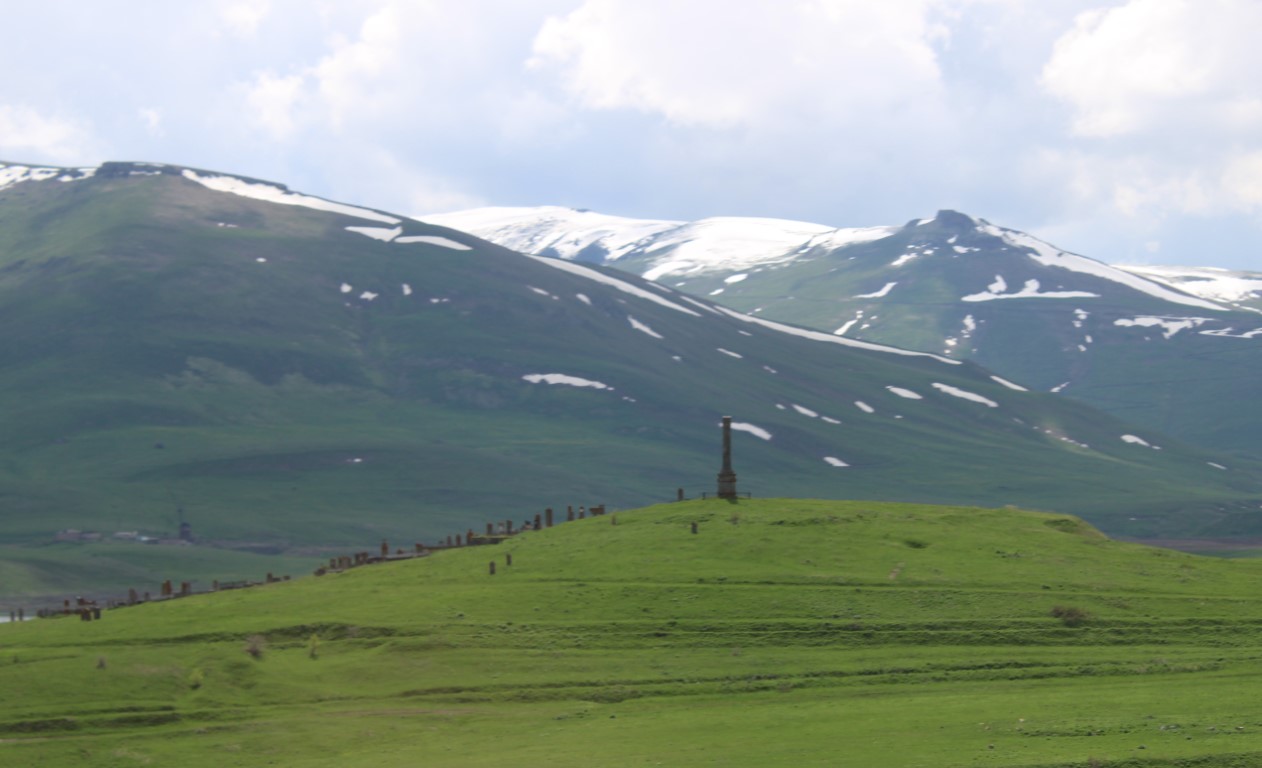
DAILY PHOTO: The Mysterious Carahunge [Armenia’s Stonehenge]

NOTE: Also referred to as Zorats Karer, this mysterious grouping of rocks in southern Armenia is sometimes called “Armenia’s Stonehenge.” Like Stonehenge, it is a gathering of huge stones whose purpose and rationale of geometric arrangement (circular) is not understood. Also, it’s not known how the stones would have been carried to the site and had nearly perfect circular holes drilled through them. It’s not known whether or not the installation is prehistoric or not, but there are mentions of it from as early as the 13th century.

DAILY PHOTO: Republic Square, Yerevan

Government House # 2
Government House #1
Museums Building [National Gallery and History Museum]

DAILY PHOTO: Jermuk Falls

DAILY PHOTO: Tatev Monastery

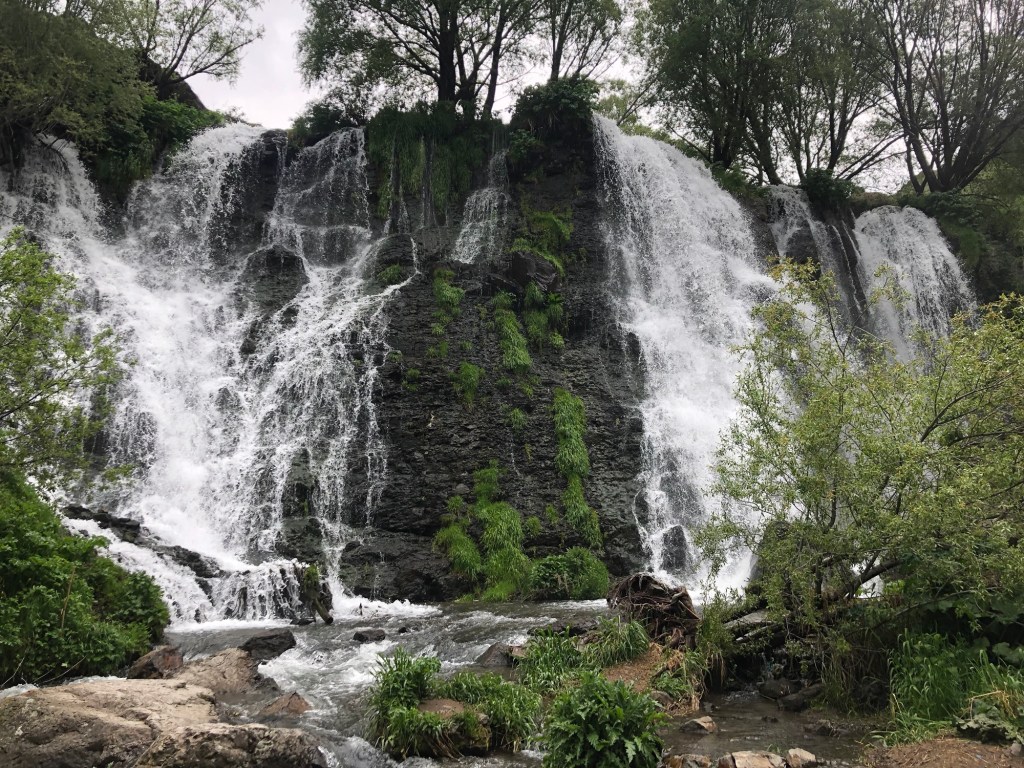
DAILY PHOTO: Shaki Falls

DAILY PHOTO: St. Astvatsatsin Kathoghike Church

DAILY PHOTO: Tsitsernakaberd Armenian Genocide Memorial

DAILY PHOTO: Cascade Complex, Yerevan

BOOKS: “Ali and Nino” by Kurban Said

Ali and Nino: A Love StoryAli and Nino: A Love Story by Kurban Said
My rating: 5 of 5 stars

Amazon.in Page

I read this book as travel literature for a trip to Azerbaijan and was pleased that it both met my needs as travel literature (i.e. offering insight into the local culture(s),) and it turned out to be an engrossing story, as well. You may have caught that “turned out to be.” It’s true that the first one-third to half of the book is a slow-burn on the story front. Through those early chapters, the book is the character-driven, plotless novel one frequently sees among literary fiction. Don’t get me wrong, it is still interestingly written and engaging (if you’re a literary fiction reader,) and it definitely met my needs for travel literature. But just as I’d resigned myself to this character-driven literary fiction formulation, it shifted into being a compelling and even action-packed story.

This is a tale of star-crossed lovers but set in the Caucuses in the WWI era (i.e. the time of the Armenian Genocide, when the Ottoman Empire was in its violent death throes.) Unlike Romeo and Juliet, in which the lovers came from feuding clans that were culturally quite similar, cultural divergence is the crux of the matter for Ali and Nino. While the families of the two kids get along fine enough, Nino is from an aristocratic Georgian family of progressive Western (and Christian) proclivities. The protagonist, Ali, is also from an upper-crust family, but they are of a much more conservative Muslim bent. While Ali, himself, is an educated and moderate personality and somewhat of a bridge between the old world Persian mindset of his family and the liberal European one in which he was educated, he has friends and family that it would not be unfair to call fanatics. So, while the families bless the union, it is ill-fated because the worldviews of Ali and Nino make it so there is no place they can both be happy living, except a Baku that is being contested by the Ottoman Empire and a Russia in the midst of its own transmutation. In Persia, Nino is a soulless possession who is not allowed to interact with anyone but Ali, eunuch and female servants, and her own family when they visit. On the other hand, Ali can’t bear to go to Europe or America, where he’d be so far out of his element. So, they are stuck with a Baku besieged by multiple entities.

The writer made a couple of unconventional but clever choices that I found to be brilliant. I’d highly recommend this book for readers of literary fiction and / or historical fiction.

View all my reviews