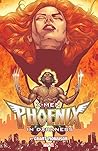
“X-Men: Phoenix in Darkness” by Grant Morrison

X-Men: Phoenix in Darkness by Grant MorrisonX-Men: Phoenix in Darkness by Grant Morrison by Grant Morrison
My rating: 5 of 5 stars

Amazon.in Page

This volume consists of two different story arcs that are thinly tethered by the character of Jean Grey / Phoenix. The first arc features an elaborate plot by Erik Lehnsherr / Magneto to clear the playing field of major opposition so that he can carry out his plans for world domination / the end of homo sapiens. The second arc is set in a futuristic dystopia and its villain is a dark and twisted variant of Hank McCoy / Beast who sets himself up to control the power of the gene. Interestingly, while Jean Grey / Phoenix plays important roles in both arcs, the stories are by no means centered on her. This keeps the stories from just playing out the will of a ridiculously overpowered character, and instead uses the fact that Phoenix is a threat everlasting, one that can never be allowed to get out of one’s sight.

The volume can be a bit chaotic, with the various time jumps and rather large cast of characters, but I felt it wasn’t too hard to follow the story — even given a bit of Grant Morrison trippiness.

If you’re interested in the X-men, this volume is worth looking into.

View all my reviews

BOOKS: “DCeased” by Tom Taylor

DCeasedDCeased by Tom Taylor
My rating: 5 of 5 stars

Amazon.in Page

It’s the zombie apocalypse in a world brimming with superheroes. Sort of. As is mentioned a couple of times throughout the story, it’s not really zombies as we know them, and there are a few crucial distinctions. But, basically, zombie apocalypse. What matters is that it is a threat that grows to inexorable proportions because it infects efficiently and spreads rapidly, and no one is immune. The threat is increasingly everyone and everywhere. The source is a viral bit of “programming” called the Anti-Life Equation.

This is about as dark as superhero comics get. The heroes that we are used to saving the day experience only victories of a short-lived and pyrrhic nature, while experiencing defeat after defeat. There are no ex machina saviors, at least not that amount to more than a blip in the scheme of things.

I found this story, depressing as it may be, to be intensely suspenseful. Full Disclosure: I also liked the Avengers “Infinity War” movie much more than “Endgame.” It’s not that I necessarily like seeing villains win, but that a story feels more compelling when there is strong and successful opposition and when costs accrue. And credible opposition and true stakes are often missing from superhero comic book stories.

I’d recommend this book for superhero comic book readers.

View all my reviews

BOOKS: “Saga of the Swamp Thing: Book One” by Alan Moore

Saga of the Swamp Thing, Book OneSaga of the Swamp Thing, Book One by Alan Moore
My rating: 5 of 5 stars

Amazon.in Page

This volume presents two separate and complete story arcs. The first features the Floronic Man (Jason Woodrue) as the main villain, and it deals heavily in the origins of Swamp Thing and the creature’s struggles to come to grips with who it is and why it experiences the world as it does. The second story makes a shift to a more supernatural threat and shows a Swamp Thing who is more comfortable in its… roots? twigs? foliage? — whatever Swamp Thing has in lieu of skin.

Alan Moore does his usual superb job of creating a clever and satisfying set of tales. Swamp Thing was groundbreaking in its cross-genre mélange of horror, supernatural, eco-fiction, and sci-fi. There is also a certain smartness about the comic. One is led to consider questions of consciousness and humanity’s role in nature through these stories. And solutions are rarely achieved by punching the villain into a stupor. This won’t be for everyone. In some ways, the comic elevates the wise old mentor to the role of hero.

I enjoyed reading this book and would highly recommend it for readers of comic books and graphic novels.

View all my reviews

BOOKS: A Few Rules for Predicting the Future by Octavia Butler

A Few Rules for Predicting the Future: An EssayA Few Rules for Predicting the Future: An Essay by Octavia E. Butler
My rating: 5 of 5 stars

Amazon.in Page

Release Date: April 16, 2024

This brief essay by one of science fiction’s greats, Octavia Butler, discusses her thoughts about forecasting the future and why it’s worth doing even though it’s so difficult (at some level of precision– even impossible.) Butler tells a few stories about questions from fans, being prescribed medication, and growing up during the space race and Cold War, stories that cleverly present her thoughts on the challenging art of anticipating the future.

It should be pointed out that this is a very short work. Even the sixty-ish page count is deceptive as that is accomplished with lots of white space, with large fonts, and even with colorful blank pages (and / or artwork.) If you’re paying full book price for it, be forewarned that, as clever and quotable as it is, it’s essentially magazine article length (and not a long article at that.)

If you can get your hands on this essay for a price commensurate with its word count, I’d highly recommend reading it.

View all my reviews

BOOKS: The Batman Who Laughs by Scott Snyder

The Batman Who LaughsThe Batman Who Laughs by Scott Snyder
My rating: 5 of 5 stars

Amazon.in Page

This volume plays on the spookiness of buffoonery that has made the Joker not only one the most well-known and effective villains of Batman’s rogues’ gallery but in all of comic books. However, while the Joker does play a role in this book, he’s not the villain. Instead, the book employs the popular comic book scenario of having the villain be a version of the hero, a version without moral compunctions or constraints. In this case, the central villain is a demented and mutated version of Batman with Jokeresque qualities, assisted by a Batman who is a bit more malevolent and vengeful, one who goes by the moniker Grim Knight.

How are there multiple versions of Batman? The multiverse, of course. That makes this a sci-fi heavy Batman story. If you like your Batman of the Matt Reeves / Robert Pattinson variety — i.e. in a plausible world, with fully human enemies, and with no freaky supernatural happenings, then this one may not be for you. That said, I don’t think the sci-fi elements detracted from the story, and they did allow for some compelling story elements. Snyder, wisely, avoids a problem that can readily plague sci-fi intense Batman stories, which is reference to (or cameos of) the god-tier DC heroes. (An occurrence that always begs the question, why wouldn’t Superman use his god-like powers to fix this debacle before heading to lunch.)

I enjoyed this story. I especially enjoyed that it wrapped up the narrative arc in a tidy package. It is often the case that comic book volumes end with a speedbump on the way to the next volume. This story felt like the central issue was resolved, while still leaving potential for future stories. I should point out that, with flashbacks and multiple Batmen, it does require one’s full attention while reading, lest one get lost between backstory and the present.

I’d highly recommend this volume for comic book readers.

View all my reviews

PROMPT: Alternate Universe

Describe your life in an alternate universe.

If there is any alternate universe, there are probably infinite alternate universes. So, I am everyone, everywhere, all at once, any how.

In my best moments, I feel like that already.

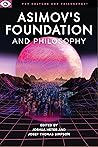
BOOK REVIEW: Asimov’s Foundation and Philosophy ed. by Heter Joshua & Josef Thomas Simpson

Asimov's Foundation and PhilosophyAsimov’s Foundation and Philosophy by Heter Joshua
My rating: 5 of 5 stars

Amazon.in Page

Release Date: August 24, 2023 [Paperback; ebook is out]

When I was a budding social science grad student, I learned that Asimov’s “Foundation” series was impetus for many young nerds of the previous generation to enter fields like Economics and Poli-Sci. The reason? At the heart of the story is a fictional discipline called Psycho-history, a mathematical field that’s premised on the idea that [while one can’t reliably forecast what an individual (or even small groups) will do,] given a large enough population one can make grand over-arching predictions about what will happen to society as a whole. It’s an idea that Asimov drew from his education in Chemistry, a field where one couldn’t say much about individual molecules but you could accurately model collective parameters (e.g. temperature.) It turns out that humans and their interactions are more complicated than gas molecules and so Psycho-history only works as a powerful plot device (a fact that Asimov discovered himself, supposedly driving mid-course corrections in the limited space he had to make them.) Anyhow, the idea that one might predict the unfolding of societal, economic, and international events was a powerful scholarly aphrodisiac for individuals who might otherwise have dismissed study of the social world as hopelessly and absurdly chaotic.

With that background generating curiosity and having read a number of Asimov’s books, I was eager to investigate this book that explores the philosophic underpinnings of Asimov’s fictional world. I was not disappointed. The imaginative “Foundation” series of books provides plenty of situations and ideas to which one can apply the lens of philosophy, from the limitations of reason and symbolic logic as tools to solve humanity’s problems to the morality of manipulation and questions of transparency that follow from it to what kind of free will — if any — can exist in a universe where Psycho-history works. This anthology of essays considers questions of mind, logic, morality, free will, identity, and existence, as well as various ideas from the Philosophies of History, Religion, and Science. The twenty-one essays are grouped into six parts by philosophic subdiscipline.

There are so many of these “pop culture meets philosophy” books out there, but I think this one does better than most because Asimov’s creative mind really offered such a rich assortment of ideas upon which to reflect.

View all my reviews

BOOK REVIEW: Swamp Thing, Vol. 1 by Brian K. Vaughan

Swamp Thing by Brian K. Vaughan, Vol. 1Swamp Thing by Brian K. Vaughan, Vol. 1 by Brian K. Vaughan
My rating: 5 of 5 stars

Amazon.in Page

The first thing to be aware of is that the protagonist of this book is Tefé Holland, daughter of Swamp Thing, and the titular character is only in the book for a few frames of flashback. This has the advantage of making for a confused and tormented lead character, a sort of coming-of-age element. Tefé struggles with who she is, and this leads to some wonky behavior. At times, she doesn’t do what would be expected of a superhero, but at other times she does, and this makes her character feel constantly off-kilter. One doesn’t straight away develop an affinity for the character, or – if one does – it comes and goes as she responds to varied situations in various ways. However, this seems to be intentional, a reflection of the fact that she doesn’t know if she’s the protector of the plant world, of humanity, of both, or of neither. She’s at once a pretty and sweet young woman and a terrifying god-like Elemental. She has a couple of “sidekick” characters, Barnabas and Pilate that help lend humanity and provide contrast (given the hardcore nature of these two men, they tend to make Tefé seem even more extreme as they are the ones to talk her down.)

While the Swamp Thing and its extended character-verse is heavy with environmental message, the book is not written to bludgeon the reader with rebukes or preach to the choir. It keeps the lessons subtle enough that I didn’t feel the book swerving into preachy mode, and it remains entertaining throughout.

I enjoyed this volume. It can feel a little disjointed and might read more smoothly for someone who’d read previous Swamp Thing series, but with attentive reading, one can certainly follow the action. (Another potential advantage of it focusing on the daughter character.) [FYI- This is the third of seven series.]

View all my reviews

BOOK REVIEW: Slumber, Vol. 1 by Tyler Burton Smith

Slumber, Volume 1Slumber, Volume 1 by Tyler Burton Smith
My rating: 5 of 5 stars

Amazon.in Page

Release Date: October 18, 2022

Stetson is a “dream eater.” She makes her living by entering the dreaming mind of clients and “killing” their nightmares. When a series of mysterious and highly irregular murders happen in the real world, the police develop a hunch that Stetson might be involved, or – at a minimum – know something they don’t. And it soon becomes clear that it’s not just a job for her; there’s some sort of personal stakes or vendetta driving her.

I got hooked on this book. The art is colorful and fun and plays well with the imaginative and amusing dream world. The story was well-crafted and offered a satisfying and pleasurable read. If you’re into surreal speculative fiction that deals in dreams and nightmares, it’s worth looking into this book.

View all my reviews

BOOK REVIEW: Trapped on Zarkass by Yann

Trapped on ZarkassTrapped on Zarkass by Yann
My rating: 4 of 5 stars

Amazon.in Page

Release date: October 11, 2022

This odd-couple quest story contextually resembles the movie Avatar, which is to say it involves an Earth-colonized exotic planet that has an intelligent – if primitive – indigenous lifeform. That said, neither the story nor the visuals are reminiscent of Avatar.

The story is about a pair of women who are tasked with tracking down a crashed enemy spacecraft in the remote jungles of the planet Zarkass, and returning with samples and intel about it. Because of treaties, the pair must operate undercover, assisted by a group of locals who are kept from the truth of the mission. One of the “agents” is a sweet, sensitive young woman who is pretending to do research as an expert on butterflies, and the other is a gruff, red-neck-ish drug dealer who’s released from prison to be the first woman’s guide and protector. The downed aircraft is a triangular spaceship that outmatches the Earthling craft, and the colonizers want metal samples to discover why their missiles glance off.

I enjoyed the story and found the world-building to be brilliantly imaginative [it’s outlandish, scientifically speaking, but creative.] As per the odd-couple norm, these two very different women slowly and begrudgingly develop respect and concern for each other by surviving numerous trials by fire together. Furthermore, in the end, it seems like they’ve developed a similar begrudging connection with the indigenous species that they did for each other. Even the main characters look down on the indigenous population throughout the book, but there seems to be a change. If you’re put off by nudity and near nudity of a gratuitous nature, the book does have it in spades.

If you like sci-fi adventures set on exotic worlds, you might want to give this one a look.


View all my reviews