Ninjas, pirates, and smugglers aren’t exactly chatty. They burn, or shred, their correspondence. They sow seeds of disinformation to confuse the authorities. They lurk in the inkiest of shadow worlds behind doors we don’t even know exist. Still, who wants to do a hatchet job on a pirate? Right?
Did I mention that these are characters in the novel that I’m currently revising (or did I let you believe I was talking about in-the-flesh smugglers so that you’d keep reading.) Sorry, no one ever accused me of NOT being a deceitful bastard. Well, my friend, you’re now more than Tweet deep in this post; that’s quite an investment; it’s the modern-day equivalent of having read The Iliad, so you might as well keep reading.
Kiss the Cobra (my third working title) features a cast of characters of not only the aforementioned occupations but also monks (both the scholarly and kick-ass kung fu varieties), an Emperor, a muay Thai master, and a secret society that makes ninjas look like chatty Cathys. Like all good lies, this novel begins with a seed of truth. That seed is the rescue of Emperor Go-Daigo from imprisonment by an evil (ok, quasi-evil) shogun in 1337. From that seed, it’s my wild imagination run amok… or is it? The Emperor assigns the loyalist ninja who rescued him, Korando, to travel to Southeast Asia to acquire an artifact that legend has it will help him re-consolidate power.
Cut to the present day, a linguistically-talented young man, Matsuo (a.k.a. “Matt”), comes into possession of a scroll. The scroll is Korando’s journal, written and hidden as a confessional. Matt investigates Korando’s journal on an electronic bulletin board only to find himself being chased by nefarious characters. Matt discovers that there are still people willing to kidnap, kill, or commit treason for the secrets that Korando’s journal may possess.
The novel weaves the 14th century journal with this present-day cat and mouse game between the forces of good and evil. There’s murder and mayhem, love and betrayal, victory and defeat, virtue and vice; in short everything you love in a novel is densely crammed into this book. There’s even one character who may or may not be a Zombie–I’ll let you be the judge.
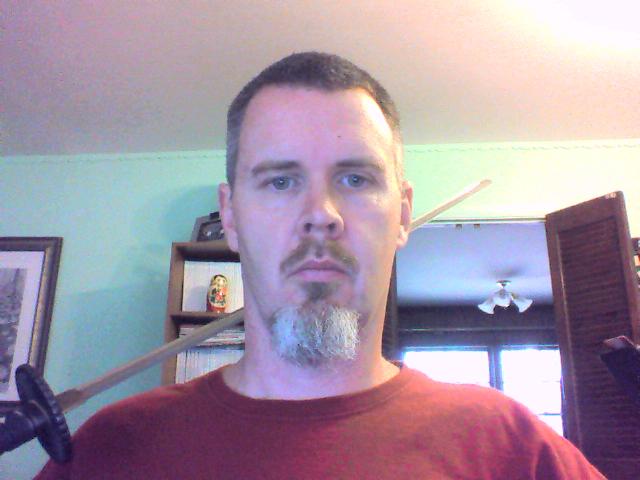
Now let me just add this screenshot of me to show you ho
Did you ever get an inexplicable chill on the back of your neck?



 Tiger Riding for Beginners