BOOK REVIEW: Mockingjay by Suzanne Collins

Mockingjay (The Hunger Games, #3)Mockingjay by Suzanne Collins
My rating: 4 of 5 stars

Amazon page

[Spoilers for the previous books. If you haven’t read “The Hunger Games” or “Catching Fire” you might want to before reading this review.]

This book concludes “The Hunger Games” trilogy. A rebellion has been stoked in Panem, and its architects need Katniss Everdeen to keep the fires burning. But there are two problems. Problem one is that she’s healing, disoriented, and—in a manner of speaking—mourning Peeta (who is alive but in the hands of the Capitol.) The second problem is that they want her as a celebrity spokes-model, a position at which she stinks. Once she gets her feet under her, she has other ideas, ideas that will put the Mockingjay—beloved symbol of the rebellion—in mortal peril. The reluctant heroine who refuses to play on the terms of others is a recurring theme, but it unfolds on a much different field.

Where “Catching Fire” repeated and expanded upon the “gladiatorial combat and a love triangle” theme of the first book, here the games aren’t in the arena but in rebel strongholds in the Districts and in the Capitol, itself. While the love triangle angle seems moot at the book’s beginning, it does continue to play out in an intriguingly twisted fashion. The gladiatorial combat is replaced by actual war, but the gamemakers are still around to put their diabolical stamp on the proceedings.

As an ending, “Mockingjay” is satisfying in that it ties up loose ends and leaves the story at a clear conclusion. Readers will have varying feelings about how these loose ends were resolved, the pacing of those resolutions, and the emotional tone with which one is left. (War story happy endings only get so happy.) When I read “Mockingjay” I found it a tad less enjoyable than the other books, but for reasons that I’ll admit are hard to explain. Collins presents a bitter-sweet, realist conclusion, but in the shell-shocked miasma in which the reader is left, it’s hard to tell if one is satisfied or just done. I suppose the fact that it triggers an emotional response at all makes it a good ending.

I’d recommend this book, and the rest of the trilogy as well.

View all my reviews

BOOK REVIEW: Catching Fire by Suzanne Collins

Catching Fire (The Hunger Games, #2)Catching Fire by Suzanne Collins
My rating: 5 of 5 stars

Amazon page

[Spoiler Note: While I intend—as usual–to keep the spoilers minimal (insignificant) for the book under review, it’s hard to review it without major spoilers of the first book in the series—“The Hunger Games.” If you haven’t read that book, you may want to before you read this review.]

As a surviving / winning tribute, life should have been cake for Katniss Everdeen. She returned to her family and friends in District 12, but instead of subsistence living she has a beautiful house and more money than she can spend. Of course, winning tributes are celebrities and have to serve as mentors to future tributes—most of whom will die. Still, the rest of the year she could be happy, except that the gambit by which she managed to save Peeta (one-third of her love triangle) as well as herself in the first book (one of them should have died, per the rules of the Hunger Games), has riled President Snow. Snow intends to do everything in his power to make sure she doesn’t live out her days in fame and comfort. The President might have found it strategic to let matters lie, but each Games brings Katniss back into the spotlight. As the 75th anniversary games approach, she will be back in the public eye, both during a victory tour and the Hunger Games.

At this point, one might be wondering whether a major criticism of this book will be the same as was leveled against “Star Wars: The Force Awakens”—i.e. that it’s a fine story but essentially a repeat of the original with a bigger death star. There’s an argument that that’s an apt description, but there are also counterpoints. The first retort is “What does it matter as long as the story is enjoyable and the tension is ratcheted up?”

The other major justification is that this part is a necessary bridge between the first and the last books in two regards. For one thing, we have to see the dawn of the revolution and Katniss’s—unwitting, but significant–role in it. A couple of the most emotionally intense moments of the book involve the first sparks of rebellion before the Games even begin to be replayed. For another, the love triangle is re-intensified. The survival of Katniss and Peeta hinges on their ability to continue to act out the star-crossed lover card that saved them in the first book—obviously straining the other edge of the triangle.

I enjoyed this installment, and think Collins did a good job of giving readers enough new tension to make the story gripping despite the fact that replaying the Games is at the heart of the story. I’d recommend the book for anybody who finds dystopian fiction appealing—whether a YA or not.

View all my reviews

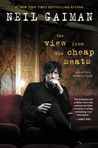
BOOK REVIEW: The View From the Cheap Seats by Neil Gaiman

The View from the Cheap Seats: Selected NonfictionThe View from the Cheap Seats: Selected Nonfiction by Neil Gaiman
My rating: 4 of 5 stars

Amazon page

Not every writer—not even many literary greats—could pull off a book like this. It’s a collection of random speeches, front matter from books (not his own), liner notes, and the occasional eulogy for individuals living and dead. While the book is organized into sections on topics like other authors, comic books, films, and music, it seems that organization derives organically from the topics on which Neil Gaiman is asked to comment–rather than a desire to tighten the book’s theme.

If you’re a Neil Gaiman fanboy/girl, you’ll need no excuse to read anything that he puts out (even though–if that is the case–you’ll probably have read much of this before in separate outings.) So the question is why the rest of us—who may enjoy Gaiman’s writing tremendously but who don’t qualify as fanboys / fangirls—should read this. The reason that it’s worth reading is that Neil Gaiman is funny, has a way of framing ideas that makes them thought-provoking and interesting, and frequently writes quotable bits of text that are essentially brain candy.

The book’s title comes from an essay on Gaiman’s experience attending the Oscars from the upper balcony. As mentioned, the book is divided into thematic sections–ten of them to be precise. The book starts with “Some Things I Believe,” which presents speeches on the virtue of reading, libraries, books, and bookstores. The next section discusses people he has known and worked with—largely writers and graphic artists. Then Gaiman offers thoughts on the nature of science fiction, again mostly through book forwards on seminal works from the genre. There is a section on films and Gaiman’s experience with them—several of his works have been made into films and many others have been considered. The next part is on comic books and the works and artists that influenced Gaiman. The next section bears the title “Introductions and Contradictions” and it offers introductions for various books (not Gaiman’s but those written for other writers.) There’s a musical section about a few recording artists including They Might be Giants, Lou Reed, and—of course—Gaiman’s wife Amanda Palmer. Next, Gaiman presents some introductions and forwards for works of fantasy. One section includes only a solitary entry–a commencement speech entitled “Make Good Art.” The final section is sort of a catchall of essays that includes the title piece and one on events in Syria.

I’d recommend this book for those who enjoy reading (or writing) in the genres for which Gaiman is known. His comments offer interesting insight, and you may learn about some books and authors that you’d never heard of before.

View all my reviews

BOOK REVIEW: Good Omens by Terry Pratchett & Neil Gaiman

Good Omens: The Nice and Accurate Prophecies of Agnes Nutter, WitchGood Omens: The Nice and Accurate Prophecies of Agnes Nutter, Witch by Terry Pratchett
My rating: 5 of 5 stars

Amazon page

Nature or nurture? That’s the question at the core of this funny take on the coming of the apocalypse, written by two masters of humorous speculative fiction—the late Terry Pratchett and Neil Gaiman. The end of days is coming. What if the Antichrist responsible for seeing it through had been switched at the hospital and was raised as a normal kid? Would he be evil enough? If not, how would the apocalypse play out? After a chapter that shows the reader the mix up at the hospital, the bulk of the book takes place over a few days that are supposed to be the last few days of humanity.

There’s an extensive cast of characters including the “gang” of Adam the anti-Christ, the four horse-persons of the apocalypse, angels and demons, witches and witch-hunters, and other sundry characters. However, the characters that most carry the tone and message of the book are Crowley (a demon) and Aziraphale (an angel.) With these two, the authors inject some Taoism into an otherwise Biblical world. That is to say, pure evil and pure good are rarities; there’s always a bit of good amid the bad, and vice versa. Aziraphale can be grumpy, and Crowley’s proclivity to be mischievous has its limits. Being in similar positions, the two bond as low-level managers working for Coke and Pepsi might get on because they face similar demands and have similar complaints about management.

Running through the book are mentions of a book called, “The Nice and Accurate Prophecies of Agnes Nutter, Witch.” This witch’s prophecies are quite unusual in that they are invariably correct, and yet are specific. That is, the prophecies aren’t “right” in the sense that astrologers are often “right” by making vague statements that offer no disprovable propositions. This might lead one to believe that the book would be a marvelous guide for making predictions. However, there is still the issue of having been written centuries ago. Items like automobiles and cellphones, that play a major role in life today, were unfathomable. Furthermore, it’s usually not clear who, exactly, a given prophecy applies to. In short, the medieval writing style results in the fact that the prophecies usually only make sense after the fact.

I’d recommend this book for readers of humorous speculative fiction.

View all my reviews

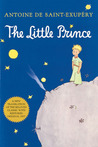
BOOK REVIEW: The Little Prince by Antoine De Saint-Exupery

The Little PrinceThe Little Prince by Antoine de Saint-Exupéry
My rating: 5 of 5 stars

Amazon page

A pilot crash lands in the middle of the desert and meets a little traveler who came from a tiny planet. As this “Little Prince” tells of his travels, he shares his child-like (not to be confused with “childish”) wisdom on friendship and how adults misunderstand what are “matters of consequence.” While the Little Prince takes a child’s perspective, one’s responsibility to others is an important theme. Of course, that may just be the theme intended for children. At the same time, the lesson for adults may be to reevaluate what one considers important. (The reader may be familiar with the controversy as to whether this is really a work of children’s literature.)

The book is humorous and light-hearted, but with some serious themes and moments. There are many though-provoking ideas in this classic. Some quotes that struck me as profound are:

“The thing that is important is the thing that is not seen.”

“One runs the risk of weeping a little, if one lets oneself be tamed.”

“’Then you shall judge yourself,’ the king answered. ‘That is the most difficult thing of all.’”

“For it is possible for a man to be faithful and lazy at the same time.”

It’s a tiny book—less than 100 pages, including the many color drawings that feature throughout the book.

I’d highly recommend this book for anyone who hasn’t read it at least once. (There may be a couple of you out there.)

View all my reviews

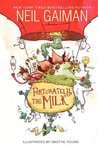
BOOK REVIEW: Fortunately, The Milk by Neil Gaiman

Fortunately, the MilkFortunately, the Milk by Neil Gaiman
My rating: 5 of 5 stars

Amazon page

It’s “The Usual Suspects” for kids, but with Gaiman’s humor and imagination. A father goes out to buy a carton of milk for his kids’ cereal. When he comes back after being long delinquent, he’s got a rather extraordinary explanation for why the short run to the corner c-store took so long.

I read in a Gaiman’s new nonfiction collection, “The View from the Cheap Seats,” (due out May 31, 2016) that even he got grief for writing a children’s book in which the lead isn’t a child. But, he’s Neil Gaiman; so they wisely published it anyway. While the book is aimed at the children’s market, there’s enough humor and absurd happenings to keep an adult reading. So the risky choice of protagonist may prove useful. It certainly helps Gaiman’s argument against narrow definitions of children’s versus adult books (also discussed in detail “The View from the Cheap Seats.”)

Apropos of a youth market book, it’s only about 140 pages, but that’s with extensive illustrations (on almost every page, and many are full-page) and large font. Chris Riddell’s black and white drawings match the whimsicality of the text well.

I’d recommend the book for anyone who reads kid’s books (whether they’re a kid or not.)

View all my reviews

BOOK REVIEWS: The Things They Carried by Tim O’Brien

The Things They CarriedThe Things They Carried by Tim O’Brien
My rating: 5 of 5 stars

Amazon page

It’s called a novel, but it reads like a collection of war stories and essays about being an American soldier in the Vietnam War. That’s not a criticism. In fact, it’s part of the brilliance of this book. If it were thoroughly plotted, it might not feel so authentic. As war is disjointed, so is O’Brien’s book. Some of the chapters are tiny and some are lengthy. Some read more like essays than fiction, and others are clearly fictitious.

When I say that “some are clearly fictitious,” there’s always a doubt that it might just be a true story–because war is just that absurd. An example that springs to mind is one of the most engaging pieces in the work. It’s called “Sweetheart of Song Tra Bong,” and it’s about a wholesome, young girlfriend to one of the soldiers who [improbably] comes to live in the camp. The girl acclimates to the war, and soon she is going out on patrol–not with the ordinary infantry soldiers, but during the night with the Green Berets. Perhaps the moral is that some people are made for war, and it’s never who you’d suspect. As I describe it, the premise may sound ridiculous, but the way O’Brien presents it as a story told by a Rat Kiley–a fellow infantryman known to exaggerate—it feels as though there is something true, no matter how fictitious the story might be. Before one reads “Sweetheart of Song Tra Bong” one has been primed by a chapter entitled “How to Tell a True War Story,” which tells one that truth and falsehood aren’t so clear in the bizarre world of war.

There are a couple of chapters outside the period during which O’Brien (the character, who may or may not be the same as the author) is actively in an infantry unit. One early chapter describes his near attempt at draft dodging, and another talks of his time stationed at the rear after being injured. Both of these chapters offer an interesting twist in the scheme of the book overall. We find O’Brien to be a fairly typical infantry soldier, and it seems hard to reconcile this with his floating in a canoe and narrowly deciding not to make a swim for the Canadian shoreline. However, what is odder still is realizing how distraught he is to be pulled out of his unit, particularly when he realizes that he has become an outsider and the [then rookie] medic who botched his treatment is now in the in-group. This is one of the many unusual aspects of combatant psychology that comes into play in the book, along with O’Brien’s description of how devastating it was to kill.

There are 21 chapters to the book. As I said, they run a gamut, but at all times keep one reading. It’s the shortest of the Vietnam novels I’ve read—I think. When I think of works like “Matterhorn” and “The 13th Valley,” there seems to be something hard to convey concisely about the Vietnam War, but O’Brien nails it with his unconventional novel. O’Brien also uses repetition masterfully. This can be seen in the title chapter “The Things They Carried,” which describes the many things carried by an infantry soldier—both the physical items they carried on patrol and the psychological and emotional things they carried after the war. It’s a risky approach that pays off well.

I’d recommend this book for anyone—at least anyone who can stomach war stories.

View all my reviews

BOOK REVIEW: Burmese Days by George Orwell

Burmese DaysBurmese Days by George Orwell
My rating: 5 of 5 stars

Amazon page

Orwell’s novel is about the ugly face of empire. It takes place in a Burma that was administered by the British as part of their Indian colony—but it’s in the waning days of the Empire, much to the chagrin of the entitled and chauvinistic European characters of the book. Most of the characters are shockingly racist and life abroad hasn’t broadened their thinking in any discernible way. The notable exception is the lead character, John Flory, whose best friend is Dr. Veraswami (an Indian medical doctor and government official) and who is unique among the British for being able to see the native ways as anything other than primitive and preposterous.

However, the hero is deeply flawed. Flory is a coward, and in the early pages of the novel is unwilling to support the nomination of his good friend Dr. Veraswami for membership to the expat’s club because many of its more vociferous members will be damned before they admit a brown person. Flory is also a bit morally loose for the taste of his early post-Victorian comrades. He has a birthmark that he’s constantly trying to conceal, and whose presence we are led to believe is crucial to his lack of confidence. While the main intrigue is provided by a plot by an unsavory Burmese official named U Po Kyin to undermine Dr. Veraswami and bolster his own stock among the whites, it’s Flory’s story that we are following. The reader hopes that Flory will develop the confidence needed to rise to the occasion—he being the only likable person in the cast (except perhaps Dr. Veraswami, depending upon how put off one is by the Indian doctor’s borderline Uncle Tom-ish obsequiousness.) Flory’s relationship with a young woman plays an important role in his story and sometimes it seems she may spur him to heights while at other times she looks to be his downfall. Flory’s conundrum is that the more virtuously he behaves, the more a target is painted on his back.

While the book is set almost a century ago, I found that it has something to say today. While the times have changed and the Empire is long dead, there are times that the long shadow of this period can still be seen in the current era.

I’d recommend this book for readers of historical fiction and particularly those interested in the past and present of areas under colonial rule. Orwell builds interesting (if often despicable) characters and the book has a well-developed and interesting narrative arc.

View all my reviews

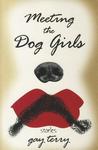
BOOK REVIEW: Meeting the Dog Girls by Gay Terry

Meeting the Dog Girls: StoriesMeeting the Dog Girls: Stories by Gay Terry
My rating: 3 of 5 stars

Amazon page

This collection consists of 30 pieces of short fiction that might be put in the bucket of speculative fiction. (“Speculative fiction” being defined as existing in a world unlike our own–i.e. sci-fi, horror, strange tales, and fantasy.) The stories are cross-genre, but “tales of the weird” is a common theme. Many of the pieces are too long for flash but on the short side of short story, though there are also a number that are of typical short story length.

It’s a mixed bag not only in terms of genre, but also in terms of the appeal. There were a few stories that I enjoyed, others that I didn’t care for, and—worst of all–a number that were utterly forgettable. Besides the strangeness, there’s another quality that might be called “quirky humor” that sparkles here and there throughout the collection.

Among the pieces that I found most interesting and readable were: “Spirit Gobs,” “Barbara Hutton Toujours,” “On Orly’s Border,” “Icon,” and “Meeting the Dog Girls.”

There’s a mini Tai Chi theme running across a couple of pieces, so I dig that.

If you enjoy tales of the strange and you can pick this book up at a good price, you just might like it.

View all my reviews

BOOK REVIEW: And Another Thing by Eoin Colfer

And Another Thing... (Hitchhiker's Guide to the Galaxy, #6)And Another Thing… by Eoin Colfer
My rating: 3 of 5 stars

Amazon page

The Earth is about to be destroyed, again. To save it, Zaphod Beeblebrox and friends need weave together a web of improbable conditions including getting Bow Wowbagger–the immortal alien whose pastime is insulting every person in the universe—to take him to Asgard so that he can get Thor to “dissuade” the tirelessly bureaucratic Vogons. Fortunately, the possibility that a genuine god might prove up to the task of smiting the immortal insult-slinger once-and-for-all is enough to gain his compliance. Thor, on the other hand, will take some convincing after Zaphod’s high jinx resulted in the mighty god’s abject humiliation.

Facing precarious business conditions, the publishing industry is reluctant to let anything as trivial as the death of a popular author derail the gravy train of a successful series. James Patterson, having proven that an author’s involvement can be an inconsequential factor in the selling of books, paved the way for wave of books written by authors who who’ve passed on (e.g. Eric Van Lustbader has already written three times as many “Bourne” novels as Robert Ludlum, and a new author is taking on the “Girl With the Dragon Tattoo” series that was immensely popular a few years back.) The problem is that not all novels are James Patterson’s formulaic “Alex Cross” crime novels; some writers have a unique voice—if not a genius. Some authors do matter.

It’s hard to imagine a better example of an author who mattered to the success of his books than Douglas Adams. It’s not that no one could be as funny as Adams, but rather that his brand of funny isn’t so easily to emulate. This is the nature of humor. Consider stand-up comedians. Among them there are some who could be fed material written by anyone about anything and they would be funny in the same degree (for good or bad.) However, there are others whose funniness is tied to their voice and the material that they either developed or molded to their peculiar nature. Adams had a peculiar nature.

It seems to me that there are two possible outcomes for someone trying to emulate Douglas Adams. The first is that they try to be original, but copy the style of Adams. That book seems like it would be impossible to make worthy of more than one star. The other possibility is for the author to use Adam’s own tropes and ideas to provide the humor and then to stick heavily to Adam’s original material with respect to story. Such a book would be derivative in the highest degree, but might not suck entirely. The best I could rate such a work would be mediocre, which is where I think “And Another Thing” is. It’s not that Colfer isn’t a good writer or a sharp guy; it’s that he took on a task that was doomed. Perhaps, I should say kudos to him for challenging himself to such a daunting task.

Personally, I think H2G2 should have been allowed to be laid to rest. (Frankly, having read all five of the original series books, I thought the stories began to drag as the series progressed relative to its original greatness. In other words, I’m not sure whether Adams, himself, could have added anything worthy to franchise.) However, having said all this, I must admit that I would’ve found this book an enjoyable read if I didn’t know that the best of it was just the result of standing on the shoulders of a giant.

Read it or don’t. It’s readable, enjoyable, derivative, and utterly unnecessary in equal proportions.

View all my reviews