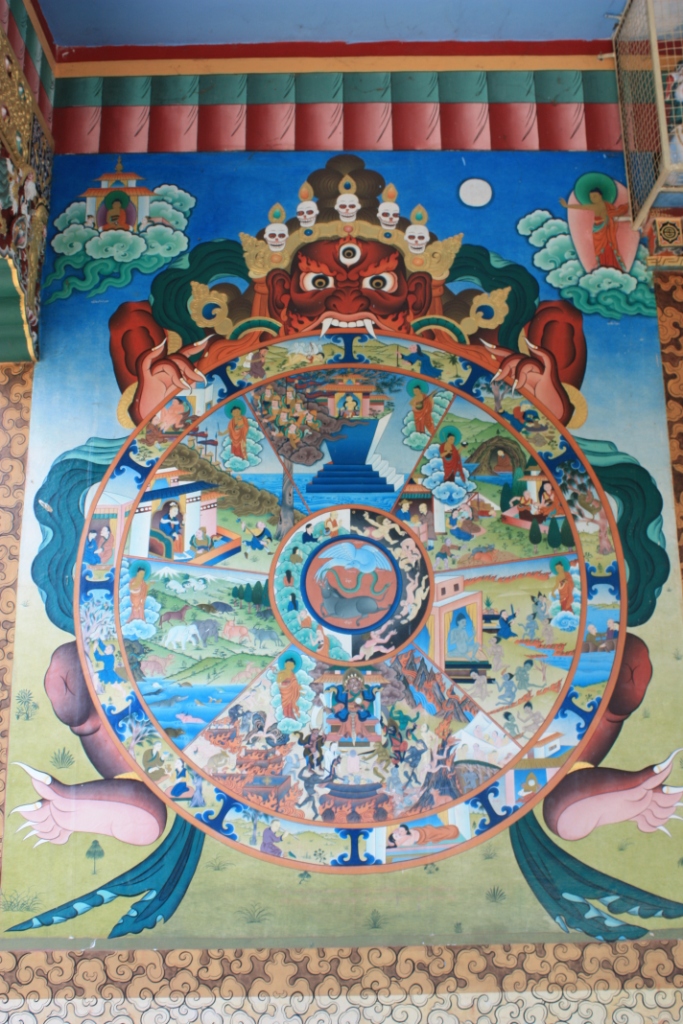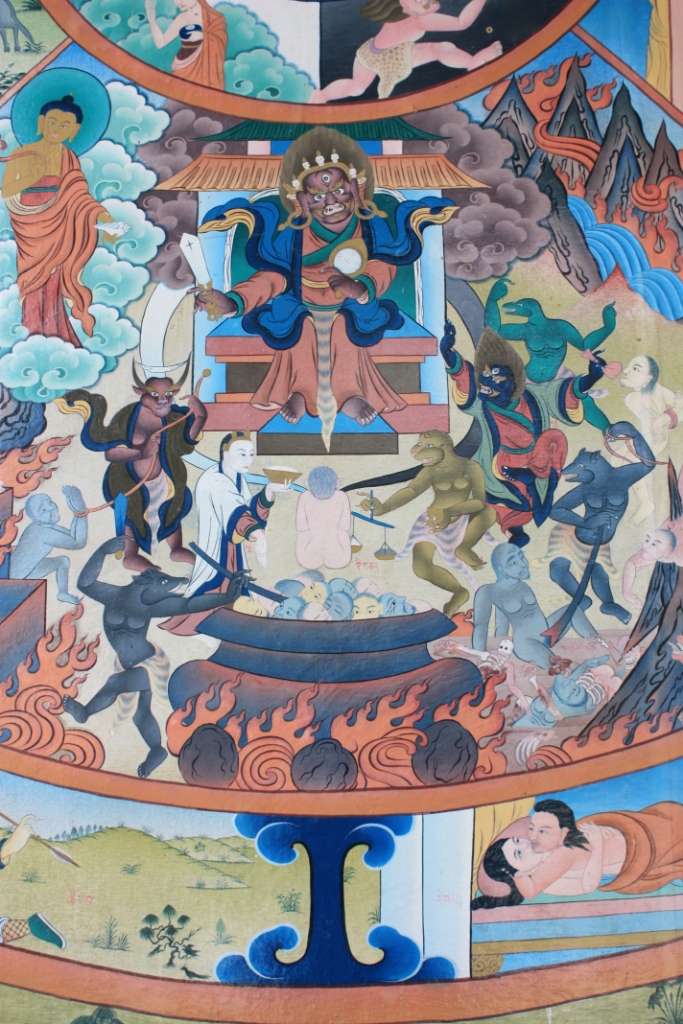
Taken on July 20, 2014 at the Karnataka Chitrakala Parishath in Bangalore

Taken on July 20, 2014 at the Karnataka Chitrakala Parishath in Bangalore
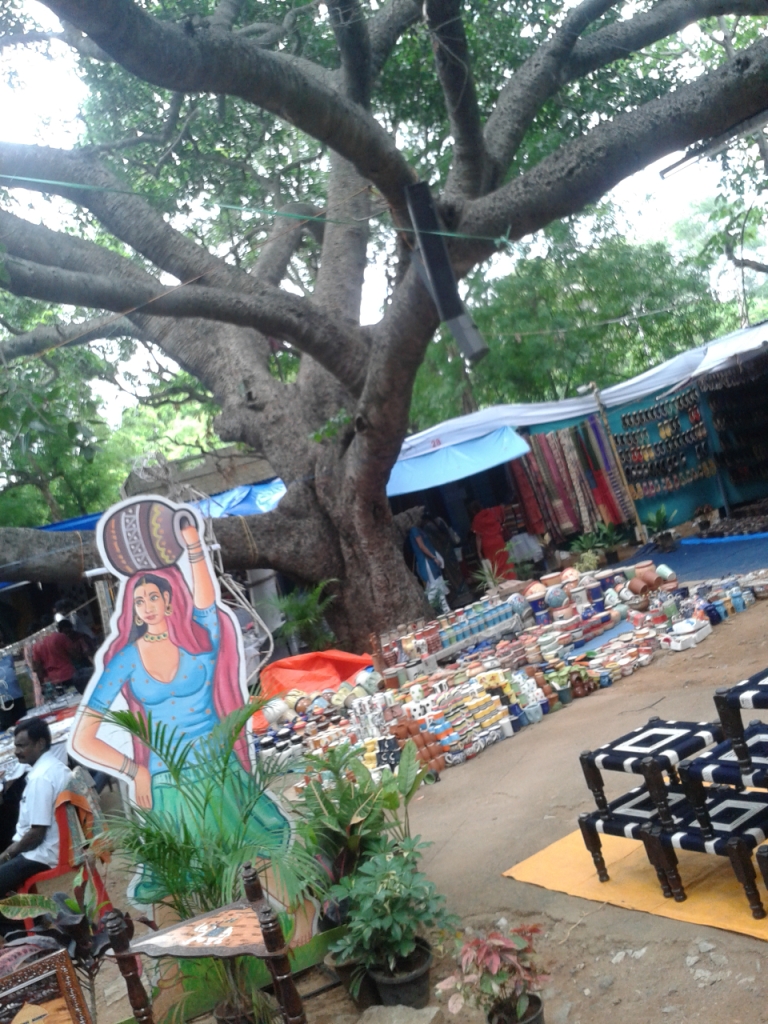
Taken May 23, 2014 in Indiranagar.
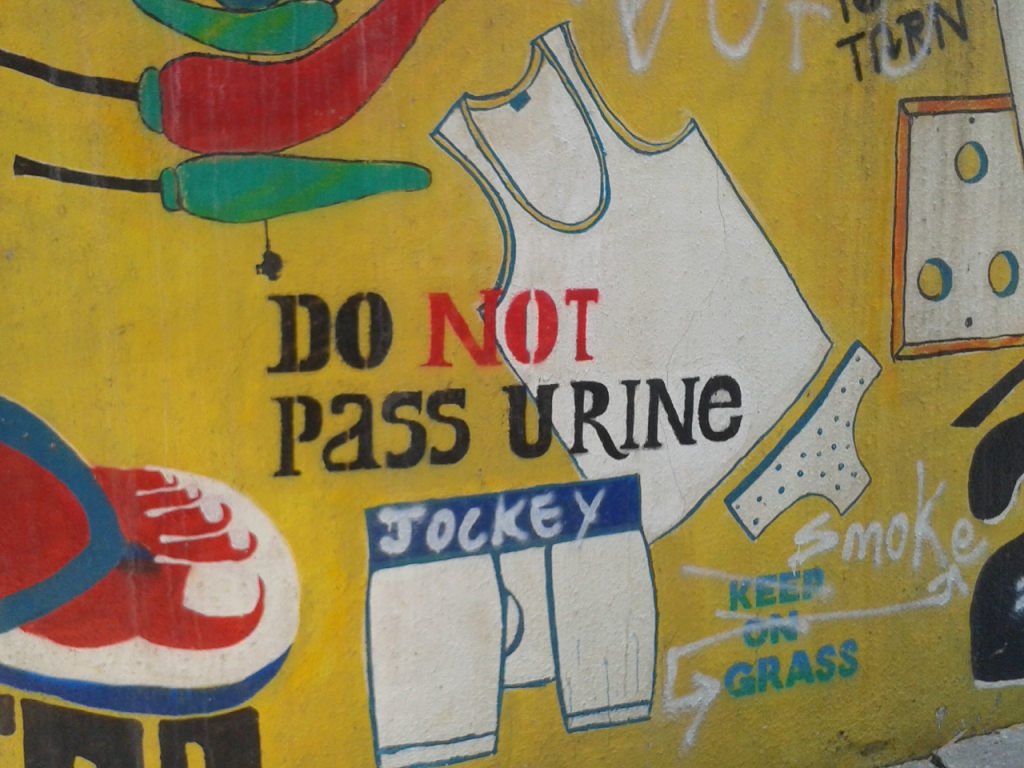
This was taken at the Goethe Institute in Bangalore. Normally one doesn’t see such fancy signage requesting one refrain from urination because… well, because all the urine on such signs tend to erode the paint away.

Taken May 18, 2014 in Bangalore
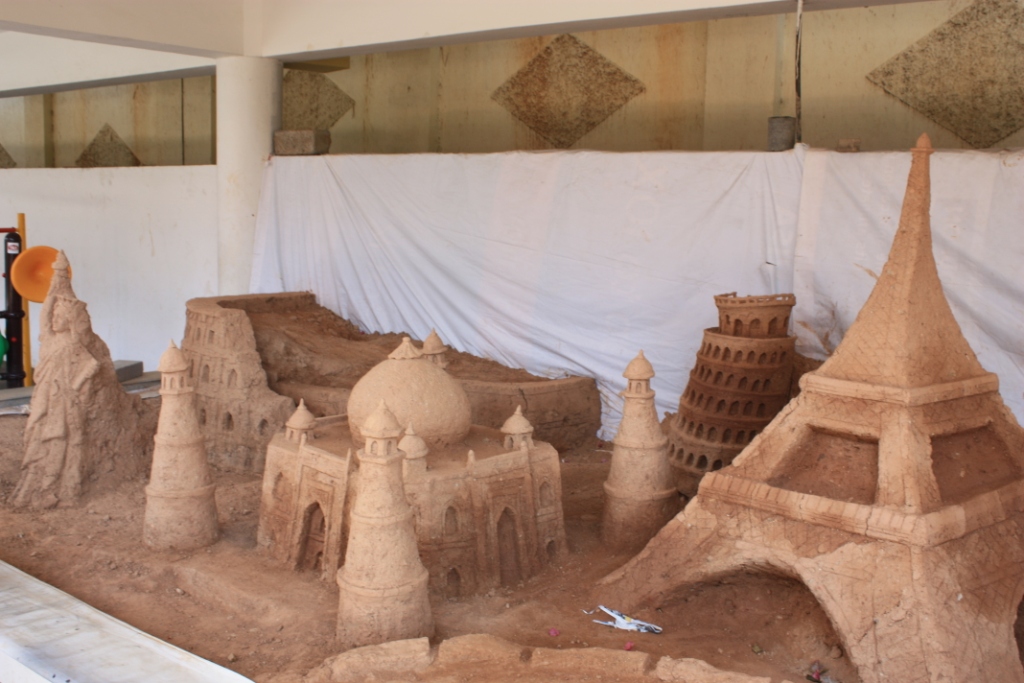
Taken May 18, 2014 at the MG Road Metro Art Station.
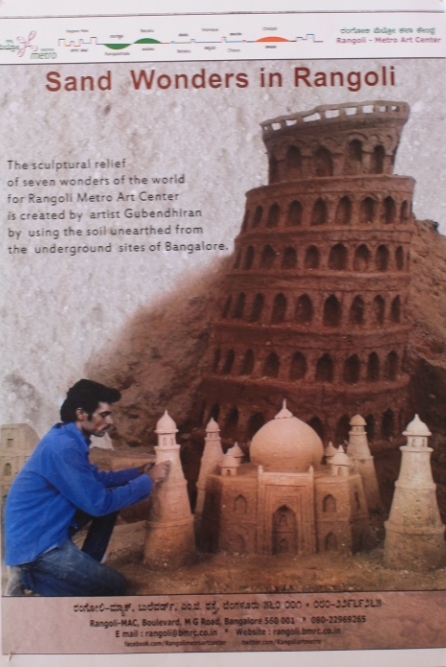
Taken May 18, 2014
I’ve been a delinquent poster as of late. However, I took some photos over the past few days so that I can at least resume my Daily Photo posts. Look for some Book Reviews in the near future and after a week or two I should be up to writing some posts about my adventures in the study of Yoga, Thai Yoga Bodywork (and Tok Sen), and Kalaripayattu.
This was taken at the art station that runs along MG Road between MG Road Station and St. Mark’s Road. This area displays a mix of permanent and temporary exhibits. This exhibit, made out of sand, obviously fits in the latter category. It consisted of seven prominent man-made creations. (While the display poster referred do the seven wonders, some of the depictions were part of the traditional seven wonders–e.g. the Great Wall, Taj Mahal, and the Roman Colosseum, and others were not–e.g. the Eiffel Tower and Statue of Liberty.)
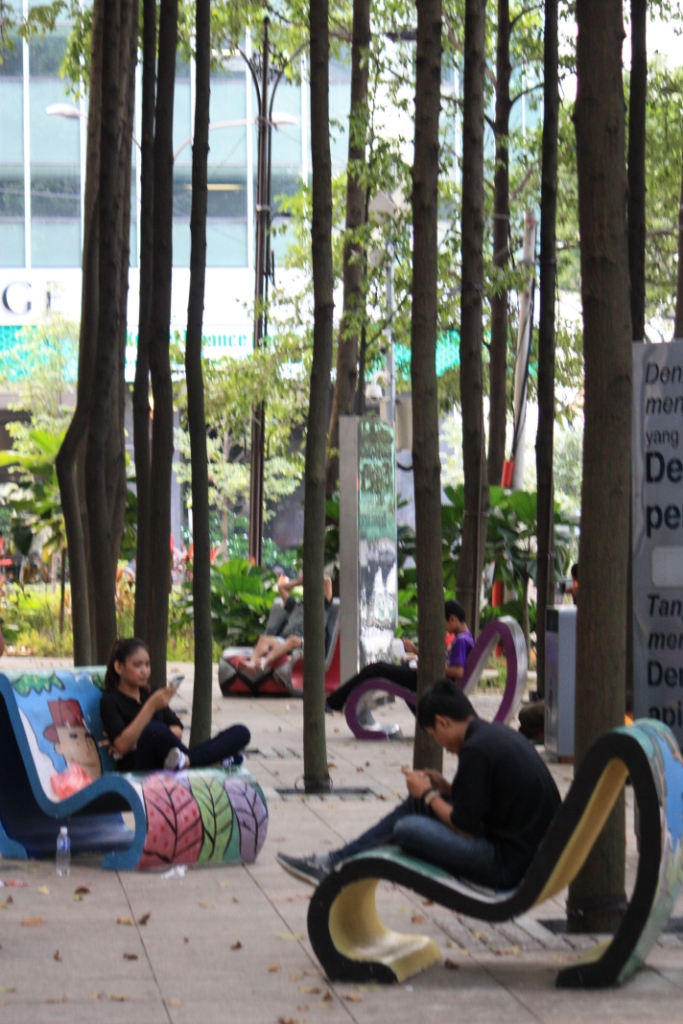
Taken in December of 2013 in Kuala Lumpur.
In Kuala Lumpur we came across this little wooded area to the side of an office tower. Planted among the trees were these curvy, ornately painted benches.
As I’ve mentioned before, being a weary traveler on occasion, I’m frequently dismayed by artists who take up valuable and precious bench space with their bronze creations. This on the other hand, was a magnificent find, art that one could sit down on and rest one’s feet. As you can see, the benches were quite popular.

Taken November 2, 2013 at Hampi.
These guardians of the inner sanctum can be seen here and there throughout Hampi.
I assume they were meant to be guardians and not just four-handed mutant freaks doing yoga stretches to loosen up their leg abductor muscles.
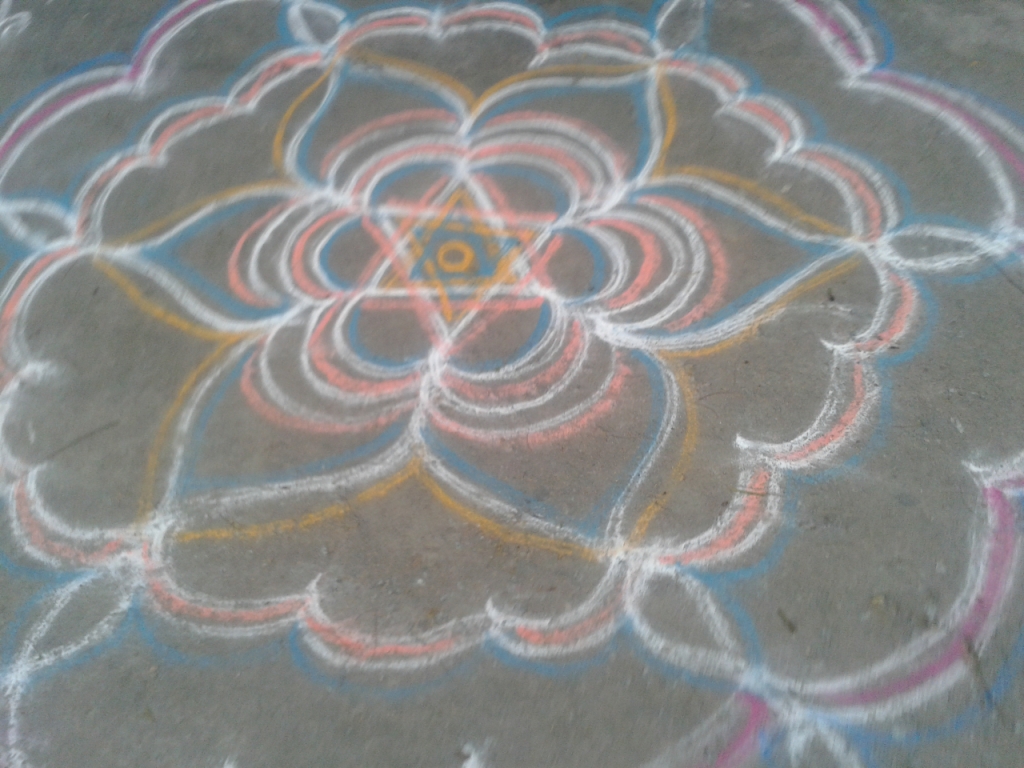
Taken on October 5, 2013 on 80 Feet Rd in Bangalore
Kolam are chalk or (traditionally) rice powder drawings that one finds in front of entryways throughout much of South India. The practice has even carried over to other countries in the South Asia displaying Indian influence such as Thailand and Malaysia. Their drawing is traditionally practiced by Hindu women each day to bring prosperity to the household. Although this one was in front of a business as is also common these days. Some are much smaller and less elaborate than this one. However, some are even more elaborate and perfectly formed. They only last a day, and are traditionally washed away at the end of one day so that a new one can be drawn to start the new day.
[Note: This is posted in my Jissen Budōka blog as well.]

Source: Wikipedia; Status: Public Domain
Miyamoto Musashi, who was undefeated in over 60 duels, claimed that he never had a teacher. Some historians refute this claim. Whether one accepts it or not, the statement astonishes.
Musashi wasn’t talking only about martial arts, but about the many areas in which he was accomplished. Not being a painter or a sculptor, I can’t say how important a teacher is in such domains. But it’s easy enough for me to imagine a successful writer who never took a formal class in writing; someone who read profusely and practiced his (or her) craft relentlessly could do it. (Certainly, one can easily imagine successful writers whose formal education was in some area other than writing because there are so many of them–probably at least as many as those whose education was in writing. Examples include: Vonnegut [Chemistry], Crichton [Medicine], Zane Grey [Dentistry], Ursala LeGuin [Anthropology], and J.K. Rowling [French]. That’s not even to start on the many literary legends who dropped out all together– e.g. Dickens, Faulkner, Twain, H.G. Wells, and Jack London.) This isn’t to say that writing teachers don’t make writing better, but just that there is a path to this skill that doesn’t involve being fed lessons.
However, I struggle to imagine a martial artist achieving so much without a teacher. Boiled down to its most workaday definition, a martial art is a collections of lessons about what works in a combative situation. This is what separates the importance of a teacher in martial arts from that of a discipline like writing. In writing, one has the leisure to make one’s mistakes, learn from them, and self-apply course corrections. Musashi was in life or death duels; he couldn’t learn lessons at such a leisurely pace and in such an iterative fashion.
A martial arts teacher has a number of roles, such as preventing inertia (slacking) from taking hold in the training hall. However, the most fundamental purpose is to pass along the collection of lessons so that a student doesn’t have to learn them all by way of personal experience. Most of us aren’t Miyamoto Musashi; we can’t survive the process of learning all our own lessons.
Needless to say, I am a firm believer in the value of a good teacher. I’ve had several over the years, and I received valuable lessons from all of them–all with different, but no less valid, points of emphasis and flavor.
Having said all that proceeds, there’s much that cannot be taught. Such lessons may be described or discussed, but they cannot be learned except through the initiative of the student. I said that most of us can’t survive the process of learning all one’s own lessons, but I’ve increasingly come to believe that one can’t survive learning none of them either. In the beginning, one must be fed the lessons from a teacher in order grow. However, as the decades pass, one increasingly needs the space to learn one’s own lessons. If one lacks said space, one will stagnate and eventually the wheels will roll off one’s training altogether.
So what are the unteachable lessons? Knowledge can be conveyed, but not everything that a martial artist must learn is knowledge. Confidence cannot be taught. A teacher may explain–or even show–how he or she became confident, but that won’t translate one iota into the student being more confident. This is like a Buddhist monk telling one that “desire is the root of suffering.” One may understand that statement. One may believe the statement. However, one’s suffering won’t decrease because one has the knowledge. One’s suffering will only decrease if one conscientiously does the hard work of reducing one’s desires.
Another area of unteachable lessons are the lessons that the teacher has never learned. Loyalty is a great virtue, and so there may be a tendency to restrict one’s learning to the lessons of one teacher. However, even if one has an outstanding teacher and are practicing a great lineage, blind spots happen. The only way to learn whether there is anything of value obscured in those blind spots is to throw off one’s blinders and have a look for oneself.
What blinders? An excellent and tricky question. It’s like when someone says, “it’s not what you said, but the way you said it.” We all understand that there is some intangible character in language that is commonly understood but not easily seen or defined. In any culture (and a dōjō contains a culture, believe me) there’s always a collection of norms, rules of thumb, ideas, beliefs, mores, credos, etc. that come to be taken so much for granted that they become an invisible filter through which one sees the world. This isn’t an inherently bad thing, and it’s probably necessary to produce sufficient order in a chaotic world in which to learn and grow. Having said that, some of the ideas and beliefs in our cultural filter may be arbitrary, or at least not universal, but yet we don’t necessarily see the potential for error because we are seeing the world through the cultural filter. We take for granted that grass is green, but what if we see it through a yellow filter? Then it’s blue. Right?