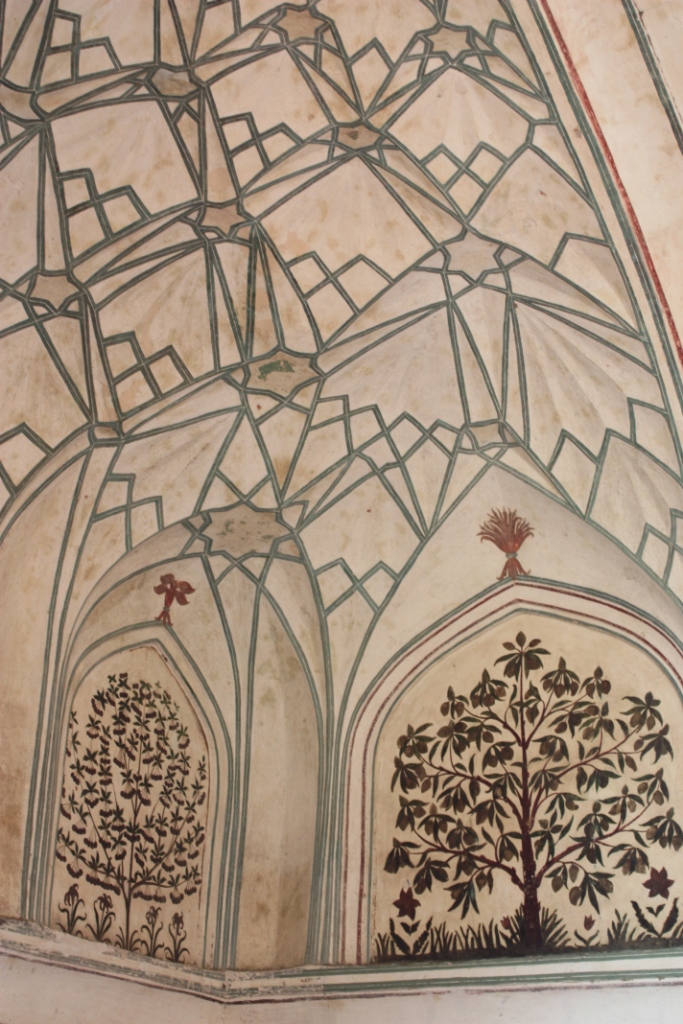
Taken in October of 2013 in Old Delhi.
This photo was taken at the Red Fort in Old Delhi. It’s the arched ceiling of an alcove, and the angular pattern in which it’s been carved astounds me.
Taken in October of 2013 in Old Delhi.
This photo was taken at the Red Fort in Old Delhi. It’s the arched ceiling of an alcove, and the angular pattern in which it’s been carved astounds me.
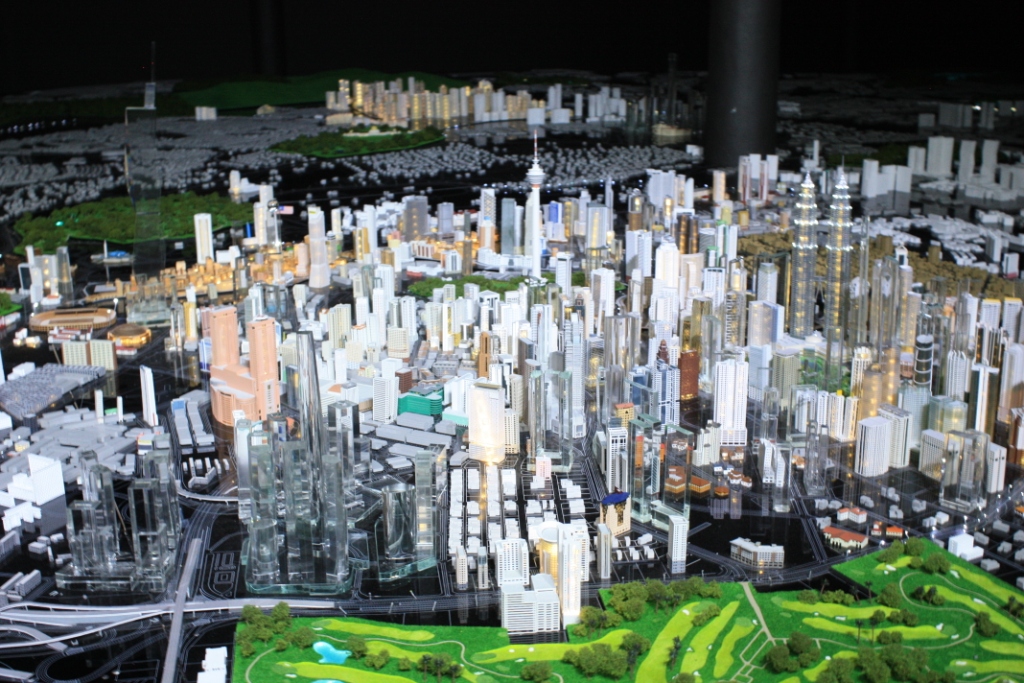
Taken in December 2013 in Kuala Lumpur
In Kuala Lumpur’s City Gallery there’s a model of the city that is part of a video presentation on the city. They darken the hall, play a film, and there are lights to highlight certain buildings or roadways as mentioned in the video.
It’s nifty and it’s free. The City Gallery is adjacent the famous “I♥KL” sign, near Independence Square and the Sultan Abdul Samad Building (Offices of the Ministry of Information, Communications, and Culture.)
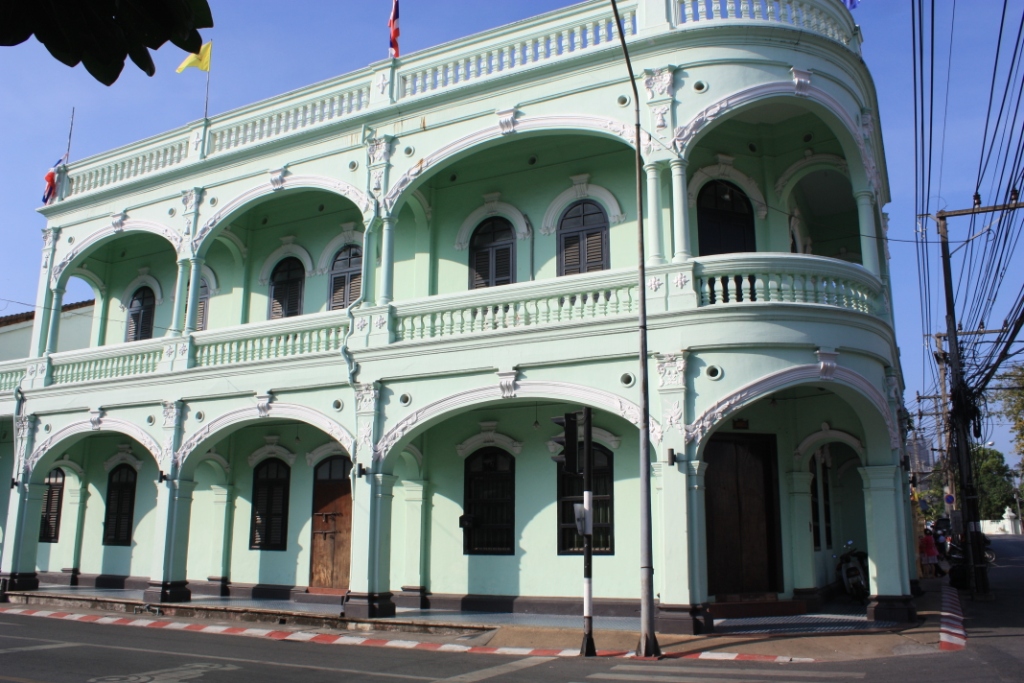
Taken in January of 2014 in Phuket Town.
While it may sound like sacrilege to some, if you’re like me you reach the point when it’s enough already with the beach. That raises the question of what there is to do on Phuket if you need a day away from having sand in every bodily crevice and feeling punished by the sun. One should definitely assign a day to Phuket Town. A lot of your Phuket Town day will rightly be spent admiring the many Chinese shrines in the area (there are about five big ones.) [This, too, can be a break if your Thai travels have left you burnt out on the gleaming, golden Theravadan Buddhist temples.] However, Phuket Town also has interesting secular architecture–some of it run down, but much of it nicely restored.
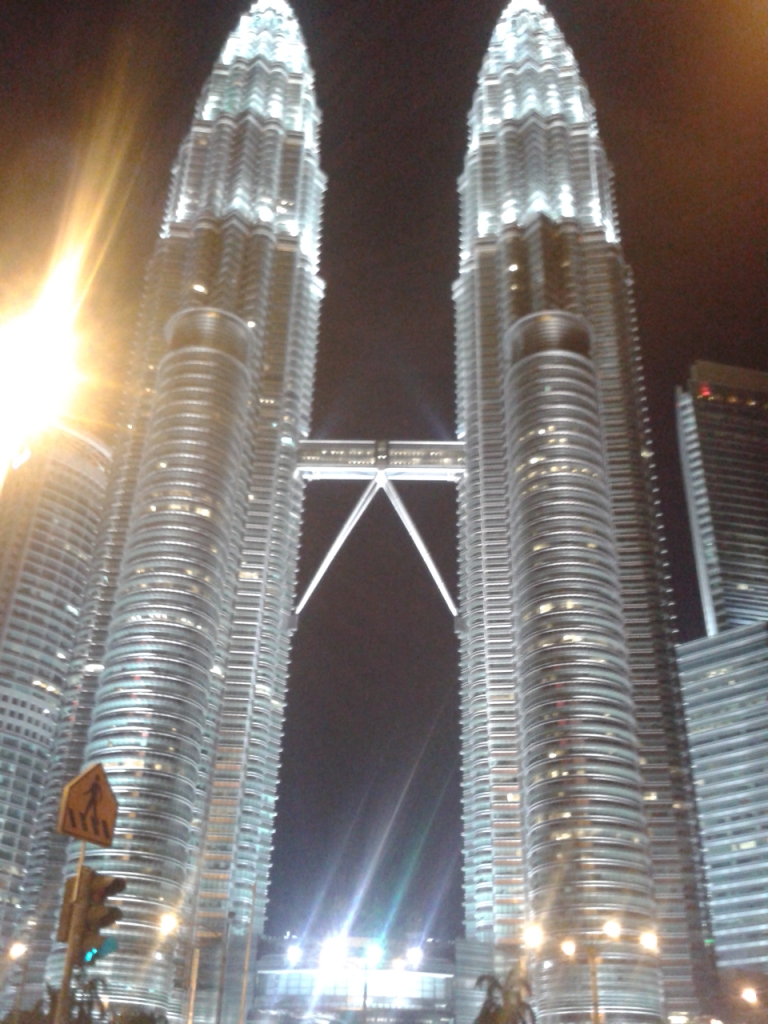
Taken December 2013 in Kuala Lumpur
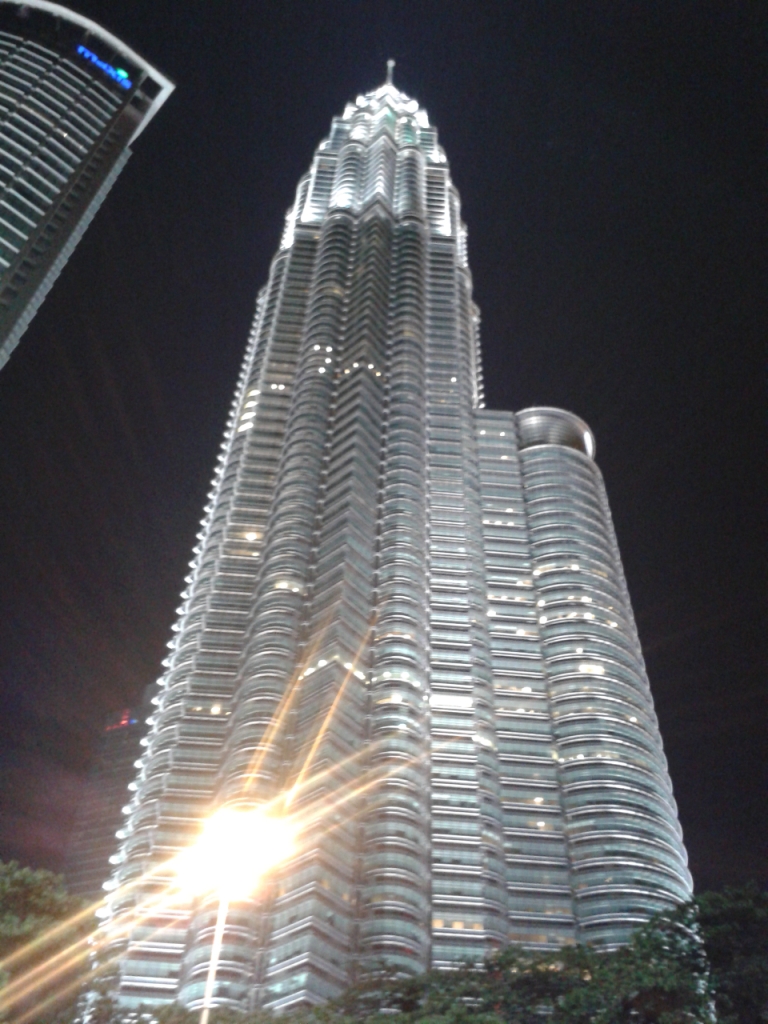 Back from my travels to Kuala Lumpur and Phuket, I’m ready to resume blogging. I’ve got a ton of new pics to sift through. Here’s a first installment.
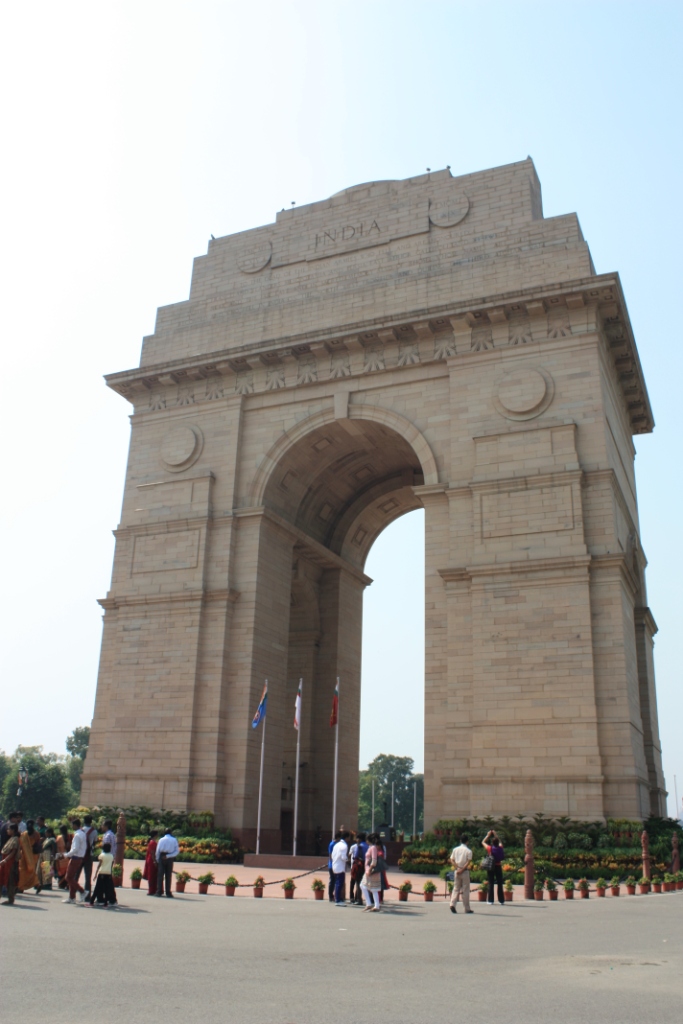
Taken October 16, 2013 in Delhi.
The India Gate honors 70,000 Indians who died during World War I fighting on behalf of the United Kingdom. Beneath the arch is India’s Tomb of the Unknown Soldier.
It’s India’s answer to the Arc de Triomphe, and it sits at the opposite end of the Rajpath from the President’s house, i.e. the Rashtrapati Bhavan. Like the President’s house, the Gate was designed by Edwin Lutyens, a famous British architect.
The India Gate is among the must-see sights for visitors to New Delhi.
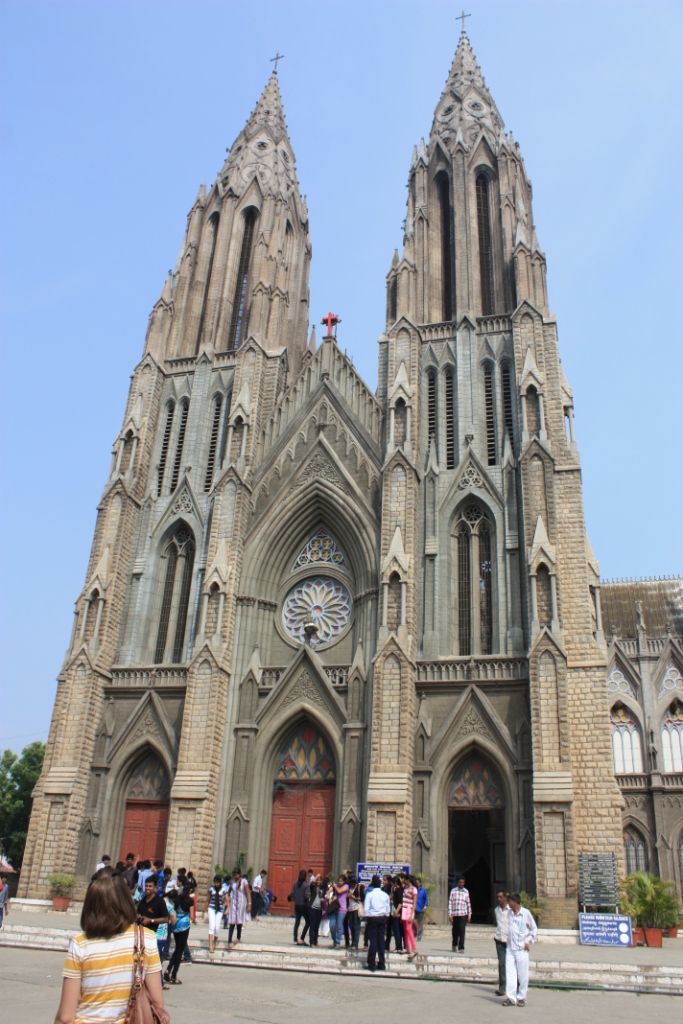
Taken on November 29, 2013 in Mysore.
This neo-Gothic cathedral sits in downtown Mysore. It was built in 1936 and its design was influenced by the cathedral in Cologne.
The saint for which it was named was a martyred Greek princess.
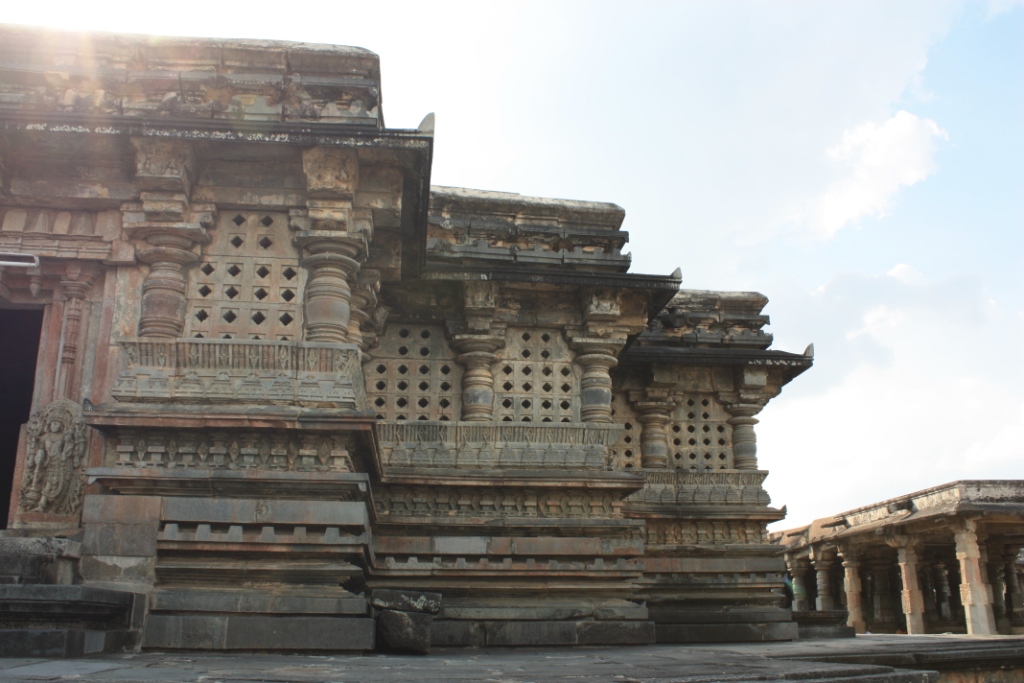
Taken November 23, 2013 at Belur.
Chennakeshava temple at Belur is a Hoysala era temple to Vishnu–the deity of the Hindu trilogy responsible for processes of sustenance and evolution (as opposed to creation or destruction, which are the bailiwicks of Brahma and Shiva, respectively.)
This temple and its sister temple at Halebidu, Hoysaleshwara temple, are probably the most ornate structures I’ve seen anywhere in the world. They are covered with soapstone carvings arranged in several tiers. For example, the bottom layer is a series of elephants, each one unique. There is a layer that tells tales from the Mahabharata in pictures.
Soapstone is soft and easily worked when quarried, but it becomes hard enough to survive everything but looters as it’s exposed to the elements. You’ll note the “windows” carved in the rock to allow in light and breezes.
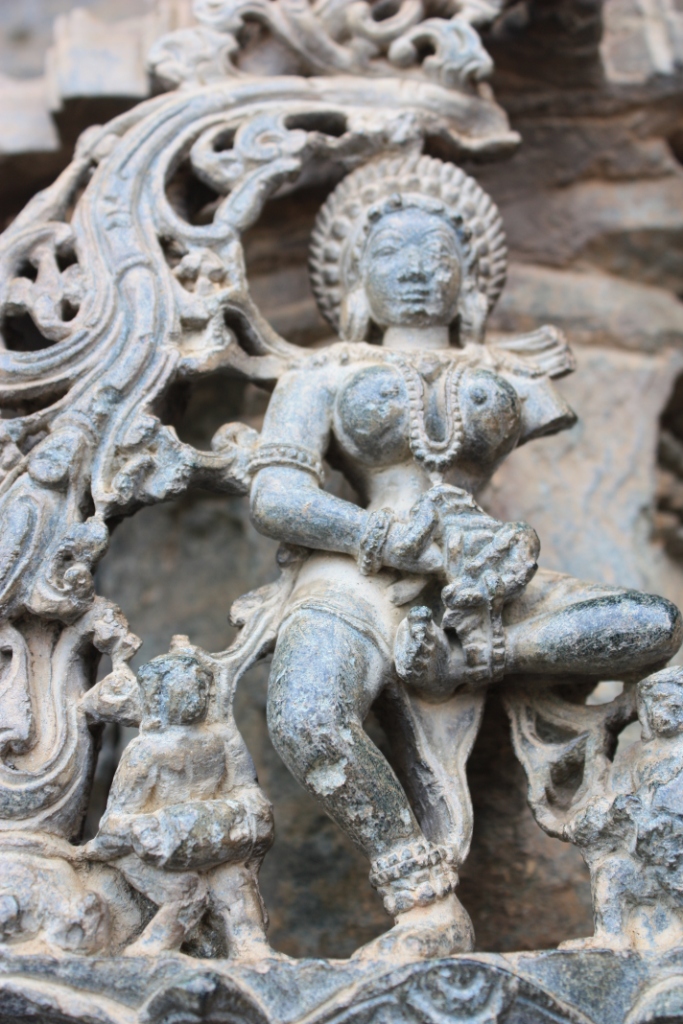
Close up
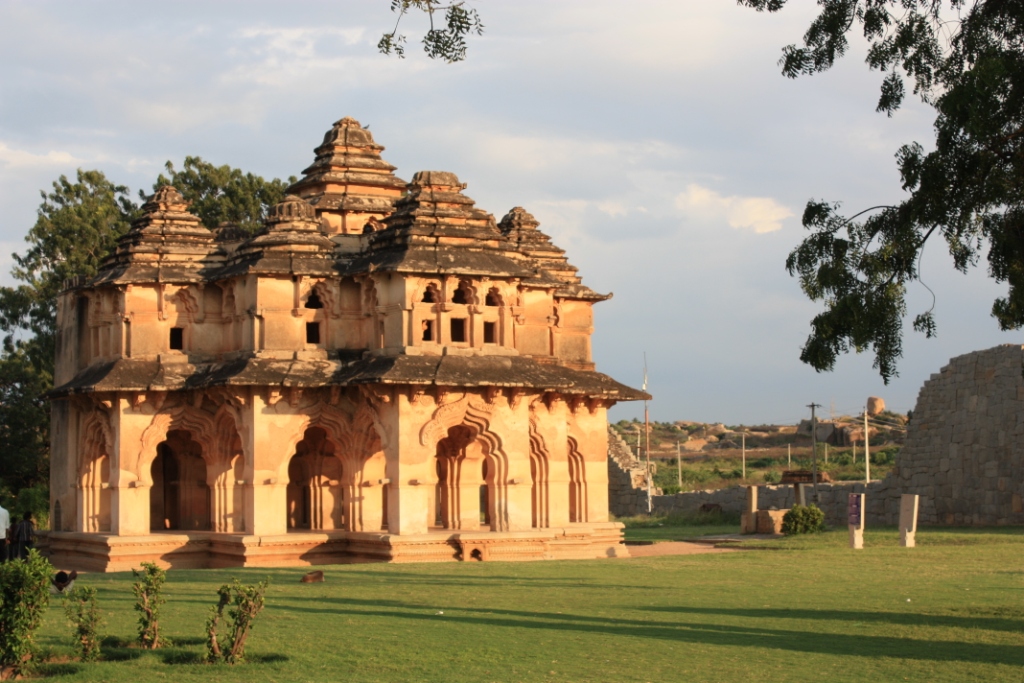
Taken November 2, 2013 at Hampi
The Lotus Mahal is one of the most popular attractions at Hampi. It’s atypical in that it’s built, in part, in the Indo-Islamic style (note: the arches.) (Hampi [Vijayanagar] was the capital of a Hindu kingdom that was defeated by a confederation of Islamic states. ) While this pavilion is often referred to as the “Lotus Temple,” it was believed to be either a rest-house for visiting royalty or the queen’s recreational building–but not a religious building of any sort.
We got there with good timing. The beige-pink lime mortar seems to glow in the low, afternoon sunlight.
The Lotus Mahal is located in the Zenana Enclosure with the Elephant Stables.
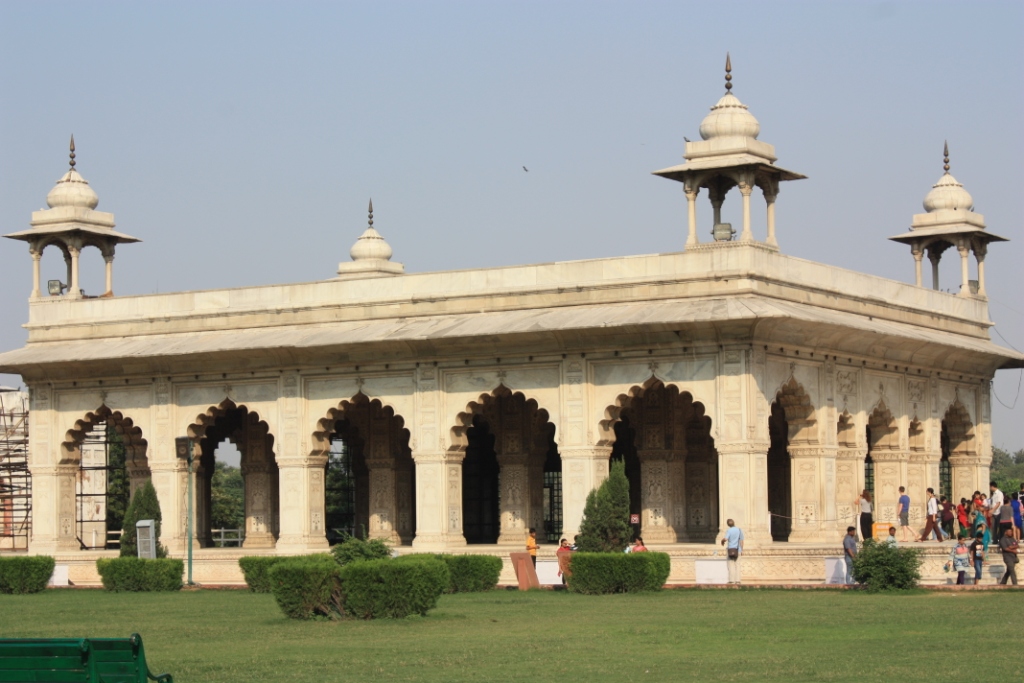
Taken on October 16, 2013
This white marble palace constructed in the Indo-Islamic style is one of the more impressive structures in Old Delhi’s Red Fort.
The Red Fort should be visited before visiting Agra Fort, because it should be seen but it’s not as impressive as its Agra kin. I did it the other way around, and the Red Fort was a disappointment by comparison. The grounds aren’t kept up, most of the semi-precious gemstone inlays are missing from the ornately carved marble, and the fort houses an architectural hodgepodge. That being said, the red sandstone walls are imposing and magnificent and the few historic structures are quite impressive–if not as much so as in Agra.
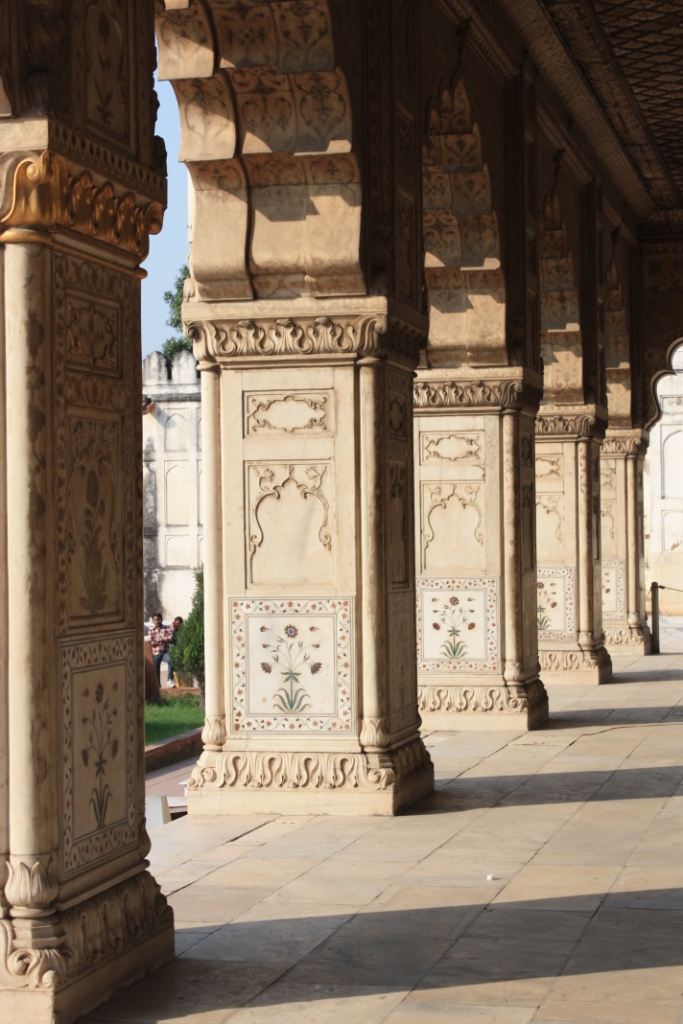
Close up of the same structure.

Taken October 14, 2013 in Old Delhi.
This is India’s largest mosque. It is capable of holding 25,000 worshipers–mostly in that open courtyard that can apparently be covered as needed.) It dates back to the rule of Mughal Emperor Shah Jahan–who you may know of from his requisitioning of the Taj Mahal.
It’s located in Old Delhi and is usually matched with trips to the Red Fort and Chandni Chowk (a huge bazaar street), which are both nearby.
It’s mostly Red sandstone with white marble, as was common of Shah Jahan’s other monumental structures.
[I realize it’s a cheat that I’ve posted two “Daily Photos” in a couple of hours of one another, but it’s a new day in the States–and I’ve got a ton of photos from my recent trip.]


 Tiger Riding for Beginners