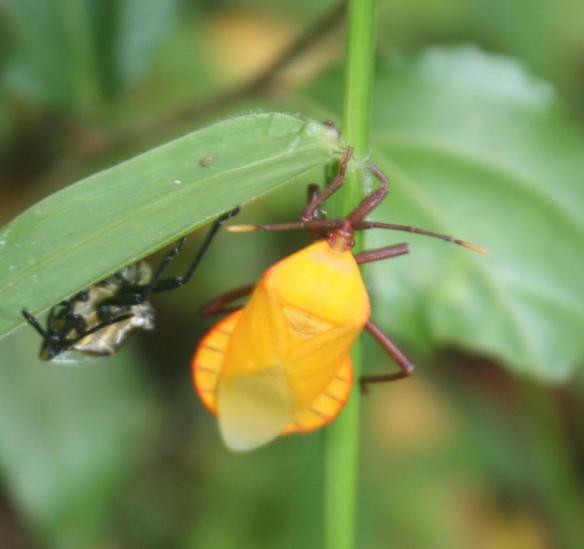
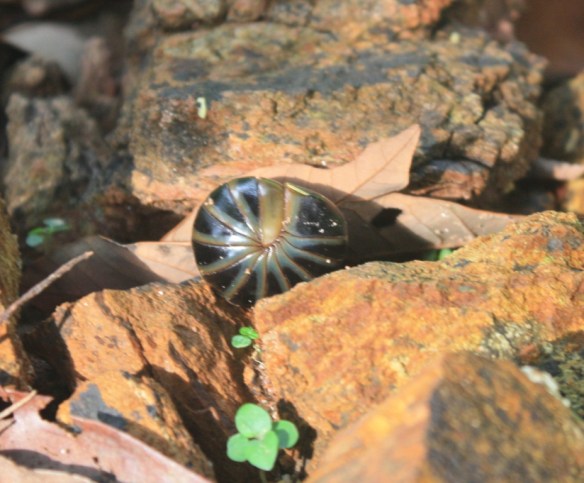
Taken in December of 2015 in Hanoi


Taken in December of 2015 in Hanoi

Taken in May of 2015 in Negombo
 On the cusp of each journey that matters,
a mingling of wonder and fear flushes the body.
If you made the journey,
wonder outshone fear.
Death is a journey.
I can’t tell you whether it’s
-a journey to oblivion
-a journey to spread one across a web of consciousness
-a journey to be uploaded into another body
-a journey to Heaven or the Elysian Fields
I don’t know,
but I don’t have to know.
All I have to do is be ready for the journey, and
Let my wonder burn brighter than my fear.
My brain has a label-maker that pumps out bifurcated tags for everything it experiences:
good… bad…
pleasurable… painful…
in-group… out-group…
familiar… strange…
It pastes these labels all over my world, a world once painted in feeling. But once a label is applied:
-I think I know the labeled thing.
-I can’t really see the labeled thing.
-And, I can no longer be awed by the labeled thing.
As it happens, my brain also contains an inner mischievous boy with a penchant for picking at the corners of those labels. And whenever one comes loose, he looks around the joint, and — if the coast is clear — he rips away the label and runs. Running not to escape punishment, but to find the optimal distance for that thing’s radiated splendor.
And sometimes when that boy sees another staring intently into the distance as if hoping to see magic or a fireworks display, the boy wonders why that one doesn’t watch the magic near at hand. But they can’t see it. It’s invisible to them. And instead they suffer blank hope, drowning amid a sea of bliss.
 The Hidden Girl and Other Stories by Ken Liu
My rating: 5 of 5 stars
Out: February 25, 2020
This smart collection of speculative short stories by Ken Liu is mostly science fiction, but includes a few works of fantasy (including the titular story, which is what one might call “martial arts-fantasy” – i.e. imagine “Crouching Tiger, Hidden Dragon” with more magic.) Depending how one counts up the stories, one could call the collection nineteen stories or sixteen stories and a novella. The novella, broken into three parts, is “storified” enough that its sections are interspersed among the other stories.
Liu doesn’t neatly contain his stories within boundaries of genre. In some cases, he jumps through time — including historical fiction, contemporary / near future, and distant future within a single story. He also takes on social issues like the Japanese internment during World War II in “Maxwell’s Demon” and the blight of technology on social interaction (best shown in “Thoughts and Prayers.”) There are hard sci-fi stories that show intergalactic travelers in a distant future, such as “The Message,” but there are even more that peer into the worries of the near future, such as artificial intelligence or the replicating of human consciousness in computers.
The novella imagines a world in which companies have captured the consciousnesses of great, but dying, minds for their own purposes. It then explores considerations such as: what happens when a great mind gets tired of being trapped as an acorporeal intelligence for the benefit of a company, and what does humanity mean in the context of fully replicated human minds?
I found these stories to be both intriguing and thought-provoking. I enjoy a good story, but stories that make one think deeply hold that much more allure. I’d highly recommend this collection for fiction readers. Whether or not you read genre fiction, you’ll find stories of great appeal.
 Pain: Considering Complementary Approaches by National Center for Complementary and Alternative Medicine
My rating: 4 of 5 stars
The National Center for Complementary and Integrative Health (NCCIH) has put out a new edition (dated 2019) of its pamphlet (about 50 pages) about how useful various complementary practices are in helping patients reduce, or cope with, pain. The NCCIH is a center in the National Institutes of Health (NIH) that serves as a clearinghouse for information about how alternative and complementary practices perform in treatment of various ailments. While alternative (instead of mainstream medicine) and complementary (in conjunction with mainstream medicine) are quite different, in almost all cases this work herein is reporting on the latter basis. The complementary practices in question include: yoga, taiji, meditation and mindfulness, massage, acupuncture, chiropractic manipulation, relaxation methods, and others.
Complementary approaches to treatment of pain is a particularly salient topic these days as the mainstream medical approach (giving patients pills to gobble down) has resulted in what many have called a “crisis” of opiate addiction. So, if it’s possible to reduce the grip of pain with practices that at best have numerous other health benefits and at worst do no harm, than that’s a pretty good outcome.
Chapters three through eleven form the pamphlet’s core, and all but the last of those look at one complementary practice each, including (in order): acupuncture, massage, meditation, relaxation techniques, spinal manipulation, taiji (a.k.a. tai chi, or tai chi chuan), yoga, and dietary supplements and herbs. Chapter 11 discusses a few additional (less popular) practices. These chapters follow a three-prong approach: 1.) is it safe? 2.) does it help mitigate pain? and 3.) where can I find more information? [Spoiler alert: In almost all cases the answer to #1 is roughly “Yes, for most people, but possibly not for you. Check with your doctor,” and to #2 is usually something like: “there is some preliminary evidence that in certain cases certain people may have benefited.”] The chapters before (ch. 1 & 2) and after (ch. 12 to 14) provide background context and additional information.
On the positive side, it’s great that this information has been gathered together and packaged into a readable format with pictures and easy to read text.
On the down side, this was clearly a document put together by a committee of bureaucrats in consultation with lawyers. It is so laden with qualifiers and spongy speak that it’s impossible to discern how strong the evidence is for the various practices or how one compares to another. I felt that they could have given the same information in a three-column table in which the first column is the practice, the second column is “can’t hurt to try*” [*provided your physician concurs,] and the third column would be “nah, this stuff is fake.” [Spoiler alert: almost everything besides homeopathy would have the first column checked, but the consensus seems to be that homeopathy is pseudo-scientific quackery designed to sell water at medicinal prices.]
This booklet is available on the web for free, so if you’re interested, check it out. But don’t expect to come away with any profound insights. It’s not that kind of booklet.
 on a fence rail,
i saw a scorpion —
dead, but menacing
a dog nudges
its dead companion,
whimpering
after life,
no one contemplates the
Afterlife
grasping the sword
like nothing depends upon
everything
when you accept
that you, too, will be food,
death holds no sway
When they’re dancing down the alleyway
in their death’s head masks,
neither join them nor delay them,
nor stop each one to ask,
“Is there salvation down this way?”