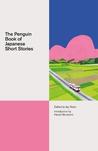
 The Penguin Book of Japanese Short Stories by Jay Rubin
My rating: 5 of 5 stars
Amazon page
This book contains 35 short stories by many of the most prominent Japanese writers (at least among authors whose works are translated into English,) including: Jun’ichiro Tanizaki, Natsume Soseki, Yukio Mishima, Banana Yoshimoto, Yoko Ogawa, Akutagawa Ryunosuke, and Haruki Murakami (who contributes the book’s Introduction as well as two stories.)
The stories are arranged into seven sections that are apropos for modern Japanese literature: “Japan and the West” (3 stories,) “Loyal Warriors” (2 stories,) “Men and Women” (6 stories,) “Nature and Memory” (5 stories), “Modern Life and Other Nonsense” (5 stories,) “Dread” (3 stories,) and “Disasters, Natural and Man-made” (11 stories.) This organization scheme, which might seem random applied to most literature, offers some insight into the Japanese mind and experience.
“Japan and the West” reflects a Japan in the vanguard among non-Western nations entering into developed nation status. For a time, Japan sat in the unique situation of being the only rich nation that wasn’t majority Caucasian, and the uneasy balancing act that many Japanese felt is reflected in these three stories. “Loyal Warriors” reflects the long shadow of the feudal samurai era, and – in particular – the custom of ritual suicide. It’s true that “Men and Women” has a certain universality to it, though the individual stories speak to the Japanese experience and history. The section entitled “Nature and Memory” is really more about the latter than the former, and the stories all reflect a concern about remembering, forgetting, and the imperfection of memory. “Modern Life and Other Nonsense” explores the modern corporate existence. “Dread” are the horror stories, a genre that has a lengthy history in Japan. “Disasters, Natural and Man-Made” reflects Japan’s experience with many devastating earthquakes and two atomic bombs.
In the interest of brevity, I’ll not describe or comment upon all the stories. Instead, I’ll pick out a few that I found particularly moving. This doesn’t mean that there aren’t many gems among the others. But my intention is merely to give the reader a taste of what is in this volume.
– “The Story of Tomode and Matsunaga” by Tanizaki Jun’ichiro: A writer receives a letter from a woman whose husband has a history of pulling extended disappearing acts. She asks for the writer’s help because she believes he may know her husband. The writer makes a connection to an acquaintance he has frequently socialized with in bars. The writer notices the man’s appearance in town seems to line up with the dates the woman gave for her husband’s disappearances. It might seem like a mystery solved, but the two men look nothing alike.
– “Patriotism” by Yukio Mishima: A junior military officer comes home and tells his wife that he has been put in the untenable position of having to arrest his comrades. Deciding that there is no honorable path, he decides to commit seppuku (ritual suicide,) and – given societal norms – this means his wife, too, will be expected to end her own life.
– “Smile of the Mountain Witch” by Ohba Minako: A mythical mountain witch is transposed into a modern urban setting.
– “Peaches” by Abe Akira: A man revisits a memory from his youth involving his mother and a cart of peaches, realizing that events couldn’t have happened as he remembers, he reconstructs events as he re-imagines his story.
– “Mr. English” by Keita Genji: We meet an office worker who seems like a bit of a jerk, but as we get to know his story, he is humanized.
– “Hell Screen” by Akutagawa Ryunosuke: A prima donna artist painting a hellish artwork for his Lord insists that he must have seen scenes to accurately depict them, and thus he is drawn into the hellishness of his work.
– “Filling Up with Sugar” by Suwanishi Yuten: A woman’s mother has a rare and incurable disease in which the body slowly turns into sugar.
– “Hiroshima, City of Doom” by Ota Yoko: As the title suggests, this is a story of the devastation of Hiroshima by atomic bomb at the end of the Second World War.
– “Weather-Watching Hill” Saeki Kazumi: This description of the 2011 earthquake and tsunami reads a bit like a journalistic account.
– “Same as Always” by Sato Yuya: This is a chilling tale of a mother who uses the release of radiation as a result of the Fukushima Dai-Ichi nuclear plant melt-down as a pretext for murdering her baby in a way that won’t look like murder. It’s so wrong in so many ways, but extremely evocative.
I enjoyed this collection immensely. The stories are great, and I would highly recommend it for readers of short fiction – particularly if one enjoys the cultural insight that comes from reading translated literature.
View all my reviews
Share on Facebook, Twitter, Email, etc.
 MONKEY New Writing from Japan: Volume 2: TRAVEL by Ted Goossen

 Tiger Riding for Beginners