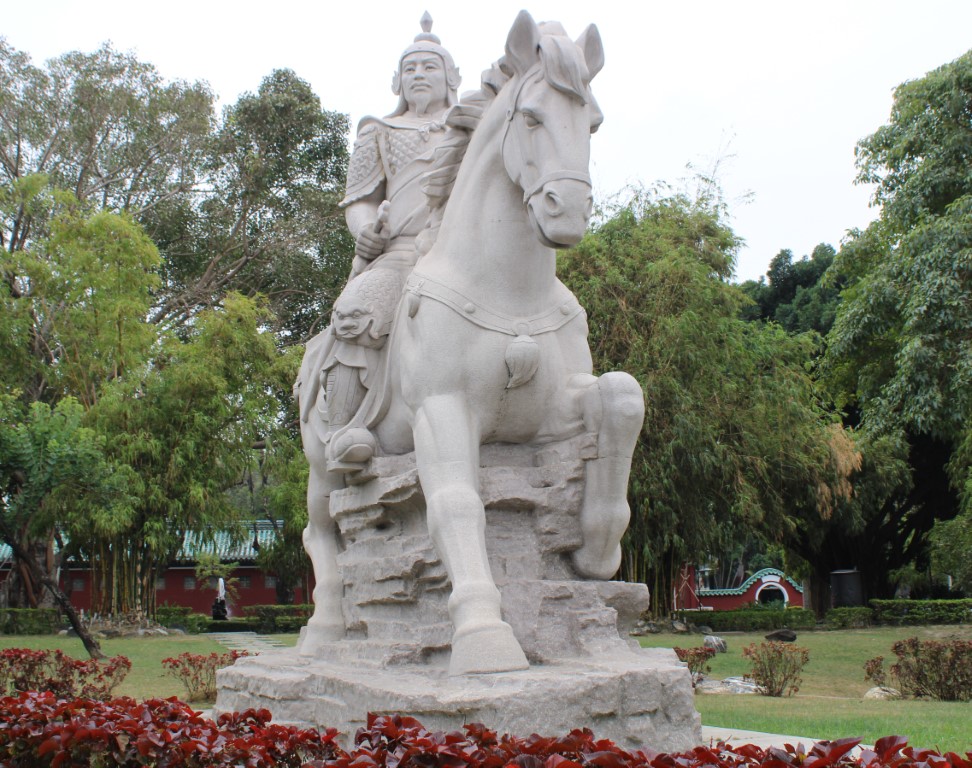
“Cavalry Days” by Xin Qiji [w/ Audio]

Drunk, I'd keep a lamp lit to find my sword,
The blare of horns sounded throughout the camp.
Soldiers ate meat under waving banners;
The military band played boisterous tunes.
Autumn brought our troops to the battlefield.

Carried by a charger at full gallop,
My bow thwipped, sending swift arrows flying.
We restored Imperial lands, boldly,
And won great fame for fighting gallantly,
But fame grows thin and gray just like my hair.

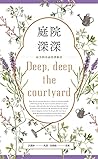
BOOKS: “Deep, Deep the Courtyard” [庭院深深] trans. by Xu Yuanchong

庭院深深:最美的宋詞英譯新詮 (Traditional Chinese Edition)庭院深深:最美的宋詞英譯新詮 by 吳俁陽(賞析)
My rating: 5 of 5 stars

Publisher Website

This is a bilingual (Chinese / English) anthology of Song Dynasty poetry. It features more than 140 poems by almost fifty poets of the Song Dynasty, but a few of the Song poetic rockstars are particularly well represented (e.g. Su Shi, Qin Guan, Ouyang Xiu, and Xin Qiji.) The principal language of the book is Chinese (Mandarin) and so, while the poems themselves appear in English as well as Chinese, the ancillary matter is only in Chinese. Said ancillary matter includes notes, contextual information, bio-blurbs on the poets, and brief front and back matter.

I learned after reading the translations, that the translator was Xu Yuanchong and that he was (i.e. he’s now deceased) a very big deal as a translator, translating classical Chinese poetry into both English and French. All in all, I enjoyed the translations and found them to be sound as poems in their own right. That said, my personal preference would have been to have had less effort put into maintaining rhyme. I suspect a closer transmission of the ideas of the originals could have been achieved without the forced constraint of rhyme. Furthermore, while in many cases metering was attended to, sometimes it was not, leaving those poems to have a doggerel quality. [I come to this conclusion by comparing a few of the poem’s translations to those by other translators as well as to literal translations.] That said, the translator was clearly no slouch, and his stylistic choices were likely informed by what was popular during his career.

This book is part of a series. Other volumes include: In the Thick Woods a Deer Is Seen at Times (Tang Dynasty poems) and A Pair of Swallows Fly (from The Book of Songs, a.k.a. The Classic of Poetry.) I picked this book up in Taipei’s Zhongshan Book Street (Eslite Bookstore,) and don’t know how widely available the books of this series are outside of Taiwan, but if you are interested in Classical Chinese poetry and can find a copy, I’d recommend it.

View all my reviews

BOOK REVIEW: Poetry and Prose of the Tang and Song [Trans. by Yang Xianyi & Gladys Yang]

Poetry and prose of the Tang and SongPoetry and prose of the Tang and Song by Yang Xianyi
My rating: 5 of 5 stars

Amazon.in Page

This collection includes works from eighteen prominent poets and writers from the Tang (618-907 AD) and Song (960 – 1279 AD) Dynasties of China. Among the most famous of the included authors are: Wang Wei, Li Bai, Du Fu, Bai Juyi, Wang Yucheng, and Su Shi. The included works (mostly poems but including some brief prose writings) explore subjects such as nature, social justice, patriotism, travel, and drinking. If some of those topics surprise you, you’re not alone. I may be letting my biases show, but I was surprised by how much social outrage and humor was contained in these works from the China of 750 to 1,400 years ago. That said, most of the works do present the kind of sparse imagist depictions of natural scenes one would likely expect from Chines poets in days of yore. (Think haiku, but longer — though no less devoid of analysis or judgement.)

As someone who isn’t an expert on Chinese literature or even a speaker of any of the Chinese languages, I can’t comment intelligently on how precise the translations are. However, the English language versions contained in this volume are evocative, clever, and, occasionally, funny.

To give one an idea of the kind of humor, I’ll offer this quote from a poem by Xin Qiji:

Last night by the pine I staggered tipsily
And asked the pine, “How drunk am I?”
When I imagined the pine sidling over to support me,
I pushed it off saying, “Away!”


I enjoyed this collection, and would highly recommend it.


View all my reviews