POEM: Rag Bag

 In my youth,

in a cubby under the stairs,

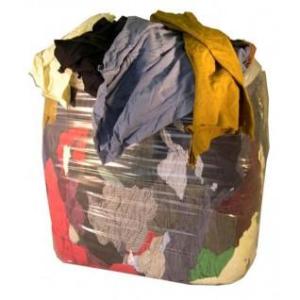
there sat a big rag-bag.

Chaotically stuffed.


We’ve no rag-bag.

Our rags are store-bought:

laundered and folded.


Our cast off garments sit–

caked in dumpster chutney–

in a landfill.


Rag-pickers will scavenge them.


Some will be stuffed into craggy concrete holes.

There to keep the rats out.

The rats will make a nice meal of them.

And maybe a nest.


Some will rub rims clean–

if only for a monsoon moment.


Wiping, wiping–they’ll one day

dissolve into component threads.

POEM: 3 Haiku

Leaves scattered widely
Monsoon rains fall every night
You’d think it autumn


4 A.M. bird call
Ceaseless screeching through dreamland
Please, shut the fuck up


Banana leaf rains
Like an old tarp pulled tightly
But drips in my ear

POEM: The Taoist’s Dilemma

Life, at the moment, was a dumpster fire.
But all roads lead up when stuck in the mire.
So one smiles with the rock-bottom delight,
lifting one up to the highest of heights.
But up top, amid those beauteous views.
You’re on the cusp of receiving dread news.
In the best times sits the seed of the worst.
In moments of elation, you’ll find yourself cursed.

POEM: Literarily Insane

Hemingway off’d himself–
curled up under his
own looming shadow.

What loomed beyond
that shadow was the
great unfathomable.

Peering into it might
have been a comfort,
or might have killed
him in pre-greatness days.

***

Kesey’s Chief wondered
how the Irishman could live
in his own grandiosity of being.

McMurphy’s sanity was surely
built upon a foundation of delusion–
sanity and delusion forged iron-clad.

Meanwhile, those free of such
delusions huddled in the fog,
unable to step out into life.

***

Heller’s Yossarian summed
up the whole damned mess:
claims of insanity are a
recognition of one’s sanity.

Who else seeks to turn down
the volume on reality?

Other than one who can
hear it well enough to know
when it peals thunderous?

POEM: Abhaya

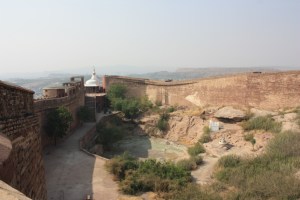
Stand atop the wall.
Feel the conch sound.
Watch the arrows sail.
Survey the killing ground.

Know you’ll someday die.
As will all, I suppose.
For those who die well,
it is no tale of woe.

POEM: Land’s End

Land ends in a wall of fog.

If you were told it was the

end of the universe, you

could not prove otherwise.

It glides up to the cliffside.

Stealing sight. Silent theft.

Ears ring. Seeking sounds.

Mind searches sensation.

Senses wet cotton dulled.

Solitude sweeps over one.

What would happen if one

stuck one’s arm inside the

fog? Would it expand into

infinity?  Or disintegrate

into a lawless zone free of

 mathematical certainty?

POEM: Under the Rug

a vessel cracked

an act of ransack

a pile of shards

one can’t discard

but swept aside

never to be eyed

under the rug

like Kafka’s bug

POEM: The Humorless Giraffe

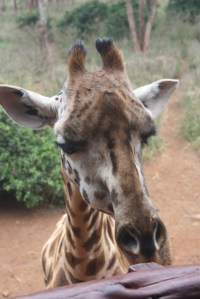
So now, tell me, Mister Giraffe:

How come I never hear you laugh?

Are you too tall to hear the joke,

or are you just an uptight bloke?

Human humor is elation

vis-a-vis

circumvented expectation.

Since I never do misconstrue,

I never need let them know I knew.

BOOK REVIEW: Turtle Island by Gary Snyder

Turtle Island (Shambhala Pocket Classics)Turtle Island by Gary Snyder
My rating: 4 of 5 stars

Amazon page


If you’re not a reader of latter-20th century American poetry, then maybe you’ve heard of Gary Snyder’s fictional doppelgänger, Japhy Ryder, even if you haven’t heard of Snyder, himself. Ryder appears in Jack Kerouac’s “Dharma Bums” as a friend and mentor to Kerouac’s own fictional persona, Ray Smith. If you do remember Ryder, you have some insight into the themes that recur throughout this collection. Said themes include reverence for nature and an appeal to Eastern philosophical and religious traditions–most specifically Zen. Though there are other themes that you might not be expecting, such as fatherhood and the overarching theme of North America.

This collection consists of 63 pieces divided into four parts. Except for those of the last part, the pieces are all poetic. In other words, there are 58 poems and five short prose essays. The poems cover a lot of ground, though they are all free verse. Some of them are spare and others are prose poetry. They range from a few lines to a few pages. The vast majority of the poems put nature at the fore. Some have the tone of haiku—though not its form. By that I mean the tendency to describe without letting in analysis or judgement, attempting to offer a pure reflection of scenes from nature. There are some points at which Snyder veers into political commentary, e.g. with lists of statistics—some of which have no meaning as written (see: “Fact” the first piece in the section “Magpie’s Song”) and rants against the Liquid Metal Fast Breeder Reactor (LMFBR)–a technology that one suspects the poet knows no more about than does the reader. But for the most part the poems are portraits of North American wilderness, and can be enjoyed as such.

I found this collection to be enjoyable and evocative. Snyder transports one into North America’s great outdoors. I’d recommend this work for poetry readers.

View all my reviews

POEM: Figment

i’m a figment

a wisp of consciousness

once spun across the universe

now unspun and dangling

once entangled with

all that is, was

or

ever could be

now

a

dead wire