Sleep Haiku

eyelid weight
like snow accumulates
to avalanche


what world is this
where doors are portals
through space-time?


sleepless, and
processing drops to
dial-up speed


your meeting
is more sedating
than telling


the world blurs
walking insomniac
slows to zero

POEM: Forced Philosophizing

Life makes philosophers of us all.

You’re forced to decide how you will know your truth.

And it is “your truth,” or “my truth.”

We are powerless to determine THE truth, having only a limited capacity to even discern it.

“Your truth” is the concoction of fact and fiction by which you dance through life.

Now, you may say,

“Life may force me to be a liar, a whore, and a scoundrel, but I’ll never stand for it to make me a philosopher!”

Maybe you think you can side-step philosophy by taking answers straight from science, scripture, or lockstep walking with your tribe, but making that decision has still forced you to philosophize.

No matter what default you choose, knowledge of truth will remain limited and sometimes faulty.

I favor holding truths like an intact bird’s egg found fallen out of a nest — careful not to grasp too tightly for fear of either crushing it or having a misidentified velociraptor chick pop out and bite off my thumb.

I can’t say that this is a better approach than those who hold truths in the way of a rodeo rider with a dislocated elbow and shoulder who — never-the-less — stayed his eight.

It’s not just in matters of truth and knowledge that we are forced to philosophize.

One also has to determine what constitutes a virtuous life, and to what degree one finds chasing said path worth the effort. Again, the choice to outsource future thought to a holy book is still an act of philosophizing.

I understand that most people don’t want to be seen as a philosopher anymore than than they would want to be seen as a masochist — a lifestyle which bears something in common with philosophy.

After all, the philosopher is one who insists on engaging in rigorous and tedious thought on subjects that offer no right answers — just a huge slate of equally least-worst options.

If she wanted to engage in such thought AND uncover the right answer, she’d be a scientist.

If he wanted to wax eloquent on his love of living in the dark, he’d study language or literature.

But the philosopher likes his thought like he likes his tragic figures of Greek mythology –Sisyphean.

POEM: Faceless

the faceless, in my dreams, play at chores i can’t comprehend,

leaning over consoles  — big powerplant-style consoles,

neither typing nor jabbing buttons,

just sitting, attuned to the lay of the world according to indicator lights

i shout to them

of course, they can’t shout back

but they don’t even flinch

zero acknowledgement

i can’t tell if they have ear-holes,

whether they’re ignoring me, or can’t hear me

i guess i should consider myself lucky

if one turned its faceless face toward me

i’m sure i’d shit a dream brick

POEM: The Last Word on ultima Thule

ultima Thule / əl-tə-mə-ˈthü-lē / n. 1. a distant unknown region; 2. the extreme edge of the discovered world


“Where lies the ultima Thule?”
he inquired about the edge of discovery.


“It’s down in cave, beyond the cold,
in a pocket that’s hot and noxious.”


“I’m sure it lies in the Challenger Deep,
far down below the waves.”


“It must be out amid the void of space,
where frozen silence reigns.”


“If it lies not in the recesses of my mind,
I’m sure I’ll never see it.”

POEM: Momentarily Untethered


For a moment —
a still moment —
belief flat-lined.

I don’t mean belief in gods, myths, or monsters —
that abandoned me long ago.
[Or I abandoned it? Either way, it’s gone.]

I mean recognition that there is a world,
and that I know enough to hum along to its tune.

And as I’m listening to the shrill and steady tone in my ears —
[it really was a flat-line, like in the TV medical dramas]
the world snapped back to normality

&

I almost fell out of the bed.

Gray Day Haiku


palm trees waving
under gray, stormy skies
delusion rocked


foggy city
bridge top corner juts
from river’s cloud


monochrome town
fog drained your varied hues,
what feats light works


cloudy mountain
layers of gray stay silent
keeping secrets


vodka, no ice
peering out a window
into nothing

POEM: Softening a Blow with Poetry

Nothing, these days, sounds mean or terse,
if you put it in metered verse.
Rhymes make a “screw you” whimsical,
not hostile or inimical.

So if you’d like to ride the fence,
and give insults benign pretense,
just rhyme your lines and count your feet,
they’ll think it jest and call it sweet.

[Ex. 1]
Your breath is Death on crack and meth
gone ten days without a shower.
It’d stop a clock and kill the hour.
“What foul winds blow?” It is your breath.

[Ex. 2]
To say you’re dumber than a post
gives the post too much room to boast.
I’d liken your wits more to toast,
but
one day you’ll be sharp as pot roast.

So if you need make libel or slander,
you can do it with the utmost candor,
if you can make the barb zing like a song,
they will drop their riposte and sing along

POEM: Same Dream in a Different Key

I have a recurring dream.

It never plays out the same,
never looks the same,
the setting differs,
and, besides me, the cast differs.

But it feels the same,
an identical nuance of feeling,
and there’s always a tower —
a high tower that I don’t think I ever top.
Sometimes, its a bamboo scaffold.
Other times, there’s gilt ornamentation around the elevators,
but there’s some common towericity… towerness?

There’s also a man on the tower who thinks himself a holy man,
but I think he’s a fraud.
I’m not sure whether I think he’s a fraud during the dream,
or only once I wake up.

But they say you are every person in your dream.
So, that makes me a fraud and a self-professed holy man,
but how can a person who never claims authenticity be a fraud?
I’m not sure what genuine means in this mysterious world,
and don’t get me started on what I don’t know about being a holy man.

I have a recurring dream.

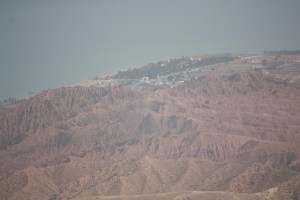
POEM: Kyrgyz South Shore

standing on a green mountaintop
with snowcaps to my back
ahead, angular arid lands
crinkled, as marked by wrack

beyond, a lake still and turquoise
waters frigid as clear
not a sound but for bird or breeze
at habitat frontier

where do desert, beach, and meadow
mingle as in this place?
a thousand square miles condensed
into a hundred acre space

BOOK REVIEW: Kulager by Ilias Jansugurov [Trans. Belinda Cooke]


Kulager by Ilias Jansugurov
My rating: 5 of 5 stars


This narrative poem was written by Ilias Jansugurov about the life of another poet, a man named Akan who lived from 1843 to 1913. More accurately, it’s about Akan’s horse, the eponymously named “Kulager.” The story revolves around a horse race that is takes place in Kazakhstan. An important, if unloved, man passed away, and as part of the wake there is a massive get together of people from far and wide, and it features a horse race.

Kulager is a crowd favorite, and in the cut-throat Kazakh steppe, that love seals the animal’s fate. The opening chapters acquaint us with setting, with Akan, and with Kulager, and then proceed into the story of the Akan’s arrival, the pre-race braggadocio that confronts him, and the race, itself. There is another favored horse who isn’t so beloved as Kulager but who has an owner willing to do anything to secure a victory. The tragedy that ensues is one in a long line that have confronted Akan.

It’s worth mentioning the tragedy of the author’s own life. Jansugurov was killed in 1938 in Stalin’s purges. He was considered too outspoken, and his criticisms were not so well veiled to keep him from drawing the ire of the state.

The book includes monochrome artwork and a glossary that comes in handy for those who aren’t acquainted with the Kazakh language. There are two forwards and a translator’s post-script, but it’s not the case (as is sometimes the case for poetry and thin volumes, more generally) that the ancillary matter exists to pad the book out to a publishable length. The ancillary matter is of reasonable length, contains useful information, and the bulk of the page count consists of the poem.

I found this book interesting and readable and would recommend it for those interested in life on the steppe. I picked “Kulager” up because I try to read indigenous literature from each country I visit, and this was the only Kazakh literature I could find translated to English. That said, it seems to be the first work to be put out by Kazakhstan’s National Bureau of Translations, and so – hopefully – there will be more to follow.

View all my reviews