Tsukahara Bokuden Defeats a Braggart

[Note: There are many versions of this story, and these events have even been attributed to other warriors. The tale was likely passed around orally before it was written down myriad times in myriad different ways (most famously in the Kōyō Gunkan.) The details of the story aren’t important; it’s the overall moral of the story and that remains the same from one version to the next.]

Bokuden Boat

Tsukahara Bokuden listened to the braggart nauseating the ferry passengers with graphic details of his “exploits.” Bokuden would have happily ignored the young samurai, but the cocky youth seemed eager to take offense at the lack of interest in his tales of hacking people to bits and was looking for a fight. The other passengers on the boat were all commoners: an elderly man who was probably a craftsman or a small business merchant, and a mother with her young child.

“Do you doubt me? Do you have the audacity to call me a liar,” The young man said, having not received a suitably enthusiastic response to his stories. And he stood, one hand on his scabbard and the other brushing his sword’s hilt.

Tsukahara Bokuden said, “Easy, young man. No one is calling you a liar. These good people are just not used to such bloody stories.”

The young samurai turned to eye Bokuden, who had appeared to be napping in the back earlier. The braggart asked, “And who are you to challenge me?”

“I didn’t challenge you. I merely explained these people’s lack of enthusiasm for your yarns. But if you must know, I am Tsukahara Bokuden,” he replied, hoping his name might give the bragging samurai pause. Bokuden was well-known, having traversed Japan in musha shugyō (sometimes related to the European “knights errantry,”musha shugyō was a time in a samurai’s life–particularly in times of relative peace–when he traveled the land engaging in matches with individuals from other schools to increase his skill and notoriety–i.e. if he didn’t get killed, which was not uncommon, even when the fight was with wooden swords.)

“I’ve never heard of you. What’s your style?” the cocky samurai asked.

“Mine is the School of No-Sword,” replied Bokuden.

“I’ve never heard of that school, but it sounds weak,” the braggart said.

“I assure you, the technique is quite powerful,” Bokuden said.

“Are you suggesting that you could defeat me with this so-called ‘no sword’ technique?” the braggart said, his hand tightening on his scabbard.

“I said nothing of the sort. I would just like to enjoy the remainder of the ferry ride in peace,” said Bokuden.

“Are you scared to have a match to see who’s style is better?” the cocky youth asked.

“Not in the least, but I see no benefit in it either,” Bokuden replied.

“I’ve had enough of your lip, old man, prepare to defend yourself,” said the young samurai.

Bokuden sighed, “If you insist upon a match, let us at least do so where these good people’s lives will not be in peril. Surely you’ll agree that it would do no great honor to the samurai class if we were to injure or kill innocent bystanders.”

At this the braggart just harrumphed, “Who cares, but I’ll take you on wherever you wish.”

Tsukahara Bokuden said to the oarsman, “Sorry to trouble you, but would you mind diverting to drop us on that outcrop so that we can spare these people the swinging blades.”

The oarsman was readily agreeable. He didn’t want two samurai fighting on his ferryboat any more than Bokuden did.

He rowed them to a stony outcrop that jutted up out of the water. The uneven rocky ground wasn’t ideal for a match, but it would spare the other passengers and would provide a challenge.

When the boat’s bow ground up against the rock, the young samurai jumped out, twisting around in air, and landed on the rock. The braggart held his scabbard and hilt at the ready for a swift draw. The young man was eager to do battle, and it was clear that he was annoyed with Tsukahara Bokuden’s slow movement. The older swordsman took out both of his swords and asked one of the passengers to hold the swords. The oarsman and the passengers were surprised by this disarming behavior, but they’d heard him call his school the “school of no-sword.”

Tsukahara Bokuden then moved up to the boat’s bow as if preparing to move ashore.

“Might I borrow your oar, young man?” Bokuden said to the oarsman. The oarsman nodded and handed Bokuden the long oar with two hands, and with his head bowed. The general assumption was that the older samurai wanted to stabilize the boat against the rock so he could pass ashore smoothly.

Taking the oar, Bokuden drove one end into the outcrop, and grabbed the other pushing the boat away from the rock. The boat glided out from the rock in an accelerating fashion.

Lunging toward the water’s edge, the perplexed braggart called out, “What on earth are you doing, old man?”

To which Bokuden replied, “I’m defeating you with the school of no sword.”

By the time the young samurai could remove his swords and tug away his outer garment, Bokuden had rowed out to deep waters and returned the oar to the oarsman.


Learning to Leap: Why?

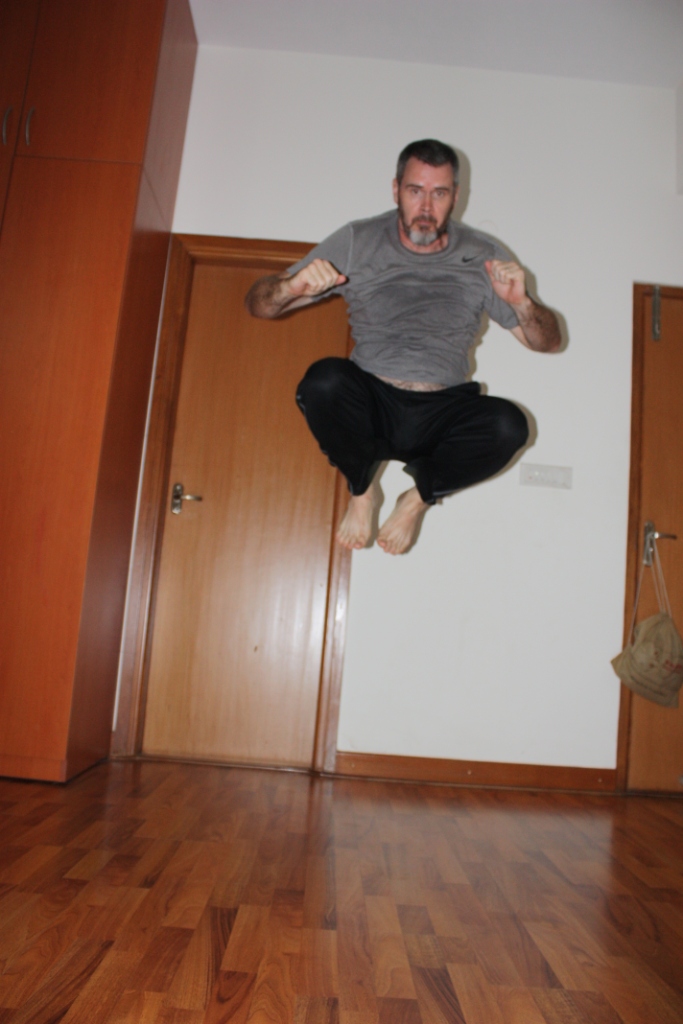
IMG_1631Leaping maneuvers are ever-present in martial arts movies and in some martial arts (e.g. Indian Kalaripayattu and some forms of Kung fu). However, these acrobatic techniques are rarely seen–and are even less often successful–in combative encounters (neither in sport nor in the real world–excepting those sports that highly reward such maneuvers and create rules that make them feasible for entertainment value.)


Why leaping, spinning wildness is popular in movies is easy. We thrill to see extremely demanding action that draws ooohs and ahhhhs. It’s the same reason one wants to watch a parkour runner vault over a car (presuming it’s not one’s car), even when it would be infinitely more practical to walk around it. It’s why we want to see gymnasts tumbling and flipping through the air even though walking across the floor is both easier on the joints and less hazardous.


However, the question of why martial arts that aren’t purely for entertainment practice leaping maneuvers. Even a few of the quintessentially pragmatic Japanese martial arts, which follow the motto “eliminate the extraneous” have some leaping techniques. One of the schools I’ve studied, Kotō-ryū Koppōjutsu has a scroll devoted to leaping techniques, despite the fact that it’s otherwise a grounded system–both literally and figuratively. Muay Thai, which also values tried and true winning basics over snazziness, also has leaping knee strikes in its repertoire, though one doesn’t see them a lot in fights. It’s true that the arts that emphasize practicality but have leaping and spinning techniques tend to have a different approach to them. The Kotō-ryū Hichōjutsu (that school’s leaping techniques) emphasize eliminating big wind-ups, and going straight into the leap from a natural posture. This gives one less air, but is much less obvious. It’s particularly useful if you don’t really want air, but you just want to leap as much as you must.  But why leap at all?

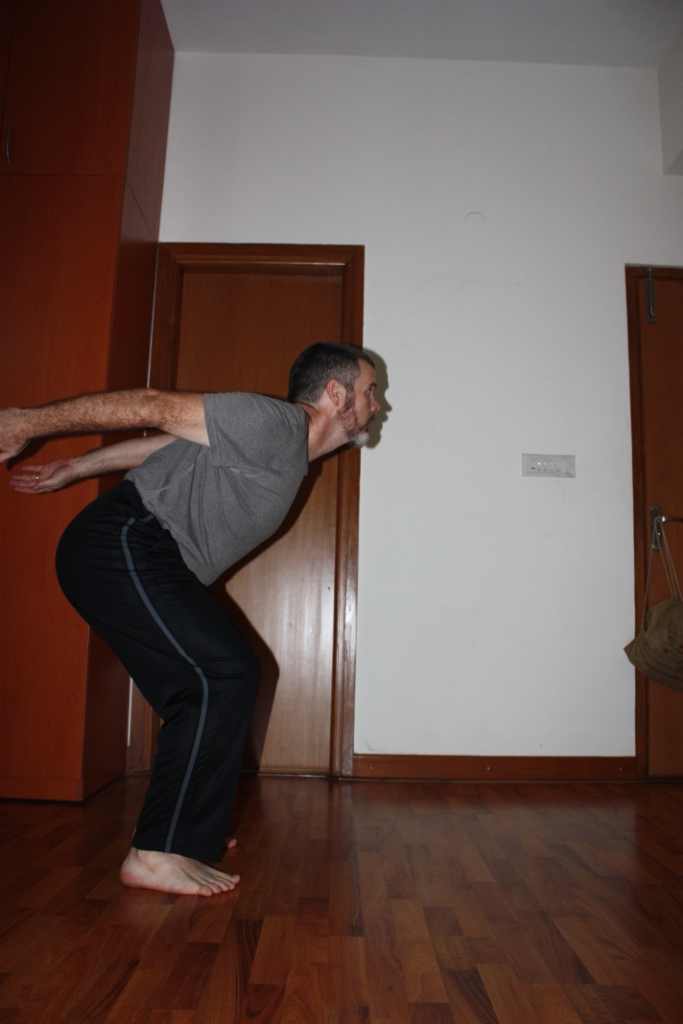
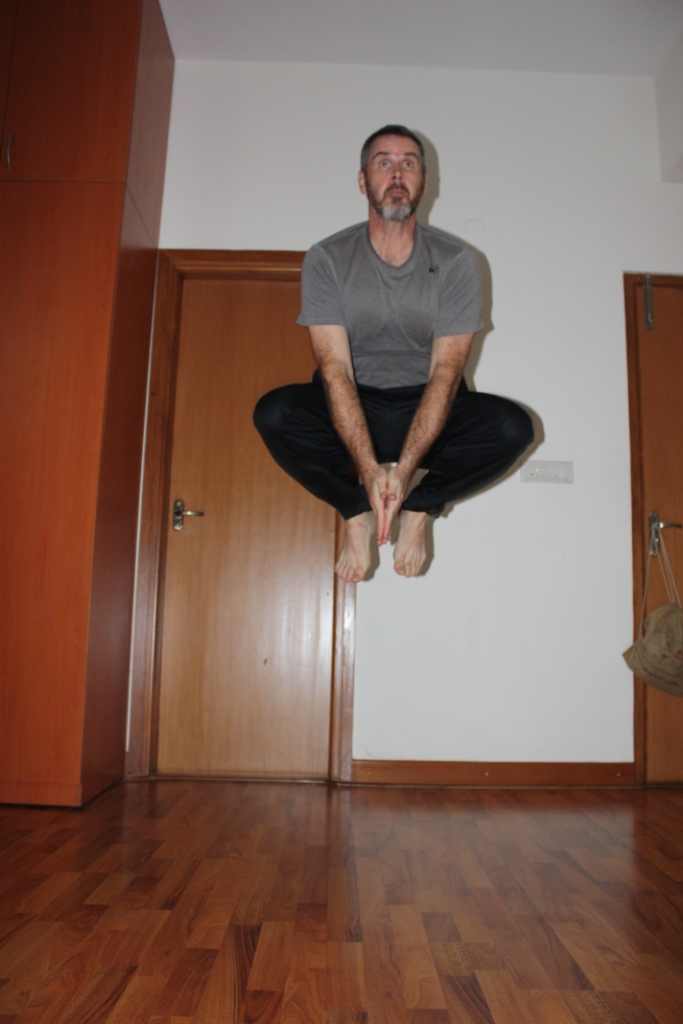
Creating this kind of spring loading of the legs may not fly.

Creating this kind of spring loading of the legs may not fly.

This kind of windup would be anathema to schools.

This kind of windup would be anathema to some schools


There are a number answers to this question. First, while it’s hard to make aerial techniques work, when they work, they can be devastatingly effective. There are few ways to put more power into a strike than to literally put all of one’s body-weight in motion under the force of gravity. There’s understandably something unsatisfying about this explanation. I think it mostly has to do with the dearth of second chances in combative encounters. Few second chances make one want to have the highest likelihood of success on the first go.


Second, while tried-and-true, go-to techniques work because they are hard to defeat and /or they minimize one’s risk of a fight-ending counter, some techniques work because they catch the opponent off-guard. Such techniques work because the opponent can’t believe one is actually trying something so wild on them. However, failing to anticipate the unusual, the opponent hasn’t trained a response into themselves. This answer gets us somewhere in cases where either the situation is dire or one knows something about the opponent.


Third–and I would argue most importantly–these techniques produce explosively powerful legs that are beneficial to a martial artist even when he stays on the ground. In other words, maybe they are more important in the role of capacity building than they are as actual techniques to be emulated.

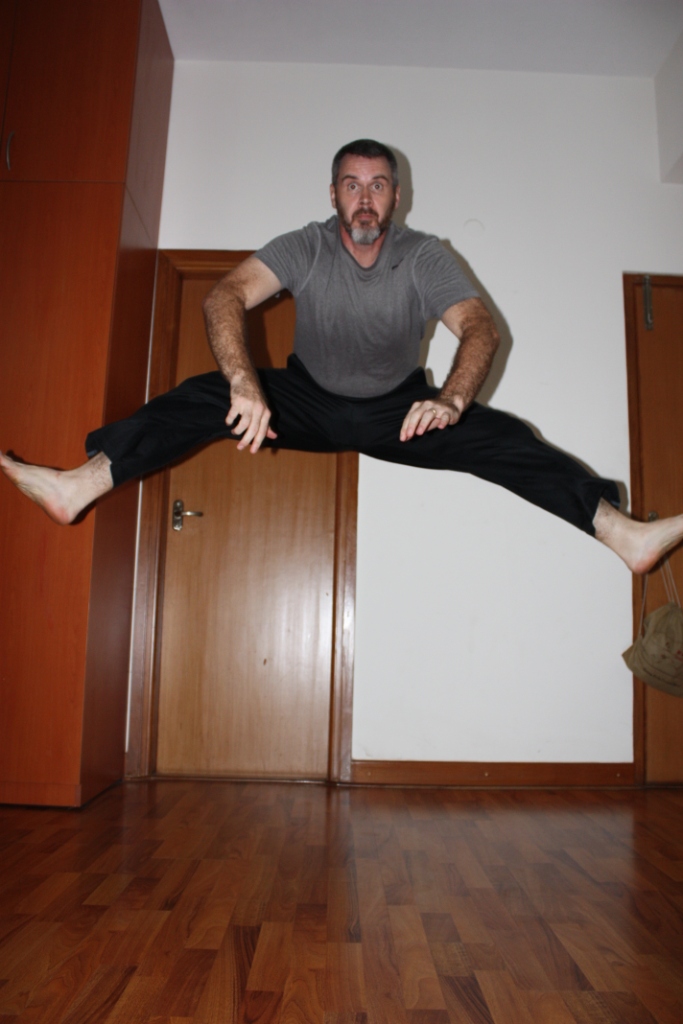
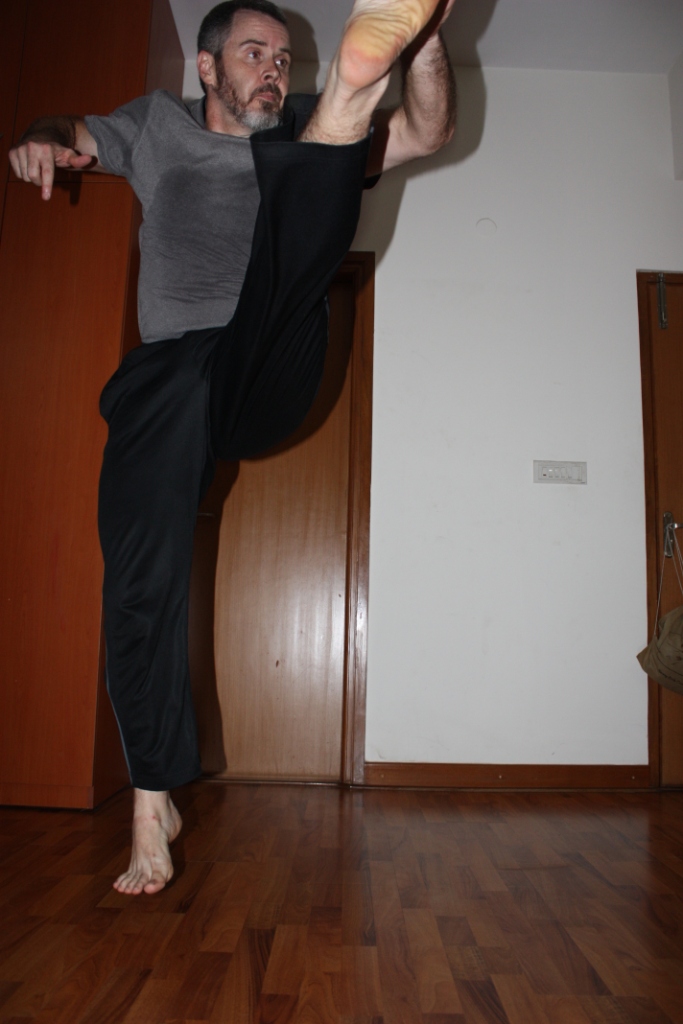
The split kick allows one to kick two opponents at once--as long as they aren't moving and are  perfectly spaced. However, it does require a multidimensional fitness that's beneficial for martial artists. (Which is why I can't do it well.)

The split kick allows one to kick two opponents at once–as long as they aren’t moving and are perfectly spaced. However, it does require a multidimensional fitness that’s beneficial for martial artists. (Which is why I can’t do it well.)


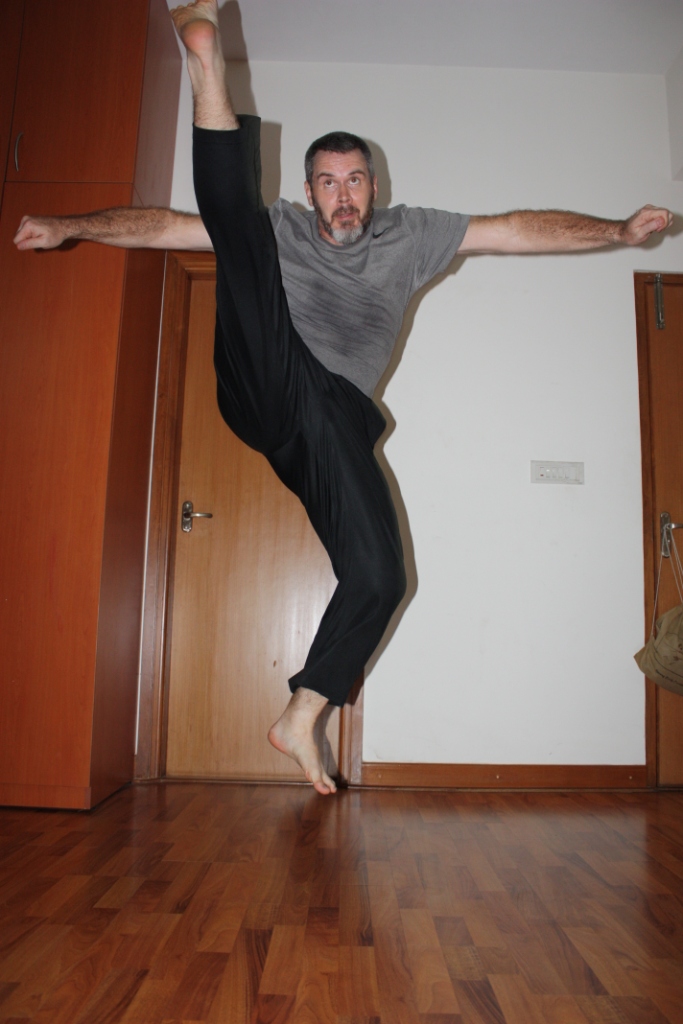
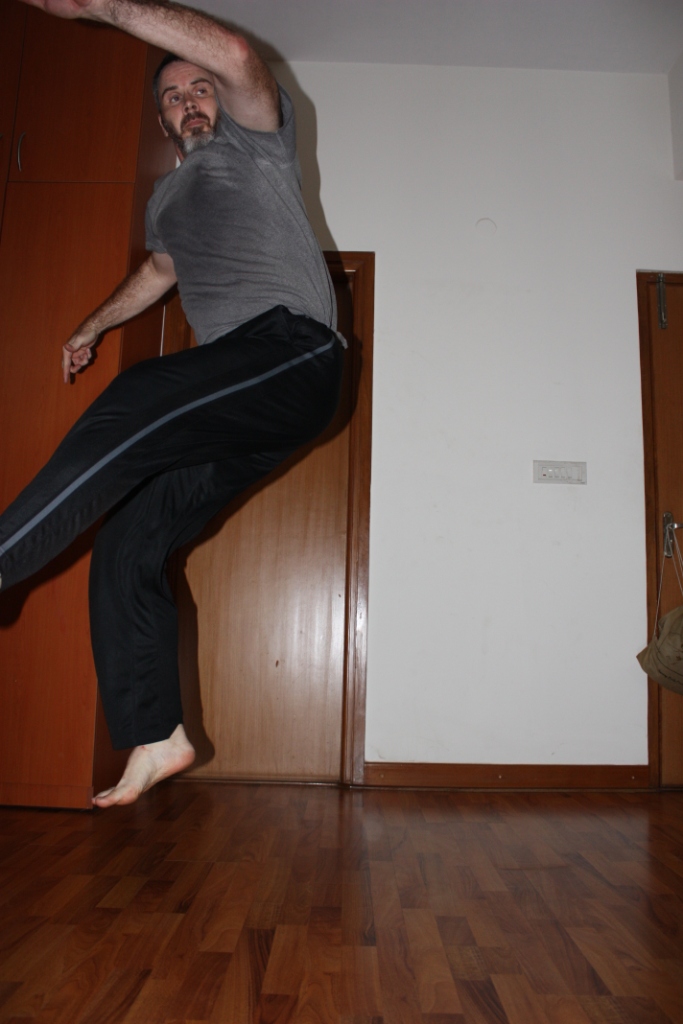
Finally, there’s one more reason that is important but was last because I didn’t even learn this lesson until I was reviewing the photos for this post, and that’s that these techniques require a whole new level of bodily awareness and control. I would generally be considered to have pretty good bodily awareness. I’ve been doing martial arts a long time, have practiced various kinds of yoga and chi gong, and have done my share of other physical training. Still, when I looked at my photos I found that I often had body parts jutting every which way. While one may argue that one doesn’t need that brand of bodily awareness if one is not using that kind of motion, I think that it probably helps with one’s awareness at high-speed in general and that many arts don’t adequately prepare one for keeping one’s body under control when there are those extra forces (e.g. centripetal & centrifugal, and gravity) acting upon it.

In my mind this looked completely different. I didn't have my arms out to the side like I was on a cross and my heel standing leg heel was still up near my buttock.

In my mind this looked completely different. I didn’t have my arms out to the side like I was on a cross and my heel standing leg heel was still up near my buttock.


One aspect of bodily awareness that is particularly important for these maneuvers is control of the eyes. In the arts I’ve studied, there has always been emphasis on the placement of the eyes. However, given all the little details one had to keep in mind, it was a reality easy aspect to half-ass. However, when one is leaping, and particularly if there is a spinning component, wandering eyes translates to crash and burn.

Entering the spin.

Entering the spin.

Mid spin / mid kick

Mid spin / mid kick. I have no idea why my right index finger is pointed down.


I’m not built for leaping. It’s not so much the leaping, but–in the immortal words of Tom Petty–“Coming down is the hardest thing.” I figured that getting to the level of Kalaripayattu training that involves a lot of leaping would be the end of that art for me. As I mentioned, there are some leaping techniques in the martial art I studied, but I was never particularly good at them. When I was young and had the proper body for it, I didn’t have the right mindset, and when I got older I was lacking the physical capacity for them. However, I’ve learned quite a bit about my body through the practice of these techniques, and I’m interested to see what level I can take it to.

IMG_1654


Haiku no Gyokko-ryū Jōryaku no Maki

throw open the gate
mindless herds will charge headlong
into the stockyard


prolong each journey
show the Emperor the sights
drop his palanquin


the guitarist’s hand
bounds chord to chord on the dot
no beat is missed


the slug ricochets
yet always finds its mark
burrowing deeply


waves washing ashore
within a rocky inlet
turn about strongly


gulls flap into flight
slowly lifting skyward in
an unrushed climb


sparks pop from the fire
with impeccable timing
uncapturable


topple the gatepost
with a splintering impact
but start with a sting


the pinky finger
of a raging wild-eyed brute
snaps like a pea-pod


once the snake constricts
all is hopelessly lost
sting first and sting deep


bears don’t crush stout trees
stout trees sometimes crush a bear
falling in tree’s time


the bull’s hoof clomps down
a statement made decisive
not to be wrangled

Book Review: Takagi Oriemon, Budo Hero of Shiroishi

9781447769033Takagi Oriemon: Budō Hero of Shiroishi by Mamiya Hyoemon

My rating: 4 of 5 stars

This is an English translation of a book that was written long ago. The translation is by the Jinenkan Honbu Dojo — specifically Manaka Unsui (the head [Kancho] of the Jinenkan) and his students Robert Gray, Maurizio Mandarino, and Eric Shahan. The original is entitled Budo Shiroishi no Ei and was written in Japanese.

The book is the story of the seven-year warrior pilgrimage (musha shugyo) of a warrior named Takagi Oriemon who lived from 1625 to 1711. Takagi founded a martial arts school that, as was typical, branched out over the centuries. As I understand it, there are two or three descendant schools still in existence today.

Takagi was legendary for his strength. The book offers many accounts of descriptions of both his physical strength (from moving boulders to help farmers to chopping down a house to create a fire break) and his strength of mind (e.g. staying where others were afraid to because of hauntings.) However, mostly it portrays Takagi as a supremely humble and virtuous man. He misses no opportunity to assist those in need of help, and always humbly declines reward. He does not use his great power for wanton destruction, but does punish the wicked when no other choice remains.

Unlike Musashi’s Book of Five Rings or Yagyu’s The Life-Giving Sword, which are mostly about strategy, this book is mostly examples of virtuous living with a few strategic concepts thrown in.

I can offer a test for whether a reader might enjoy this book or not.

You’ll love this book if you:
– are fascinated by biographies of great martial artists.
– enjoy learning about life in Japan during the Tokugawa period.
– enjoy morality tales and the example set by great men and women.
– like to be inspired by people who really had their stuff together.
– don’t mind the occasional ghost story.

You won’t like this book if you:
– are an editor or English teacher and things like errant apostrophes make your head explode.
– are turned off by the flouting of conventional writing style (multi-speaker paragraphs of dialogue abound in this book.)
– find that ghost stories or supernatural elements completely ruin an otherwise down-to-earth read.
– find typos grate on your nerves.
– are really grossed out by gory manga-style line drawings (they are not all like that, but some are.)

I had to deduct at least a star for the many grammatical and formatting deficiencies of the book, but I still think everyone would gain from reading it and seeing the life example set by Takagi Oriemon: Budo Hero of Shiroishi.

View all my reviews