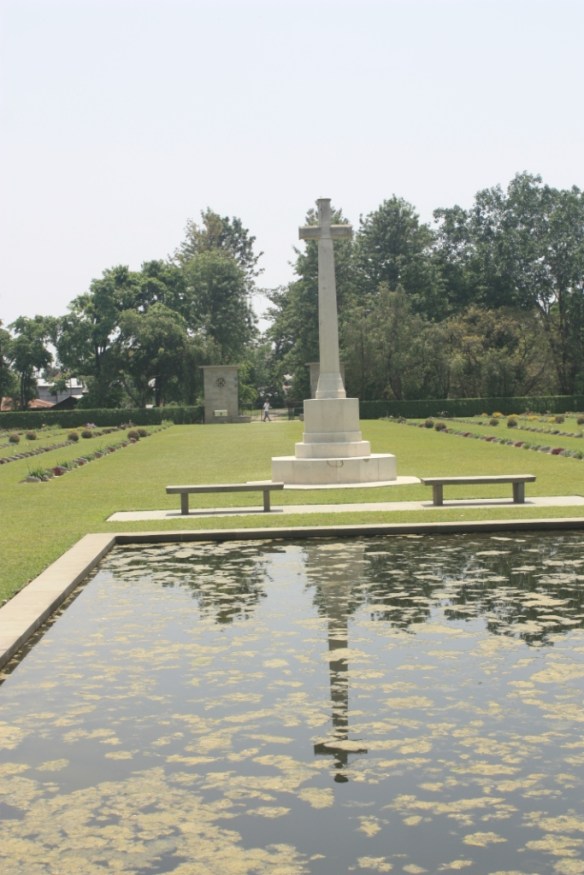
DAILY PHOTO: Imphal War Cemetery

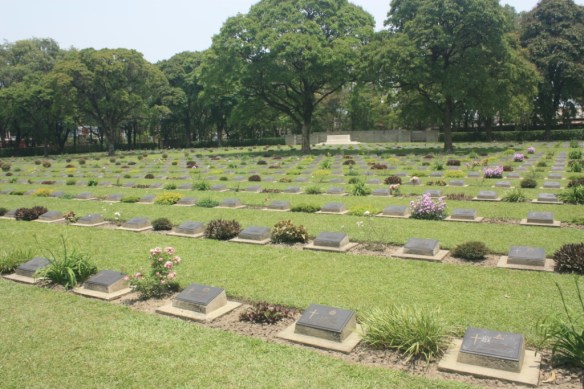
Taken on May 5, 2017 in Imphal


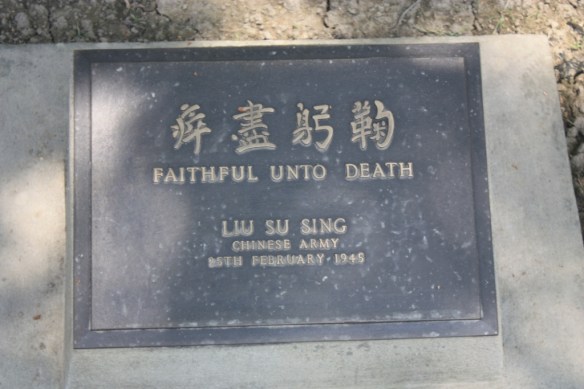
Japan reached the end of line in its advance to the west in Northeastern India. Both Kohima in Nagaland and Imphal in Manipur have substantial war cemeteries. This is the one in Imphal. The graves are largely English names with crosses or Indian names with Hindi writing, but there are a few others of note. There are several unknown soldier graves, and a fair number of Muslim graves.  There are also laborers who got only one name put on their grave, and–in the case below–the grave of a Chinese soldier.


It was a confusing time because many Indians were serving with the British to fight the Japanese, but other Indians were fighting Britain and trying to ally with Japan.


BOOK REVIEW: The Devils of Loudun by Aldous Huxley

The Devils of LoudunThe Devils of Loudun by Aldous Huxley
My rating: 5 of 5 stars

Amazon page


In 1634, a parish priest named Urbain Grandier was tortured to exact a confession that he’d engaged in sorcery and made a pact with the devil. There was plenty of reason to believe that Grandier was a less than virtuous fellow (e.g. that he knocked up the teenage daughter of his best friend in Loudun), but no evidence of the crimes that he was actually accused of–and that the Church insisted he cop to despite his steadfast denials. However, there was some potent circumstantial evidence in the form of a case of mass hysteria by members of a convent of Ursuline nuns that was attributed to demonic possession at the time.

Huxley tells this fascinating story in great detail. At some points, perhaps too much detail. The writing style can come across as pretentious, needlessly complicated, and slow-moving at times. (For example, there are frequent quotes and snippets of poetry in French–and a few in Latin—and many of these were not translated to English in the edition that I read. Apparently, the assumption was that the reader would have a basic competency in these languages.) However, when it comes to the climax of the story, the book is as gripping as they come. Having been presented with great insight into Father Grandier, we know him to be a deeply flawed man. He’s like the priests and bishops of a Marquis de Sade novel, lecherous and libertine. Yet, he manages to become a sympathetic character as he shows virtue of sticking to his guns in denial of being in league with Satan long after the truth of his vices has been admitted. In essence, when juxtaposed to his inquisitors, he becomes the lesser of two evils.

I also don’t fault that Huxley delves into analysis, because there is a fascinating question at the heart of the event—one that deserves to be batted around. What made this group of nuns behave in such an un-nun-like fashion? There was writhing, foul language, wardrobe malfunctions, etc. Today, it’s impossible for a rational skeptic to write these events off as demonic possession. However, while the Mother Superior, Sister Jeanne of the Angels, clearly had an axe to grind against Grandier (for issues regarding organizational leadership and not so much for womanizing the townies), that also seems unsatisfactory as a cause for these sisters to behave as they did. There have been a number of cases of pretended possession, but generally these were individuals—e.g. Martha Broissier. There seems to be some fascinating psychology at work in this case.

The book is arranged in 11 longish chapters, largely following a chronological progression of events. The edition that I have has some interesting appendices as well as a bibliography. There isn’t much in the way of graphics, but as the book reads like a novel one doesn’t expect there to be.

I’d recommend this book for those who are interested in history or psychology. It’s fascinating in both domains. While I thought the book could have been a little clearer and more concise, it’s still quite readable and the heart of the story is highly engaging. I was also reading the book as a general interest reader. A scholarly reader might appreciate Huxley’s thoroughness more.

View all my reviews

DAILY PHOTO: Azad Maidan, Panjim

Taken on October 9, 2016 in Panjim, Goa

Taken on October 9, 2016 in Panjim, Goa


This monument is dedicated to Dr. Tristao de Braganza Cunha, who was an Indian nationalist who opposed the colonial regime. While India gained it’s independence from Britain in 1947, Goa remained under Portuguese rule until 1961.

DAILY PHOTO: B.B.D. Bagh

Taken on July 3, 2016 in Kolkata

Taken on July 3, 2016 in Kolkata

IMG_0284 IMG_0290


This square in Kolkata was previously named Dalhousie square for the British Governor General of that name. B.B.D. is short for Benoy-Badal-Dinesh, three gunmen who assassinated the Inspector General of Prisons in a gunfight in a prominent building nearby (i.e. the Writers’ Building.) All three of the men committed suicide rather than be captured (Badal via Potassium Cyanide and the others by self-inflicted gunshot wound.)

DAILY PHOTO: Shahid Minar

Taken on July 2, 2016 in Kolkata

Taken on July 2, 2016 in Kolkata

IMG_0316


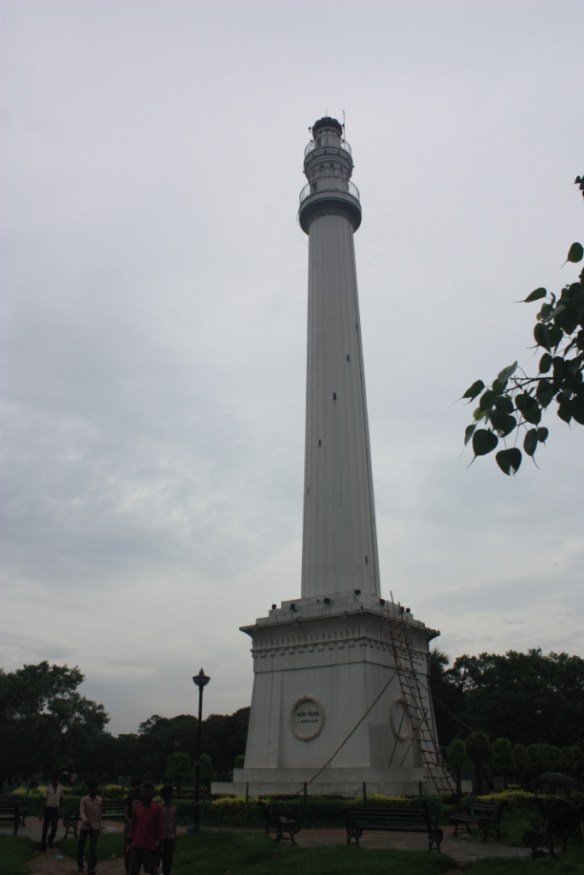
Interestingly, while this monument looks like the minaret of a mosque (and combines elements of Egyptian, Syrian, and Turkish architecture) it was originally a memorial to the commander of the British East India Company, Sir David Ochterlony. Ochterlony was instrumental in the defense of Delhi in 1804 against Marathas and a British victory in the Anglo-Nepalese war.


In 1969, it was re-purposed to serve as a monument for those who died in the Indian independence movement. The current name, Shahid Minar (or Shaheed Minar) means “martyrs’ monument.”


The Shahid Minar dates to 1828 and sits in the north of the Maidan, Kolkata’s central park.

BOOK REVIEW: Into Africa by Martin Dugard

Into Africa: The Epic Adventures of Stanley and LivingstoneInto Africa: The Epic Adventures of Stanley and Livingstone by Martin Dugard
My rating: 5 of 5 stars

Amazon page

“Doctor Livingstone, I presume?” These iconic words are culturally embedded in the psyche of Americans (and, I assume, the British as well), but I had only a vague understanding of their meaning before reading Dugard’s account of the two expeditions that would bring the phrase into household immortality—the first of which was Dr. David Livingstone’s search to once-and-for-all find the source of the Nile and the other was Henry Stanley’s search to discover whether Livingstone was still alive.

If one isn’t a diehard history buff, it can be hard to maintain one’s interest in events of almost 150 years ago. Let me assure you, this isn’t the case for stories of African explanation—including “Into Africa.” If the author is at all skilled, these books read like novels with an almost improbably high level and pace of tension. That’s because almost everything in Africa in those days was working against the explorer, and most things were actively trying to kill him. A summary of threats include: a panoply of diseases (e.g. malaria, dysentery, etc.), an ark of animals and insects (e.g. poisonous snakes, lions, elephants, rhinos, etc.), and of course tribes and other humans (e.g. one could find oneself caught in the cross-fire between Arab slave traders and tribes who resented being enslaved, even if one had no stake in the fight.) And if none of those killers got one (and at least some of them always did), your men might desert you in the middle of the night while absconding with all your goods—and those goods were how one paid for both one’s food and for safe passage through tribal lands. In Dugard’s work, one sees each of these threats played and replayed, as well as a host of others from political conflicts, incompetence, and disgruntledness. It should be noted that there was almost no precedence for sending someone to look for a lost explorer—it was considered so unlikely to succeed in that era, not to mention likely getting a lot more killed.

The book largely alternates chapters featuring Stanley with those featuring Livingstone. This is particularly the case once the book reaches the point at which Stanley is actively on the trail. These were very different men, but the name of each man became synonymous with courage. Stanley was an American journalist who made it to the top based solely on willingness to go places and do things other reporters wouldn’t. In fact, he had trouble making a go of his career starting out, and it wasn’t until a traumatic adventure that he developed the assertiveness to make something of himself. Livingstone was already a legend when he took on this expedition, and was arguably too far past prime to be taking on such an adventure. The men were also quite different as expedition leaders. Stanley ran his caravan with an iron fist, while Livingstone was known for being lax and easily distracted—while they were at opposite end of the spectrum in this regard, it seems likely that both would have succeeded better with more moderation.

At the book’s beginning there’s a conflict at the Royal Geographical Society between Richard Burton (the explorer, not the actor) and John Speke over the source of the Nile. Livingston, a living legend, was asked to investigate and settle the issue—an objective he didn’t complete. It should be noted that finding the river’s source isn’t as easy as it sounds. Speke was correct in that the Nile reached at least to Lake Victoria (at the equator), but it wasn’t clear whether Victoria was connected to other lakes in the southern hemisphere, and—if so—how far down it went. There was a chain of lakes to the south that might have drained into the Nile, but, as it happens, flow into the Congo River.

I found this to be fascinating reading. The book consists of 40 chapters divided among five parts, and so most of the chapters are quick reads and the interspersal of the Stanley and Livingstone story lines keeps the pacing going nicely. Dugard did a good job structuring the narrative.

I’d recommend this book for anyone interested in learning about Stanley, Livingstone or who just want to know what it was like to be an explorer on the Dark Continent. [Fun-fact: While “dark continent” sounds blatantly racist, it turns out that the phrase was originally used in reference to the fact that so much of the map was blank—i.e. it was largely unmapped.]

View all my reviews

DAILY PHOTO: Jallianwala Bagh Memorial

Taken on April 10, 2016 in Amritsar

Taken on April 10, 2016 in Amritsar

IMG_2830

IMG_2834


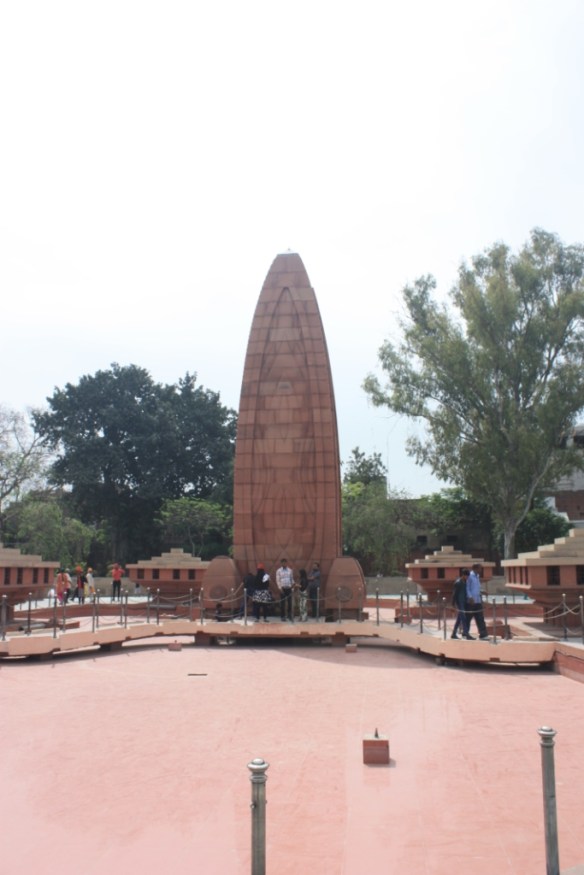
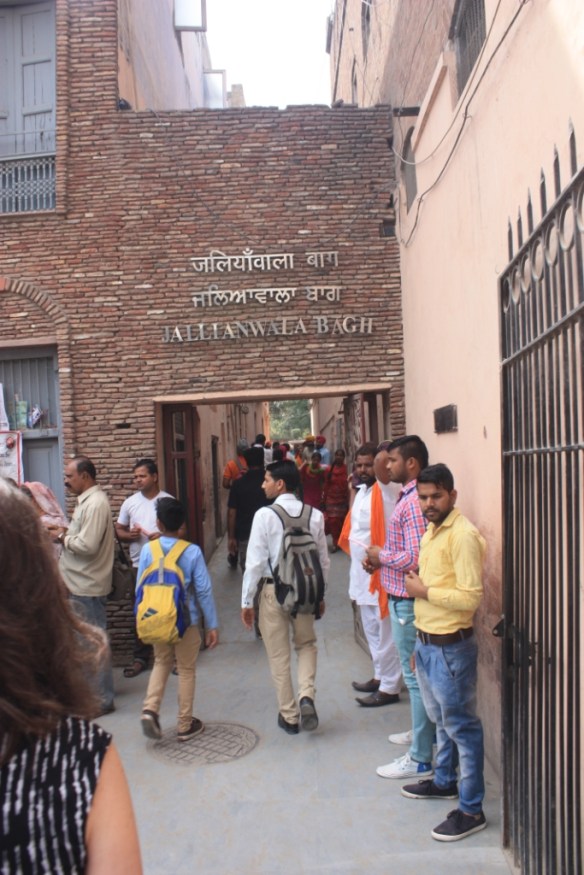
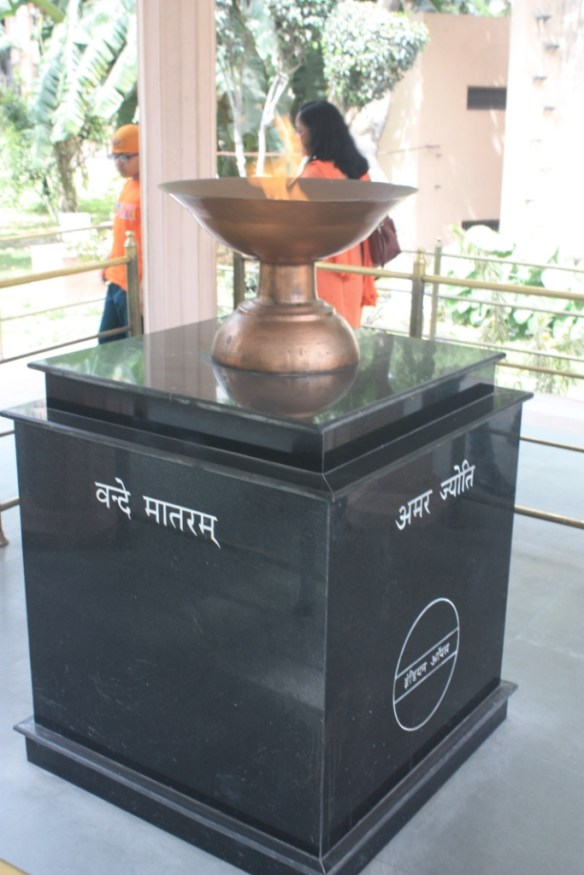
Jallianwala Bagh is the site of a memorial for those who died in a massacre that took place at the same location in 1919. You may be familiar with the massacre from its depiction in the movie Gandhi. The killings were carried out by British troops led by Col. Reginald Dyer against nonviolent protesters convened in the park there.

DAILY PHOTO: Military Bulldozer

Taken in December of 2015 at the War Remnants Museum in Ho Chi Minh City

Taken in December of 2015 at the War Remnants Museum in Ho Chi Minh City

DAILY PHOTO: Credentials Presentation Room, or Swanky Gold Room

Taken on December 20, 2015 in Saigon

Taken on December 20, 2015 in Saigon


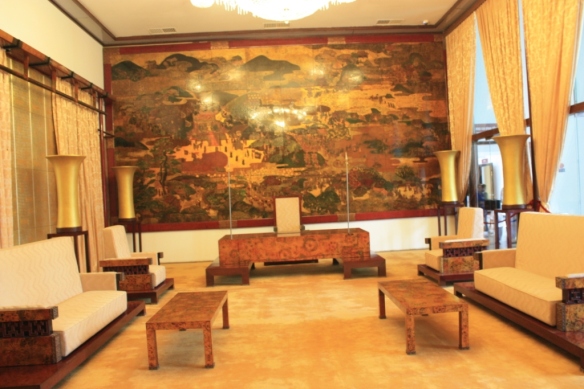
This room, featuring lacquered furniture and  artwork, is located in the Independence Palace (a.k.a. Reunification Palace) in Saigon (i.e. Ho Chi Minh City.) The palace had been the home of the leader of South Vietnam during the war years, and its fall to the North Vietnamese Army in April of 1975 signaled the unambiguous end of the war. This room was used for meetings with high level dignitaries, Ambassadors, and the like. It’s arguably the most impressive room in the Palace.

DAILY PHOTO: Vietnam Military History Museum

Taken on December 27, 2015 in Hanoi

Taken on December 27, 2015 in Hanoi

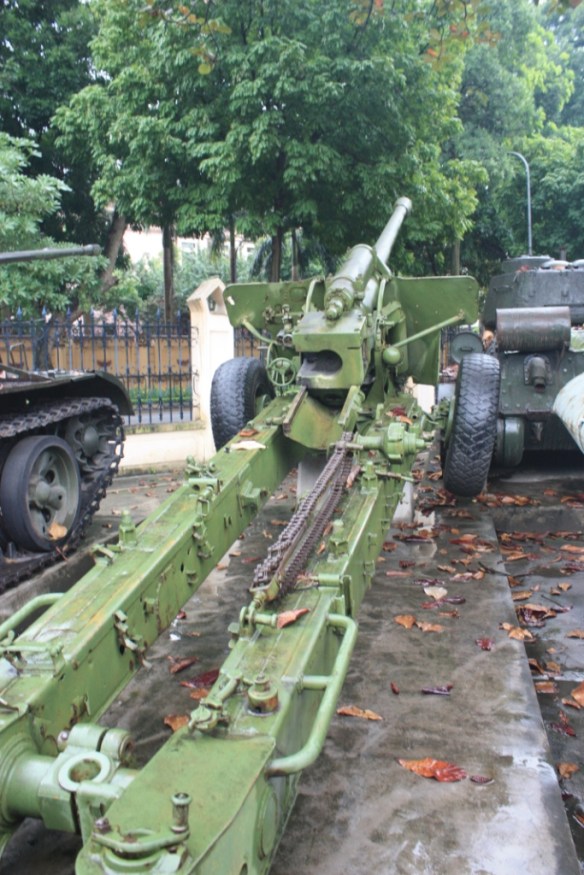
IMG_2114 IMG_2040 IMG_2078