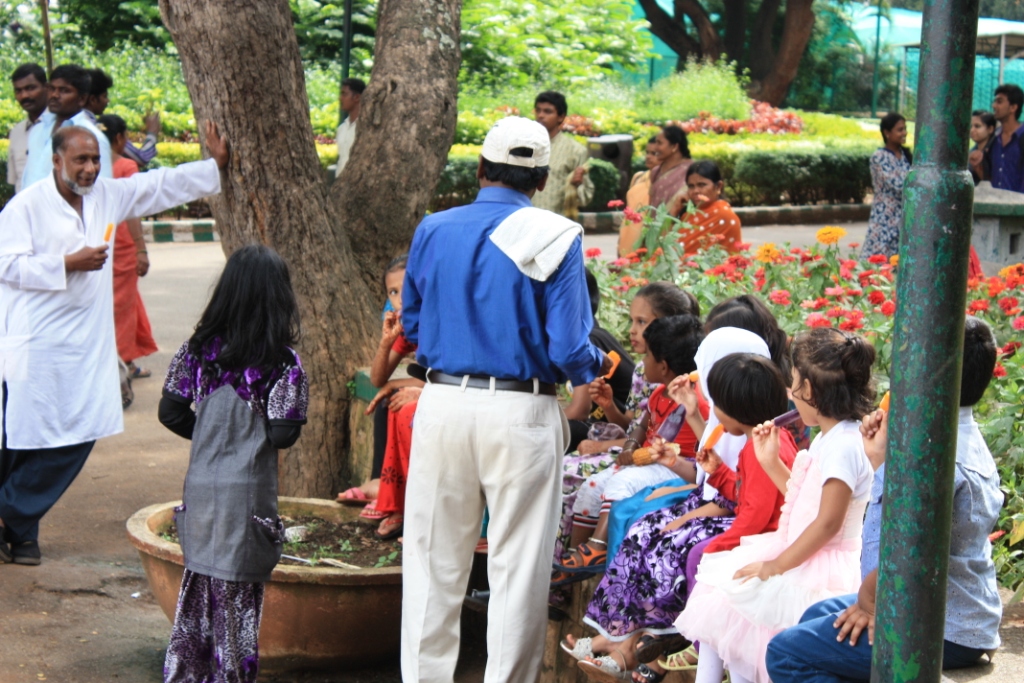
Taken September 8, 2013 in Lal Bagh Gardens, Bangalore.

Taken September 8, 2013 in Lal Bagh Gardens, Bangalore.
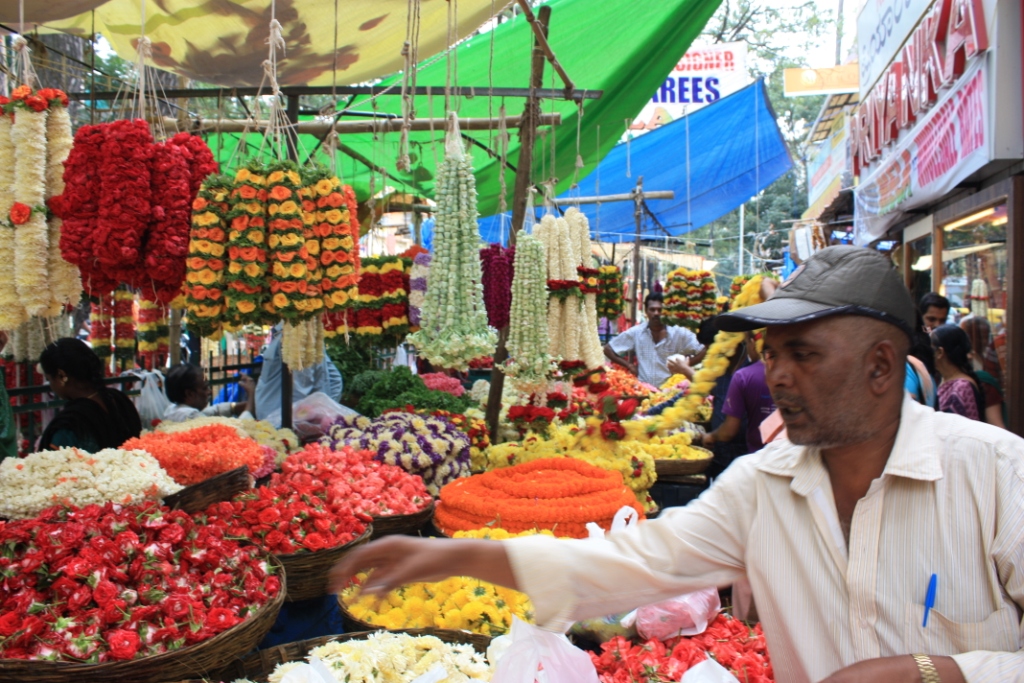
Taken Sept 7, 2013 at Gandhi Bazaar
Taken on September 3, 2013 in Cubbon Park
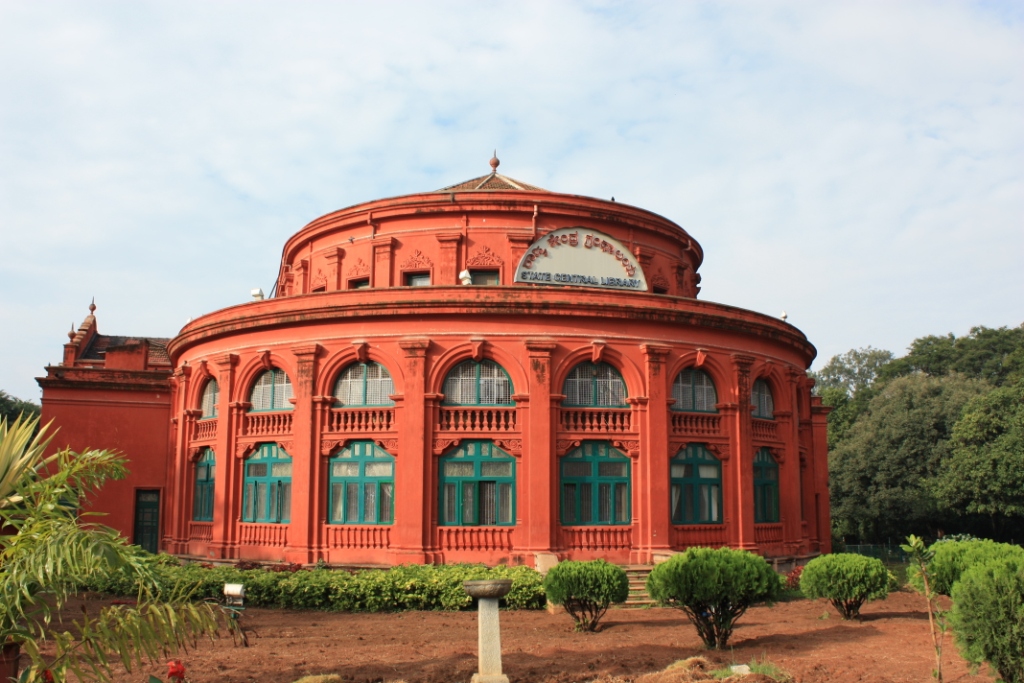
Bangalore has many buildings that look dull red in the midday light but become a vivid orange when exposed to the long, low light of dawn and dusk. This is but one. Others include the Karnataka High Court and the State Museum.
1.) Mornings:
Bangalore (Bengaluru) isn’t an early riser, and that makes the mornings an idyllic time for those of us who are so inclined. The weather is cool; the pollution is tamped down by all that plant respiration, and the wailing horns are sparse. It’s the best time to take a walk. One can actually cross busy intersections with minimal delay and risk to life and limb. Cubbon Park is closed to vehicular traffic.
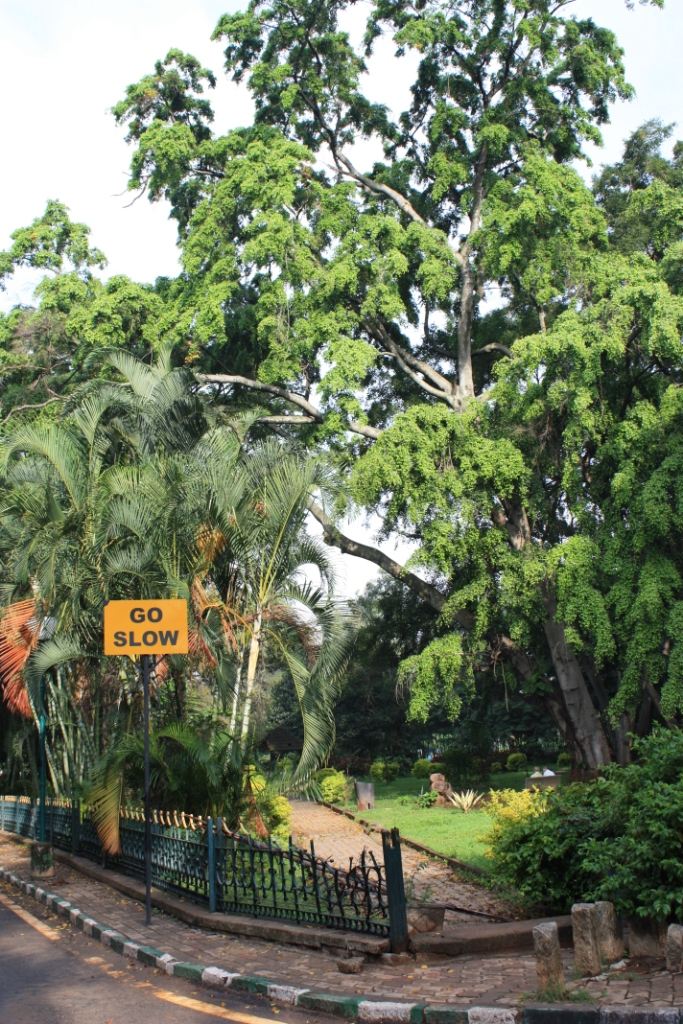
Words to live by
2.) Parks:
Bengaluru was once called the “Garden City.” While some refute this moniker in the face of the hyper-growth of this high-tech city, Cubbon Park, Lal Bagh Gardens, and numerous small parks offer aesthetically pleasing and relaxing oases.
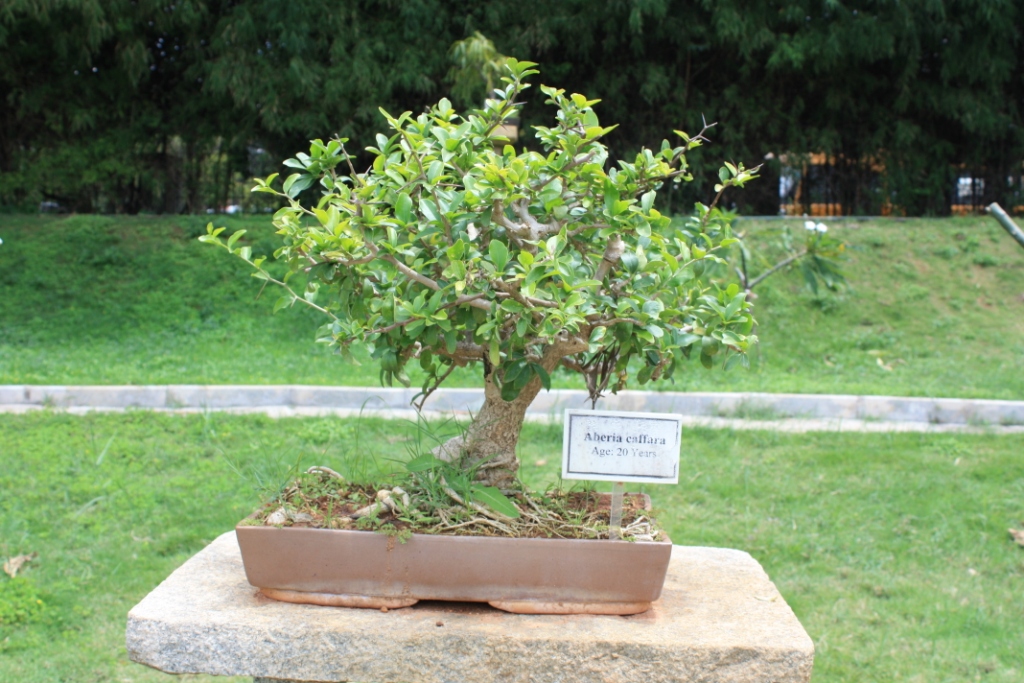
Lal Bagh Botanical Gardens displays a large collection of Bonsai.
3.) Restaurants:
The city offers a wide range of options for both South Indian cuisine as well as more cosmopolitan fare. I’ve sampled many local restaurants as we’ve been getting settled. The most iconic place I’ve eaten at in Bangalore is the Lal Bagh Road location of the Mavalli Tiffin Rooms (MTR.) I had the lunch thali. (For those unfamiliar, a thali is India’s answer to China’s dim sum, or what foodies might call a “tasting menu”– which is to say small portions of a large assortment of foods. MTR offers an interesting dining experience. One sits down at a large table, quite probably with a group of strangers, while bustling stewards come around to ladle up the thali’s various component dishes. MTR’s food was delicious, but, more importantly, it’s hygienically prepared as well. The restaurant was built on the idea of strict food sanitation standards. I have anecdotal evidence to support this claim as I made my sole slip thus far by drinking water whose origin I didn’t know from a cup that was placed before me at this restaurant. I was none the worse for the experience. I suspect MTR uses bottled water because there wasn’t any flat taste that I associate with boiled water, but–whatever they did– they did something. While I have a fairly robust system by Western standards, I’m under no illusions that I’d do well drinking untreated tap water here. (Time Out Bengaluru did a little piece in its “The City by Numbers” segment in the current issue. They say that 59% of Bangalore’s tap water is not potable, and 8.4% of borewell water is contaminated by E. Coli. Incidentally 0% of borewell water is potable.)
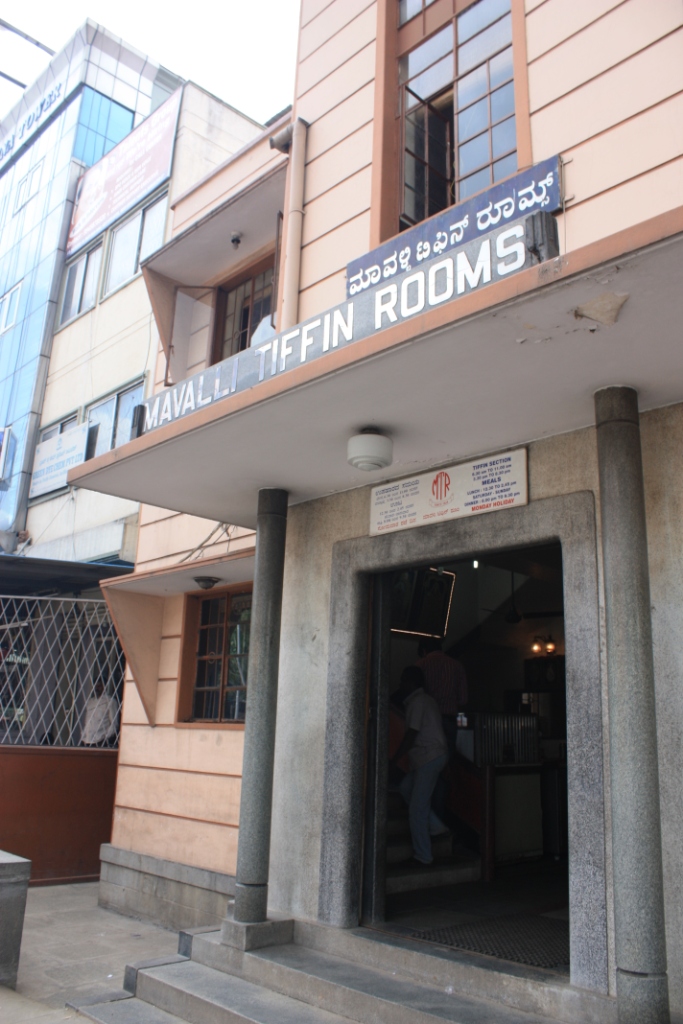
The Lal Bagh Road store, which is not the original location, but is the oldest of the existing locations.
While I have not yet tried any of the other locations, it should be noted that some of the newer restaurants appear to be more hip, trendy, and not so utilitarian. I saw the location below near Janata Bazaar. There is also a location blocks from where I live.
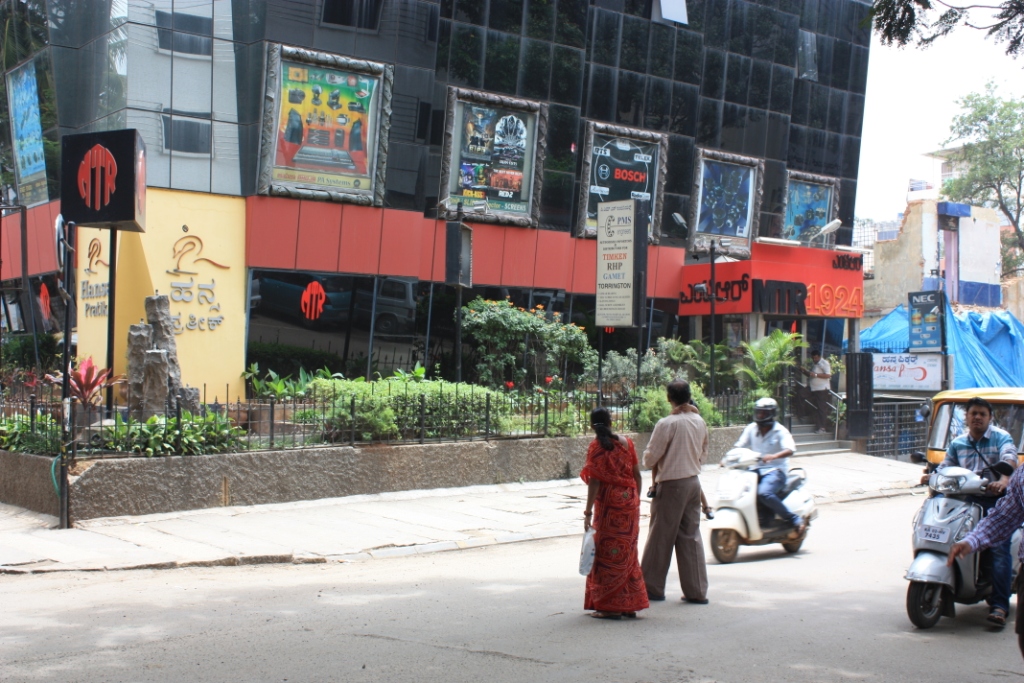
MTR Gandhi Nagar location.
4.) Serenity Against All Odds:
Despite the frenetic pace of this town, there are still many who manage to find some clarity and piece of mind. Besides the yoga practitioners in Cubbon Park and the adherents of various indigenous religions at temples and shrines throughout the city, there are large meditation centers headed by famous gurus. The most well-known of these are Sri Ravi Shankar’s Art of Living centers.
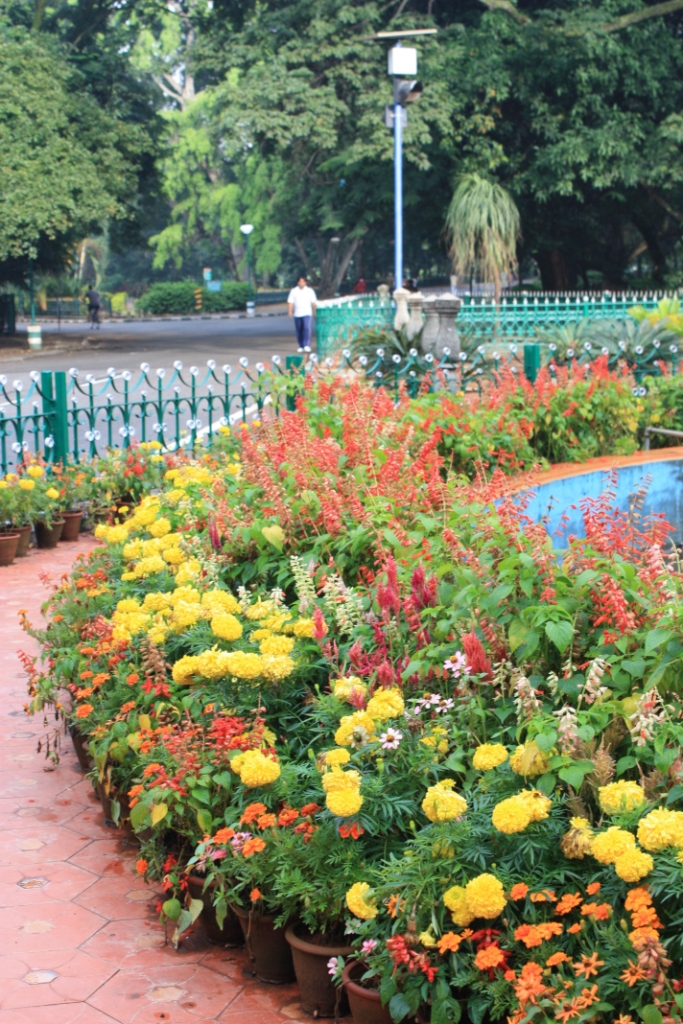
Cubbon Park with the roads closed to vehicles.
5.) Climate:
We’ve seen some heavy rains in the evenings and overnight since we’ve been here. This is apparently out of the usual as the rainy season should be over. However, even with nighttime rains, the weather has been great. Bangalore is the San Diego of India in that the climate doesn’t tend toward the extremes witnessed in many other parts of the country. This may have influenced the British decision to build a military base here. It most certainly influenced the wave of retirees who came here afterward. And it likely factors in to the calculus of all those IT firms that have converged here in recent years.
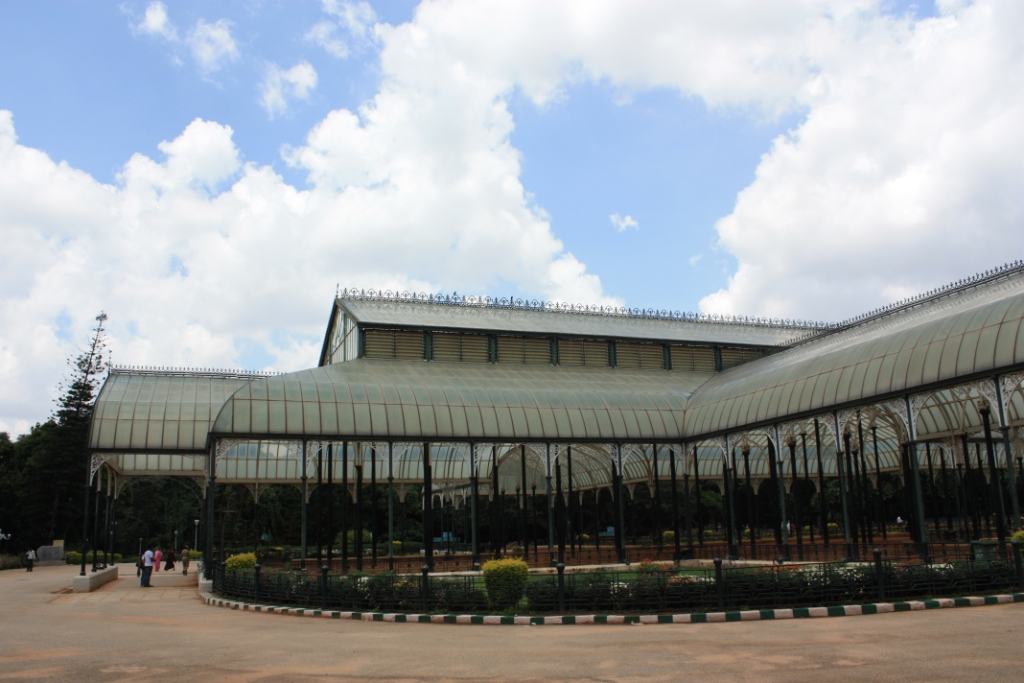
The Glass House of Lal Bagh gardens, and a typical Bangalorean sky.
6.) Stree Life:
In Atlanta, as in most of urban America, one won’t see wildlife bigger than a squirrel or animals bigger than a dog –at least not outside of the zoo. So large domesticated animals in the city is a big change, as is being able to go to the nearby countryside and see the likes of elephants. I’ve been surprised how freaked out some city dwellers in America got by the likes of a fox or a tomcat. It’s good to see people can move about in the presence of large animals without feeling the need to eliminate them.
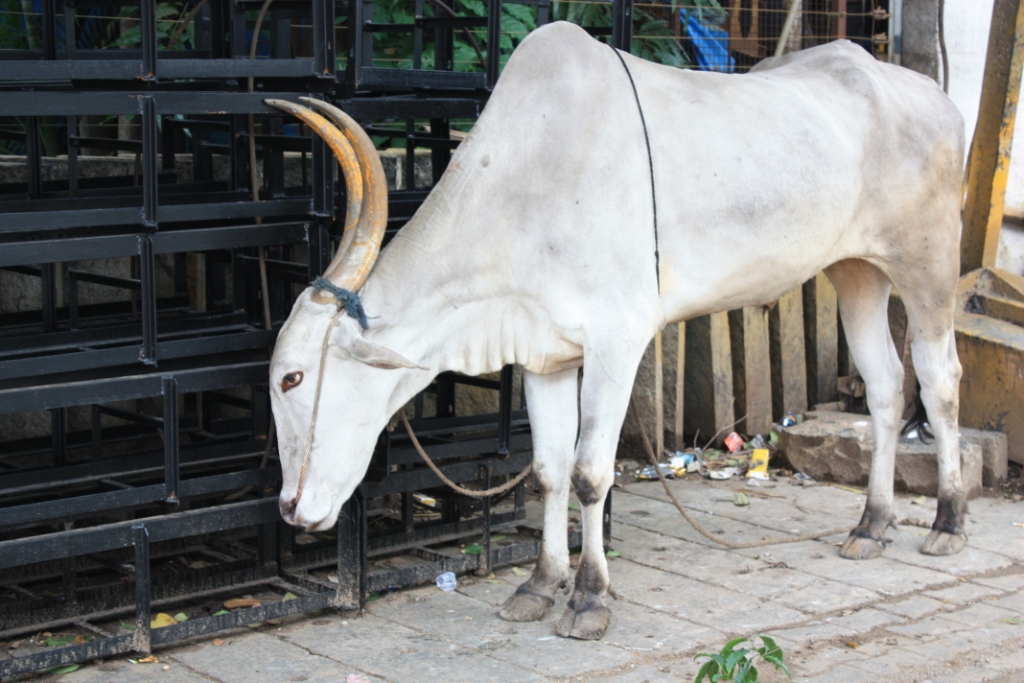
The well-known Indian street bovine.
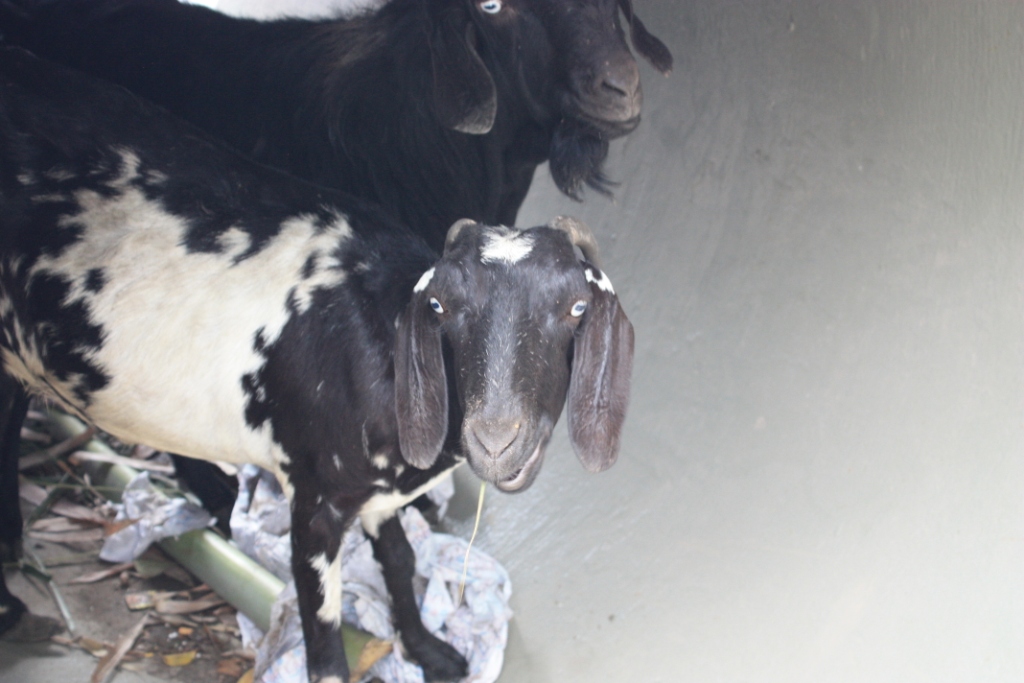
The lesser known Indian street goat.
7.) Markets:
I’ve been to the City (KR) Market, the Janata Bazaar, the Gandhi Bazaar, and everything from large, modern shopping malls to little neighborhood shops. Commerce thrives throughout the city in all its varied forms.
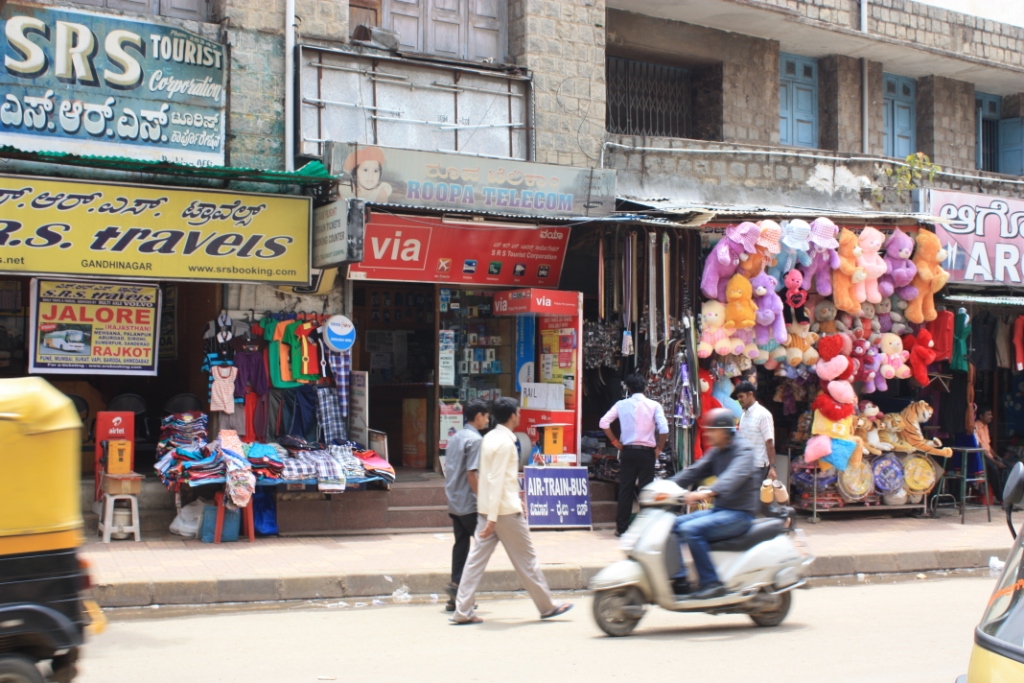
Near Janata Bazaar
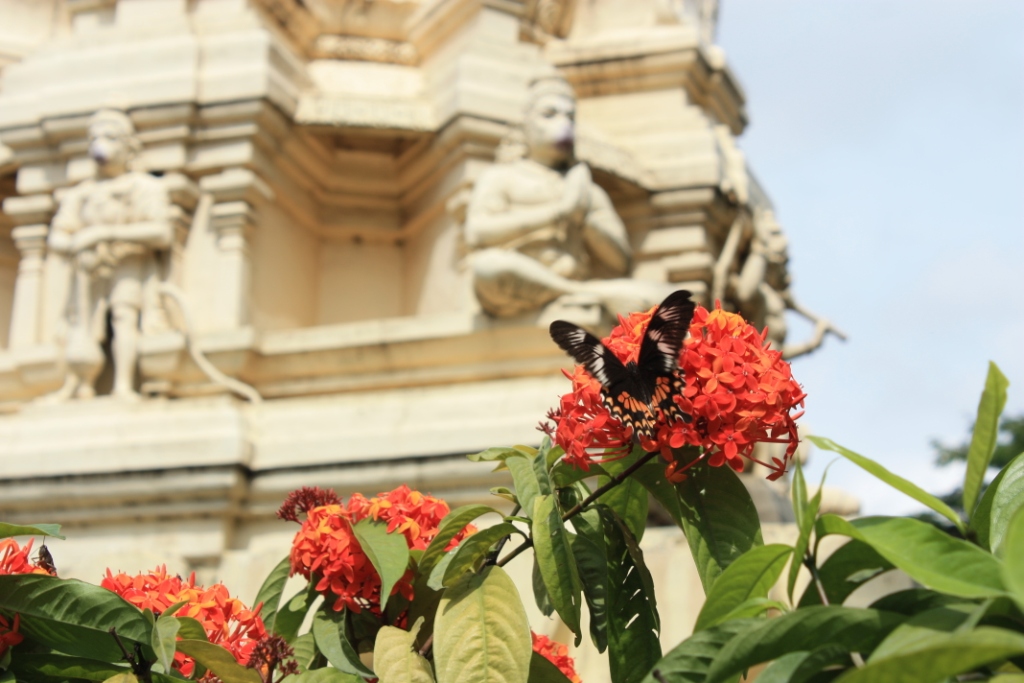 The background in this photo is the Hindu temple that is on the site of Tipu Sultan’s Palace, but which predates the Sultan’s Indo-Islamic teak structure. There is a simple but beautiful garden in between the palace and the temple that displays various flowering plants.
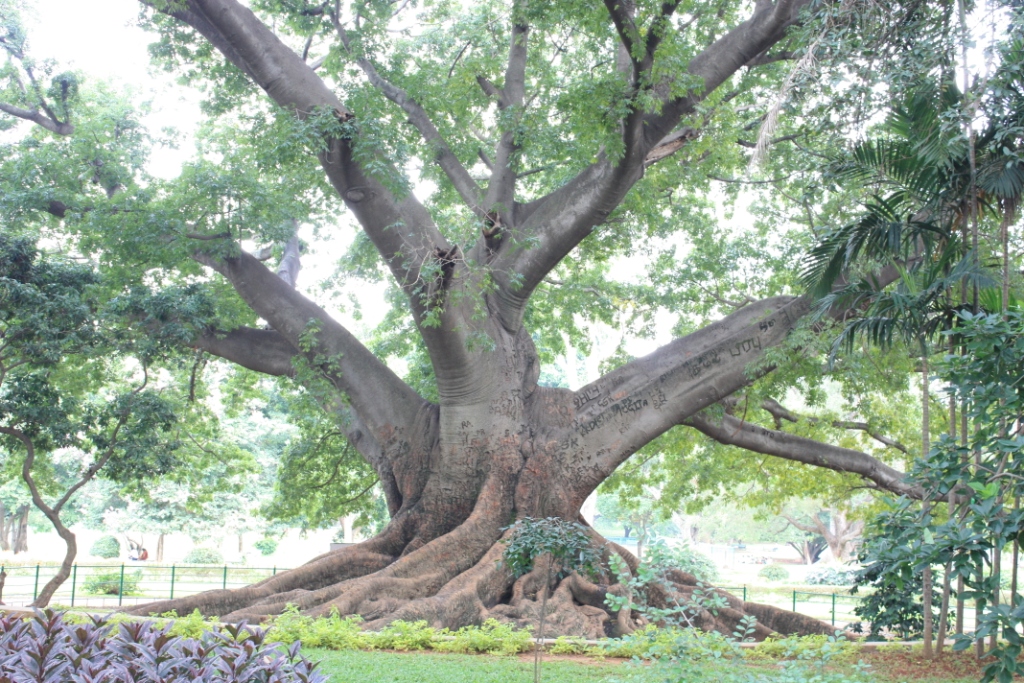
Taken September 3, 2013 in Lal Bagh Botanical Gardens
When I was learning to drive, one piece of advice I still remember was:
Never blow your horn because whatever damn fool thing the other driver is doing to get you in an accident is predictable. They will continue to do the same damn fool thing. Therefore, focus on avoiding the collision, and not venting your anger. Honking the horn can only cause the other driver’s panicked reaction to be unpredictable, thus making the situation more dire. The horn can cause inopportune slamming of the brakes, gunning the accelerator, or swerving sharply (invariably in the direction one was hoping to avoid them.)
This isn’t advice practiced in India. Rather the horn seems to be used to say, “One of us should be paying attention right now, and I kind of need a break.”
I suspect one reason why Indians don’t follow the above advice is because there is no erratic response to horn blowing here–there is no response whatsoever. The locals don’t even hear the horns anymore. I’ve only been here three days and I’m already becoming desensitized to them. (Although I took an early morning walk this morning and everything was perfect in the world because the horn blowers had not yet awoken.) No doubt, many literally cannot hear the horns after a lifetime subjected to the blare,
I wonder whether the blowing of the horn isn’t just an attempt to assert one’s existence among the whirring throngs of motorists.
Bangalore suffers from regular, albeit ephemeral, power outages. Sometimes the sewer drains don’t work as intended. Sometimes, cars come to a gliding halt; hoods popping up. But one thing works with the certainty of death and taxes. and that’s the horn on every single motorized vehicle in the country. One would think the horns would wear out, that they would choke and sputter, but there seems no sign of that.
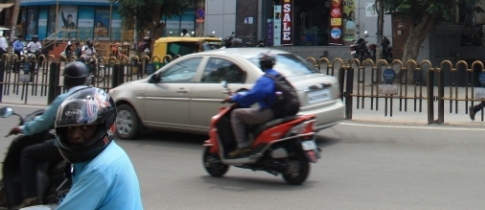
Only 1 in 3 drivers are looking at the road at any given moment (but the one not looking slams on his horn to alert others to keep an eye on him.)
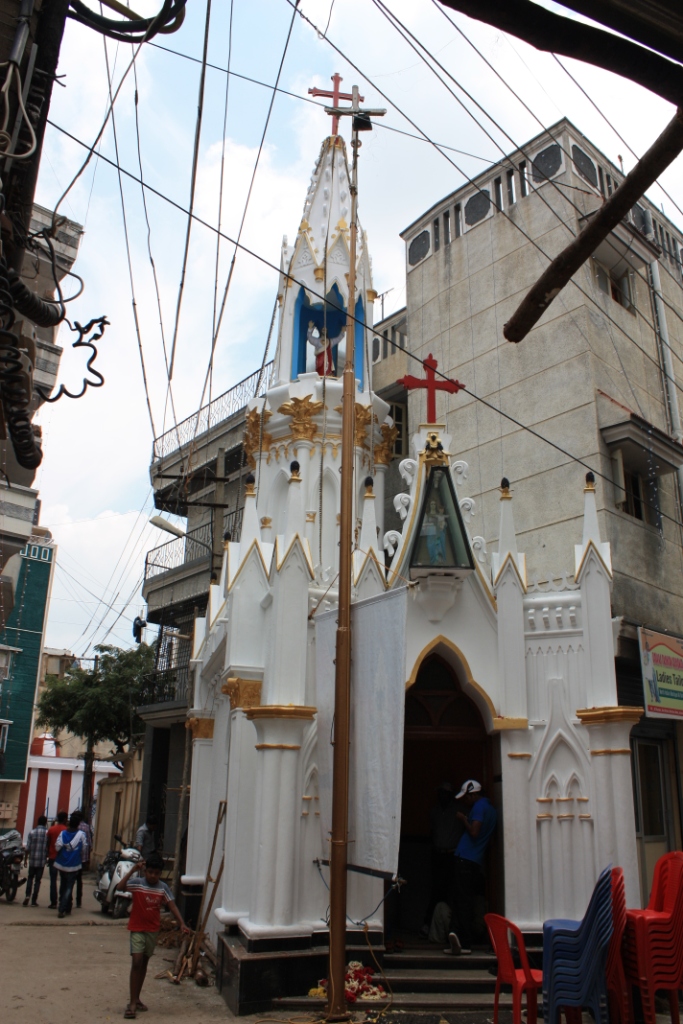
Taken September 2, 2013
Once and a while stumbling through the back streets pays off, and rewards one with an unexpected treasure.
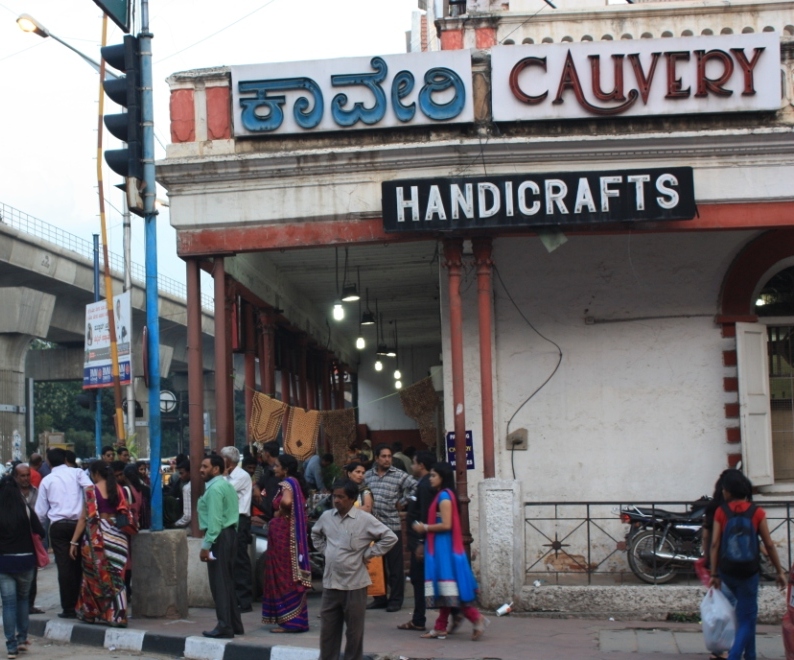
Taken September 1, 2013 in Bangalore, India.
This is my first post from my home for the next two years–Bangalore, India. I arrived in the wee hours of the morning, and–owing to fuzzy-headedness that I’ll blame on jet lag–I forgot to put a memory card in my computer. Thus, I haven’t had a chance to take many pictures yet. More to come.
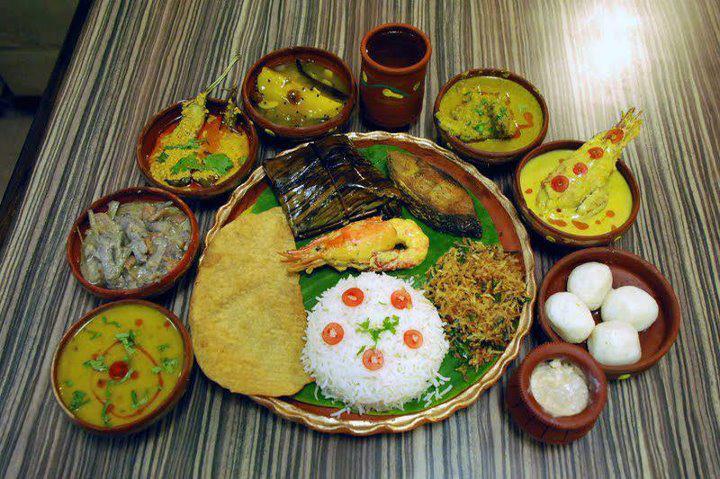
Bengali Full Meal; Source Nandinissaha (via Wikipedia)
When I tell people that I’m moving to India, a common–but strange–response is for them to issue warnings about the food and water. I find this odd for two reasons.
First, said warnings are often issued without much firsthand experience of developing world dining (not including high-brow resorts), and without knowledge of my dining history.
Here are few facts that might help one to better understand my approach. I’ve dined on cold seafood salad in a Phnom Penh cafe. I’ve noshed on snake-on-a-stick in China. I once supped at a home/restaurant in the Peruvian Andes whose latrine consisted entirely of a squat-hole cantilevered out over a cliff side. A couple of days in Bangkok, I consumed nothing but street-food. I was raised on a farm with non-pasteurized milk, and had a father who wasn’t above cooking up a nice-looking piece of road kill. Not a bloated opossum mind you– but I’ve gnawed clean the drumstick of a pheasant that died not by birdshot, but on the grill of a Peterbuilt. (Funny story, spellcheck wanted to change “pheasant” in the preceding sentence to “peasant.” That would have really freaked you out.) So while my home life has been first world, I’ve got a little third world in my gut.
Now you’re probably thinking, “This idiot is infinitely lucky to be alive, and given his behavior he will probably die soon.” Au contraire mon frère. It’s not that I randomly engage in high-risk behavior. Even locals get Delhi Belly if they don’t choose wisely–despite the full panoply of aggressive gut organisms working on their behalf. I’m quite aware of the hazards, and take calculated risks backed up with sensible precautions.
It’s funny that people live in terror of street food–not that there aren’t some carts that one should run from screaming. However, do you really know what the pimply-faced teenager is touching or scratching during the act of assembling your burger at Chili’s? I know exactly what the hands of the old lady grilling my moo ping on Sukhumvit Road looked like. I got a good look because there was always a line that I had to wait in– and gladly so. (FYI – sanitary wipes or hand sanitizer are one thing you should take with you wherever you go in this world.)
I’m not saying that I’ve never gotten an upset stomach, but I’ve done some remote third world travel and never experienced anything worse than resulted from any given trip to Taco Bell.
I’m quite fond of Indian food, and am sure I will cope well with having it for the majority of my meals for the next couple years. Yes, I’ll have to severely reduce my intake of ice-cold beverages and raw foods. (Ice and wash water are the hidden killers that probably cause more food-borne ailments than anything else.) However, ice-cold beverages –while refreshing and pleasant– are not really that healthy for a body in high temperatures anyway. (Flash heating or cooling of things at the other end of the temperature spectrum is bound to cause problems–one’s organs aren’t that different.) While I like raw vegetables, the human body is more efficient at extracting nutrients from cooked food, so there’s a side advantage there as well.
I think people freak themselves out and miss out on some excellent food. One individual who traveled widely once told me that she never ate the local food for fear of getting sick. I felt bad for her. She traveled to the source of some of the world’s best food, and then dined on American fast food–that’s a squandering of no small part of the travel experience. Of course, some people have very weak systems, and that may have been the case for her. (American fast food may be bad for you, but it is uniformly bad throughout the world.)
The second thing that I find strange is that when I was moving to England 25 years ago, no one warned me that I would be going to one of the most gastronomically unappealing places on the planet. Let’s face it, the reason Britain took over India in the first place was so that they could get something decent to eat. Curry is also the reason they didn’t let go easily.
Is there some bias whereby people tend to respond with negativity when one says that one is moving to the developing world, versus positive responses to moving within the developed world? One probably shouldn’t respond with negativity to news someone is moving anywhere, but–if you must– you should tailor it to the individual concerned. For example, if one said to me, “That shrill flute in their music is going to get on your last nerve.” Well, sorry, but that’s probably a correct statement. (No offense, I’m sure it sounds lovely if you were brought up with it, but it will be–at best– an acquired taste for me.)


 Tiger Riding for Beginners