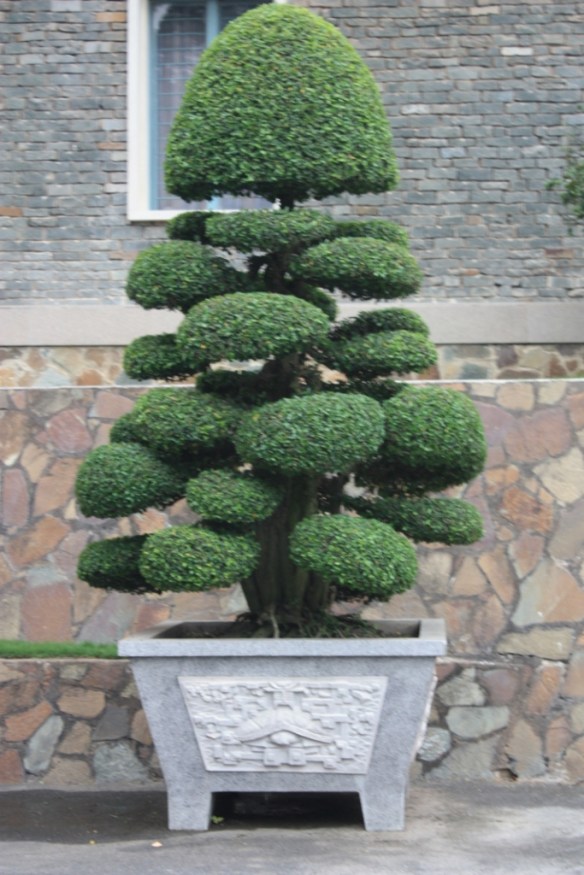
Taken in December of 2015 in Ho Chi Minh City (Saigon) at the Independence Palace (a.k.a. Reunification Palace.)

Taken in December of 2015 in Ho Chi Minh City (Saigon) at the Independence Palace (a.k.a. Reunification Palace.)
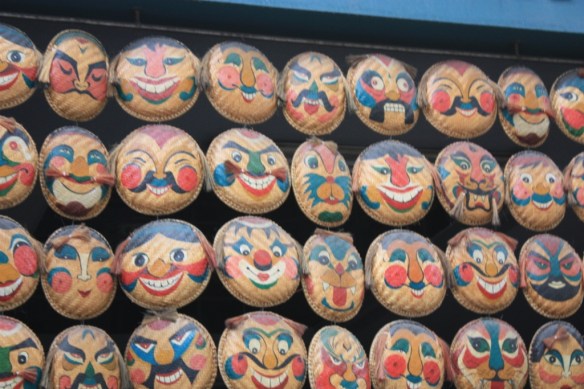
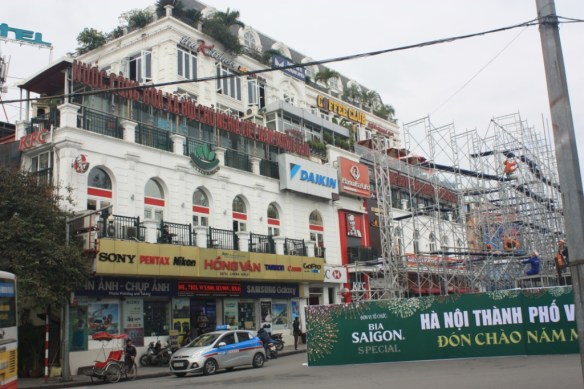
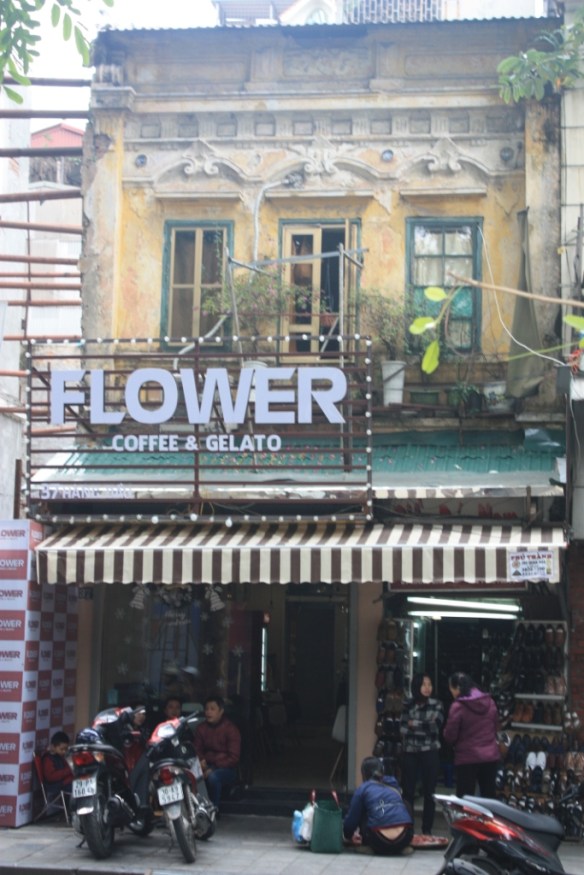
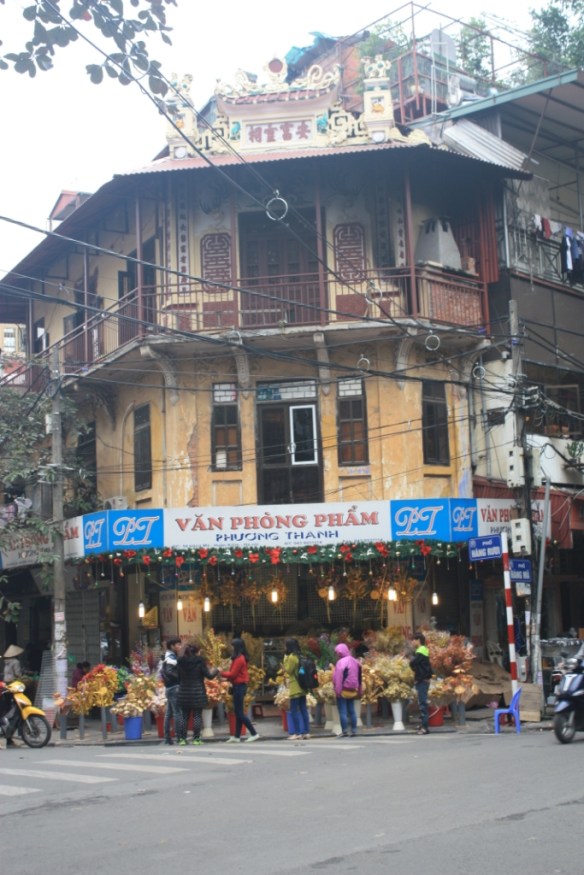
Taken in December of 2015 in Hanoi

Taken in December of 2015 in Huế
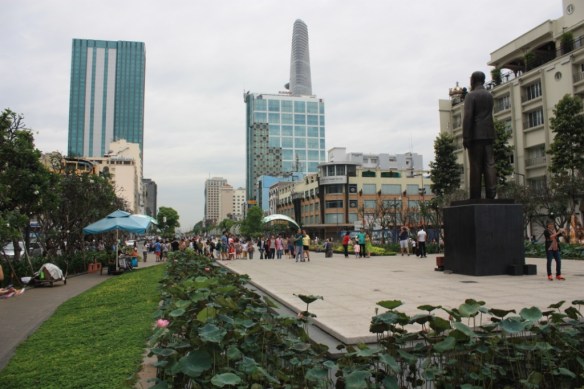
Taken in December of 2015 in Saigon (Ho Chi Minh City) in front of City Hall
 Vo Dan Toc / Martial Arts by Hữu Ngọc
My rating: 3 of 5 stars
This book is part of a series that is subtitled “Vietnamese Culture: Frequently Asked Questions,” and that tells one a little about both the content and the format of the book. It’s better described as pamphlet than a book. At about 75 pages, it’s in bilingual format (i.e. one page is in Vietnamese and the adjacent page is the English translation.) So it’s about 38 pages in English that answer 11 questions about Vietnamese martial arts.
The 11 questions addressed by the book are:
1.) How have martial arts developed throughout Vietnamese history?
2.) How were training and examinations for martial arts organized by the court?
3.) What are the schools of Vietnamese martial arts?
4.) What are the main sects of Vietnamese martial arts in France?
5.) How did Liễu Ðôi become a village with a great wrestling tradition?
6.) Who killed a ferocious tiger in 1770 in Sài Gòn’s Tân Kiểng Market?
7.) How did the famous school of Lady Trà-Tân Khánh martial arts begin and develop?
8.) How did President Hổ Chí Minh keep himself fit?
9.) Who played a key role in the success of Thúy Hiển, the world wushu champion?
10.) What do foreigners think of Vietnamese martial arts?
11.) How did the female master Hổ Hoa Huệ impress the Europeans?
The listed questions tell the reader what the book is about. It starts with some general history from centuries past, and then goes on to discuss specific events. I have no idea to what degree propaganda / myth has seeped into the text—maybe not at all or maybe a lot. I purchased the book in Hue, and am not sure if it’s available outside Vietnam. As one can see from the questions, this book won’t give one much insight into the details of Vietnamese martial arts tactics or philosophy. Instead, one gets a bit of history that some readers will find interesting and others will not. There are black and white photos (about 8) that show static instances of Vietnamese martial arts practice, and there is a glossary.
I picked this book up because I was curious about Vietnam’s martial art history—knowing that it must have had an impressive one. There isn’t much English-language information available about Vietnamese martial arts other than Vovinam. Vovinam is a martial art that allegedly developed in the modern era utilizing pieces of other martial arts and arranged to be ideal for the typical Vietnamese body type. However, what one sees of Vovinam on-line is just a poor-man’s version of that signature move of Black Widow from the MCU movies, so I don’t know whether there is any substance there or if it’s just for show.
Considering that it’s only about $0.67 USD in bookstores in Vietnam, I’d say it’s worth picking up this little book if you want to learn something about Vietnam’s martial history. [If you buy pay alot for a copy on-line, you’ll probably be disappointed.]
 The Things They Carried by Tim O’Brien
My rating: 5 of 5 stars
It’s called a novel, but it reads like a collection of war stories and essays about being an American soldier in the Vietnam War. That’s not a criticism. In fact, it’s part of the brilliance of this book. If it were thoroughly plotted, it might not feel so authentic. As war is disjointed, so is O’Brien’s book. Some of the chapters are tiny and some are lengthy. Some read more like essays than fiction, and others are clearly fictitious.
When I say that “some are clearly fictitious,” there’s always a doubt that it might just be a true story–because war is just that absurd. An example that springs to mind is one of the most engaging pieces in the work. It’s called “Sweetheart of Song Tra Bong,” and it’s about a wholesome, young girlfriend to one of the soldiers who [improbably] comes to live in the camp. The girl acclimates to the war, and soon she is going out on patrol–not with the ordinary infantry soldiers, but during the night with the Green Berets. Perhaps the moral is that some people are made for war, and it’s never who you’d suspect. As I describe it, the premise may sound ridiculous, but the way O’Brien presents it as a story told by a Rat Kiley–a fellow infantryman known to exaggerate—it feels as though there is something true, no matter how fictitious the story might be. Before one reads “Sweetheart of Song Tra Bong” one has been primed by a chapter entitled “How to Tell a True War Story,” which tells one that truth and falsehood aren’t so clear in the bizarre world of war.
There are a couple of chapters outside the period during which O’Brien (the character, who may or may not be the same as the author) is actively in an infantry unit. One early chapter describes his near attempt at draft dodging, and another talks of his time stationed at the rear after being injured. Both of these chapters offer an interesting twist in the scheme of the book overall. We find O’Brien to be a fairly typical infantry soldier, and it seems hard to reconcile this with his floating in a canoe and narrowly deciding not to make a swim for the Canadian shoreline. However, what is odder still is realizing how distraught he is to be pulled out of his unit, particularly when he realizes that he has become an outsider and the [then rookie] medic who botched his treatment is now in the in-group. This is one of the many unusual aspects of combatant psychology that comes into play in the book, along with O’Brien’s description of how devastating it was to kill.
There are 21 chapters to the book. As I said, they run a gamut, but at all times keep one reading. It’s the shortest of the Vietnam novels I’ve read—I think. When I think of works like “Matterhorn” and “The 13th Valley,” there seems to be something hard to convey concisely about the Vietnam War, but O’Brien nails it with his unconventional novel. O’Brien also uses repetition masterfully. This can be seen in the title chapter “The Things They Carried,” which describes the many things carried by an infantry soldier—both the physical items they carried on patrol and the psychological and emotional things they carried after the war. It’s a risky approach that pays off well.
I’d recommend this book for anyone—at least anyone who can stomach war stories.

Taken in Hanoi in December of 2015
I know I’ve given you a somewhat blurry photo, but it wouldn’t be the championship edition of NAME THAT FRUIT! otherwise.

Taken in December in Hue, Vietnam










 Tiger Riding for Beginners