DAILY PHOTO: The Taj, Lalbagh Republic Day Flower Show

Taken on January 22, 2017 at Lal Bagh Botanical Garden in Bangalore

Taken on January 22, 2017 at Lalbagh Botanical Garden in Bangalore


img_6241


img_6239

DAILY PHOTO: The Jaswant Thada Cenotaph

Taken in November of 2015 in Jodhpur

Taken in November of 2015 in Jodhpur


img_2705


img_2725

DAILY PHOTO: Ladakhi Landscapes

Taken in July of 2015 in Ladakh

Taken in July of 2015 in Ladakh at Namikala Pass


Leh

Leh


Nubra Valley

Nubra Valley


Pangong Tso

Pangong Tso

DAILY PHOTO: Elephant in Water

Taken in May of 2015 in Sri Lanka

Taken in May of 2015 in Sri Lanka


elephant scrubbing

elephant scrubbing

DAILY PHOTO: Little, Inexplicable Doors to Neverwhere

Taken in Hungary in December 2016

Taken in Hungary in December 2016


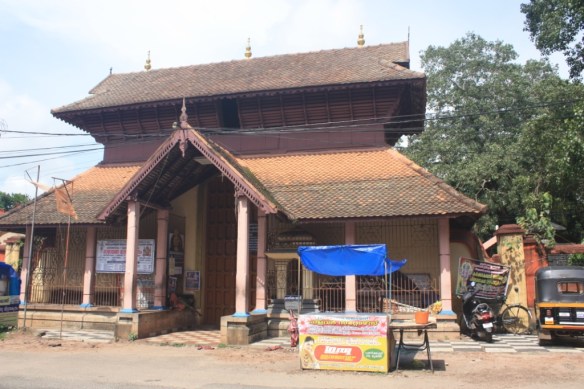
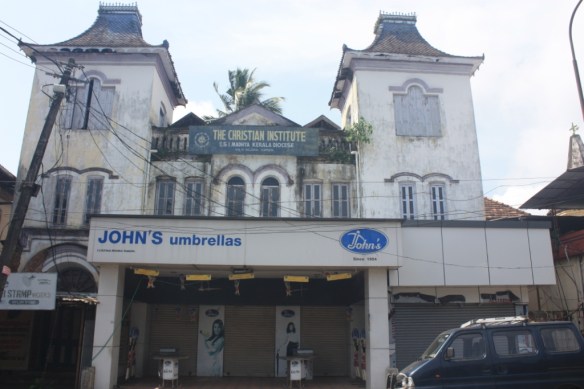
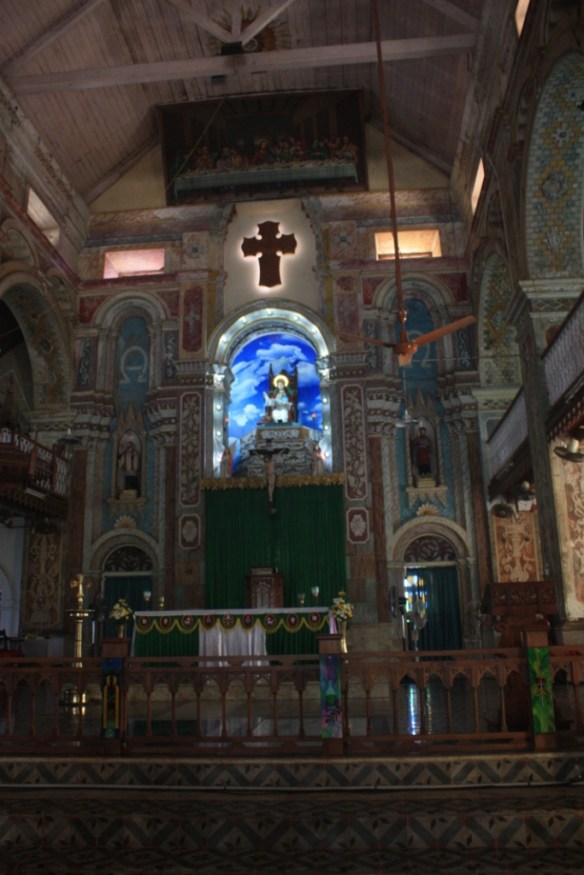
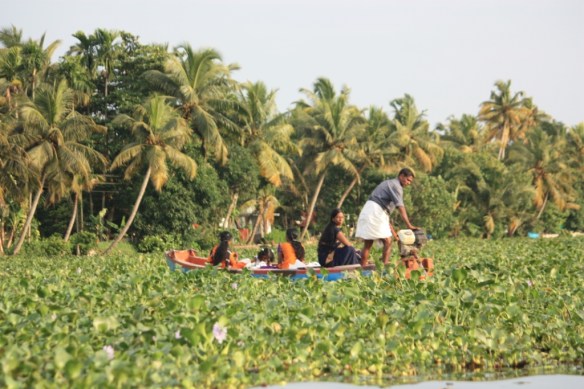
Kochi (Cochin), India

Kochi (Cochin), India


Kochi, India

Kochi, India


Whenever I come across a little, unlabeled door in a place where it seems to have no business being, I can’t help but take a picture. I’ve got quite a collection of such pics, of which I present a sample.


Maybe I watched “The Matrix” too many times, but I can’t help but wonder.

DAILY PHOTO: Mythical Beasts of Khajuraho

Taken at Khajuraho in October of 2015

Taken at Khajuraho in October of 2015


img_3316 img_3226 img_3204 img_3112 img_3436

BOOK REVIEW: Khajuraho by the Archaeological Survey of India

KhajurahoKhajuraho by Krishna Deva
My rating: 3 of 5 stars

Amazon page


Khajuraho is one of India’s most legendary historical sites; despite the fact that it’s located in a quiet, rural town that’s not so easy to travel to—at least, relative to many of the popular tourist sites of India. I could tell you that it’s so well-known because of its exquisite carvings. However, while it’s true that the sculptures are beautiful, the fact that almost no one outside of India has heard of Belur or Halebidu—sites which also have magnificent carvings—puts strain on the credulity of that explanation. It’s also not a major pilgrimage site like Varanasi. I’m afraid the explanation that remains is a touch lascivious. Imagine the Kama Sutra played out in 3-D on bas-reliefs and sculptures, and you have the scenes for which Khajuraho is most well-known. Which isn’t to say that the temples are nothing but “hein’ and shein’,” there are many of the same types of devotional imagery that one sees at other Hindu temples, and I’m sure some people go out of their way to see those devotional images.

This is one in a series of guide books put out by the Archaeological Survey of India. They are mostly sold at various historical sites and museums run by the Indian government, but can also be found at used bookstores and for sale online (e.g. Amazon.com.) This isn’t the first book of this series that I’ve read. I first stumbled upon them when I traveled to the caves of Ajanta and Ellora in Maharashtra.

The text for this book is based on a manuscript by Krishna Deva, and it’s organized to move from general to specific. After a one page Forward by the Minister of Tourism [at the time, 2002], there’s an Introduction that describes the historical and political context in which these temples were built. Then there are chapters that examine the art and architecture of the Chandella era, then the general approach to sculptures, and, finally, a look at the specifics of various temples ordered by groups. Those who’ve traveled to Khajuraho will know that the most extensive and impressive temples are in the Western Group—that’s the only group for which there is an admission fee. There is also an Eastern Group, a Southern Group, and a couple independent temples that don’t conveniently group with any others.

Almost as important as the text are the pictures. There are many color photographs that serve to illustrate the explanations being offered and which will help travelers to link up the textual discussion to what they are seeing. There are photographs on every page excepting the ancillary material.

These books also have a number of nice ancillary features. The book has a brief “Practical Information” section that provides guidebook style information (getting there, where to stay, where to dine, etc.) This includes a couple pages that are about traveling to / in India generally, and then a couple that are specifically about Khajuraho. I wouldn’t count on any of this information to not be out of date, though in little ole Khajuraho it might change less rapidly than in the cities. There is also a brief glossary and a “Further Reading” section, both of which may be of use. The book is indexed. There is also a general map of the part of India containing Khajuraho on the inside flap (both front and back.) A map of Khajuraho town might have been nice, but they do have an outlay of the Western Group, which is helpful.

I found this book (and the other books in the series that I’ve used) to be useful and informative. Furthermore, one can’t beat the price. The list price was 99Rs, but I see there’s a stamp inside mine that they’d discounted it to 50Rs. (That’s less than $1 USD.)

I’d recommend you pick up one of these guides—particularly if you are traveling to one of the more extensive sites. If you like to use guides [human guides,] you may find that there’s not a lot of new material to be gleaned from these concise guides, but they may help you organize your photos after your travels—and they don’t take up much space (a flat 12 X 23.5 X 0.5cm.)

View all my reviews

Since they don’t have a cover photo up for this book, I’ll include a couple illustrative pics that I took at Khajuraho:

In the Western Group

In the Western Group

In the act

In the act

Jain Temples of the Eastern Group

Jain Temples of the Eastern Group

DAILY PHOTO: Skating Under Gray Skies, Városliget

Taken in December of 2016 in Budapest

Taken in December of 2016 in Budapest


img_5664

DAILY PHOTO: Kunst Haus, Vienna


Taken on December 31, 2016 in Vienna

Taken on December 31, 2016 in Vienna


img_5929


Kunst Haus in Vienna (often written KunstHausWien) is a modern art museum featuring works by Friedensreich [Regentag Dunkelbunt] Hundertwasser, but also with temporary exhibits by other artists. The whimsical facade of the building is reflective of Hundertwasser’s style and is similar to the older and more well-known HundertwasserHaus, which is an apartment building a couple blocks away.

DAILY PHOTO: 2016 Christmas Markets: Budapest & Vienna

Taken in Budapest in December of 2016

Taken in Budapest in December of 2016


Budapest Hungary

Budapest, Hungary


Vienna, Austria

Vienna, Austria


Vienna, Austria

Vienna, Austria