 Perfect Breathing: Transform Your Life One Breath at a Time by Al Lee
My rating: 4 of 5 stars
Amazon page
It’s not an exaggeration to say that there is no set of yogic practices with a greater power to transform one’s life than breathing exercises (pranayama.) With this in mind, I’m always on the look out for new sources of insight into breathing – be it from free-divers, Buddhists, sports scientists, yogis, martial artists, or else-wise. This book provides an overview from a diverse set of experts with descriptions of a number of different breathing practices (e.g. Taoist qi gong, yogic pranayama, a practice for runners, etc.,) but it takes as its central tenet a six-second breath that it recommends as the titular “perfect breath.”
Breathing practices are often underestimated. People, after all, figure that they’ve been breathing every day of their lives, so who can teach them anything on the subject. The idea of reading a book on breathing is right up there with watching the paint dry or the grass grow for excitement. Unfortunately, in parts – many densely pack up front – the authors do too little to dissuade readers of this belief. In early chapters and sprinkled throughout, the book is rife with truisms and banal comments that will leave the rankest neophyte thinking they aren’t going to learn anything of value. That said, I’m glad I kept with it, because the authors convey some powerful insights by telling the stories of people from various walks of life who’ve achieved great things by improving their breath.
The book is organized around a central structure of breathing as a tool for improvement of body, mind, emotion, and spirit. This is sound approach to covering the topic, and the discussion of breath as a means to emotional control is particularly beneficial and welcome. It could be argued that the coverage of the topic of spirituality could have been jettisoned without much loss. The authors talked around the subject in away that was vague and insubstantial. To be fair, they may have been trying to avoid running afoul of individuals who were either secular / scientific (non-spiritual) or who had strong sectarian beliefs on spiritual matters.
The book has seven parts. Part I consists of two chapters that offer an introduction into the topic. These could have been pared down without substantial loss of value. Part II (Ch. 3 – 8) is entitled “Your Perfect Breath” and it discusses developing awareness of breath, body, emotion, spirit, and introduces the fundamentals of how one should breath the “perfect breath.” Part III (Ch. 9 – 12) explores the role that breathing practices can have on improving health outcomes. It’s well established that the body puts healing / rebuilding on hold under high stress, when the sympathetic nervous system is engaged. Breathing practices can help trip parasympathetic (rest and digest) activity. Part IV (Ch. 13 – 15) is of particular interest to athletes and those who want to perform better at some physical or mental activity. In addition to discussing both physical and mental performance, the authors devote a chapter to what is sometimes called Flow (Csikszentmihaly) or The Zone, and how breath can play into quieting the mind to facilitate said state. Part V (Ch. 16 – 19) is about breathing as a means to take control of one’s emotional life. People in the throes of emotional turmoil are unlikely to notice how that turmoil influences their breath, but it has a major impact — and it’s a two-way street, i.e. one can help mitigate excessive emotional response through breath. Part VI (Ch. 20 – 21) is devoted to spirituality and the nexus of breath and prayer or meditation. The final part (Ch. 22) explores the idea of the final breath. I thought this was a valuable discussion, given the tremendous anxiety of coming to one’s last breath and its impact on people’s lives.
There are no graphics in the book. They aren’t greatly missed, but might have been useful in places. (It’s probably more accurate to say the authors could have gone into more depth if they’d used graphics and not stayed in such vague territory.) There is an appendix that lists and briefly describes the included exercises, and the e-book / Kindle version includes hyperlinks to the detailed description in the book’s interior. Having a link to the practices is a useful feature. There is also a short section of recommended readings.
While it took me a bit of time to get traction in reading this book, once I did, I learned a great deal. I would recommend it for anyone who is interested in an overview of breathing practices for health, emotional control, and increased physical performance. The authors transmit expertise from a broad range of experts from various walks of life.
View all my reviews
Share on Facebook, Twitter, Email, etc.

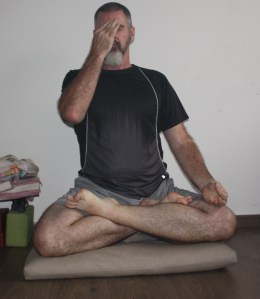 As I’ve been expanding my pranayama (yogic breathing exercises) practice, I’ve found myself searching beyond traditional yogic sources of information at times. It turns out that there are several disciplines from which valuable tidbits of information about breath can be gleaned, including: martial arts, freediving, and physiology.



 Tiger Riding for Beginners