BOOK REVIEW: A Search in Secret India by Paul Brunton

A Search in Secret IndiaA Search in Secret India by Paul Brunton

My rating: 4 of 5 stars

Amazon page

A Search in Secret India is a travelogue by Paul Brunton as he wondered through India in search of sages. In the process, he found a number of masters of body, mind, and both. However, he finds these individuals as rare nuggets in a sea of frauds.

Brunton states up front that he won’t waste time with any of the blatant frauds or suspected frauds, but he does devote space to a number of the more impressive ones. Impressive either by way of a large following or artfulness of technique. He also finds individuals he doesn’t know what to make of. These individuals appear to have impressive otherworldly skills, but skills that he can neither reconcile with known scientific understanding nor uncover as hoaxes despite his best skeptical inquiry. Given Occam’s Razor, he seems to be left suspecting that these are masters of illusion, but he maintains skepticism of his skepticism. A prime example of this is a Yogi who seems to be able to conjure any scent upon request.

Brunton also runs across individuals who are able to do amazing things that are inconsistent with his knowledge of the world, but which his exhaustive investigations leave little room to dispute. For example, there is one yogi who can completely cease his respiration for a seemingly impossible length of time, and who resumed breathing not with a gasp but with a slow, calm series of breaths.

As suggested above, this book is really an attempt to analyze India’s spirituality through the lens of Western logical and scientific approaches. The author is a Brit and the book was first published in the 1930’s. His worldview is consistent with that status. While Brunton would like to master his own mind, he is unwilling to let himself be duped.

There is another side to this juxtaposition of East and West. The yogis and gurus with which Brunton comes into contact often have trouble grasping the Western mindset (there is one notable exception.) What these wise-men have difficulty understanding is why a people, like the British, devote so much time to mastering the external world (and with a great measure of success it must be added), but put so little effort into mastering or understanding the self. Most of the gurus appreciate that a Brit is taking an interest in the spiritual and yogic ways of India, but with their own skepticism. They find Westerners materially rich, but bankrupt of the mind. They find the Brits strong, but lacking the supple power that yoga introduces.

After completing his travels, it seems the book is set to draw to an end. However, Brunton realizes that while there were a number of skilled individuals that he came across in his travels,there is one that stands out as someone he should not miss an opportunity to learn more from. Therefore, instead of getting on a steamer back to England, he returns to South India to a man called the Maharishee in order to find out if the guru will take him as a student. The last couple chapters describe his time under the Maharishee’s tutelage as well as under one of the guru’s most advanced students. The Maharishee is a sage the likes of which Brunton has not seen in all his travels. The guru has the humility to say that he cannot teach Brunton anything, but instead can only show him some things that he learned on his own journey.

If there is a lesson for those who would like to follow in Brunton’s footsteps, it seems to be that there is an inverse relationship between how easy a guru is to find(/how eager a guru is to talk to one) and the level of skill of that teacher. In almost all cases, Brunton had to take great initiative and steer off the beaten path to find the true masters. On the other hand, most of the individuals who were easily found, and eager to talk, were just con men.

I recommend this book for those interested in development of the mind and body.

View all my reviews

Is India More Rape-prone Than Other Countries?

india_sm_2012As I prepare to move to India with my wife, the string of high-profile rapes that have taken place in recent months in India have not gone unnoticed. This past week two such cases were in the news. An American tourist was gang-raped in Himachal Pradesh, and a businessman in West Bengal was charged with the rape of an Irish NGO worker. Other recent cases include a Swiss cyclist in the countryside south of New Delhi and that of a British woman who jumped out of her hotel window because a group of men were trying to force entry into her room in the middle of the night.  While one might argue whether these cases should be given particular prominence just because their victims were foreign, they do speak to a certain level of boldness. In these cases, the criminals didn’t know anything about their victims, and while this makes the act no more or less reprehensible, it does suggest the attackers were particularly audacious.

Of course, the case that has garnered the most attention and outrage was the brutal gang-rape and beating of a young Indian physical therapy intern and the thrashing of her male friend last December. This case gained particular attention both because the victim later died, but probably also because the circumstances seemed like those that anybody could fall into. This wasn’t a drunk girl hitchhiking through the countryside at witching hour. The girl and her friend were going home from a movie at 9:30pm and were lured aboard a bus that was said to be going their way. In some sense, the victim was doing most things right. She was not traveling alone. It was not particularly late. She was not in an isolated area.

However, it turned out that the private bus was under the control of six joyriders. All six men, including the driver, participated in the violence. It may seem odd that the victims would get on this bus that was not  a normal city bus. However, for those used to traveling in the developing world, private buses and collectivos are not that out of the norm–and sometimes are the only way to get the place you’re going.

So the question remains, is rape more common in India than elsewhere? It turns out that this question is hard–if not impossible–to answer. If one takes the statistics at face value, then one should be more worried living in America. The U.S. had almost four times as many police-reported rapes in 2010 as India. When one normalizes this for population (accounting for the fact that India’s population is over 1 billion and America’s is only 300 million), this disparity becomes even more exacerbated.

However, it’s impossible to know what these numbers really tell one. While it is a sad fact that many rapes go unreported in the U.S., there is reason to believe that unreported rapes are even more prevalent in India. In absolute  terms, India has one of the highest numbers of police-reported rapes, but it also has one of the biggest populations in the world–and the biggest for a democracy. When one normalizes for population, India drops way down the list. However, up toward the top of the population-normalized list is Sweden, which would seem to speak to how important the incidence of reporting is. (I don’t imagine Sweden to be home of a disproportionate hostility toward women, but I could be wrong.)

I would also say that India is likely not as bad as many countries which institutionalize misogyny, e.g. theocracies. However, one of the breaks of being a democracy is that one gets held to a higher standard. Yes, there is a lunatic fringe in India. This was most vocally personified by Asaram Bapu, a Hindu guru who shifted blame to the victim by saying that she should have fallen to her knees, held her tormentors hands, and invoked their common religion; and, in doing so, she could have prevented the attack. Another break of democracy is having to accept that you’ll have ass-clown douche-bags with the power of the microphone. As much as most Indians might like to ship Asaram Bapu off to an island with the likes of Todd Akin (the Missouri candidate for Senate who said that women don’t get pregnant if they are really raped [presumably because, “it’s devastating to my case, Your Honor”]), that’s part of liberty–the freedom to say really stupid stuff.

As I’ve been reading about these cases, there are a number of explanations that I’ve heard that hold varying degrees of sway. Some have suggested that alcohol is the culprit. Wrong! Yes, alcohol makes one stupid, but this stupidity is usually restricted to the making and accepting of ill-considered marriage proposals. Millions of people get drunk every week without perpetrating violence other than badly sung karaoke.

There are a few cultural arguments. One is that there’s a bodice-ripping theme in Indian entertainment. This sounds like the alcohol argument and a few other arguments that shift blame away from the attackers–in this case by suggesting that they were just confused about what women want by pop culture depictions.  Speaking as a man, we are all perpetually confused about women want, but knowing that a person doesn’t want to be beaten up or lose control of her body is a no-brainer.

Another argument is that Indian tendencies towards rape reflects the vestiges of ingrained power dynamics. While India may have abandoned the caste system, the idea that some class of people have the right to exert power over others may not be entirely dead.

I don’t know if India has a more extreme problem than other countries in this domain, but I’ll take the recent outrage as a good sign. If there is some societal proclivity that contributes to the problem, perhaps it is about to go down.

Most importantly, be careful out there.

Paul Brunton’s Search for Sages in India

Source: Kalyan Kumar by way of Wikipedia

Source: Kalyan Kumar by way of Wikipedia

As I prepare to move to India, I’ve begun to read up on this subcontinent about which I know too little. For example, I’d never heard of Paul Brunton before a week ago, but now I am immersed in his book A Search in Secret India. Brunton was a Brit who, like a number of his contemporaries living in the first half of the 20th century, struck out to experience the mysteries locked in the heart of India. Like many, he wanted to gain access to the country’s treasure, but the treasure he sought had nothing to do with material wealth or ancient artifacts. He sought living sages, and the lessons they could teach him. The book I’m reading tells the story of this search.

Something about India drives internal reflection and the spirituality that often accompanies it. It’s the home of Hinduism, Buddhism, Sikhism, and Jainism, as well as many non-denominational wisemen (and wisewomen) who at once can be seen as followers of no religion and believers in many religions.  Value for the unity of mind and body can be seen in the popular national practice of Yoga, which is the antithesis of mindless exercise in which one jumps on a treadmill with an i-Pod and zones out for an hour as one’s body churns through its paces. Yoga, like Tai Chi, requires one’s full attention, and that one’s movement, one’s breath, and one’s awareness are all working toward the same purpose.

So far, Brunton’s work has appealed to me not only because he is in search of wisdom, but because he goes about this pursuit as a skeptic. In the introduction he tells how he edited out the many meetings with charlatans and frauds. Charlatans always abound in the presence of sages because it’s quite lucrative to convince people that they can achieve self-improvement effortlessly through some patented approach. (I’m here to tell you that self-improvement is a struggle that requires your physical and mental energy all the way–what I cannot yet tell you is whether it is worth it or not.) If one cannot see the cloud-enshrouded destination, it’s easy to sell maps–whether one knows the route oneself or not–and many are all too ecstatic to buy a map that shows a secret route that takes them to the pinnacle by way exclusively downhill paths.  The fact that Brunton enters his quest with a degree of skepticism suggests he didn’t fall for such traps; traps that should be obvious but that appeal to those for whom the force of wanting to believe is stronger than the force of truth. [As I am only a few chapters in, I reserve the right to change this prognosis. At some point, I’ll put up a review with my final thoughts.]

I look forward to discovering whether wisdom is alive and well on the subcontinent. Hopefully, the hucksters haven’t won the war for the mind’s of seekers.

Why I’m a Slacker Lately: or, Mysterious India

What's this India I hear so much about?

What’s this India I hear so much about?

I haven’t been writing, editing, or conducting research much as of late. This has probably gone unnoticed in the vastness of the cyberspace, but in the spirit of blogging I thought I’d answer a question that no one asked. I recently learned that my wife and I will probably be moving to Bangalore, India later in the year. This has kept me physically occupied with home repair and boxing up the house. In my non-labor moments, my mental faculties are largely devoted to understanding the country in which I will be living. I’ve never been there before.

India is a harder nut to crack than one might think. Yes, there is the obvious. At 1.2 billion people, it has the world’s second largest population and is screaming up on China for number one. It’s the seventh largest country by land area. It’s the birthplace of that most excellent yoga that keeps all the twisty people twisty. It’s home of tandoori chicken and naan bread, both of which I love.

However, that’s all superficial. I must sadly admit that–until recently–my in-depth knowledge has come from three sources:

1.) The Jungle Books by Rudyard Kipling

2.) A junior high school field trip to see the film Gandhi, which I had been under the impression was six hours long, but, according to Wikipedia, is only a little over three hours long. I guess that, just as kids think everyone is taller, a kid’s perception of Oscar-winning motion picture run times is greatly distorted.

3.) A ton of reading about the Indo-Pakistani rift and its strategic implications as a graduate student studying International Affairs with a focus on Strategic Studies.

With respect to number 3, the amount of study of this region was not commensurate with the fact that the Indo-Pakistani border region is generally voted “Most Likely Point of Origin for Global Nuclear Winter.” I’m not suggesting that the relationship between India and Pakistan is any more dysfunctional, unstable, or rooted in irrationality than other relationships between nuclear powers. However, the adjacency of the two countries is a problem from the perspective of strategic stability.  When alarms went off in the U.S. or the U.S.S.R. back in the day, there was at least a little time to evaluate and communicate. Being next-door neighbors makes the Indo-Pakistani conflict particularly troubling. That said, they’ve had some pretty big strain tests on their relationship without blowing up the world, so that’s a positive sign.

So why does this country, which should be so front and center in the global consciousness, remain so mysterious? One way we know countries is by those grand competitions through which nations–friends and enemies alike–interact.   In this domain, India really hides its light under a bushel. India has won 26 Olympic medals in 23 games, this is fewer than either Kenya or Jamaica–and both of those countries did it in fewer games. Yesterday, in a post about a book by Nobel Prize-winning Hungarian, Imre Kertész, I may have mentioned that Hungarians have won 12 Nobel Prizes–that’s more than India by a large margin.  Now, while India has had its problems, it’s 100 times more populous than Hungary, and has a history of publishing scientific literature in English (an undeniable advantage in this domain.) Depending upon which country Rudyard Kipling is counted toward, India has either eight or nine Nobel Prize wins. Of course, it would be ridiculous to think that India doesn’t have the human capital to excel in such domains.  While I realize it may not be a representative sample, I think almost every Indian I’ve met in person has had an advanced degree and has been smart as a whip. So it’s certainly NOT true that this is a country that undervalues education.  With a third of the world’s population, statistically speaking, they must be home to physical and mental specimens of humanity that are as impressive as any, but somehow either the will or ability to convert that human capital into winners on the global stage is missing.

I do know a little more about India. It’s the birthplace of both Hinduism and Buddhism, as well as a bunch of other religions. As a martial artist, I’ve heard that  many believe most Asian fighting systems could trace their origins back to India. I don’t know how much truth there is to this belief. Martial arts always evolve into optimization with the local conditions and culture, and, therefore, a lack of superficial similarities doesn’t discount the possibility of such a connection. One of the origin myths the Indo-centric martial arts is the story that Bodhidharma brought a fighting style to China that would be the stepping off point for most of the myriad Asian martial arts. The current consensus among historians seems to be that this part of the Bodhidharma story is not true (See: Meir Shahar’s The Shaolin Monastery.) However, that being said, there is an odd but clear connection between this most pacifistic of world religions, Buddhism, and some of the world’s most kick-ass martial arts. Whether one is talking about China’s Shaolin monks or Japan’s legendary warrior-monk Benkei, it’s clear that some exceptional martial arts have developed in tandem with the spread of Buddhism. Of course, even this just creates more questions, namely: Why should a pacifist religion have legendary fighters sprouting up anywhere near it?

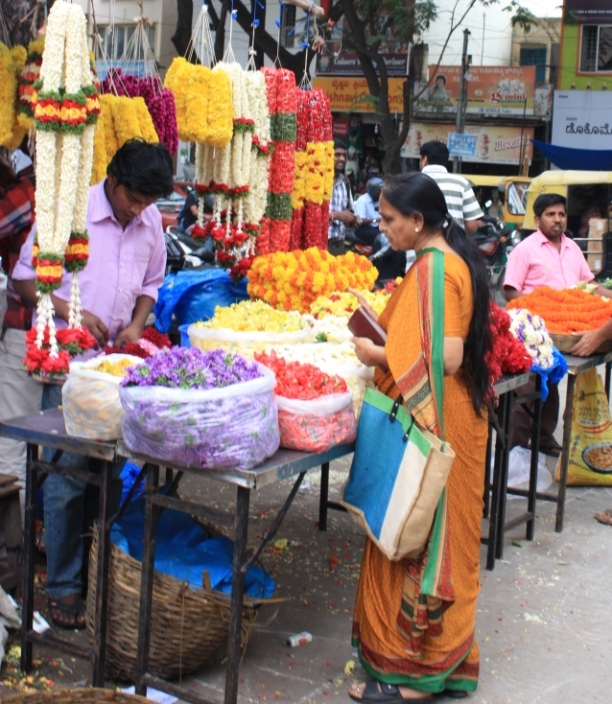
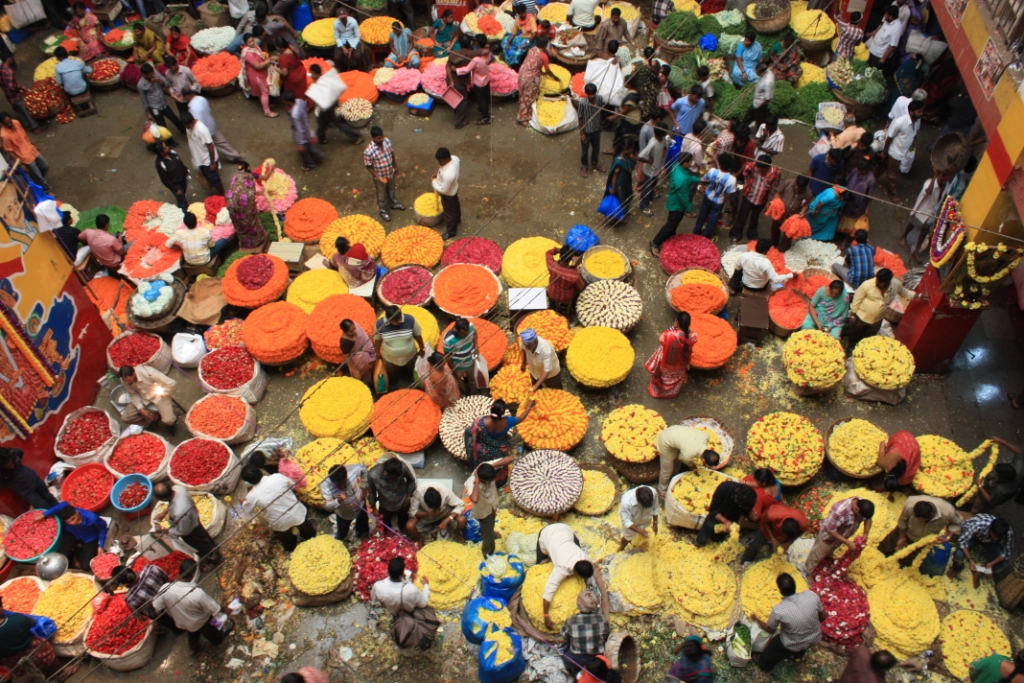
I’m looking forward to getting to know more about India than that it’s huge and its Chicken Vindaloo is scrumptious. It’s a country with a long and intriguing history. I want to see its jungles, its deserts, its mountains, and its beaches. I want to visit its temples and learn from its sages. I’m eager to see its vivid colors and smell [at least some] of its pungent scents. At some point I expect to have some awesome posts about my time there, and hopefully some bold pictures as well. In the mean time, please forgive my slacking.

BOOK REVIEW: A Dead Hand by Paul Theroux

A Dead Hand: A Crime in CalcuttaA Dead Hand: A Crime in Calcutta by Paul Theroux

My rating: 4 of 5 stars

Amazon page

A Dead Hand opens with the protagonist, Jerry Delfont, receiving an unexpected and unusual letter. Delfont is a traveling writer who is temporarily in Calcutta. The letter is from an American businesswoman and philanthropist who seems to have gone native in India. The woman, Merrill “Ma” Unger, asks Delfont to investigate a mysterious event involving her son’s boyfriend, a young Indian man named Rajat.

Rajat claims to have woken up one night in his cheap hotel room to find the dead body of a boy on the floor. Rajat panicked and left, and is living in fear that he will be picked by the police.

The book in part traces Delfont’s investigation of this mysterious body, and in part describes his burgeoning relationship with “Ma” Unger. The former is slow going through the first 2/3 of the book, and at some points one wonders if Delfont has forgotten about the investigation altogether.

The title has a dual meaning. It describes both the writer’s block Delfont is suffering at the beginning of the book and the actual physical hand that turns up as the sole remaining trace of the dead boy who turns out really was in Rajat’s room.

Coming from famed traveling writer Paul Theroux, it’s no surprise that the development of setting is phenomenal. Theroux not only gives one a sense of the sights, sounds, and scents of Calcutta, he also gives the reader insight into the human dimension of India through a number of supporting characters. There is a passionate young woman who writes poetry and practices the Indian martial art of Kalaripayattu. She is a strong, bright, and independent woman but is stuck in a world of arranged marriages and sexual repression. Despite the official end of the caste system, we see completely subservient Indians as well as others who think they are beyond talking to a lowly writer.

The plotting is solid. It’s neither exceptional nor so flat or formulaic as to be boring. I, who am not particularly good at foreseeing plot twists, did anticipate the ending–at least in broad brush stroke terms. However, the book kept me interested and reading. There was a clear narrative arc and the main character definitely undergoes a change over the course of the book (more on that below.)

In my opinion, the book’s weakness is in character development, and specifically Delfont’s character. We are introduced to a Delfont who is having a tough time, but is essentially a likable guy with his head on straight. However, as he begins to fall for “Ma” Unger, he seems increasingly pathetic. Specifically, he falls into this weird relationship in which he seems to see her both sexually and maternally, and–like a schoolboy with a crush–he wants to do anything he can to please her and to gain her attention. Now, being pathetic is a little like being crazy. If the character knows or suspects they are crazy, then how crazy can they really be? Because Delfont recognizes he’s being pathetic, he remains a sympathetic character. However, I think Theroux over hammers the degree to which Delfont is smitten until we begin to think he is obsessed. The problem is that it makes his transformation and that of his relationship with “Ma”, which happens like the flip of a switch, less credible.

All and all, I would recommend this book. I think it’s particularly interesting for one who wants greater insight into India and, specifically, Calcutta.

View all my reviews