DAILY PHOTO: Ancient Temple, Modern Workers

Taken November 23 at Hoysaleshwara Temple in Halebidu

Taken November 23 at Hoysaleshwara Temple in Halebidu

For almost 900 years poor schlubs have had to scrub their way around this temple, washing its ornate carvings.

I wonder how similar or different the workers of past generations looked? Obviously, they didn’t have molded plastic water jugs, but the pottery version might have looked similar (not the day-glo lime green one, but certainly the brick-colored one.) No dress shirts or ball caps  back then, but the turbans and sarongs are probably not so out-of-place.

Of course, the scaffolding, rough-cut wood lashed together, gives it an ancient feel.

Probably, the most striking difference is the female job foreman.

DAILY PHOTO: Mysore Palace

Taken November 29, 2013 in Mysore.

Taken November 29, 2013 in Mysore.

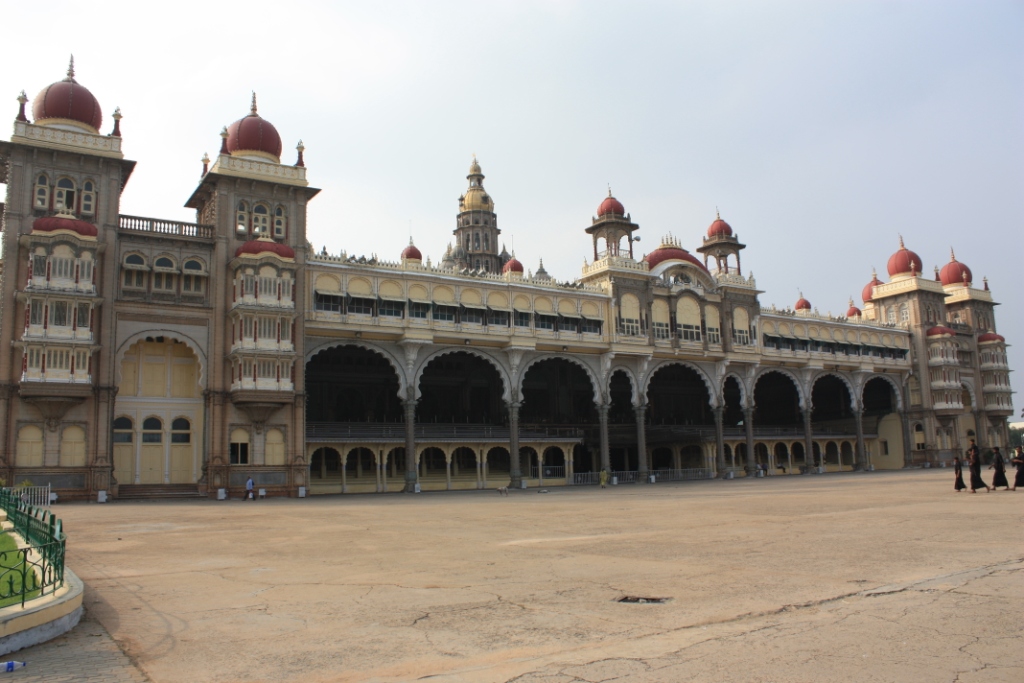
This is the front of the palace at Mysore. This particular palace was constructed between 1897 and 1912, and was the seat of the Wodeyar Kingdom that  ruled from 1399 to 1947.

The front of the building is set up like a parade ground with a stage from which the King could address the public, with the highfalutin’  people sitting under the shelter of the palace roof and the minions and peasants out baking under the sun. Of course, now there’s bird netting all over the facade to prevent the pigeons from bombing the place into poop-blivion.

One can’t take pictures inside, which is too bad because the colors and opulence are stunning, e.g. imagine a sterling silver couch. I come from the wealthiest country in the world (if one doesn’t count debt, which the government doesn’t, so why should I), and I have trouble wrapping my brain around a silver couch. I bet Warren Buffet doesn’t even own a silver couch.


DAILY PHOTO: An Emperor’s Jail

Taken on October 12, 2013 at Agra Fort.

Taken on October 12, 2013 at Agra Fort.

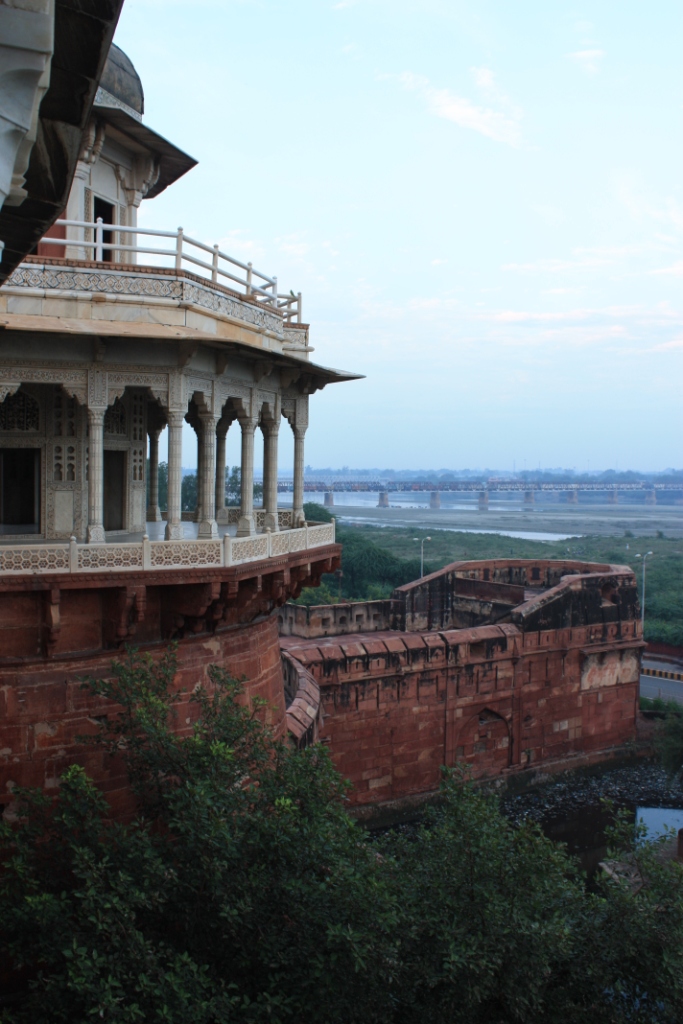
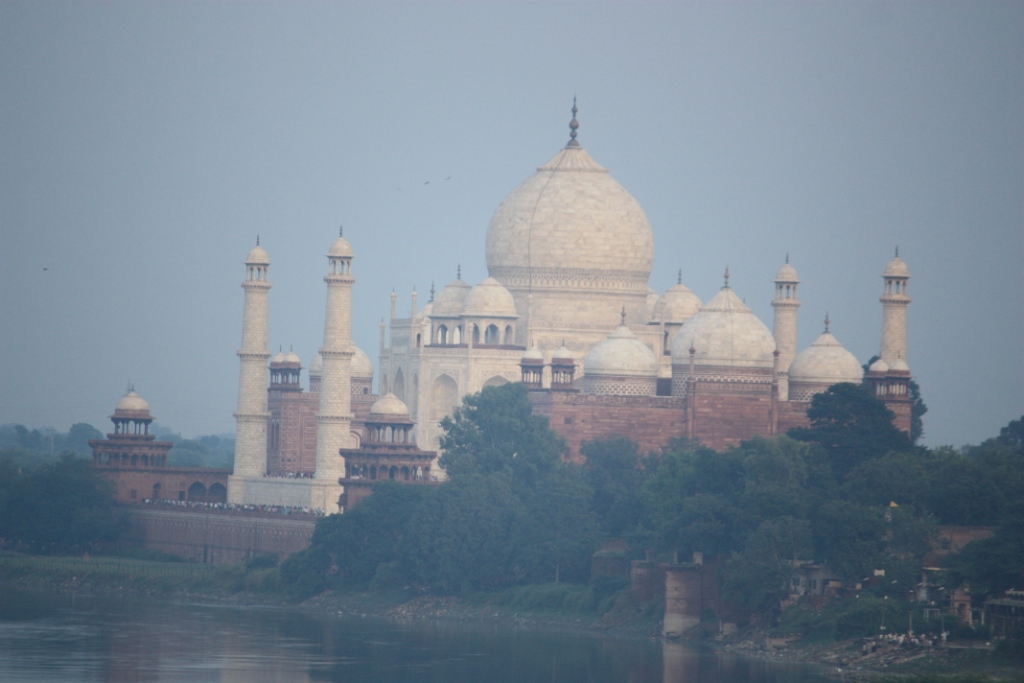
The top of this tower is where Shah Jahan was imprisoned by his son, Aurangzeb–the latter being the 6th Mughal Emperor. The 5th Emperor’s “cell” offered a great view of the Taj Mahal, the monument that Jahan built to his wife, Mumtaz Mahal.

This just goes to show that just because one kills off one’s brothers who are ahead of one in line for succession, and imprison one’s own dad,  doesn’t mean one has to be completely heartless.

This is what Jahan would have seen-- except from about one story up and a couple hundred feet to the left.

This is what Jahan would have seen– except from about one story up and a couple hundred feet to the left.


DAILY PHOTO: Chennakeshava Temple at Belur

Taken November 23, 2013 at Belur.

Taken November 23, 2013 at Belur.

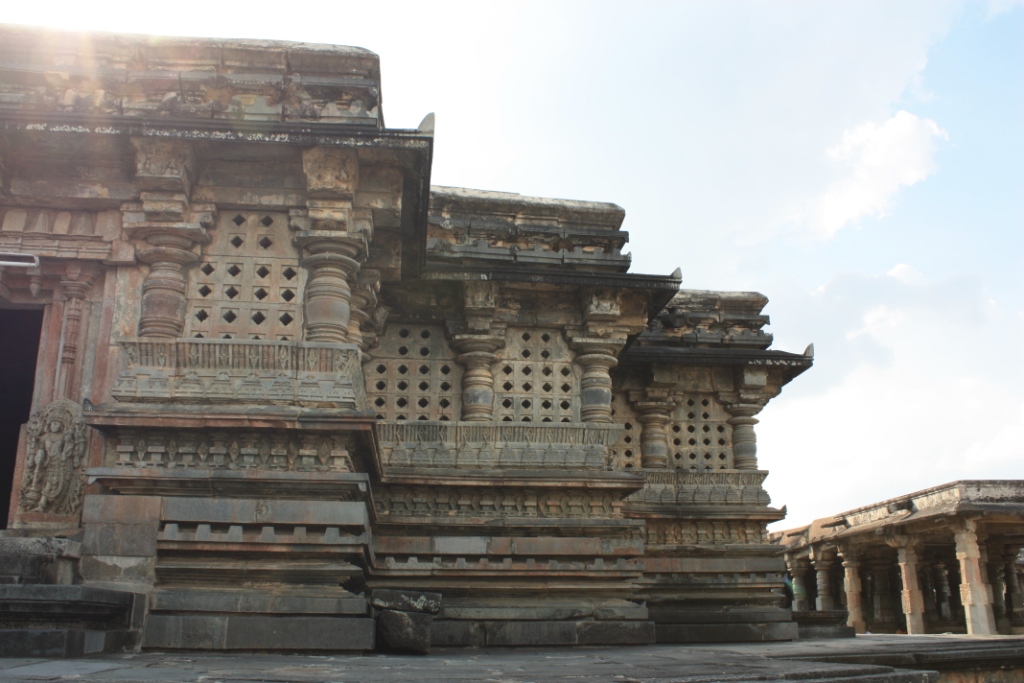
Chennakeshava temple at Belur is a Hoysala era temple to Vishnu–the deity of the Hindu trilogy responsible for processes of sustenance and evolution (as opposed to creation or destruction, which are the bailiwicks of Brahma and Shiva, respectively.)

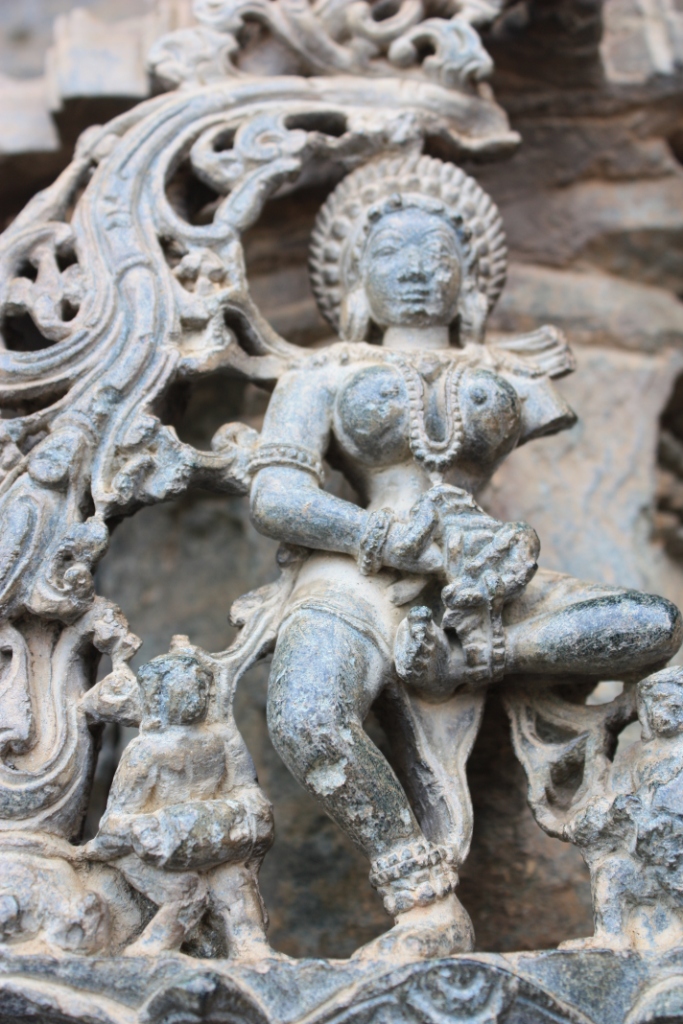
This temple and its sister temple at Halebidu, Hoysaleshwara temple, are probably the most ornate structures I’ve seen anywhere in the world. They are covered with soapstone carvings arranged in several tiers. For example, the bottom layer is a series of elephants, each one unique. There is a layer that tells tales from the Mahabharata in pictures.

Soapstone is soft and easily worked when quarried, but it becomes hard enough to survive everything but looters as it’s exposed to the elements. You’ll note the “windows” carved in the rock to allow in light and breezes.

Close up

Close up


DAILY PHOTO: Lotus Mahal

Taken November 2, 2013 at Hampi

Taken November 2, 2013 at Hampi

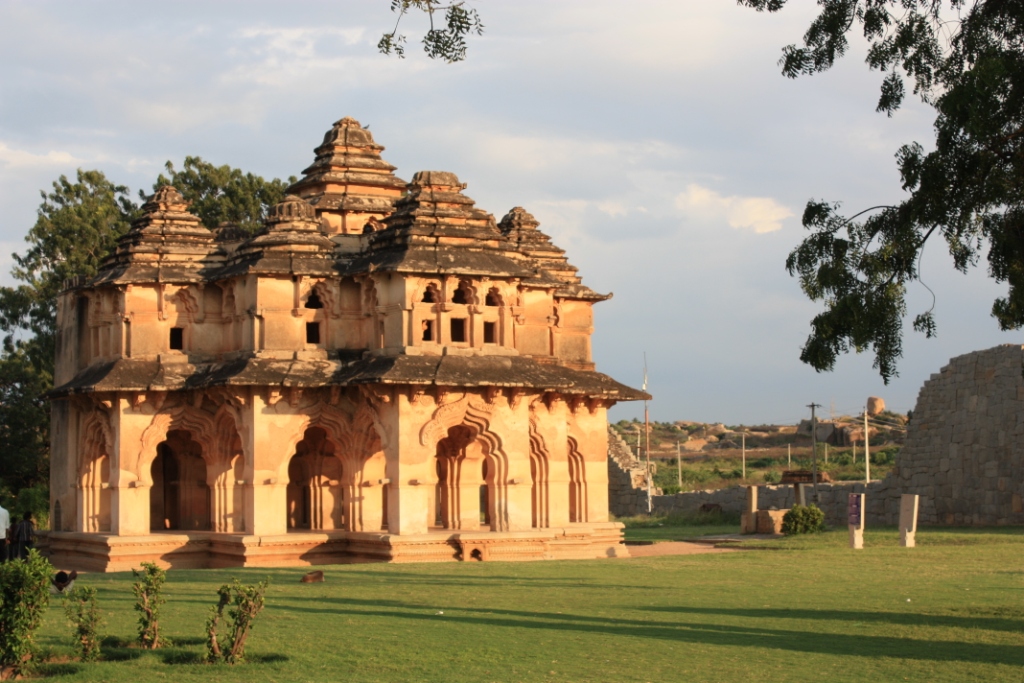
The Lotus Mahal is one of the most popular attractions at Hampi. It’s atypical in that it’s built, in part, in the Indo-Islamic style (note: the arches.) (Hampi [Vijayanagar] was the capital of a Hindu kingdom that was defeated by a confederation of Islamic states. ) While this pavilion is often referred to as the “Lotus Temple,” it was believed to be either a rest-house for visiting royalty or the queen’s recreational building–but not a religious building of any sort. 

We got there with good timing. The beige-pink lime mortar seems to glow in the low, afternoon sunlight.  

The Lotus Mahal is located in the Zenana Enclosure with the Elephant Stables. 

DAILY PHOTO: Mahanavami Dibba

Taken November 3, 2013 at Hampi

Taken November 2, 2013 at Hampi

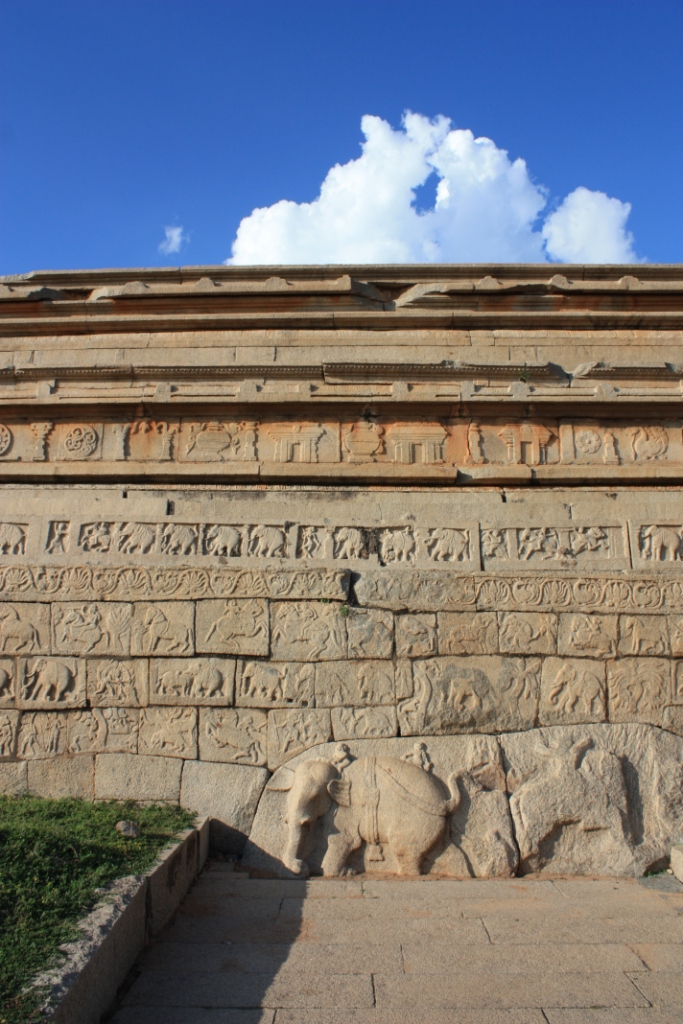
The Mahanavami Dibba was a monument built to honor Emperor Krishnadevaraya’s win over the state of Kalinga. (I believe he had it built himself. The arrogance of emperors knows no bounds.) At a little over 20 foot tall, it’s the highest structure in the Royal Enclosure, and offers a nice view of the palace ruins as well as  the boulder mountains of the surrounding countryside. The sides of the platform are covered in friezes in which elephants play heavily, but also dancing-girls and hunting scenes.  We had great skies for our visit.

The Royal Center is part of Hampi that one will need to have transportation to get around because it’s quite far from the Hampi Bazaar (where the guest houses are) and the key sites (e.g. Queens Bath, Hazara Rama Temple, the Lotus Mahal, and the Royal Elephant Stables) are spread out over a large area. However, willing auto-rickshaw (tuk-tuk) drivers abound.

DAILY PHOTO: Fatehpur Sikri

Taken October 13, 2013

Taken October 13, 2013

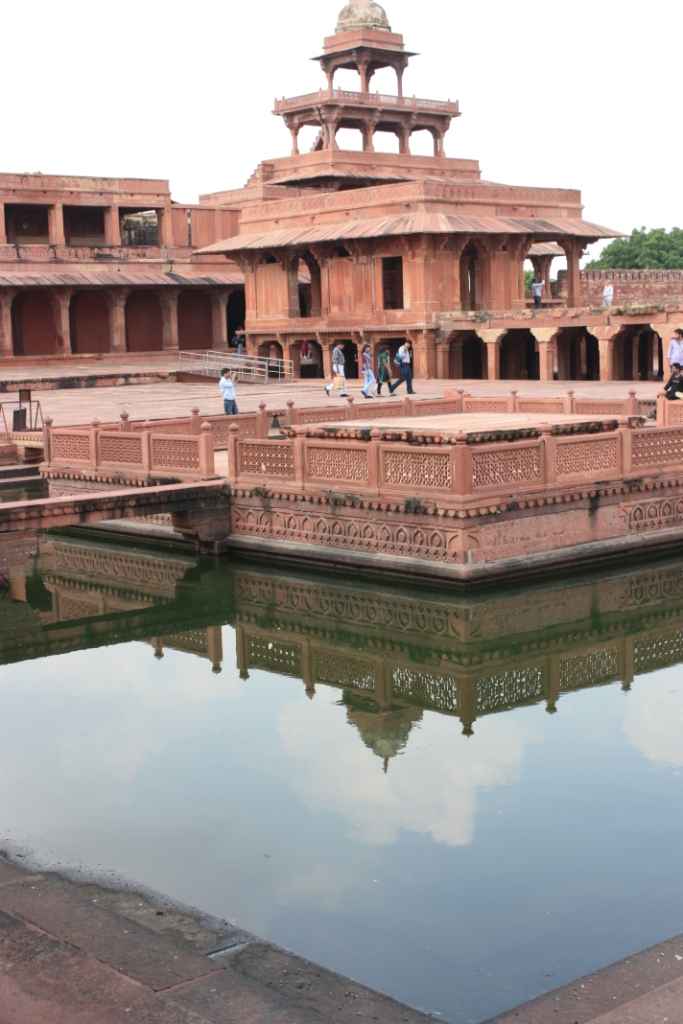
Fatehpur Sikri is a historic site not far from Agra (home of the Taj Mahal.) It’s almost entirely red sandstone, and is impressive site and well-maintained– including ornate carvings inside many of the structures.

This will be my last post for a few days as I will be traveling to Hampi, another set of famous Indian ruins of once great states.  I’ll be back after Diwali with photos and experience from that visit.


DAILY PHOTO: Jama Masjid

Taken October 14, 2013 in Old Delhi.

Taken October 14, 2013 in Old Delhi.

This is India’s largest mosque. It is capable of holding 25,000 worshipers–mostly in that open courtyard that can apparently be covered as needed.)  It dates back to the rule of Mughal Emperor Shah Jahan–who you may know of from his requisitioning of the Taj Mahal.

It’s located in Old Delhi and is usually matched with trips to the Red Fort and Chandni Chowk (a huge bazaar street), which are both nearby.

It’s mostly Red sandstone with white marble, as was common of Shah Jahan’s other monumental structures.

[I realize it’s a cheat that I’ve posted two “Daily Photos” in a couple of hours of one another, but it’s a new day in the States–and I’ve got a ton of photos from my recent trip.]

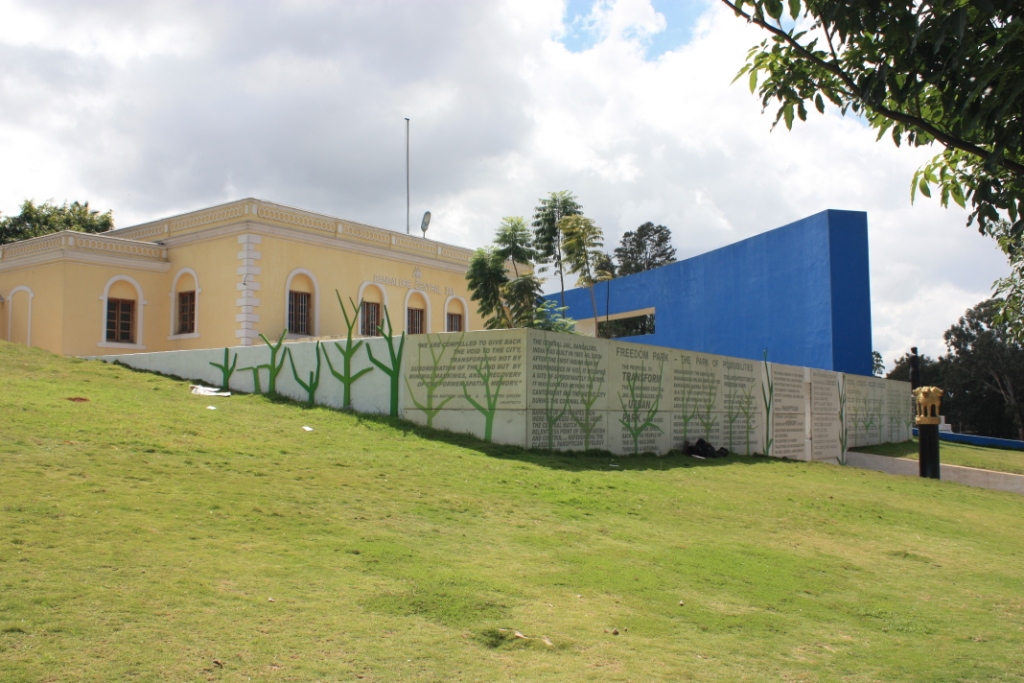
DAILY PHOTO: Bangalore Central Jail

Taken September 24, 2013

Taken September 24, 2013

While parks like Cubbon and Lal Bagh Gardens are more famous, Freedom Park may be the most pristine city block in all of Bangalore. The park sits on what was the grounds of the Bangalore Central Jail. Built in 1866 in the wake of the First Indian War of Independence, the Central Jail was constructed to hold rebels and revolutionaries opposing British rule. The first war didn’t succeed in achieving independence, that didn’t come until 1947. The first war did succeed in changing the ruling power from the British East India Company to the British Empire proper, a distinction without a difference in the eyes of Indians I suspect.

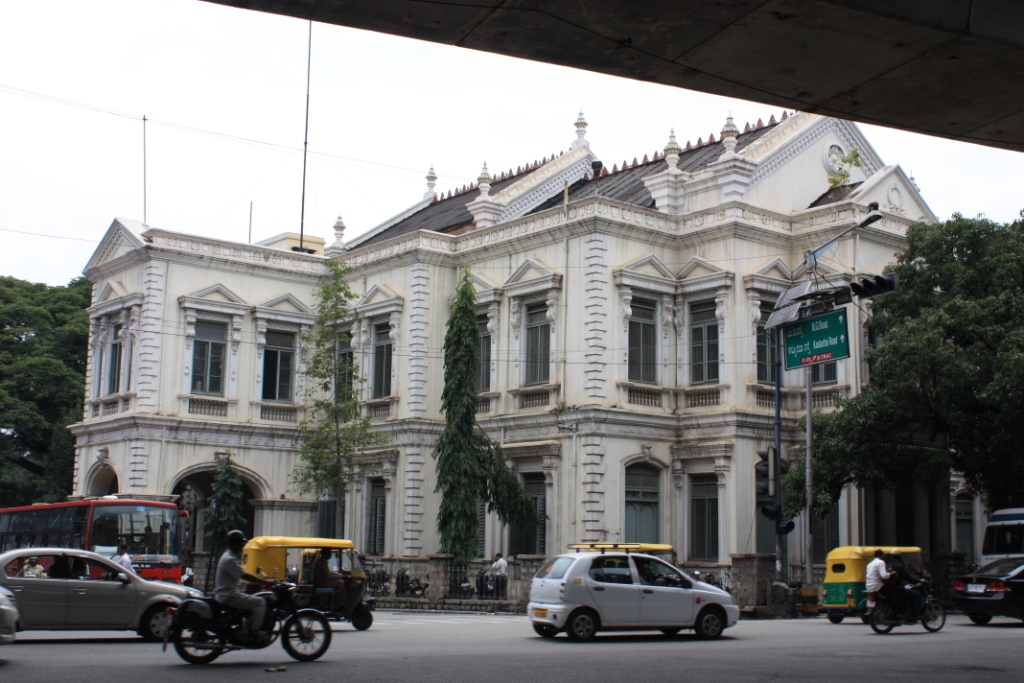
DAILY PHOTO: Mayo Hall

Taken September 12, 2013 in Bangalore.

Taken September 12, 2013 in Bangalore.

Named for the Sixth Earl of Mayo… No, I am not making that up… No, I’m not aware of whether the Sixth Earl of Mayo has any relationship to the Fourth Earl of Sandwich–famous inventor of meat between bread. If only Sir Francis Bacon had been made an Earl…