BOOKS: “A Carpet Ride to Khiva” by Christopher Aslan Alexander

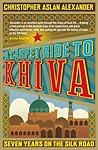
A Carpet Ride to Khiva: Seven Years on the Silk RoadA Carpet Ride to Khiva: Seven Years on the Silk Road by Chris Aslan
My rating: 5 of 5 stars

Publisher Site – ICON Books

“Travel-centric memoir” is how I’d classify this book, but it’s one of those books that isn’t easily categorized. The author cleverly interweaves explorations of Uzbek history and culture with his own story of living in the Uzbek city of Khiva for seven years as an NGO worker and traditional crafts entrepreneur. The side voyages into history and culture not only support the readers’ contextual understanding of the author’s story but also make for a fascinating journey of understanding of the locale. Uzbekistan has had many lives, from beating heart of the Silk Road to forgotten backwater of the Soviet Union, and these many lives have shaped what Uzbekistan is, and what it’s becoming.

I should point out that Uzbekistan has apparently made a hard shift since the days described in this book (late 90’s early 2000’s, i.e. fairly early in the wake of independence from the Soviet Union.) I mention this to avoid discouraging travelers through discussion of the author’s experiences. [I, myself, am planning a trip in the near future.] I’m sure that Uzbekistan continues to have deep-seated problems, but it seems to be making great efforts to be tourist-friendly these days. Which is not to say that the individuals were ever unfriendly to travelers. The author describes an Uzbek people who are warm-hearted, welcoming, and helpful. But when the author was there it was also on the list of the biggest human rights violators, corruption was ubiquitous, and tourism was almost non-existent. In fact, the penultimate chapter of the book describes the author’s experience of a visa denied, ping-ponged deportations, and a life sharply diverted by corruption.

The final chapter is intensely compelling and describes the author’s (late 2000’s) visit to Afghanistan to help apply the lessons he learned in Uzbekistan to building a rug weaving operation in that war-torn country (allowing women to make some money, an activity disallowed by the Taliban before and since.)

This is a fascinating book, and I’d highly recommend it for travelers and those interested this lesser-known part of the world. Even the descriptions of silk production, rug weaving, and natural dyes (topics that I expected wouldn’t resonate with me) were interesting and engaging.

View all my reviews

The Mythical High Performance Sock

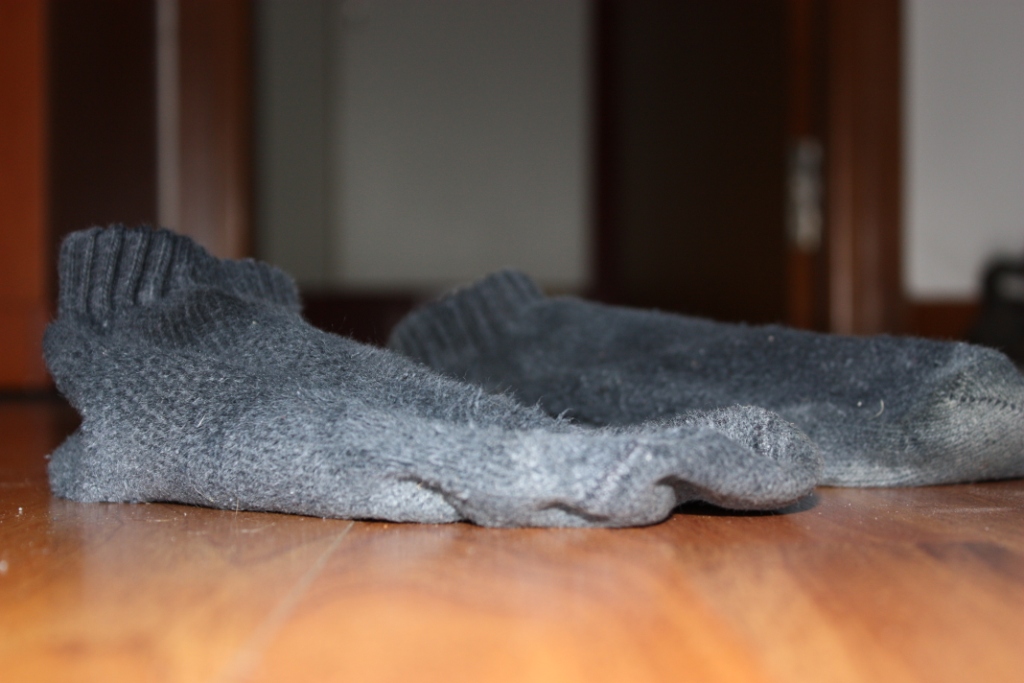
All my socks do is sit and plot their escape.

All my socks do is sit and plot their escape.

The day before I flew to India, a guy in the hotel’s guest laundry room told me that he’d almost gotten in a fight once when a pair of socks turned up missing. We all know that socks are the great self-emancipators of the garment world; they go Steve McQueen from the dryer all the time. Begging the question, why would anyone get so upset over the disappearance of them.

He must have seen the incredulity in my face, as he went on to tell me these were “high performance” socks.

I don’t know if got my second level incredulity as I thought, High… Performance… Socks? The things you wear on your feet to mop up sweat?

A sock is essentially a foot-shaped bag for your feet. As near as I can tell, the acts it “performs” are: 1.) warming the foot a little, 2.) drying the foot a little (theoretically)–though it can also keep the foot wet longer than it otherwise would be, and 3.) producing stink.

In the military we were instructed to wear two pairs of socks. The sock closest to the skin was a cotton sock, and the outer sock was wool. This rationale for this foot sauna was that the cotton sock would wick moisture away from one’s skin, and the wool sock would keep one’s foot warm even when wet. Incidentally, this works great if you are in a cold environment–unfortunately, we haven’t fought a war in a cold environment since 1953.

So when I thought about the “performance” at which these socks excelled, I assumed they must keep one’s feet toasty. Wrong! The material seems extra thin. So, they must keep the foot extra dry, perhaps they are embedded with talc or something like that. Wrong again.

Surely these socks aren’t better than average at producing foot stench?  No. That’s not it.

Then I realized there was an other factor on which a sock might be judged: its ability to get people to hand over money in exchange for it. An average pair of socks can garner $3 or $4, but high performance socks can get people to shell over $17 or more. That’s some high performance.

Now, I know someone out there will be wanting to tell me about the orthopedic benefits of said sock in supporting one’s arch. This sounds like sock oil salesmen shtick. Is there any fabric known to man that can support your body weight so as overcome in adequate arch support in your shoes? Unless you are Tinkerbell, I doubt it. Perhaps, these socks do have physics-defying properties; maybe we should use them to mend bridges.