BOOKS: “The Creature Commandos” by J.M. DeMatteis, et. al.

The Creature CommandosThe Creature Commandos by J.M. DeMatteis
My rating: 4 of 5 stars

Publisher Site – DC

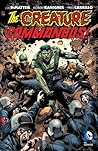
Having recently heard about the impending animated series being made under James Gunn’s aegis, I read this book to learn who, exactly, were the “Creature Commandos.” This volume collects eighteen issues of “Weird War Tales” from the 1980’s and is where this superhero team got its start. It’s not a complicated premise: a team consisting of characters based on classic horror figures is assembled to carry out challenging missions on behalf of Allied powers during World War II. It should be pointed out that these aren’t the original horror characters, but rather were mostly made in the lab using “science.” The core team of Lucky Taylor (Frankenstein’s Monster-like,) Sgt. Velcro (Dracula-like,) and Griffith (a Werewolf) were all produced in such a way by “Project M.” A fourth member of the team, Dr. Medusa (Myrra Rhodes,) got her powers in a laboratory accident (yes, this wasn’t exactly sophisticated storytelling.) An occasional fifth member J.A.K.E., the robotic infantryman, appears in only a few issues.

This collection is definitely from another era. It is written with an audience of children in mind. It’s not just the “science” that lacks cleverness, but also much of the dialogue and some of the story elements. It is also different in that there is no overarching story continuity. Each episode is standalone. This is probably in part because the Creature Commandos didn’t have their own title at this point and were appearing in “Weird War Tales.” In early issues there is a fair amount of repetitive exposition to catch new readers up, but that became less prominent as the series progressed.

Having said all that, many of the stories are compelling and — despite the campiness — the authors do succeed in making the reader sympathize with the core group and their plight as humans turned monster. My only complaint about character development would be with respect to the team’s leader, Lt. Shrieve. I’m sure they were aiming for “gruff, war-hardened, but fundamentally decent,” but through the first three-fourths of these comics Shrieve is completely detestable and has no redeeming value whatsoever. The authors did start to make course corrections toward the end, planting seeds to make Shrieve less loathsome, to make him someone that you can understand (despite his rough edges) why his team might save him instead of fragging him. I suspect that they wanted to make the most physiologically human character the least humane of the characters, but they took it too far.

All and all, I found this collection enjoyable to read — despite being juvenile and camp — and am looking forward to what they will do in the animated TV series. [Note: It is a different slate of characters and is otherwise updated to appeal to an adult audience, but – I suspect – draws from the original source material in some ways.]

View all my reviews

BOOKS: “DC vs. Vampires, Vol. 1” by James Tynion IV & Matthew Rosenberg

DC vs. Vampires, Vol. 1DC vs. Vampires, Vol. 1 by James Tynion IV
My rating: 4 of 5 stars

Publisher’s Site

In this opening volume in a series that pits a set of the DC pantheon of superheroes against a shadowy vampire cabal, we learn that the vampires are preparing for attack and that they’ve infiltrated all levels of society to degrees unknown — even the Justice League. This volume focuses heavily on the extended “Bat-Family” along with Oliver Queen’s smaller Green Arrow team, but includes many more superpowered characters in varied roles. Though it also ignores some of the most powerful characters, a big risk for such a huge ensemble cast. (One wants to save some big guns, but it begs the question of whether Superman is fiddling while the world burns.)

I like how tension was built in this story, and how information is revealed to the reader, allowing one to be gripped by questions of how the characters will learn what one already knows and with what consequences. The volume ends with a big reveal, though not with any kind of resolution. So, it’s not a standalone story in my view.

I found the volume engaging, but feel it suffers from the unavoidable problems of having too many characters, particularly characters of the god-tier variety.

View all my reviews

BOOKS: “Captain America: Winter Soldier, Vol. 1” by Ed Brubaker

Captain America: Winter Soldier, Vol. 1Captain America: Winter Soldier, Vol. 1 by Ed Brubaker
My rating: 5 of 5 stars

Amazon.in Page

This is a tale of cloak and dagger intrigue, modern-day intrigue rooted in post-Cold War intrigue rooted in Cold War intrigue rooted in Second World War intrigue. It’s intrigue all the way down, and the book uses flashbacks to gradually fill in the reader on the necessary background.

I liked that Brubaker shows us a Captain America that’s a bit beaten down and jaded. Not beaten down in the physical sense, but in the sense of not being able to maintain his preternatural positivity and virtue in the face of all he’s seen and been through. It makes for a more interesting and textured Captain America.

In issue one of this seven issue collection, the Red Skull is found dead, and the bulk of the remainder of the book is a detective story of political intrigue. [Except the final issue which wraps up a secondary plot point from an earlier issue by telling us the tale of Jack Monroe. Which shows us a darker, grittier side of super-soldiery.]

I enjoyed reading this volume. It was a compelling story arc with plenty of action but also a bit of mystery. If you’re a Marvel comics reader, it’s must-read.

View all my reviews

BOOKS: “Eternals” (2006) by Neil Gaiman and John Romita Jr.

EternalsEternals by Neil Gaiman
My rating: 4 of 5 stars

Amazon.in Page

The Eternals is one of the lesser-known superhero groups, a collection of immortal, god-tier heroes who protect the Earth from a specific set of enemies (Deviants) and serve a specific master (Celestials.) [The Eternals are a little better known now, given Marvel’s “every hero, everywhere, all at once” strategy led them to make a movie based on the team, and — like many products of that phase — it was not loved.] I am usually not a big fan of god-powered comic book characters because it’s an uphill battle to make them interesting. However, I am a big fan of the story-crafting of Neil Gaiman, and this story had the promise of the heroes not knowing they were heroes, at least through the early part of the book.

I found the story to be coherent, despite its outlandishness, and I was a fan of having the heroes living under the impression they are ordinary people. I think that device created fine conditions for tension and intrigue. Still, the volume does not read with the visceral intensity one would expect of a story with stakes as high as they are stated to be. There was some distance created by a lack of intense connection to the characters and the clunkiness of the premise.

If you’re looking for stories of a hero team stranger than the Avengers, but not as strange as Guardians of the Galaxy, this may be your cup of tea.

View all my reviews

BOOKS: “Pawan” by Sorabh Pant

Pawan: The Flying AccountantPawan: The Flying Accountant by Sorabh Pant
My rating: 4 of 5 stars

Amazon.in Page

On one level, the more superficial level, this is a superhero fantasy featuring a Vanara (a supernatural monkey-man creature from Indian mythology,) on another level it’s a political satire that riffs on the geopolitics and the military-industrial complex of India. It’s cleverer as the latter than the former.

The story has some clunkiness, including the occasional hard to follow description and sloppy story elements (e.g. the deus ex machina.) That said, it’s pop genre fiction and with regards sloppy story elements they’re par for the course in superhero fiction. My point being that the fact that it’s amusing and mostly readable means it hits its target, strained credulity and logical inconsistencies aside.

The humor is of the broadest range with occasional laugh-out-loud hilarity, lots of mildly amusing jokes, and a few groan-worthy lines that go down like a lead-balloon. That’s not a terrible ratio for a novel.

If you want to check out a book featuring an Indian mythology-based superhero, and you don’t mind a lot of jokes directed at political and national security apparatus leadership, this book is worth looking into.

View all my reviews

“X-Men: Phoenix in Darkness” by Grant Morrison

X-Men: Phoenix in Darkness by Grant MorrisonX-Men: Phoenix in Darkness by Grant Morrison by Grant Morrison
My rating: 5 of 5 stars

Amazon.in Page

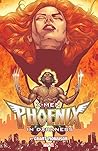
This volume consists of two different story arcs that are thinly tethered by the character of Jean Grey / Phoenix. The first arc features an elaborate plot by Erik Lehnsherr / Magneto to clear the playing field of major opposition so that he can carry out his plans for world domination / the end of homo sapiens. The second arc is set in a futuristic dystopia and its villain is a dark and twisted variant of Hank McCoy / Beast who sets himself up to control the power of the gene. Interestingly, while Jean Grey / Phoenix plays important roles in both arcs, the stories are by no means centered on her. This keeps the stories from just playing out the will of a ridiculously overpowered character, and instead uses the fact that Phoenix is a threat everlasting, one that can never be allowed to get out of one’s sight.

The volume can be a bit chaotic, with the various time jumps and rather large cast of characters, but I felt it wasn’t too hard to follow the story — even given a bit of Grant Morrison trippiness.

If you’re interested in the X-men, this volume is worth looking into.

View all my reviews

BOOKS: “Batwing, Vol. 1: The Lost Kingdom” by Judd Winick

Batwing, Vol. 1: The Lost KingdomBatwing, Vol. 1: The Lost Kingdom by Judd Winick
My rating: 4 of 5 stars

Amazon.in page

This New 52 spinoff takes the Batman mythos out of Gotham and into the Democratic Republic of Congo. Batman, himself, plays largely a supporting role as mentor and equipment provider to David Zavimbe, a.k.a. Batwing. The book is careful to avoid having Batman play the role of rescuer, but instead, when Batwing and Batman fight together they do so largely as peers.

I’ve got to say that the name had me worried. It’s like a mashup of “Batman” and “Nightwing” and seems lazy and uninspired in a way that I feared might infect the comic. However, character building is a strength in this volume. David Zavimbe is a former child soldier in the Congo, particularly gifted in killing — though tormented by it, torment that reflects itself in PTSD.

While Batwing’s abilities paired with Bruce Wayne’s technology makes the Congolese superhero a force to be reckoned with, Batwing meets his match in a mysterious villain who calls himself “Massacre.” This six-issue volume focuses on the on-going battle between Batwing and Massacre, as the former tries to disrupt the latter’s killing spree.

This arc is stimulating in that it deals heavily in the complex realities of war-torn Africa. There is the issue of redemption, and whether it is even possible for someone who has been a cold-blooded killer. But the story also generates ambiguity about who is right, and even whether “right” is meaningful in a context where everyone has blood on his hands.

I enjoyed reading this book and would recommend it for all comic book readers, especially those who like either Batman, Black Panther, or both.

View all my reviews

BOOK REVIEW: Batman: The Complete Hush by Jeph Loeb

Batman: The Complete HushBatman: The Complete Hush by Jeph Loeb
My rating: 5 of 5 stars

Amazon.in Page

Over the course of this twelve-chapter story, Batman is pitted against much of his rogues’ gallery, but they’re puppets to a shadowy unknown, a secret villain: Hush. Batman has to do his best detective work, and still faces twist after turn in uncovering this enemy that knows him all too well, who knows all his pressure points. Batman has to battle Killer Croc, Poison Ivy, Harley Quinn, Joker, Scarecrow, and Clayface – and even [due to mind control] Superman and Catwoman, but nothing is as it seems. One might expect that a book this packed with enemies would face problems of pacing and poignancy, but the way the story is crafted (and the villains are effectively subordinated) it’s quite the opposite.

This was one of the smartest comics I’ve read. It’s a mystery that offers foreshadowing, but also false flags. There’s a sub-plot love story between Batman and Catwoman in which the relationship matures, but the question of whether one can ever really trust someone in that world remains ever in the background.

I thought this was one of the best comics I’ve read, and if you’re a Batman fan, it’s definitely a must-read.


View all my reviews

BOOK REVIEW: M.O.M.: Mother of Madness, Vol. 1 by Emilia Clarke & Marguerite Bennett

M.O.M: Mother of Madness #1M.O.M: Mother of Madness #1 by Emilia Clarke
My rating: 4 of 5 stars

Amazon.in Page

Out: December 14, 2021

This graphic novel uses a story about a single mother who develops superpowers tuned to her emotional states as a means of exploring a wide range of social justice issues. On the positive side, the story has moments of humor and moments of poignancy, and it takes efforts to avoid being purely divisive in the way socio-politically themed works often are. On the other hand, the book becomes bogged down in preachiness at times, and would likely have been much more effective if it’d used story to convey ideas, trusting the audience to grasp the takeaway without hammering them with ham-fisted dialogue. To be fair, the book, using fourth wall breaks, sometimes acknowledges its own exposition dumps and other clumsy and clunky elements.

The artwork was clear, if sometimes a bit bizarre and quirky. (e.g. See cover)

Unfortunately, as I read the book what the story most reminded me of was the Halle Berry “Catwoman” movie, which no one [even, I suspect, Halle Berry] wants to be reminded of. One reason for this comparison was that both stories decry objectification and shaming while featuring only beautiful people, and they definitely [unconsciously, I suspect] perpetrated the “ugly equals evil” notion ubiquitous in storytelling.

It’s not a bad story and has its admirable qualities, but I think it could have been better if it were a bit more focused and less heavy-handed with the commentary. At times it seemed as if the author thought, “Oh, and I want to say something about this social travesty,” and then she inserted dialogue that seemed to have little to do with what was going on with the story at the moment. Or, perhaps, there was a list of disparate social issues that needed to be touched upon in the single volume.


View all my reviews