BOOK REVIEW: Anno Dracula by Kim Newman

Anno DraculaAnno Dracula by Kim Newman
My rating: 5 of 5 stars

Amazon page

Anno Dracula is set in a world subsequent to the events of Bram Stoker’s Dracula. In the world of Anno Dracula, Dracula kills Van Helsing (not the other way round) and becomes more powerful than ever. In fact, the Count has married himself into line to become king. Vampires flourish in the open and their numbers are swelling. But a few of them are being gruesomely murdered. In Newman’s work, the vicious Whitechapel murders attributed to Jack the Ripper target young, “turned” working women of Whitechapel. The killings attract attention and become politically charged. The book’s plot revolves around the investigation by an unlikely duo, Charles Beauregard (human) and Geneviève Dieudonné (Vampire elder), into the murders.

Newman creates a fascinating world that blends not only his own characters (e.g. Beauregard and Dieudonné), but also characters from other popular works set in the 19th century as well as from our own history. Some of these borrowed characters are important to the story, others are mere cameos, and still others are references to the departed or imprisoned. Among the book’s fictional pantheon are those from works by Robert Louis Stevenson, Oscar Wilde, H.G. Wells, Sir Arthur Conan Doyle, and—of course—Bram Stoker. Bram Stoker lends the critical character of Dr. John Seward to the book, although there are references to most of that book’s major characters. (You’ll miss some connections if you haven’t read Dracula, but you’ll still be able to follow the story.) The next biggest contributor of characters is Sir Arthur Conan Doyle. Mycroft Holmes, Inspector Lestrade, and Professor Moriarty are all present in the flesh, though the latter plays a small role, and others—including the great detective, himself—are referenced throughout.

Many of the real world characters are literary greats (poets, playwrights, and novelists) including George Bernard Shaw, Lewis Carroll, Alfred Tennyson, and Oscar Wilde. However, also included are political figures, royalty, and—of course—the victims of Jack the Ripper. This mixing of the literary and historical worlds lures book-lovers further down the rabbit hole.

If this book seems like a murder mystery, it’s not. One of the interesting elements of Newman’s approach is that he reveals the killer from the outset. While we know who the killer is from the book’s opening, we don’t know whether or how he will be brought to justice—or what precisely justice means in this case. The book is more about the web of intrigue that surrounds the murders than it is about the murders. Ultimately, the book takes in a much bigger picture than a few murders in the seedy side of London.

Anno Dracula is intriguing and readable. If one has read Dracula, the various Sherlock Holmes stories, The Strange Case of Dr. Jekyll and Mr. Hyde, The Island of Dr. Moreau, and other contemporary literature, it’s all the more enjoyable for the way it artfully places these all in the same universe. I’d highly recommend this book for readers of the classic popular fiction.

View all my reviews

BOOK REVIEW: The Mandala of Sherlock Holmes by Jamyang Norbu

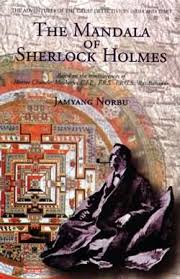
The Mandala of Sherlock Holmes: The Adventures of the Great Detective in India and TibetThe Mandala of Sherlock Holmes: The Adventures of the Great Detective in India and Tibet by Jamyang Norbu

My rating: 2 of 5 stars

Amazon page

I gave this book the lowest rating that I’ve ever given a book I reviewed. However, there’s a selection bias at work. I don’t finish (and rarely start, for that matter) books that are so horrible that they’d get a lesser rating. Ergo, any book that I finish and review has some redeeming qualities. I’ll leave it to the reader to determine whether these redeeming qualities will outweigh the deficiencies of story in this book.

The Mandala of Sherlock Holmes takes our beloved detective out of London and onto a trip from Bombay to Shangri La by way of Shimla (India) and Lhasa (Tibet.) It’s one of several pieces of Great Hiatus fan fiction out there. (I recently saw an addition that took Holmes to Japan.) Fans of Sherlock Holmes will be aware that Sir Arthur Conan Doyle became tired of the character at one point and killed him off (along with Professor Moriarty) at Reichenbach Falls. Holmes was “revived” several years later due to popular demand (and—perhaps—Doyle’s need for funds), leaving fans / authors to speculate what the detective did during his time in hiding (i.e. the so-called Great Hiatus.) This particular work tells us that Holmes spent his time in the Himalayas. It’s as good a setting as any, given that fascination with the esoteric Himalayan world was building in the West during this time. In an interesting feature, Norbu’s book brings in a fictional character from Rudyard Kipling’s Kim, Hurree Mookherjee, to serve as Holmes’s sidekick. (FYI: Kim was published during the Great Hiatus years.) The story involves shadowy plots against both Holmes and a young 13th Dalai Lama (this was the predecessor of the current Dalai Lama) that are incidental to obtaining a powerful mandala.

I’ll begin with the strengths of the work before I tear into what I found objectionable about the book. The author, Jamyang Norbu, clearly did his research, and there are some fascinating tidbits and insights into that era of South Asia history. As a Tibetan, Norbu, paints an intriguing travelogue of the territory that Holmes and Hurree traverse. Also on a positive note, I’d rate the readability of this work to be high. It doesn’t follow the 19th century so closely that it falls into the purple prose and general verbosity of that century’s literature, and I think that’s a good thing. The author manages to create a bit of the feel of 19th century literature without falling off the abyss.

The book’s negative qualities are disproportionately loaded toward the back of the book. (Part of what keeps one reading and engaged is that it seems like the book could turn out well.) Let me begin with one minor character defect of the book which is that not all of the chapters advance the story; a few are descriptive like travelogues. However, most of said chapters are so short that it’s not that problematic.

I should note that one star that might’ve been obtained for originality must be forfeited because there’s no shortage of books following the same general premise.

But the story’s major flaw is that devolves into supernatural speculative fiction done poorly. Let me say, I’m not against the supernatural genre in theory. However, as with stories about Superman, these tales are exceedingly easy to do poorly and extremely difficult to do well. In the real world, tension is easily created because the reader knows many of the limits that characters face, and a good writer forces his characters up against some of those limits. However, when characters seem to be limited by the laws of physics, but then just start pulling magic rabbits out of their hats, the tension drains. We assume our protagonist will prevail and the antagonist will be thwarted. The odds stacked against our hero(es) don’t matter if one expects they’ll pull out a—proverbial or otherwise–magic wand and claim a cheap victory. If one wants to do the supernatural well, one needs to not only make the antagonist stronger (which Mr. Norbu does), but one has to know what everybody’s limits are. Otherwise, it’s just a cheap spectacle. [I should point out that Hurree does engage in a non-magical action that is critically timed during a key moment of the story, and some readers may feel that this absolves the novel of its ham-handed introduction of the supernatural.]

There’s another problem with the degree to which the book hinges on the supernatural, and that is specific to the domain of Holmes. The supernatural is usually something to be debunked in the Holmesian domain. Sir Arthur Conan Doyle’s Holmes is a product of the dawning of the age of rationality, and he is a man of science. [Want to know more? See this Tor article entitled “No Ghost Need Apply.”]Doyle’s Holmes may accept the possibility of the supernatural and apparently supernatural elements may make appearances, but Holmes is always looking for an explanation rooted in logic and favoring the possible. While Norbu goes to great lengths to capture the flavor of Holmes in many aspects, he abandons the character altogether in favor a world that looks neither like our own nor the one Arthur Conan Doyle created.

The disappointment of this book is that it looks like it’s on a trajectory to hit its mark, but then sails wildly off target.

If you like supernatural fiction and you don’t mind that magic suddenly pops up to shape the climax of the book out of the blue, by all means pick this book up. Otherwise, I can’t say that I’d recommend it for Holmes’ fans.

View all my reviews

READING REPORT: February 27, 2015

I finished three books this week.

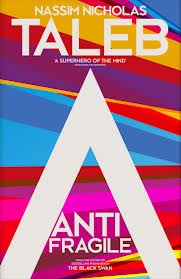
Antifragility

The first of these is Antifragile, the latest offering by Nassim Nicholas Taleb, whom you may know from Black Swan and Fooled by Randomness fame. While it’s his latest book, it came out a couple of years ago and I started it over a year ago.  The premise is that some entities become stronger when exposed to stressors and disorder,  and there are ways to nurture this tendency to be antifragile. While the ideas and many of the examples are fascinating, I put it down for a long time because Taleb is prone to rambling diatribes. After about the 1oooth time reading about how much he loathes the 98% of professors (we get it already), you may be ready to set it down as well.  [To be fair, Taleb probably gets a hundred death threats a year from enraged social science scholars whose life’s work will appear ridiculous to anyone who understands the gist of Taleb’s arguments in this and his preceding two books.] Taleb is a first-rate thinker who has delivered some very important messages about the misapplication of statistics, I’m not sure why he feels compelled go all Howard Stern about it–though it does probably sell a few extra copies and I suspect he is genuinely that way.


pyjamagameMark Law’s The Pyjama Game is in part a micro-history of the martial art and sport of judō, and in part is an accounting of his own experiences in taking up judō at the ripe age of 50. For me the history and evolution of judō is where the book is at its most interesting. However, if you don’t have any martial arts experience–or even if you don’t have any grappling-centric training experience–you may find Law’s discussion of testing and randori (free form training, the grappling equivalent to sparring) intriguing, or invaluable if you’re considering taking up judō, jujutsu, or sambo.


mantraSherlockHolmesThere is apparently a cottage industry of writers putting out their own Sherlock Holmes novels, and–in particular–writing about Holmes’s gap years. For those unfamiliar with the literary history of Sir Arthur Conan Doyle, at one point he got sick of writing these crime fiction novels and killed off Sherlock Holmes. However, there was such a clambering for the master detective that Doyle resuscitated Holmes. These gap years in which Holmes was believed dead have proven fertile soil for writers who wish to write their own spin on where Holmes went and what he did when he was traveling incognito. I saw a press post for a new one the other day in which Holmes goes to Japan. The Mandala of Sherlock Holmes, however, speculates that Holmes traveled to Bombay, and from there to Tibet and eventually to Shangri La. It’s an intriguing premise and offers some good travelogue type description of setting–however as a story it’s not as artfully executed as the Arthur Conan Doyle books.


I bought four books this week, two of which–in part–because they’ll help me complete the Book Riot 2015 Read Harder Challenge, which I will talk about below.


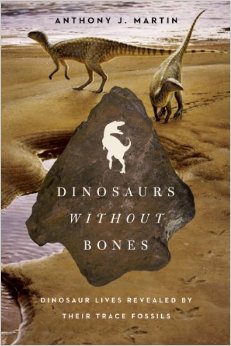
Dinosaurs_wo_Bones

Admittedly, I bought this book, Dinosaurs Without Bones,  not because the subject jumped out at me (though I’m sure it will prove thrilling) but rather because I knew the author about a billion years ago (I know; I should take geological time more seriously when mentioning a book of this subject.) At any rate, we trained at the same martial arts school in Atlanta, Georgia. That disclaimer being made, the topic looks fascinating and I’m eager to learn more about paleontological detective work.


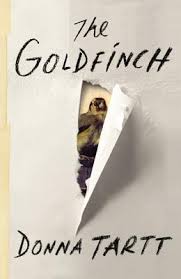
GoldfinchThe Goldfinch won the 2014 Pulitzer Prize for Literature, and so it meets an unchecked requirement for the Book Riot Challenge (recent award winner of one of the major literary prizes.) Honestly, if it weren’t for my desire to complete the challenge, I might have read Tartt’s The Secret History first. The latter books seems a little more up my alley, but I”m eager to see what this critically acclaimed novel has to offer. If it’s engaging, I’ll go back and pick up her first novel.


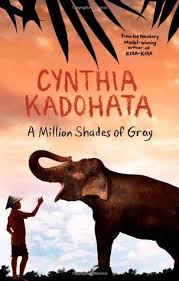
AMillionShadesofGray

No A Million Shades of Gray isn’t a mommy porn book 20,000 times more intense than E.L. James’ book. On the contrary, it’s an intriguing YA book about a teenage elephant handler who escapes into the jungle with his elephant to escape war-torn Vietnam. This book will hit on an unchecked category on the Book Riot Challenge (i.e. YA book)


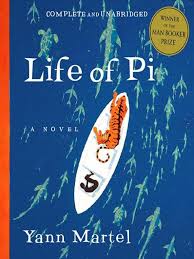
Life of Pi

Life of Pi is a book that I intended to read long before the movie came out, but still haven’t gotten around to it. It was cheap on Kindle, and so I picked it up. I’ve seen the movie, so it’ll be interesting to compare, given how visual the movie was.


I’m almost halfway through the Book Riot 2015 Read Harder Challenge. The 19 books I’ve completed thus far this year include books in 11 of the 24 categories, including:


3.) Short story collection or anthology: a.) 999: New Stories of Horror and Suspense, and b.) I Have No Mouth And I Must Scream


6.) By someone of another gender: a.) Tears in Rain, and b.) Principles of Tibetan Medicine


7.) Takes place in Asia: a.) Quarantine in the Grand Hotel, and b.) The Mandala of Sherlock Holmes


10.) A micro-history: Yoga Body: The Origins of Modern Postural Practice


12.) A science fiction novel: a.) Tears in Rain, b.) The Martian


17.) A collection of poetry: Leaves of Grass


18.) A book that was recommended: Key Muscles of Hatha Yoga


19.) A book originally published in another language: a.) Tears in Rain (Spanish), b.) Quarantine in the Grand Hotel (Hungarian)


20.) A graphic novel or comic book collection: The League of Extraordinary Gentlemen (Vol. 1)


23.) A book published in 2014: The Martian


24.) A self-improvement / self-help book: Zen Mind, Strong Body