BOOK REVIEW: Pulp: The Process Edition by Ed Brubaker

Pulp: The Process EditionPulp: The Process Edition by Ed Brubaker
My rating: 5 of 5 stars

Amazon.in Page

Out: July 26, 2022

This is the “how the sausage gets made” edition of a popular standalone graphic novel, “Pulp.” It takes the reader through the various stages of the book’s development from conception through book “trailer,” drafting, penciling, coloring, and on to the final product. It offers explanatory notes by the author and artist at each stage along the way, in addition to showing the work at that stage of development. For the more substantial stages (e.g. drafting and final edition) it shows the full product, but for intermediary stages (e.g. inking and coloring) it just shows a few representative pages to give one the idea.

If you’re just looking to be entertained by a story, this isn’t the edition you want. Which isn’t to say that it’s not the book you want, “Pulp” offers a well-crafted and intriguing tale of a man, Max, who lived the gangster life in the wild west in the prime of his life (late 1800’s) and then “went straight” to become a pulp fiction writer in 1930’s New York during his senior years. The action of the story takes place in 1930’s New York, with flashbacks to violent episodes of Max’s past out west. It’s a take on “the life sucks you back in” storyline.

The main market for this edition is artists and writers interested in the comic writing / drawing tricks and techniques of seasoned professionals. I can also imagine actors, filmmakers, and those with cinematic interests benefiting from learning how choices are made with respect to how scenes are set and framed – i.e. to learn from the economy of the graphic novel format.

If you’re a creative type looking to work with comics or wanting to learn about how scene choices are made, give this book a look. If you’re just looking for an action-packed story, pick up the original edition of “Pulp.”


View all my reviews

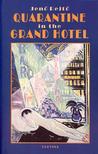
BOOK REVIEW: Quarantine in the Grand Hotel by Jenő Rejtő

Quarantine In The Grand HotelQuarantine In The Grand Hotel by Jenő Rejtő

My rating: 4 of 5 stars

Amazon page

[Note: This book is published by Corvina Books, which is a Hungarian publisher that—among other things—specializes in translations of Hungarian literature (into mostly English and German.) I bought the book on a recent trip to Budapest. I mention these two facts because this seems to be an expensive and / or difficult to acquire work outside of Hungary. A cursory Amazon search brought up copies only at an exorbitant rate. In Hungary I paid 2500 forint (about $9 USD at the time), which I would consider on the high side of what the book is worth. It’s a good book, but it’s a 160-page pulp-fiction paperback novel written about 80 years ago.]

Quarantine in the Grand Hotel is a murder mystery set on a fictional resort in Indonesia (or thereabouts.) However, it’s not your typical dour mystery. It’s as much of a satirical humor novel as it is a mystery. I was hooked with the first paragraph, which reads, “When Maud returned to her room, she saw a man emerge from her wardrobe. Dressed in pyjamas and wearing a bright green lampshade on his head, the stranger beamed a friendly smile at her.” From that point, I had to know who the man in the pyjamas is and how he got there, and that information doesn’t come immediately or without false leads.

The premise is that the resort is quarantined and a murder takes place there (actually two murders.) It’s not a creative premise. The hotel setting allows the author to bring together an international cast of characters (suspects) some of whom would believably have secrets or be leading double lives. Where the creativity comes in is both in the humor, and in the skilled reveals. Rejtő used cliff-hanger chapter closings to good effect. He also plants false information, e.g. in the form of false confessions designed to protect loved ones that may or may not have actually committed a crime.

Rejtő (who wrote under the nom de plume “P. Howard”) was a Hungarian journalist and author. He wrote this and most of his books in the 1930s. He died in a forced labor camp in axis-controlled Soviet territory during World War II. He’d displeased the Hungarian Arrow Cross Militia (i.e. the Hungarian fascists) and was sent to a labor camp at the front.

I’d recommend this book for those who like light, humorous novels. If you’re a hardcore mystery fan, it might seem a little silly and ham-handed. If you are looking for a novel that offers insight into Hungarian literature, I don’t think this one is for you. The setting is not Hungarian, the major characters are not Hungarian, and I would hazard to say that most people wouldn’t know that this translation wasn’t written by a British, or other English-language country, author.

View all my reviews

TODAY’S RANDOM THOUGHT: Chasing MacGuffins

What's the "Rabbit's Foot?" Source: Paramount

“What’s the ‘Rabbit’s Foot?'” “I don’t know, but I’m going to shoot her in the head if you don’t give it to me.” Source: Paramount

Critics often bemoan the effectiveness of MacGuffins. A “MacGuffin” is an object so intrinsically valuable that people are willing to kill for it, die for it, or chase each other across the universe for it… and this is the important bit…without knowing precisely why said object is so valuable. In other words, it’s a plot device designed to propel plots forward that would have no reason to advance otherwise. Its exact characteristics are unimportant, and sometimes even its general characteristics remain unrevealed.

Prime examples from the cinema include “the case” from Pulp Fiction, the “Maltese Falcon” from the same-named movie, the “one ring” from Lord of the Rings, the sword “Destiny” from Crouching Tiger, Hidden Dragon, the “Rabbit’s Foot” from Mission Impossible III, the “Tesseract” from The Avengers, or “Genesis” from Star Trek II: The Wrath of Khan.

So, why would people kill, die, or chase after something that they didn’t understand? That’s what the aforementioned critics say, but I have my own theory as to why MacGuffins work well and frequently.  MacGuffins work because people are used to spending their lives chasing something that they don’t precisely understand. Call it bliss or legacy or a missing part of oneself. If one spends one’s life chasing after a key that may or may not achieve one’s desired goal, it would be hypocritical to not have sympathy for characters who do the same.