POEM: Dueling Grace of the Sun

The early morning sun warms the silvery shafts of a eucalyptus to a buttery yellow.

That seems a fine bit of grace,

until I see a hawk whose brown cowl is glowing gold in the same light,
as it perches watchfully on the one corner of a dilapidated building
that receives rising rays.

POEM: Strange Country


There’s a strange country
tucked away in the mind.

One can stumble into it
without expecting to;
Have you been there?

I remember pounding a drum to echolocate reality.
But the spongy landscape swallowed all sound.

A spastic second of fury and neural fireworks seized me
before I was overcome by the sadness
that terror was my go-to response
in the face of the unfamiliar.

What if I’d decided to be exhilarated?

Could one rise from the dead of living?

And so it came to be that the strange country cracked open,
giving birth to a world anew.
And leaves and rocks glittered with a cleansed glow.
And familiar country was suffused with an aura of novelty.

POEM: A Mythical Child of the Corn

Whenever I tell anyone that I grew up on a farm,
I get a certain reaction,

“REALLY?”

As if, of all the lies I could tell, that’s the one I’d pick.

You believed me when I told you I’d met the original Hamburglar,
but not that I grew up on a farm?

[Incidentally, I did meet A Hamburglar, but I’m pretty sure it was a sweaty teenager with limited job prospects.]

I don’t really think these people think I’m a liar.

Perhaps they thought farms are like Conestoga wagons and cave paintings,
quaint reflections of simpler bye-gone days.

Maybe they thought their corn chips were grown in petri dishes in a subterranean factory.

[Bad example. Maybe corn chips are manufactured that way, but I’m pretty sure somewhere there is a hose through which good old Hoosier-grown corn is fed in; maybe it’s just defective kernels that weren’t salable to the makers of feed for hulking Angus cattle, but still…]

Anyhow, I suspect they are just excited to come across someone so rare — if in a workaday way.

It’s nothing like meeting Neil Armstrong or Beyoncé,

but rather like meeting the guy who did Neil Armstrong’s tire alignment or who cleans Beyoncé’s fish tanks.

A mundane superstar.

A mythical child of the corn.

POEM: You’re Killing Me, Ms. Dickinson, or: Samurai Surgery


“If I feel physically as if the top of my head were taken off, I know that is poetry.”    – Emily Dickinson


It’s mean accuracy and angry power that can cleave the top off a head;
neither merely scalping the reader,
nor decapitating him.

Popping the top to blow the mind is samurai surgery.
Some lines tink against the forehead like a dull knife,
while others — with razor-sharpness — succeed only in shearing an unsightly bald spot.

The fabled Taoist butcher could cleanly slice between the bone ends,
never dulling his cleaver,
but that’s not much help for one seeking to take off the top of a head…

or is it?

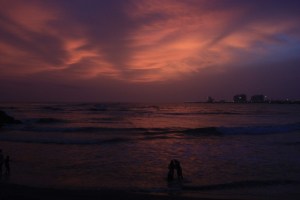
POEM: Sunset on the Sea

Will those trawlers haul their nets through the night,
even after darkness has descended?
When clustered stars offer the only light,
and the land-locked day has long since ended?

Are fishing vessels like the dreaded shark,
that swims endlessly when wetted by sea?
No mourning nor merriment owed the dark,
and miles between the hull and the quay.

They persistently glide on ocean tides,
measuring time by space left in the hold.
There’s a secret some sailors will confide,
each outing ends in a death unforetold.

There is the pleasant death of days at rest,
but then there’s becoming Poseidon’s guest.

Ninja Nursery Rhymes

Public Domain image from Wikipedia

Ninja be nimble,

Ninja be quick,

Ninja knock you on the noggin with a big stick.

***

Ninja be stealthy… healthy… and wise,

Ninja snatch like a snake, pull out your eyes.

***

Biscuit in a basket,

Ninja put you in a casket.

***

Heading home from the archives,

I met this cat who had five lives.

He’d met four ninja in lives past.

One life was lost in a big blast…

two were stabbed,

and the last one gassed.

Reaching home, ninja at his door,

his lives remaining numbered four.

***

Uh, oh, Ninja,

Have you any heads?

Yes, sir, yes, sir,

Three over in the shed.

One for my Lady,

One for my Lord,

One for the practice,

’cause I got a new sword.

***

Eeny, meeny, miny, egg.

Catch the Shogun by his leg.

If he hollers, make him beg.

Eeny, meeny, miny, egg.

***

Hey, Willie Winkie, you’re making too much noise.

Running around town, checking on girls and boys.

If you’d have done your job, and shut the kid up.

I’d not have had to put Ambien in his juice cup.

***

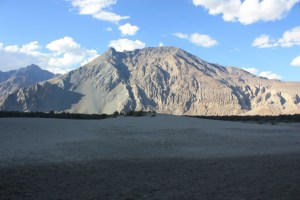
POEM: Desert Story


Play it out, like a six-gun Western.
Let the sun hang in the mid-day sky.
Have him search for a cool-water cistern.
Croaking and choking that “the end is nigh.”

Hand him a glimpse of clear, clean water,
but let the mirage vanish into sand.
Trotting up to it as lamb to slaughter,
let him know he’s surely been damned.

Then he’ll succumb to a parched stupor.
The light fades from that cowboy’s eyes.
No spur-jangle of a nearing trooper,
but dark clouds off in the western skies.

A good story would see him wake with droplets on his cheeks.
But this ain’t that kind of story, the desert plays for keeps.

5 Haiku on Consciousness


thoughts form & float,
reflections of a gliding bird
over murky pools.


sleeping deeply,
universe? where art thou?
do you rest too?


within my dreams,
i feel the familiar,
but see the strange.


images gel,
but seeking sense in them
sends them hiding.


next car rolls fore,
i yank the parking brake,
halting false back drift.

BOOK REVIEW: The Sonnets of William Shakespeare by Wm. Shakespeare

The Sonnets of William Shakespeare (Wisehouse Classics Edition)The Sonnets of William Shakespeare by William Shakespeare
My rating: 5 of 5 stars

Amazon page


This book consists of 154 sonnets that were published in a quarto dated 1609. It’s not all of the sonnets written by Shakespeare because there were a few stashed in his plays. It’s also not the entire contents of that 1609 quarto, which also included a long-form narrative poem entitled “The Lover’s Complaint.” However, these are the poems typically included in collections of Shakespearean sonnets.

For those unfamiliar with the sonnet, it’s a 14-line poem that’s metered and rhymed. In English language sonnets (and Shakespeare’s, in particular) that metering is iambic pentameter (five feet of alternating unstressed and stressed syllables.) Shakespeare’s sonnets follow a rhyme scheme that is often named for him: ABAB CDCD EFEF GG. (It’s also called English Rhyme, and is differentiated from Petrarchan Rhyme which has an octave of ABBA ABBA and a sestet that can vary, e.g. CDCDCD.) As with all rules of poetry, there is the occasional exceptions taken here and there.

Love, beauty, and death are common recurring themes in the sonnets, but there are occasional forays into tangential topics like lust, infidelity, and immortality through poetry. There are also humorous twists on the expected approach. The most famous Shakespearean sonnet is probably 18 “Shall I compare thee to a summer’s day?”, but we see in another popular contender, Sonnet 130 (“My mistress’ eyes are nothing like the sun;”), Shakespeare mocking hyperbole. Of course, he’s not just mocking hyperbole; he’s also saying that he can still love his lover despite the fact that she isn’t in all ways more beautiful than the most pleasing elements of nature (and might even have halitosis.)

There’s no division or formal organization of the sonnets. However, scholars do divide them up in various schemes. One simple way that they are divvied up is to put the first 126 in a category in which Shakespeare addresses a young man. The first 17 sonnets are a subgroup in which the poet attempts to convince the young man to be fertile and multiply. Sonnets 127 – 154 are sometimes called the “Dark Lady” (a.k.a. “Black Mistress”) sequence as they frequently refer to a brunette woman (i.e. the woman whose lips are not as red as coral in Sonnet 130.) One can see the difference in tone extremely contrasted in the two poems mentioned in the preceding paragraph – Sonnets 18 and 130.

Besides the aforementioned sonnets, a few others stand out as personal favorites:
– 55 “Not marble, nor the gilded monuments”
– 27 “Weary with toil, I haste me to my bed,”
– 1   “From fairest creatures we desire increase,”
– 65 “Since brass, nor stone, nor earth, nor boundless sea,”

But you should read them and find your own favorites. It’s Shakespeare, of course they are highly recommended.

View all my reviews

POEM: Flower Market

Taken in September of 2013 in Bangalore at K.R. Market

Garland coils in saffron and yellow.
Burlap bags of loose blooms in many hues.
Free petals strewn across the floor.

Vendors sit like stamen, still amid the chaos.
Customers waft around like pollen on the wind.
And workers flit about like industrious bees.