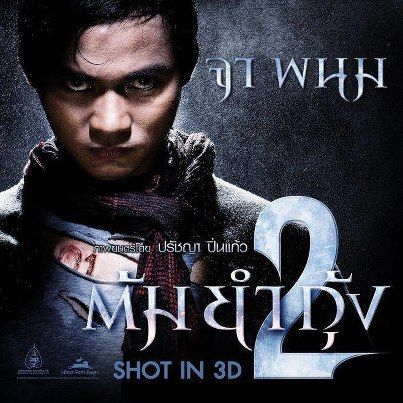
2015 Martial Arts Movies

NOTE: I’ve revised this post with up-to-date information. Please see that post here.

My third annual preview of martial arts movies will be presented in two installments. Many of the movies in the latter half of the year do not yet have release dates or trailers by January. Ergo, I’m posting the first part now, and will do a revision in mid-summer.

“Martial arts movie” is a bit ambiguous. Almost every action movie features martial arts. The leaked teaser for Ant-Man was pretty much a sequence of Scott Lang (Ant-Man) fighting his way through a corridor to access an elevator. So, does such a movie get included? I’ve opted against putting every action film with a kick in it into this post. Yet, I don’t want to stick to films that feature martial arts cliches (e.g. they killed my master, an evil billionaire is hosting a death match tournament, they killed me and left me for dead, etc.)  I, therefore, use the admittedly subjective litmus test of whether there would be a movie if one took away the martial arts and replaced it with brawling–not just whether it would be a less slick movie with a diminished “woo” factor.

I’ve tried to go as international as possible this year, including Bollywood (using the term colloquially if not precisely) and SE Asian releases in addition to the usual Hong Kong & Hollywood fare.


Underdog Kids (January 16): Described on IMDb as: “Inner city kids from a poor neighborhood go up against the undefeated Beverly Hills Junior National Karate Team.” I’ve seen no trailer for this, just a poster:
underdogs_2

Wild Card (January 30): This may be a cheat given what I said above. However, it’s a Jason Statham film, and like the “Transporter” films it probably doesn’t amount to much without the ass-kickery. Let’s face it, you’re not going to see Jason Statham for his extensive acting range.

Dragon Blade (February 19): Featuring Jackie Chan, John Cusack, and Adrien Brody. This is a period piece, and–as you can tell from the casting–is big budget as martial arts flicks go.

Wolf Warrior (March 1) [China]: This looks like more of a shoot-em-up action film than a martial arts film, but some have listed it as a martial arts film and the close quarters action is definitely reminiscent of a martial arts film.

Skin Trade (April): This film stars Tony Jaa and Dolph Lundgren as the good guys and Ron Perlman as the villain. As the title suggests, it’s set around a theme of human trafficking.

Bollywood Dragon  (May 15) [India]: The blurb for this one is: “An English martial arts instructor travels to Mumbai to identify her twin sister’s body, discovering she lived a mysterious life among the criminal underworld and decides to investigate by being her.”
There is no trailer up for this movie as of yet.

The Kickboxer: City of Blood: (May 15): This is a different project than the Bautista / Van Damme / Carano film that was originally titled “Kickboxer” and is now going by “Kickboxer: Vengence,” but there’s no graphic publicity out on it yet. It may not come out as scheduled.

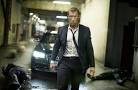
The Transporter Legacy (June 19): Another “Transporter” film, but Ed Skrein plays the role of Frank Martin in this one. As with “Wild Card” it may be a cheat to include it as a martial arts film, but car chases don’t get these movies all the way to watchability.
I haven’t seen a trailer, but there are still photos.
TransporterLegacy

The Boy and the Beast (July 11) [Japan]: This also may be a cheat because it’s an animated film, but martial arts does seem to be a prominent feature of the work. (I believe I included one of the Kung fu Panda movies in one of my past posts, so I think this is fair game.)

Brothers (July 31) [India, in Hindi]: An Indian remake of the American film Warriors. In the American movie, two estranged brothers must fight each other in an MMA bout. (Hence the name of the Indian version, Brothers.) There’s not a proper trailer out, but there is this:

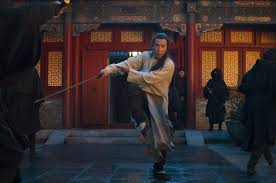
Crouching Tiger, Hidden Dragon: The Green Legend (August 28): Interestingly, this sequel to an immensely popular film will be released on Netflix and IMAX simultaneously. If this were some risky, low-budget film, going straight to Netflix wouldn’t be at all surprising, but this is the sequel to a movie that was (maybe still is) the highest grossing foreign language film playing in America. If this bold move pays off, it could be the beginning of a new paradigm of movie releases. [Also with The Interview going with an unconventional release owing to North Korean threats and intervention, there maybe a great deal learned about alternatives to a traditional film release.]
CTHD2

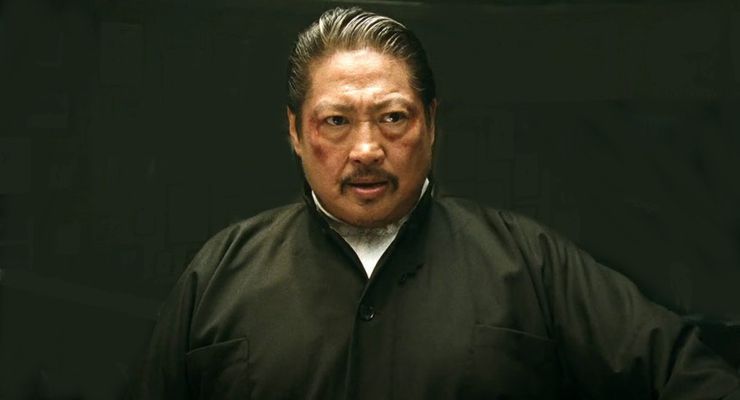
The Bodyguard (undesignated Summer release) [China]: Featuring and directed by Sammo Hung.
sammo-hung-740x400

Movies with unspecified release dates:

SPL (Sha Po Lang) II / A Time for Consequences / SPL2: Rise of Wong Po [China]: This Hong Kong film will feature Thai superstar Tony Jaa. (Is he in everything? Have they cloned him, or does he not need to sleep, eat, and poop like the rest of us.)
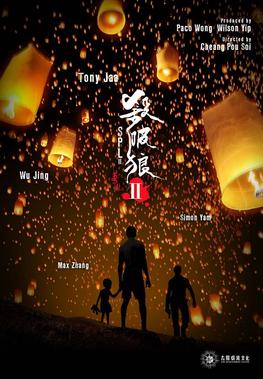
SPL_II_Teaser_Poster,_Apr_2014

The Chemist: A grain of salt on the 2015 release, please. This is an “assasin-who-can’t-bear-to-kill-his-victim-and-ends-up-protecting-her-instead” film.

Pound of Flesh: Jean-Claude Van Damme. The blurb says: “A man’s heroic attempt to help a woman in distress ends up with him waking up the next day without a kidney and plotting his revenge.”
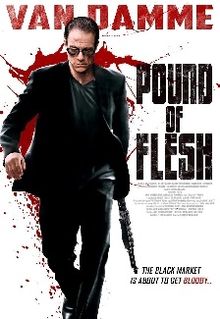
PoundofFleshMovie

Kickboxer: Vengence: Featuring Dave Bautista, Jean-Claude Van Damme, and Gina Carano.

The Martial Arts Kid: As the unimaginative title (generic knock-off of the alliterative “Karate Kid”?) suggests, this is low budget. It features past martial arts competitors like Don Wilson and Cynthia Rothrock.
MartialArtsKid

Ultimate Justice [Germany]: The blurb on IMDb reads: “A team of former elite soldiers are drawn back into action when the family of one of their own is attacked.”
I haven’t seen any publicity for this movie yet.

The Monk (Summer) [China]:This movie is based on a popular Chinese novel entitled Dao Shi Xia Shan (A Monk Comes Down the Mountain.)
I’ve seen no graphic publicity on this one, and the novel has apparently not been translated to English, so I don’t have much to tell you.

Unlikely 2015 Releases:

Stan Lee’s Annihilator: IMDb has it listed for an unspecified 2015 release. If so, those involved are better at keeping secrets than anyone else in Hollywood.

Showdown in Manila: Featuring Mark Dacascos. It’s supposed to begin filming early in February, so a release this year is unlikely. It’s said to be like “The Expendables.” I assume that means that it’s a big cast of past super-stars, but it might just mean that it sucks badly.

BOOK REVIEW: The Tao of Bruce Lee by Davis Miller

The Tao of Bruce Lee: A Martial Arts MemoirThe Tao of Bruce Lee: A Martial Arts Memoir by Davis Miller

My rating: 3 of 5 stars

Amazon page

While one expects this to be a biography of Bruce Lee, the first half of it is much more an autobiography of the author that is loosely themed around Bruce Lee’s influence on his life. It’s an unusual book in this regard. However, while my description may induce visions of a dismal read by a self-absorbed author, it’s really not so bad. The latter half of the book is much more tightly focused on the events of Bruce Lee’s life—or, more dramatically, his death.

To be fair, there’s not much material for a Bruce Lee biography. Few lights have shone so bright that, while brief, they provided decades of afterglow. Bruce Lee was just in the news last week as he was made a character in a new MMA video game—over 40 years after his death. (It might seem odd for Bruce Lee to be featured in an MMA game, but while movie Bruce Lee showed us high-flying, high-kicking kung fu, Bruce Lee the founder of Jeet Kune Do emphasized the ability to fight at all ranges, against opponents of any style, and in a pragmatic fashion.) But Bruce Lee the movie star delivered only four completed movies as an adult (though he had a childhood acting career unrelated to Kung fu.) Martial Artist Bruce had only one real fight that anyone knows about and even it remains a subject of great controversy to this day. There are competing claims about who came out on top, to what degree, and how. According to the book, there’s not even much of a sparring record of which to speak.

With the proceeding information in mind, it might not be such a surprise that the author took the tack he did and still produced only the slim volume that he did. Miller’s description of his own life pulls no punches and he spares himself none of the embarrassment incumbent in being a young man seeking to emulate the squealing man with the fists of fury. He doesn’t come across as the narcissist that one might expect from a person who devotes at half of a biography of a global superstar to his own obscure juvenile years. In fact, his profile is of a scrawny kid who got his fair share of wedgies and other bully-induced torments. The autobiographical parts are more homage than self-aggrandizement.

Just as Miller is honest about his own lost pubescence as a scrawny kid, he will win enemies with his frankness about Bruce Lee and those in the gravitational pull of the kung fu superstar. Those who deify Lee will no doubt be displeased to read intimations that he died not on a walk with his wife and from a rare adverse side-effect of a prescription—but non-illicit–drug, and instead died on the bed of a lover from a hash or pot overdose.

Furthermore, Miller tells of how Bruce Lee told his students to stop teaching Jeet Kune Do, because Lee was worried about where it was going. Miller goes on to report about how Bruce Lee’s martial art went awry according to many. Then there is the suggestion that Lee had little first-hand fighting (or sparring) experience on which to build such a combative art in the first place.

However, the overall portrait of Lee is of an exceptional human being, and one who had such a wide range of influence, from fitness to philosophy. While the Bruce Lee physique is now much sought after and regularly seen among movie stars, all the leading men of Lee’s era were doughy by comparison. (One may look no further than his Way of the Dragon nemesis, Chuck Norris.) Lee wasn’t just a movie star and martial artist; he was also a philosopher and thinker. While it’s true that he didn’t produce much in the way of novel ideas, by Hollywood standards he was a regular Algonquin Roundtable member. Lee oozed charisma so powerfully that after all these decades he’s almost as likely to be seen on a T-shirt as Che Guevara—don’t ask me why the Latin American Guerrilla fighter is so popular in silk screen, but that’s beside the point.

To sum it up, this isn’t a book about Bruce Lee, it’s about how his life and death shaped so many other lives—starting with Miller’s. While I didn’t count pages, there seems to be about as much space devoted to the events surrounding Lee’s death as the events of his life. Of course, there’s a bit of sensationalism, but inquiring minds want to know. People are intrigued about how a man who looked to all appearances to be one of the healthiest men on the planet could have died so young. (It’s an interesting irony that Bruce Lee’s almost complete lack of body fat—estimated at under 1%–could well have exacerbated his oversensitivity to whatever substance killed him.)

I’d recommend this book for anyone curious about the life and death of Bruce Lee.

View all my reviews

BOOK REVIEW: Ip-Man Portrait of a Kung Fu Master by Ip Ching, et. al.

IP Man: Portrait of a Kung Fu MasterIP Man: Portrait of a Kung Fu Master by Ip Ching

My rating: 3 of 5 stars

Amazon page

Ip Man led an interesting life. The master of Wing Chun Kung Fu lived through tumultuous times that included the Boxer Rebellion, the Sino-Japanese War, and China’s Communist revolution. After the Japanese occupation he served for a time as a police chief. Coming from a wealthy family, he experienced a riches to rags fall when the Communists took over. He had to move from his home in Foshan to Hong Kong. His use of kung fu was not restricted to the training hall, but, rather, included a few real world altercations. A couple of films have been made(loosely) about his life.

All that being said, this book doesn’t do a great job of capturing the life of this intriguing man. To be fair, the book isn’t really a biography proper–though the title might lead one to believe it was. However, it’s not entirely clear what the book is. Its fifteen chapters are each built around a principle and use vignettes from Ip Man’s life to illustrate how the Grandmaster lived virtuously. This makes the book seem more like treatise on martial arts philosophy and/or strategy. However, some chapters do a better job of making clear what the actual principle is and how the events of Ip Man’s life exemplify them than do others. In some parts it does a great job but in others it’s only lackluster.

There are some fascinating stories about the man’s life in the book, but they are generally told in a lifeless manner. In part this may be done on purpose as we are told that Ip Man eschewed embellishment and favored humility, but it makes the reading experience less than gripping. It’s also probably that some of the details were lost when Ip Man died in 1972. This lack of detail leaves one at times wondering. Throughout most of the book we get a picture of Ip Man as a virtuous warrior. However, there is one vignette in which we read about the Grandmaster picking a fight with a man by taunting him with humiliating insults about the man’s appearance. Ip Man does this to teach his student a lesson in courage. His lesson notwithstanding, this behavior paints Ip Man as anything but virtuous–rather than a humble martial arts master he becomes a pathetic bully. The author, Ip Man’s son Ip Ching, suggests that this might have been a setup for the student’s benefit, but with the prior assent of the bullied man. At any rate, there was no fight because the bullied man backed down–whether because it was staged or out of genuine fear remains unknown.

For some readers the most surprising omission will involve a lack of any mention of the man who was far and away Ip Man’s most famous student, namely Bruce Lee. There may be a number of reasons for this omission, including a desire to prevent the teacher’s story from being overshadowed by his student’s fame. However, most readers would probably like some inkling of how the ill-fated superstar came to train with Ip Man and what he learned from him. In fact, the only reference to the entertainment aspect of kung fu is a picture caption that shows Shek Kin, the villain “Mr. Han” from Enter the Dragon, at Ip Man’s funeral.

I would recommend this book only for those that have a particular interest in martial arts. It does offer tidbits of interesting events from Ip Man’s life as well as a few great life lessons. It benefits from being a concise book, and thus is not a major time investment to read. However, I don’t know that–short as it is–it would hold the interest of the general reader. Hopefully, someone will take on a more extensive English-language biography of this fascinating man’s life while there are some key people still alive to be interviewed about his life story.

View all my reviews

5 Classics of Martial Arts Cinema

Martial arts cinema ranges from the horrible through the campy to the excellent. There is one ever-present risk facing this genre. That is, like porn, movie makers may conclude that viewers aren’t watching for character or plot so they might as well just focus on the action. When they do that and then they blow the action– well, that’s when it’s painful to watch. By numbers, most of this genre probably falls into that category. However, sometimes they get it right.

Of course, it’s not always clear what should be categorized as a martial arts film, given many cross-genre romps. The Matrix is science fiction, but it’s also a kung fu flick. The Bourne trilogy films are spy thrillers, but their characteristic gritty hand-to-hand combat sequences are integral to the films. I’ve tried to focus on films that one would unambiguously categorize as martial arts cinema (though anything by Kurosawa is likely to be considered mainstream cinema.)

I also, admittedly, display several of my own biases. I prefer films that avoid over-the-top superhuman choreography. I don’t want to say that I prefer realism. None of it is realistic, but there’s a vast difference between Jackie Chan’s choreography and that of The Curse of the Golden Flower. Still, I do include Crouching Tiger Hidden Dragon and Kung Fu Hustle, which both rely heavily on wires and superhuman feats. I also like period pieces as opposed to modern-day films. Of course, characters with charisma also get my attention, but I don’t think I’m unique in that regard.

5.) Enter the Dragon

Enter the Dragon is Bruce Lee’s last film, and features Lee as a Shaolin practitioner cum secret agent. The film reminds me of the Ian Fleming novel You Only Live Twice in that it’s about a person being tasked to infiltrate an evil mastermind’s sprawling lair not because it makes logical or reality-based sense, but rather because the proposed infiltrator is just that damn good.


4.) Crouching Tiger Hidden Dragon

This is undoubtedly the most critically acclaimed of the films on the list. It was nominated for a Best Picture Oscar in 2000, and while it did not win in that category, it did take four Oscars that year. It’s in a class of film that includes Curse of the Golden Flower and Hero that are known for stunning cinematography and historical settings. (Unfortunately, these films are also marked by an insanely excessive use of wire-work for my taste.) This film includes a romantic component as well as the fight to possess a sword called Green Destiny. As is mandatory for Kung fu films, there’s a martial arts master whose death must be avenged.


3.) The Legend of Drunken Master (aka Drunken Master II)

Jackie Chan plays a bumbling young man who is, ironically, a master of Kung fu when completely inebriated. The plot revolves around a mix up between an agent who is trying to steal a valuable artifact and Chan’s character who is trying to smuggle ginseng to avoid paying duty on it. Incredibly, the artifact and ginseng are packaged identically, and the thief ends up with the ginseng and Chan’s character with the artifact. It’s Chan at his best, with all the comedy and creative choreography that one would expect.


2.) Hidden Fortress

I’m not including this just to prevent a Chinese sweep. (On that note: I’ve heard the Thai Ong Bak films are quite good, but I haven’t gotten around do seeing any of them.) Anyway, there are some excellent Japanese period films that involve many combat sequences that are not over-the-top. Of course, Akira Kurosawa dominates in this realm. There are other Kurosawa films, such as Seven Samurai, Yojimbo, or Ran that could equally well be included. Hidden Fortress is probably best known to American movie buffs as a major influence on George Lucas in the making of the first Star Wars film. Hidden Fortress is a about a General (played by portrayer-of-samurai-extraordinaire Toshiro Mifune) who must escort a princess and her family fortune cross-country to safety. Of course, as in every hero’s journey, there are many challenges to be confronted.


1.) Kung Fu Hustle

This comedy is set in the gang-ridden slums of 1930’s Shanghai. A tenement complex is assailed by the gangs. However, the residents offer some surprising resistance in the form of unexpected apartment-dwelling kung fu masters. Unlike Jackie Chan’s down-to-earth comedies, this one is almost cartoon-esque. It features a cast of anti-heroes that keeps the film interesting, and the protagonist has a strong narrative arc.

2013 Martial Arts Movies

Chinese classic literature will make a major appearance in martial arts cinema this year, with movies entitled The Monkey King and Journey to the West. Both movies will likely featuring the staff-wielding monkey who made mischief in heaven and on earth. You may be familiar with the tale from Jet Li’s portrayal of the Monkey King in the 2008 film The Forbidden Kingdom. Readers can get the jist of the tale by reading the book.

Japanese classic literature will also be addressed, sort of. In the tradition of The Last Samurai, Keanu Reeves will star in movie that has no business having an American lead. It will be some sort of take off on the famous tale, 47 Ronin.

There will also be another iteration of the life story of Ip Man. Ip Man was a Wing Chun grandmaster who, as one can tell from the pile of films about his life, lived a fascinating life. While his fame is eclipsed by that of his most famous student, Bruce Lee, Man was a police officer who had to flee China to Hong Kong because of his support for the Kuomintang.

The sequel to the Tony Jaa film Tom Yum Goong (Ummm, Tom Yum) is due out this year. It will be entitled The Protector 2 in the west. The Thai star is continuing to give Chinese Kung fu cinema a run for its money.

The Grandmaster

Journey to the West

The Monkey King

Tom Yum Goong 2 (aka The Protector 2)
TYG2

47 Ronin