
PROMPT: Gratitude

Daily writing prompt
How do you express your gratitude?

I have a daily practice of FEELING gratitude for this awesome life and all that contributes to said awesomeness. I don’t place much emphasis on EXPRESSING emotion beyond the usual social protocols and niceties. Quite frankly, I think expression of gratitude is overrated. It binds the process up with ego and desire for reciprocity, and the next thing you know you’ve lost all touch with the experience of gratitude and the powerful influence it has on fostering a positive outlook.

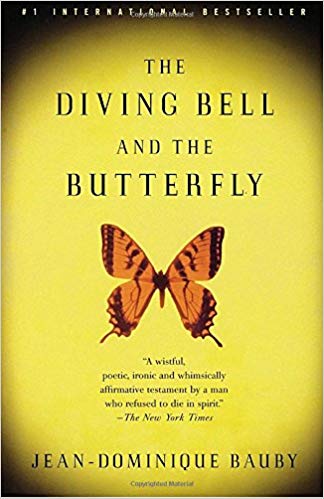
Furthermore, when one emphasizes expression, one tends to develop a blind-spot, thinking that the only entities worthy of consideration of gratefulness are other intelligent beings (or constructs attributed intelligence — e.g. gods.) I begin (though do not end) my practice of gratitude with my body (/ mind) and its systems. I’ve been told many people have trouble fostering gratitude when they focus on their body, but I don’t think one really understands gratitude if one can’t feel deep gratitude for one’s body and mind (literal warts and all.) For the body is the means by which one experiences everything, and one can only be unconditionally grateful for it. [For those who have trouble being grateful for body and mind, I’d recommend the book, “The Diving Bell and the Butterfly” by Jean-Dominique Bauby. It’s a short read because it was dictated using eye-blinks by a man who developed “Locked-in Syndrome,” a condition that left its author only with conscious control of an eyelid.]
More Information Here

BOOK REVIEW: The Diving-Bell and the Butterfly by Jean-Dominique Bauby

The Diving Bell And The ButterflyThe Diving Bell And The Butterfly by Jean-Dominique Bauby
My rating: 5 of 5 stars

Amazon page


If it had been written under ordinary circumstances, this would be a fine book. It offers some beautiful imagery and language, and – more importantly — is heartfelt, touching, and nakedly honest. But it wasn’t written under ordinary circumstances, which makes it an astounding book. Its author suffered a severe stroke that, after leaving him in a coma for a time, resulted in a condition called “Locked-In Syndrome,” which resulted in his inability to move any part of his body save his left eyelid. It was by moving this eyelid that he painstakingly dictated the book. As one might suspect, the book is concise and sparse in tone, but it read like that could have been a stylistic choice, rather than a necessity.

The title becomes less nebulous once you know it’s about a man with Locked-In Syndrome. The diving-bell represents his body, a clunky cumbersome entity that limited his perception to narrow slices of the world. The butterfly is his mind, which remained free to go anywhere and create anything he could imagine. Some of what I found most fascinating about the book was the author’s discussion of the mental world he created. Though the book deals even more extensively with how the condition changed his interaction with people. Loneliness is a central theme. Because of the severity of the condition, he is restricted to a special facility and can only see his children on weekends. While his children are the most important to him, he also reflects back to people that he worked with in his role as a magazine editor or who he counted as friends.

The organization is not strictly chronological, and I felt this was beneficial. By presenting flashbacks to before he was injured and, eventually, to when he had his stroke, he broke up the tragedy to keep it from becoming overwhelming.

I found the book to be extremely powerful. I would highly recommend it for all readers.

View all my reviews