BOOKS: “The Dangerous Life and Ideas of Diogenes the Cynic” by Jean-Manuel Roubineau

The Dangerous Life and Ideas of Diogenes the CynicThe Dangerous Life and Ideas of Diogenes the Cynic by Jean-Manuel Roubineau
My rating: 5 of 5 stars

Amazon.in Page

This is a translation of a French book about the life and philosophy of Diogenes the Cynic. It’s a thin volume, as there is much that’s unknown about the life of Diogenes, and the dearth of surviving texts means that some of what is believed about Diogenes and Cynic philosophy maybe corrupted by the reports of detractors. I learned a great deal from reading this book, but not because I learned much new about Diogenes, himself. The colorful anecdotes from his life have been extensively discussed.

With respect to what I did learn, it largely fell into three categories. First, I gained insight into the context and environment in which Diogenes lived. Second, I discovered that many of the stories of Diogenes’ life are far less certain than we have been led to believe through the presentations of them in so many books. For example, we know Diogenes was exiled from his native Sinope in relation to a scheme involving currency debasement. This is often straightforwardly stated as “Diogenes was a counterfeiter,” but Roubineau shows that we don’t know much (if anything) about the degree to which Diogenes was involved (i.e. whether he was mastermind, accomplice, or an unwitting pawn.) Third, I benefited from the comparing and contrasting of Cynic philosophy with that of predecessors (e.g. Socratics) and successors (e.g. Stoics,) and – in a few cases – comparisons between Diogenes and other Cynics.

The book consists of four chapters. The first is a discussion of what is known about Diogenes as a historical figure. The second focuses on the Cynics views on economy, wealth, and related ideas. The third explores the Cynic view of the human body and related topics like sex, pleasure, and pursuit of health and well-being. The last chapter considers Diogenes as a teacher and the Cynic approach to practicing philosophy.

I’d highly recommend this book for readers interested in philosophy.


View all my reviews

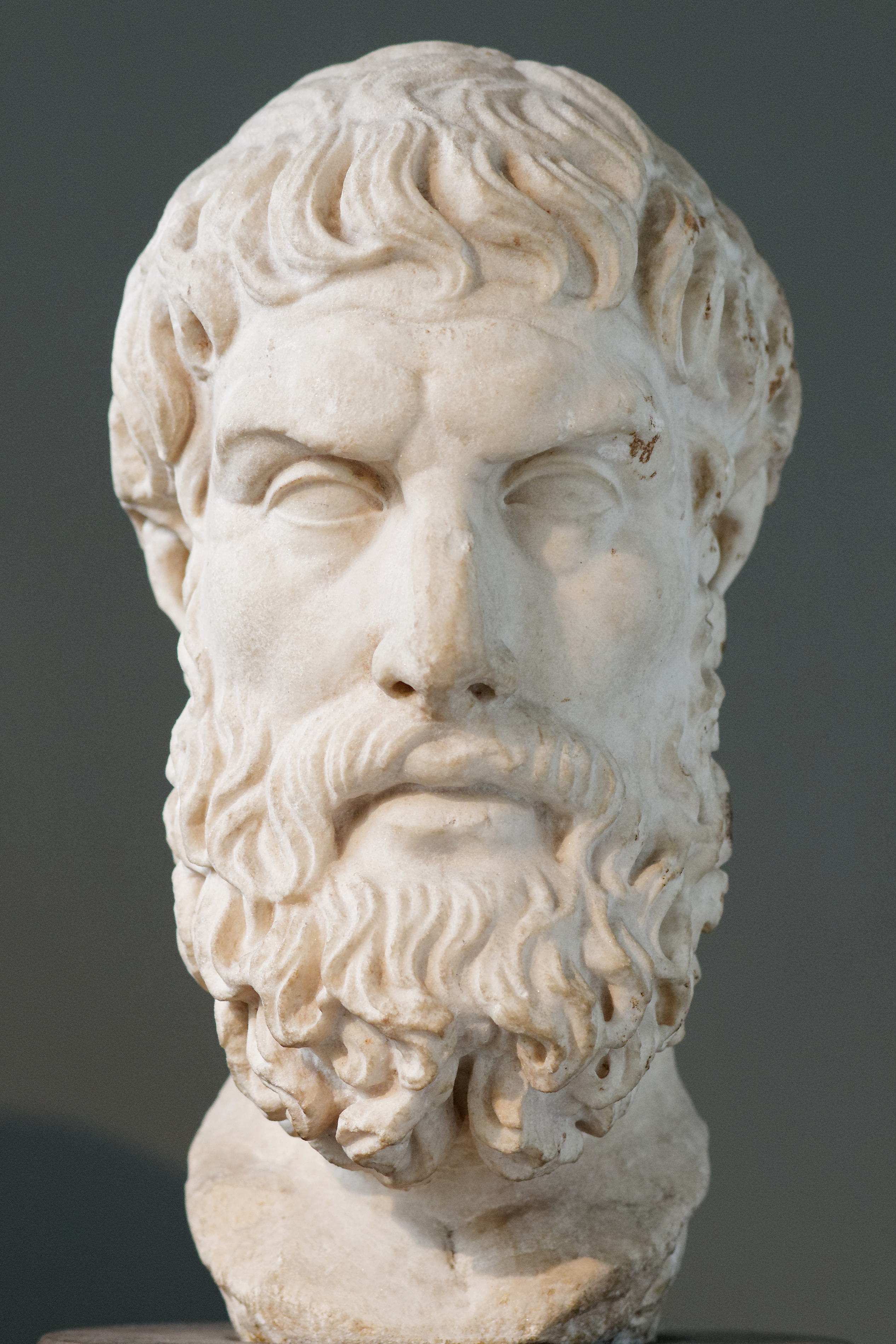
Five Wise Lines from Epicurus

Death is nothing to us, because a body that has been dispersed into elements experiences no sensations, and the absence of sensation is nothing to us.

principal doctrines – No. 2

Nothing is enough to someone for whom what is enough is too little.

Vatican Sayings – No. 68

Of all the means which are procured by wisdom to ensure happiness throughout the whole of life, by far the most important is the acquisition of friends.

Principal Doctrines – No. 27

Don’t spoil what you have by desiring what you don’t have; but remember that what you now have was once among the things only hoped for.

vatican sayings – No. 35

No pleasure is a bad thing in itself, but some pleasures are only obtainable at the cost of excessive troubles.

Principal doctrines – No. 8

And Five Honorable Mentions:

[T]here are an infinite number of worlds, some like this world, others unlike it.

Letter to Herodotus

Dreams have neither a divine nature nor a prophetic power, but they are the result of images that impact upon us.

vatican sayings – No. 24

It is pointless for a person to pray to the gods for that which he has the power to obtain by himself.

vatican sayings – No. 65

But one must not be so much in love with the explanation by a single way as wrongly to reject all others…

Letter to pythocles

Let no one be slow to seek wisdom when he is young nor weary in the search thereof when he is grown old. For no age is too early or too late for the health of the soul.

Letter to Menoeceus

SOURCE: Epicurus. 2021. The Fundamental Books of Epicurus: Principal Doctrines, Vatican Sayings, and Letters. Trans. by: Robert Drew Hicks & R. Medeiros. Independently published on Amazon. 45pp.

BOOK REVIEW: Ancient Philosophy: A Very Short Introduction by Julia Annas

Ancient Philosophy: A Very Short IntroductionAncient Philosophy: A Very Short Introduction by Julia Annas
My rating: 4 of 5 stars

Amazon.in Page

Annas’s task of creating a concise guide for such a broad topic is a daunting one. For perspective, I’ve read books in this series [AVSI] on Stoicism, Epicureanism, and Socrates – each of which is a slim subset of the material called “Ancient Philosophy.” Furthermore, it’s not as though there was great homogeneity of ideas among the ancients. And, adding to the challenge, the author attempts to address the full scope of ancient philosophy: i.e. ethics, epistemology, logic, and metaphysics.

The book is forced to both restrict itself to an inch deep (because the subject is a mile wide,) but also to make choices about what schools, philosophers, and sub-topics it will address. History did part of the work – e.g. for many ancients, only fragmentary or secondhand evidence of their positions survived. So, we see a lot about Plato and Aristotle because their words remain. The book also devotes a disproportionate emphasis to what some call “philosophy of life,” i.e. ethics and how / whether to pursue a happy and meaningful life – i.e. how to live. This emphasis is both because that’s what many ancients focused upon, but also because it’s what people find relevant when looking back to them. [As opposed to ancient metaphysics, which science has largely made obsolete, ancient ethics and thoughts on happiness aren’t necessarily outmoded.] The first chapter sets up this focus on philosophy of life in an interesting way by discussing humanity’s mixed motivational system — reason v. emotion.

One question that the book robustly considers is the degree to which ancient philosophy is still relevant. This is taken up most directly in chapter two, but the final chapter (on what constitutes ancient philosophy) also has germane things to say on the subject.

I found in this book a quick guide to comparing schools of the ancient world across the breadth of philosophy, and would recommend the volume – particularly as a starting point prior to delving deeper into sub-topics.


View all my reviews