Taken on August 1, 2018 in Chicago.



Cobra, Huey (Iroquois), and Chinook (Vietnam War era helicopters)

Bell VTOL and a helicopter

Assorted helicopters; Taken July 24, 2018

Space Shuttle Discovery; Taken on July 23, 2018 at the Udvar-Hazy Center of the National Air & Space Museum

Main Hall; Featuring the Concorde

 The Road by Jack London
My rating: 5 of 5 stars
If you’ve ever wondered what it would be like to be a freight-hopping hobo, you need look no further than Jack London’s autobiographical account of the hobo life. If you’re like me, you probably didn’t know London had been a hobo, or anything about the man other than that he wrote a book called “The Call of the Wild” that you read in high school. When you read “The Road” you’ll learn skills like how to avoid getting kicked off a train, how to survive being jailed for vagrancy, and how to tell a story that will get one a free meal. The events of this book took place in the 1890’s, during the worst economic depression prior to the Great Depression, and London—like scads of others—was out of work. (However, London does admit that the appeal of this adventurous lifestyle was a major factor in his own movement in these circles.)
The early part of the book deals with London’s life as a free-wheeling hobo riding the rails, and the latter part delves into his time in Kelley’s Army—a.k.a. Coxey’s Army. This was a confederacy of out-of-work men who engaged in protests and lived off the charity of compassionate folk.
It’s a short book, only about 200 pages. In nine chapters it tells London’s story over this phase of his life. Sometimes it reads like a memoir, and sometimes it reads like a manual.
I’d highly recommend this book. It was readably written and fascinating. While it was written and published during first decade of the 20th century, it’s about the late 19th century—and, let’s face it, the 19th century got short shrift in our education because—except for the Civil War—it just wasn’t sexy. But London will intrigue you with stories of America’s dark underbelly.
[Oh yeah, and you can get it for free on Kindle. And, it’s one of the most interesting and readable public domain free reads that I’ve gotten.]
View all my reviews
 Leaves of Grass by Walt Whitman
My rating: 5 of 5 stars
There are a number of editions of this collection of poems, as Whitman apparently continued to revise it right up until his death. The 1855 edition is popular but there is a “Deathbed Edition” which–as the name implies–is the closest thing to a final draft that exists.
Back in the day (the late 19th century), this was considered racy and controversial stuff, and the collection got Whitman fired from is civil service job as well as a great many vitriol-filled reviews. Like the works of Emerson and Thoreau, with whom Whitman shared some beliefs, it was also controversial in that the poem put man at the fore and religion was shunted out of the picture. (Trust in yourself and don’t blindly follow anyone was still a heretical notion among many at the time.) This isn’t to say that Whitman eliminated spirituality from his work (any more than Emerson did), references to the soul are commonplace—but it’s a mystic spirituality. There were features outside the “prurient” and religious that angered many, such as Whitman’s shining of light on the barbaric institution of slavery. However, today Leaves of Grass is considered one of America’s greatest and most beloved works of poetry, and for good reason. It beautifully reflects an America that was changing, an America subject to a new era of ideas both from science and from distant lands.
It should be noted that this is a life’s work. If you are expecting a typically thin poetry collection, you will be in for a surprise. Leaves of Grass is of a page count normally reserved for histories and epic novels. The collection consists of 35 “Books” that are quasi-themed sub-collections of poems. Individual poems vary greatly with some being only a few lines and some running for pages. Most of the poems are free verse, though there are sections that display a meter (specifically iambic pentameter.) Free verse is poetry without meter or rhyme. If you didn’t know there was such poetry, you may want to work through your Doctor Seuss before you crack open a tome like this one.
There are a few themes that are repeatedly revisited. One idea that made the collection so controversial is that it exalted in the human form and the physicality of humanity. In recent years, a lot of discussion of this work revolves around whether Whitman was or wasn’t homosexual or bisexual. Not that it matters, but the fact is there is a dearth of information about what form of sexuality Whitman practiced—if any, but one can imagine why people wondered. Whitman writes descriptively about both the male and female forms, and was not shy about verse that suggested lying with this gender in one poem and the other in the next. The poem “I Sing the Body Electric” is probably the most famous example of Whitman’s discussion of the body.
However, perhaps the most striking theme is a celebration of America, both in its natural state and as it was shaped by the people who settled there. In multiple poems one sees long strings of description and exposition about the various states of the United States. Whitman paints pictures of the nation as a collage showing the variations among its constituent parts. To a lesser extent, he does the same for the world (e.g. see Book VI.)
I enjoyed this collection, although I will admit I read it a bit here and a bit there over a long time period. I, therefore, probably missed some of the depth of meaning coming from how the poems were arranged. Maybe someday I’ll have time to go back and read it once more. However, the beauty of this collection is that it’s so many different things. It meanders like a river, and peers overland with an eagle-eyed view. It offers scenes that are like a hard-boiled work of film noir and ones that are like Ansel Adams pictures. It’s not anti-god, but rather about the god within, or the god within the blade of grass. Leaves of Grass offers brilliant turns of phrase, bold descriptions, and always interspersed with the author’s personal philosophy.
 This morning a yoga teacher I’ve studied with posted this article on her Facebook feed. It’s by an Indian yogini who moved to the U.S., and it offers five differences between the practice of yoga in India and in America.
It occurred to me that one additional difference that’s frequently commented upon is that mirrors are ubiquitous in American yoga studios, but a rarity in Indian studios.
There are many possible explanations of this point of divergence. Among the more cynical interpretations is that when yoga spread internationally it was never explained that there are no asana (postures) whose drishti (focal point of gaze) is the reflected “bootilicious”, yoga-panted backside of other students.
The explanation one is likely to hear, however, is that a student needs mirrors to be able to see whether his or her alignment is correct. Sounds logical? Actually, it’s lazy in the same way as saying, “I wanted to know what Lord of the Flies is about, so I rented the movie.” (Read the damn book.)
Yes, looking in the mirror will give one instantaneous feedback, but it won’t help one develop the bodily awareness that’s a huge part of the value of yoga. One should be seeking to enhance one’s proprioception. That’s a fancy way of saying, “know where your parts are.” Proprioception is defined as: “the ability to sense the position, location, orientation, and movement of the body and its parts.” The body has a built-in ability to determine where one’s various parts are in space and whether said parts are straight or crooked. One may not realize this because one may have poor proprioception… because one looks in the mirror instead of closing one’s eyes and listening to what one’s body has to say.

Taken in the Summer of 2012 at the Atlanta Zoo.
Alternative Post Titles Considered:
“Kungfu is Hard Work”
“Too… Many… Steps”
Amazon recently put out a list of 100 Books to Read in a Lifetime. I appreciate the mega-bookseller taking a less doctrinaire approach than, say, The Guardian’s 1000 Novels Everyone Must Read. Also, props to Amazon for including a number of contemporary works—though I guess that is self-serving of them (i.e. $10 versus $0 sales price)—so never mind.
Whenever I see one of these lists—and there are so many of them—I always feel a bit inadequate. I suspect I’m not alone, given a recent generic list posted by The Millions, entitled 28 Books You Should Read If You Want To. That author’s approach is laudable. She doesn’t hand out exact titles as if we all need the same books, but rather suggests the kind of books one should consider reading (but only if you want to.)
I read like a fiend. While I usually don’t read rapidly (I can; I learned how in grad school, but I prefer savoring to injecting words), I’m constantly reading. So it’s a little disappointing to see how I stack up in the grand scheme of list-makers.
At present I have read:
– 15 of Amazon’s 100 Books to Read in a Lifetime (15%)
– 12 of Esquire’s 80 Books Every Man Should Read (15%)
– 12 of The Telegraph‘s 100 Novels Everyone Should Read (12%)
– 3 of the Huffington Post’s 30 Books to Read Before You’re 30 (10%, and—sadly—yes, I’m over 30.)
– 45 of The Guardian’s 1000 Novels Everyone Must Read (4.5%)
So this brings me to the point of this post, which is to boost my self-esteem by building a list of books, all of which, I’ve read. As I considered the books I’ve read that I would be so bold as to recommend “everyone” read, I saw trends. First, I read a lot of thin books, or, perhaps, they stick with me more. Don’t get me wrong, I’ve read some monsters Moby Dick (on everybody’s list—I don’t know why), Atlas Shrugged (on the Libertarian Book-of-the-Month Club list, and not much else), and 1Q84 (given a few years, it’ll be on all the lists.) However, it’s the thin books that have stuck with me, and they often get kicked aside by the [other] pretentious list makers. Also, shorter forms (e.g. essays, short stories, poems, and novellas) often don’t get properly recognized because everyone wants to talk about novels and tomes.
Second, while I like to consider myself an international reader (e.g. I’ve read a fair number of translated Japanese and Chinese classics), the fact of the matter is that I’ve had a skewed reading history. I’m an American, and have disproportionately read books that are either by Americans or that speak to the American worldview / mindset (my list will be both.) This isn’t so much an issue for most of the list makers as they simply propose that every Nigerian, Thai, and Peruvian should read a canon devoid of any Nigerian, Thai, and Peruvian authors (but instead that is 50% British, 30% American, and 20% all others.) While the list may be targeted toward U.S. audience, these books are good for everybody, and everybody should read outside the familiar.
Without further ado, my list, 30 Thin Books That Every [Attention-Challenged] American Should Read:
Because poetry is good for the soul. Yes, this anthology is skewed toward dead poets, but it’s not only thin, it’s cheap. It’s got Whitman, Dickinson, Frost, Sandburg, and Hughes.

2.) Animal Farm, Orwell
Because, screw totalitarianism, that’s why. This is like 1984, but without the villainy clubbing one over the skull. Therefore, you can introduce the kids to commie-hating early and without giving them nightmares—well not bad ones. Plus, it’s thinner than 1984.
3.) Apology, Crito, and Phaedo, Plato
Because virtue is good for the soul. This is Plato’s account of Socrates’ defense at his own trial and his subsequent explanation of why he was going to drink the hemlock. Yes, it’s technically three books, but they are often bundled together as one book. Even with all three, it’s pretty thin.
4.) Brave New World, Huxley
Because Orwellian dystopia isn’t the only dystopia. In Huxley’s book, tyranny wasn’t a matter of force, but manipulation. This book shows how dystopia can be disguised as utopia by keeping the population adequately drugged and well-sexed.
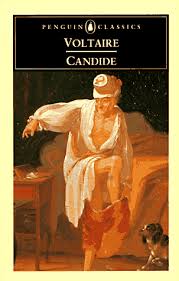
5.) Candide, Voltaire
Because satire is good for the soul. No sacred cows escape roasting in this thin volume. A naïve young man travels out into the world to find that evil is ubiquitous.
6.) Catch-22, Heller
Because how often does a book coin a common phrase. (FYI- “A Clockwork Orange” was a phrase Burgess borrowed for the book that was common in some parts, but Heller invented the term “Catch-22.”) The story revolves around the notion that one can’t get out of the war by reason of insanity, because if one is trying to get out of the war one is sane by definition, and if you are insane, you don’t try to get out.
7.) Civil Disobedience, Thoreau
Because if you’re going to break the law, you should know how to do it do it virtuously and not like a dirtbag. (Hint: It’s more painful than you think.) This essay tells of Thoreau’s imprisonment because he refused to pay taxes that would fund the war with Mexico. It’s usually bundled with other essays.
8.) Fahrenheit 451, Bradbury
Because books are good. The title comes from the temperature at which books burn, and it’s set in a dystopian future in which the protagonist, “Fireman” Guy Montag, goes around collecting and burning books.

9.) Green Eggs and Ham, Seuss
Because you should know how to turn someone down (e.g. I would not eat them on a boat, I would not eat them with a goat.) Or, because learning to be playful with words may serve one well. Or, because you should try new things. In the story, an unnamed narrator is subjected endlessly to green eggs and ham, which he steadfastly, refuses until the end.
10.) Hamlet, Shakespeare
Because you think you’ve got a weird family. Hamlet exacts revenge when he finds out that his uncle killed his father to marry his mother and usurp the throne.

11.) Into the Wild, Krakauer
Because you don’t want to underestimate Mother Nature when you strike out to build your indomitable American spirit. This is the true story of a college graduate who gives away his bank account, burns his pocket-money, cuts ties with his upper-middle class family, and sets off to become self-made. Ultimately, he ends up in Alaska, and it does not end well.
12.) It’s Getting Better All the Time, Moore & Simon
Because, stop being such a gloomy-Gus. Admittedly, this is an unconventional choice– both because it’s not particularly skillfully written and a few of its conclusions may not be as true as they once were. However, it does inject a dose of reality for those who view the world through shit-colored glasses. As the title suggests, the authors argue that life in America is getting better year after year. We are getting healthier and richer. Being economists, they present much of their findings as graphic representations of statistical data.
13.) Man’s Search for Meaning, Frankl
Because sometimes the world actually looks better through shit-colored glasses, Seriously, because you need to know how to get on with it when life is at its toughest. Viktor Frankl was a psychiatrist and Holocaust survivor who writes about what kept people going at places like Auschwitz.
14.) Meditations, Aurelius
Because, just get on with it. This was actually a kind of “Notes to Self,” written by the Roman Emperor to remind himself to be virtuous, to live, and to not fear death.

15.) On the Road, Kerouac
Because you don’t get enough of the word “rickety” these days. But seriously, you get to “see” a lot of America through Kerouac’s poetic language. It follows the road trips of a beat generation protagonist through America.
16.) Sanctuary, Faulkner
Because Faulkner’s language rocks, and this is a gripping and gritty tale. It’s the story of an upper class co-ed who’s dragged down into the underworld and some desperate times by a couple bad decisions, not the least of which was going for a ride with a stupid drunk.
17.) Self-reliance and Other Essays, Emerson
Because you need a pep talk to think for yourself. Emerson proposed that one stand as an individual and stop letting political parties, religions, or other organizations decide what one believes. Emerson and Twain both saw a sad trend brewing in which people were starting define their beliefs by identifying with a party and then letting that party’s opinion leaders tell them what to think. Sadly, this trend only grew since there day to the point that many people have extremely strong beliefs that they can’t begin explain in a logically and factually consistent way.
18.) Tao Te Ching, Lao Tzu
Because one day China is going to collect on our debts, and well need some grasp of their culture. Seriously, you should read outside your culture. In the process, you’ll find that the Taoist stream of thought isn’t all that far off our own—“f#@k authority and pretentiousness and all the bureaucratic formalities.”
19.) The Adventures of Huckleberry Finn, Twain
Because, screw Melville, this is the great American novel. Yes, I realize that it’s not particularly thin, but compared to Moby Dick it is—and it reads more quickly because there aren’t long drawn out sections on the minutiae of whale pineal glands and what not. This book follows the adventures of that rapscallion, Huck, as he flees a drunk father and a lady who wants to make him civilized, and takes to rafting on the Mississippi with an escaped slave. Yes, it has the n-word like a billion times, but if you read all the words (and not just that one) you’ll see there’s a positive message about the development of mutual friendship and respect between Huck and Jim.
20.) The Call of the Wild, London
Because you need to get outside more. It’s the story of a dog who is taken from the good life as a pet in California to the wilds of Alaska, and what said dog must do to survive.
21.) The Elements of Style, Strunk & White
Because you need to be concise AND coherent. In the age of Twitter, people are mastering the former while losing the latter. This is a thin books that tells you most of what you need to know to write intelligibly in English.

22.) The Fall of the House of Usher and Other Tales, Poe
Because America has a dark side, and nobody writes it better than Poe. Any of the many collections of Poe’s short stories (some including poems and/or long-form works) will do. One definitely wants “The Pit and the Pendulum,” “Tell-tale Heart,” “The Murders in the Rue Morgue,” “A Descent into the Maelstrom,” and, of course, the title poem.
23.) The Golden Sayings of Epictetus, Epictetus
Because we need an injection of Stoicism to counteract the prevailing trend toward whining and moaning. Epictetus was a slave who became one of the most famous Greek sages. His sayings are mostly about not crying over spilt milk, but to be careful not to be the one who spills the milk. In other words, don’t whine about what the world gives you, devote your energies to being virtuous and conscientious.

24.) The Lives of a Cell, Thomas
Because you should understand your place in the ecosystem, and Lewis Thomas describes it artfully and concisely. This is a series of essays that covers a lot of ground with respect to the subjects of biology and physiology.
25.) The Prince, Machiavelli
Because you may just want to take over the word someday. This is advice about how to rule. It may not make one popular as a middle manager, but there are bits of wisdom throughout.
26.) The Road, McCarthy
Because someday it’s all going to come to an end, and it will probably end badly. This is the story of a father and son wandering through a post-apocalyptic wasteland. I realize I’ve put a lot of dystopianism on this short list, but I’m going to say that’s part of the American condition. America has had it good for long enough to realize that all things come to an end.
27.) The Snows of Kilimanjaro and Other Stories, Hemingway
Because we should not give the short story short shrift, and Hemingway—like Poe—did them well. Besides the title story, this collection includes “The Killers”, “The Gambler, The Nun, and the Radio”, and “A Clean, Well-lighted Place.”
28.) The Sun Also Rises, Hemingway
Because you need to get out of the country and experience some of the rest of the world. This is about the travels from Paris to Pamplona of a group of men who’ve all fallen for the same woman with that woman—of course—along for the ride.
29.) Walking, Thoreau
Because you need to get out of the house, away from your cubicle, and out into nature. This is an essay extolling the virtues of putting one foot in front of the other like you mean it.
30.) Where the Wild Things Are, Sendak
This is the story of a little boy’s dreamtime journey to a world inhabited by “monsters” and his interaction with them. Like Green Eggs and Ham, you should have read this as a kid. If you didn’t, I’m sorry about your defective parents, but get over it. Since you probably don’t want to read this as an adult on the Metro going to work, you can get Christopher Walken to read it for you on YouTube.
So that is it. That is my list of 30 Thin Books that Every [Attention-Challenged] American Should Read.


