
Taken on December 27, 2015 in Hanoi

Taken on December 27, 2015 in Hanoi

Taken on December 24, 2015 in Hue
This was the capital of Vietnam during the Nguyen Dynasty (1802 – 1945.) Inside there is a Forbidden City that, while not as large and impressive as Beijing’s, is beautiful and worth visiting nonetheless. (A Forbidden City is territory in which only royalty were allowed to tread.) Much of the Citadel has had to be rebuilt or repaired because in 1968 it was targeted after extended fighting in and around the city. (Initially, the Citadel was not fired upon because of its importance as a historic site, but eventually the battle became so intense that its protection was deemed no longer an option.
 Civil War: Captain America by Ed Brubaker
My rating: 3 of 5 stars
Captain America has gone rogue. In the wake of the passing of a law that requires heroes to be registered and regulated, Steve Rogers (a.k.a. Captain America) leads a resistance movement. The arc conveyed in this four-book collection tells a story of the resistance at once battling S.H.E.I.L.D. Cape-Killers on the one hand and a HYDRA plot on the other. It should be noted that it’s at least as much a Winter Soldier collection as a Captain America one. In fact, the third book in the collection is the only one in which Steve Rogers / Captain America can be said to be the lead.
The books included are: “Captain America #22 [Civil War / The Drums of War, pt. 1],” “Captain America #23 [Civil War / The Drums of War, pt. 2],” “Captain America #24 [Civil War / The Drums of War, pt. 3],” and “Winter Soldier #1: Winter Kills.”
The first issue features Sharon Carter meeting with a S.H.E.I.L.D. psychiatrist, or so she thinks. Carter is the agency’s liaison with Captain America, and has developed a close relationship with him. While S.H.E.I.L.D. is trying to get her to exploit the relationship to bring in the Captain, others are manipulating Carter for their own nefarious purposes.
In the next issue, Bucky Barnes (i.e. the Winter Soldier) breaks into a secret facility at the behest of a disembodied Nick Fury in order tap into a fake robotic Nick Fury. Next, Winter Soldier takes on a group of “Cape Killers” (i.e. agents of the government working to bring down Captain America’s resistance forces using Tony Stark technology) in order to capture some of their technology.
In the third issue, Captain America breaks into a HYDRA facility on a mission that goes bad. When he’s discovered by Cape Killers, he’s “rescued” by Sharon Carter. During his infiltration, he learns something that will help him in his mission to defeat the Red Skull, if only he can succeed before the Red Skull destroys him.
In the final issue, the Winter Soldier is sent by a disembodied Nick Fury to interrupt a group of Young Avengers who think they are about to attack one of Tony Stark’s facilities when, in fact, it’s a HYDRA base. After a brief skirmish, the Winter Soldier succeeds in talking these young heroes out of their mission, only to be discovered. As a result, Bucky and his new group of young comrades are forced to take down the facility. The setting of the story on Christmas Eve, with flash backs to Christmas Eve 1944, are used to make the story more poignant.
As a collection, I didn’t care for this book. It didn’t provide a satisfying narrative arc. Though I’d say the individual issues were worth reading, and if the collection went a little further, it’d have something. But nothing is resolved at the end, and the jumping between Captain America and the Winter Soldier stories doesn’t provide the makings of character development. It’s a series of missions with varying objectives. The collection does offer quite a bit of action, much more than the “Iron Man: Civil War” collection that I recently reviewed. However, it doesn’t provide nearly as much of a story as that book, and is not as artfully grouped as the Iron Man collection. In summary, the tone setting and action are good, but it’s a collection of action that doesn’t go anywhere.
 Civil War: Iron Man by Brian Michael Bendis
My rating: 4 of 5 stars
With the “Captain America: Civil War” movie set to come out this year, one would have to be living under a rock to be unfamiliar with the basic premise of the Civil War story line. (Not that the movie will—or even can—follow the comic books exactly. But the gist is the same.” The government passes a Registration Act that would require superheroes to be registered, regulated, and trained. This splits the Marvel universe of heroes into two battling factions. (In the movies, it’s just the Avengers, but the comics include members of the Fantastic Four, X-men, etc.) One side, led by Tony Stark—a.k.a. Iron Man, supports the Registration Act. The other side, led by Steve Rogers—a.k.a. Captain America, staunchly opposes the new law. The four issues collected here offer insight into the mind of Tony Stark.
The four issues in this collection are: “Civil War: The Confession #1,” “Iron Man #13,” “Iron Man #14,” and “Iron Man / Captain America: Casualties of War #1.” Putting the issues in this order contributes to the somber tone of the storyline, as the chronological end of the events is put up front in the form of Stark’s confession. The start is a little like the very beginning of “Saving Private Ryan” (before the battle scene begins.) As with “Saving Private Ryan,” this opening does little to detract from the story and in fact builds immediate intrigue.
This isn’t the most action packed collection, but it is an emotional story line. Tony Stark is serious, somber, and sober (in both senses of the word.) This isn’t the cocky, witty playboy philanthropist one associates with Iron Man. It’s a man whose convictions are forcing him to fight his friends and comrades in arms. The irony of the situation is that Stark is certain the Registration Act is necessary because of people like him. In other words, if everybody was like his friend-turned-enemy Steve Rogers (i.e. a pinnacle of virtue) then the Act would be unnecessary.
There is some awkward expositional dialogue / monologuing in this book—a common problem among serial comic books. However, overall the story is engaging. If you want battle scenes, you may be disappointed, but this book makes one sympathize with Stark—even if you’ve previously thought him an arrogant douche.

Taken on December 23, 2015 in Hoi An
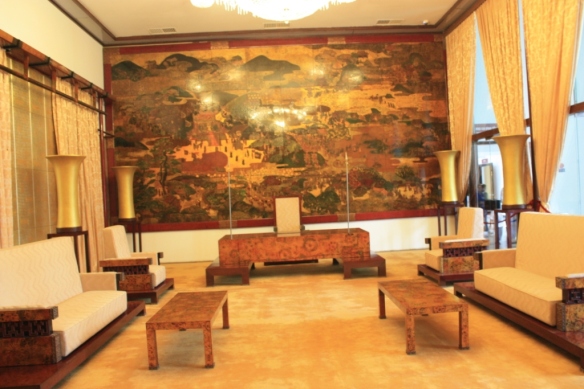
Taken on December 20, 2015 in Saigon
This room, featuring lacquered furniture and artwork, is located in the Independence Palace (a.k.a. Reunification Palace) in Saigon (i.e. Ho Chi Minh City.) The palace had been the home of the leader of South Vietnam during the war years, and its fall to the North Vietnamese Army in April of 1975 signaled the unambiguous end of the war. This room was used for meetings with high level dignitaries, Ambassadors, and the like. It’s arguably the most impressive room in the Palace.
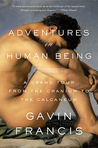 Adventures in Human Being: A Grand Tour from the Cranium to the Calcaneum by Gavin Francis
My rating: 5 of 5 stars
Dr. Francis’s book of essays takes one on a fascinating anatomical cook’s tour—literally from head to toe. The book uses patient case histories, tales from med school, great moments in medical history, and even references to art and pop culture to intrigue the reader with the awesome nature of the human body. This isn’t the kind of book that tries to tell one everything there is to know on a subject. Rather it drills deep on specific subjects, but with humor and readability. While the book examines specific issues pertaining to the body part under consideration, it gives the layman reader the necessary background to comprehend even the most complex topics, often through interesting factoids.
In 18 chapters divided into seven parts by regions of the body, one will learn about topics such as: electroconvulsive therapy (ECT), the almost ancient art of cataract surgery, botoxing of Bell’s Palsy patients, how the Epley manoeuver is used to seemingly miraculously cure vertigo through snappy head movements, why Renaissance thinkers thought the soul resided in the lips, why having one’s blood circulated pulselessly causes problems, how a “Brachial stun” immobilizes an arm, why suicidal wrist slashers rarely succeed, where the nail goes in a proper crucifixion, how kidneys became the gift that keeps giving, how a scratch on the hand almost cost a gardener her life and what her liver did to save her, why your bowel movements matter, how fetoliths (i.e. “stone babies”) come to reside in the abdomens of older women, why–in some cultures–it’s necessary to eat the afterbirth while others insist on burying it under the house, why the hip’s blood supply is lacking, and how the foot is really more specialized and consequential to human existence than our hands and their well-publicized opposable thumbs.
My wife got me this book after seeing it on the list of the best books of 2015 put out by “The Economist” magazine. It was an excellent choice and it moved it quickly to the front of my reading list. I’d highly recommend it for anyone interested in science, medicine, anatomy, physiology, or the human body.

Taken on December 31, 2015 in Bai Tu Long Bay



Vung Vieng sits scattered amid a dense cluster of skerries in Vietnam’s Bai Tu Long Bay.
This was the second floating village that my wife and I have visited. The first was located on Lake Titicaca in Peru. The two villages couldn’t be more different.

A Peruvian floating island for comparison purposes
There are similarities. Both villages are steadily shrinking (population-wise), and expected to one day disappear. Once upon a time, the villagers lived without daily tourist visits, but now tourists provide much (if not all) of the income earned by most villagers. (In Vietnam, it seemed like fishing might still be a viable income source for some at least. In Peru, it looked like if tourists disappeared tomorrow the islands would be completely abandoned the day after.)
In many ways the villages were different. On Titicaca, the islands and the structures on them are largely made of bundles of a reed that grows in the lake. In Bai Tu Long, the structures are small houses of modern design that are floating on synthetic materials. (They used to float them on polystyrene, or something similar, but that was an ecological wreck because pieces of it broke off to be consumed by the fish while floating ugly upon the sea in perpetuity. Now, the houses are buoyed with empty plastic barrels.)
The original villagers on Lake Titicaca are said to have been Pre-Incan native people who moved out there to evade the bellicose Incans. Part of why a few Peruvians have stayed is that a loophole makes life on the Lake tax-free. The Vietnamese villagers had a more mercantile motive. It was too expensive and time-consuming to go to and from the mainland each day.
Lake Titicaca is a placid high-altitude lake, and that makes it fairly safe for villagers. Bai Tu Long Bay is part of what much of the world calls the South China Sea, but which the Vietnamese call–simply–the Pacific Ocean. (The Vietnamese aren’t big fans of China’s attempts to make this part of ocean their sole domain–including the building of man-made islands. I suspect nothing has been better for building good relations between the governments of the US and Vietnam in the wake of a horrific war than the counterweight the US Navy provides to China’s ambitions.) Obviously, the Vietnamese villagers are subject to some pretty rough weather. The skerries provide protection up to a point, but historically the villagers used to hide out in caves on the islands when it got too tumultuous.


