BOOKS: “DC vs. Vampires, Vol. 1” by James Tynion IV & Matthew Rosenberg

DC vs. Vampires, Vol. 1DC vs. Vampires, Vol. 1 by James Tynion IV
My rating: 4 of 5 stars

Publisher’s Site

In this opening volume in a series that pits a set of the DC pantheon of superheroes against a shadowy vampire cabal, we learn that the vampires are preparing for attack and that they’ve infiltrated all levels of society to degrees unknown — even the Justice League. This volume focuses heavily on the extended “Bat-Family” along with Oliver Queen’s smaller Green Arrow team, but includes many more superpowered characters in varied roles. Though it also ignores some of the most powerful characters, a big risk for such a huge ensemble cast. (One wants to save some big guns, but it begs the question of whether Superman is fiddling while the world burns.)

I like how tension was built in this story, and how information is revealed to the reader, allowing one to be gripped by questions of how the characters will learn what one already knows and with what consequences. The volume ends with a big reveal, though not with any kind of resolution. So, it’s not a standalone story in my view.

I found the volume engaging, but feel it suffers from the unavoidable problems of having too many characters, particularly characters of the god-tier variety.

View all my reviews

BOOKS: “Sweet Tooth, Vol. 2: In Captivity” by Jeff Lemire

Sweet Tooth, Vol. 2: In CaptivitySweet Tooth, Vol. 2: In Captivity by Jeff Lemire
My rating: 5 of 5 stars

Publisher’s Site

This volume interweaves the continuing stories of Gus and Jepperd, separated at the end of the debut volume. As outlandish as this story might seem, human-animal hybrid babies and all, the basic forces that drive the story are straightforward and relatable. Jepperd’s is essentially a love story as he attempts to do right by his wife in a post-pandemic dystopian world. Gus, having been motivated by a desire for new adventure in the first volume, just wants to get home now that he has confronted the fundamental crumminess of the human world.

While this volume is largely filling in the backstories of the two main characters, it does so skillfully through a mix of flashback and current timeline events that advance the story. It certainly has me hooked to learn more about these characters.

I found this story to be emotionally moving and compelling and would highly recommend it for comic book readers.

View all my reviews

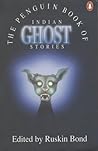
BOOKS: “The Penguin Book of Indian Ghost Stories” ed. by Ruskin Bond

Penguin Book of Indian Ghost StoriesPenguin Book of Indian Ghost Stories by Ruskin Bond
My rating: 5 of 5 stars

Publisher’s Website

This is an anthology of stories of the supernatural set in India or built around characters and contexts of India. About half of the stories are by writers of non-Indian ancestry, though some were born or lived extensively in India (e.g. Rudyard Kipling and C.A. Kincaid.) Not all of the pieces are “ghost stories” in a technical sense, but they all revolve around the supernatural or surreal experience.

I enjoyed all the stories in this collection, but among my favorites were: “The Brown Hand” by Arthur Conan Doyle; “The Strange Ride of the Morrowbie Jukes” by Rudyard Kipling; “The Fire-Jogi” by A.C. Renny; “Fritz” by Satyajit Ray; “Anath Babu’s Terror” by Satyajit Ray; “The Yellow-Legged Man” by Sudhir Thapliyal, and “Topaz” by Ruskin Bond.

If you enjoy scary stories, I’d highly recommend this book.

View all my reviews

BOOKS: “American Vampire, Vol. 3” by Scott Snyder

American Vampire, Vol. 3American Vampire, Vol. 3 by Scott Snyder
My rating: 5 of 5 stars

Publisher site

The third volume of the American Vampire series advances the story into the 1940’s — World War II to be precise. The book contains two distinct storylines, both involving missions behind enemy lines. The first, “Strange Frontier,” is set in the Pacific theater and centers on the character of Henry Preston (the non-vampire husband of benevolent American Vampire, Pearl Jones.) In it, Preston is assigned to an elite fighting squad dispatched to investigate an island that turns out to be infested with a new strain of vampire.

The second story, “Survival of the Fittest,” takes vampiric vampire-hunter Felicia Book as its lead as she is dispatched (in partnership with agent “Cash” McCogan) to Nazi-occupied Romania to investigate claims of a “mad” scientist’s vampire-related research, only to find herself in a completely unexpected and daunting scenario.

I’m enjoying this series. The stories are satisfying and well-crafted, and the books somehow manage to not be just another set of vampire stories. Moving through time allows the stories to be self-contained while making it possible to continue with ever fresh material. (A tactic that works owing to the long lifespans of vampires.) The books also use genre mixing brilliantly, be it detective noir or — in the case of this volume — the war story. Snyder has breathed new life into the vampire story, and I’d highly recommend this series for comic book readers.

View all my reviews

BOOKS: “American Vampire, Vol. 2” by Scott Snyder

American Vampire, Vol. 2American Vampire, Vol. 2 by Scott Snyder
My rating: 5 of 5 stars

Publisher site

This six-issue volume, just like the first, intersperses the story of two American vampires, Skinner Sweet and Pearl Jones. For those who haven’t read Vol. 1, the American Vampire is mutated to have advantages of strength, speed, and UV resistance, but in vampire mode they are much more monstrous. The first four issues focus on a detective noir story set in 1930’s Las Vegas. Skinner Sweet could be said to be central to events in that arc, though not to be the lead character. (That would be the police detective trying to solve a string of gruesome murders.) The last two issues put the Pearl Jones story front and center. That arc is set during the same timeframe, but in Northern California. The first arc is tied up more successfully, but I suspect this has to do with the challenges of interspersing stories (the first arc also has twice as much space with which to work.)

There’s an interesting contrast between the stories. Skinner Sweet is villainous, was villainous before he became a vampire, and is even more so afterwards. The Pearl Jones story is more of a love story between Pearl and her human husband, Henry Preston — albeit a love story in which the couple is being hunted by nefarious forces and must fight to survive. She is trying to be free of the monster life as best she can.

I am enjoying this series. The journey through time and landscapes of America makes this not just another vampire story. If you enjoy comics that mix genres, I’d highly recommend this volume.

View all my reviews

BOOKS: “Captain America: Winter Soldier, Vol. 1” by Ed Brubaker

Captain America: Winter Soldier, Vol. 1Captain America: Winter Soldier, Vol. 1 by Ed Brubaker
My rating: 5 of 5 stars

Amazon.in Page

This is a tale of cloak and dagger intrigue, modern-day intrigue rooted in post-Cold War intrigue rooted in Cold War intrigue rooted in Second World War intrigue. It’s intrigue all the way down, and the book uses flashbacks to gradually fill in the reader on the necessary background.

I liked that Brubaker shows us a Captain America that’s a bit beaten down and jaded. Not beaten down in the physical sense, but in the sense of not being able to maintain his preternatural positivity and virtue in the face of all he’s seen and been through. It makes for a more interesting and textured Captain America.

In issue one of this seven issue collection, the Red Skull is found dead, and the bulk of the remainder of the book is a detective story of political intrigue. [Except the final issue which wraps up a secondary plot point from an earlier issue by telling us the tale of Jack Monroe. Which shows us a darker, grittier side of super-soldiery.]

I enjoyed reading this volume. It was a compelling story arc with plenty of action but also a bit of mystery. If you’re a Marvel comics reader, it’s must-read.

View all my reviews

BOOKS: “Eternals” (2006) by Neil Gaiman and John Romita Jr.

EternalsEternals by Neil Gaiman
My rating: 4 of 5 stars

Amazon.in Page

The Eternals is one of the lesser-known superhero groups, a collection of immortal, god-tier heroes who protect the Earth from a specific set of enemies (Deviants) and serve a specific master (Celestials.) [The Eternals are a little better known now, given Marvel’s “every hero, everywhere, all at once” strategy led them to make a movie based on the team, and — like many products of that phase — it was not loved.] I am usually not a big fan of god-powered comic book characters because it’s an uphill battle to make them interesting. However, I am a big fan of the story-crafting of Neil Gaiman, and this story had the promise of the heroes not knowing they were heroes, at least through the early part of the book.

I found the story to be coherent, despite its outlandishness, and I was a fan of having the heroes living under the impression they are ordinary people. I think that device created fine conditions for tension and intrigue. Still, the volume does not read with the visceral intensity one would expect of a story with stakes as high as they are stated to be. There was some distance created by a lack of intense connection to the characters and the clunkiness of the premise.

If you’re looking for stories of a hero team stranger than the Avengers, but not as strange as Guardians of the Galaxy, this may be your cup of tea.

View all my reviews

BOOKS: “Constantine, Vol. 1: The Spark and the Flame” by Ray Fawkes & Jeff Lemire

Constantine, Vol. 1: The Spark and the FlameConstantine, Vol. 1: The Spark and the Flame by Ray Fawkes
My rating: 4 of 5 stars

Amazon.in Page

This is your basic “race to acquire the components of a multi-part MacGuffin” story line. There is a magic compass that John Constantine is eager to keep out of the hands of a shadowy organization of powerful magicians. Why do we care? First of all, because this is a vaguely but extremely powerful artifact that can rain utter destruction on the world in some ill-defined way. Secondly, because Constantine is just such an intriguing character. Mostly the latter, because the former is ill-defined and doesn’t merit much emotional traction.

That’s mostly what the story is about, but there are various seemingly haphazard story elements (probably too many for the first volume in a series.) This being marketed as a “Volume One” is where much of the book’s problems lie. We pick up pretty much in medias res and when an event occurs that we’re supposed to care about enough to want to see a resolution late in the volume, it’s really hard to care about because it’s been raced through. If you are picking this up after reading the previous series, it’s undoubtedly much more satisfying as a story. Picking up the story with this “Volume 1” is a bit chaotic and lacking in emotional resonance.

That said, John Constantine is one of the most interesting characters in comics and he’s written and drawn well in this book. (Not to mention supporting characters like Papa Midnight.) The story is fast-paced and the broad brushstrokes of it are comprehensible.

If you’ve read the previous Hellblazer / Constantine works, you’ll probably enjoy this volume. Taking it on as a standalone may leave one a bit befuddled.

View all my reviews

BOOKS: “Pawan” by Sorabh Pant

Pawan: The Flying AccountantPawan: The Flying Accountant by Sorabh Pant
My rating: 4 of 5 stars

Amazon.in Page

On one level, the more superficial level, this is a superhero fantasy featuring a Vanara (a supernatural monkey-man creature from Indian mythology,) on another level it’s a political satire that riffs on the geopolitics and the military-industrial complex of India. It’s cleverer as the latter than the former.

The story has some clunkiness, including the occasional hard to follow description and sloppy story elements (e.g. the deus ex machina.) That said, it’s pop genre fiction and with regards sloppy story elements they’re par for the course in superhero fiction. My point being that the fact that it’s amusing and mostly readable means it hits its target, strained credulity and logical inconsistencies aside.

The humor is of the broadest range with occasional laugh-out-loud hilarity, lots of mildly amusing jokes, and a few groan-worthy lines that go down like a lead-balloon. That’s not a terrible ratio for a novel.

If you want to check out a book featuring an Indian mythology-based superhero, and you don’t mind a lot of jokes directed at political and national security apparatus leadership, this book is worth looking into.

View all my reviews

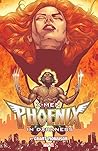
“X-Men: Phoenix in Darkness” by Grant Morrison

X-Men: Phoenix in Darkness by Grant MorrisonX-Men: Phoenix in Darkness by Grant Morrison by Grant Morrison
My rating: 5 of 5 stars

Amazon.in Page

This volume consists of two different story arcs that are thinly tethered by the character of Jean Grey / Phoenix. The first arc features an elaborate plot by Erik Lehnsherr / Magneto to clear the playing field of major opposition so that he can carry out his plans for world domination / the end of homo sapiens. The second arc is set in a futuristic dystopia and its villain is a dark and twisted variant of Hank McCoy / Beast who sets himself up to control the power of the gene. Interestingly, while Jean Grey / Phoenix plays important roles in both arcs, the stories are by no means centered on her. This keeps the stories from just playing out the will of a ridiculously overpowered character, and instead uses the fact that Phoenix is a threat everlasting, one that can never be allowed to get out of one’s sight.

The volume can be a bit chaotic, with the various time jumps and rather large cast of characters, but I felt it wasn’t too hard to follow the story — even given a bit of Grant Morrison trippiness.

If you’re interested in the X-men, this volume is worth looking into.

View all my reviews