POEM: How to Save a Life

Warm scents:

— baking bread

— roasting coffee

If you can conjure that scent to your mind,
it will defy the reality of your dank, hard cell.
For as long as you can hold that miracle
in your imagination.

I’ve conjured many things that weren’t,
and made them whir.

POEM: Shucking Crow

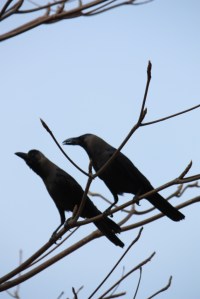
There’s a crow outside my window.
Can it see me through the muslin?
Could its feathered form be winnowed —
spirits shed by baker’s dozens

until remained only a faint dot?
Does it ask the same of me, or not?

South India Haiku

tall grass walking —
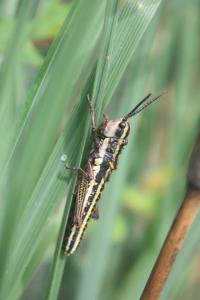
waves of grasshoppers
take the lead


one droplet
clings to the drooping point
of a leaf’s tip


red fire ball,
rising over broken
boulder lands


egret & ox,
patrolling the fields – a
baffling pair


when scale fades —
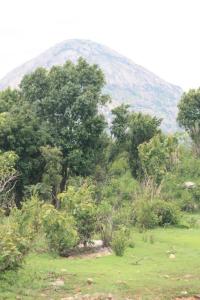
granite dome – forest-fringed,
becomes rock in grass

POEM: Good & Evil

Good & Evil —
Mankind’s most devastating invention.

Good & Evil
don’t feature in nature.

The rule of nature is:

SHIT HAPPENS!

Sometimes it’s nourishing shit that grows big ears of corn.
Sometimes it’s infected shit that cripples the village with E. coli,

but it’s all just days playing out.
-a big, indifferent system burning energy.

Nature doesn’t care that your worldview requires everything be the result of a reason.
Nature’s reason is that something must happen,
and anytime something happens it has effects —
it’s just that humans have to go sticking their labels
onto those effects: good / bad, naughty / nice, tall / grande.

Good & Evil
are cultural constructs,

but — oh my! —
what we haven’t done with them:

-global wars
-holocaust
-genocide
-hellscapes scraped into the world’s sensitive bits.

This may all sound unfair to GOOD.
Sure, EVIL is… well, evil,
“But why you gonna go crap on GOOD?”
one might ask.

Because GOOD is a line that can be hatefully drawn.

Or, if you prefer,
a box that can be hatefully placed
to separate what’s loved and hated —

or who is loved and who is hated.

POEM: Plato’s Cabin

On a weary winter’s eve,
sun long gone — the short day spent.
Cabin-clad, just one dared leave —
a son tired of being pent-

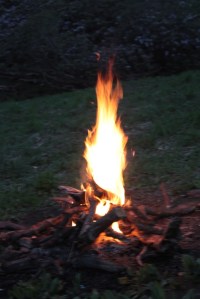
And, out front, he built a fire,
his silhouette danced the wall —
story Plato’s Cave inspired.
They saw the interloper crawl,

but he did not…

POEM: The Crossing

While, the sun, it shone.
I chilled at the bone,
and crossed.

Still as a cold stone,
in the glade alone,
I’m lost.

A teeth-gritting moan,
the known turns unknown.
What cost?

POEM: The Monster

“To freeze or flee?” Asks creatures terrified,
when monsters stomp through forests, glens, or fields.
I know what it’s like, standing stuck mid-stride.
Yet, I’m more oft the monster than he who yields.

Maybe you wonder on the monster’s life,
if the fact never occurred to you that you’re
the stomping monster of the chipmunk’s strife.
when you have that most pleasant hike or tour.

The screech, that call, that’s screamed to each and all
is not some passing fancy or fevered
dancing of critters seeking daytime prowls.
They’re warning others they feel beleaguered.

“You must be this tall to be a monster,”
reads a sign no taller than a lobster.

Five City Limericks


There was a buxom lass of London
who was perpetually undone —
her plotting, it flopped —
her buttons, they popped.
She was undone in more ways than one.


There once was a man from New York
who would only eat using a fork.
You’d think soup his ruin,
but ’twasn’t his undoin’ —
he starved over a giant slab of pork.


There was a young gal from Tokyo
who used her umbrella in the snow.
‘Twas structurally sound,
and held eighty pounds.
huge biceps had that buff girl of Tokyo.


There was a young man of New Delhi
who thought himself the new Machiavelli.
He said, “Make them fear,
or you’ll see them sneer!”
…’twere not for his knees made of jelly.


There was a salesman from Nairobi
whose mind trick was like Ben Kenobi’s —
or so he did think,
but — despite psychic link —
he couldn’t sell even one Flowbee.

POEM: Ubiquitous Bird’s Eye

On my street, not a thing happens
uncaptured in birds’ eyes.
Hawks sit on streetlamps or corners —
swivel-cowled remote spies.

And the crows lurk by the murder,
swooping to the sidewalk.
Pigeons strut and flap-glide down low —
masters of the sly gawk.

Add myriad flitters and sitters —
high-speed reconnaissance
and those who seem occupied by
a playful mating dance.

They’re squatters, stalkers, and spotters —
but who watches the watchers?

POEM: On the Way to Chennagiri, or: A Silly Line of Thought

On the way to Chennagiri, I passed the military dairy farm, and wondered if they also grew blackberries and raspberries. Or, on the contrary, was it strictly a dairy — that would be so like the military. Stick with the primary, don’t distract with a secondary. But then — for the military — milking cows would already have to be tertiary, and, so, growing wild cherries would be quaternary, or — more likely — quinary [because, of course, they’d also need skills, veterinary.] But maybe the veterinary clinic is a subsidiary, or maybe they hire labor, temporary — maybe former service members volunteer — veteran veterinarians, so to speak.

Then I had a thought that was very scary, what if armed revolutionaries or radical reactionaries made a play for that dairy. The military would have to call on the constabulary, because the cows would be no help at all.