
Taken in Tallinn in the summer of 2011.
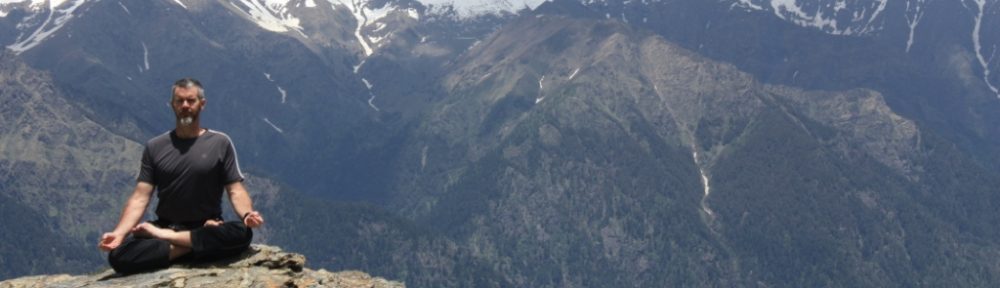

Taken in Tallinn in the summer of 2011.

The morning sun has broken through the trees.
Its yellow light is dancing on the tent.
The fly is flapping gently in the breeze.
Some droplets rolling down — oh, did it freeze?
The night is gone; I know not where it went,
but morning sun has broken through the trees.
My sleeping bag stayed ninety-eight degrees.
The earth and trees are still, and stand content,
only the fly flaps gently in the breeze.
I must get up; I have a day to seize,
but sleeping bag and chill have got me pent,
though morning sun has broken through the trees.
I force myself up onto hands and knees.
some birds are chirping, but the beasts seem spent —
hush, but the flapping gently on the breeze.
That stillness and sunshine put me at ease —
no time to mourn or sing the night’s lament.
The morning sun has broken through the trees;
my tent is flapping gently in the breeze.

Taken at the Meiji Shrine in Tokyo in the summer of 2008.

 The temple bell clangs long and loud.
It calls them all from far and near.
How’ll they come remains so unclear.
Could be in ones — could be in crowds.
They’d straggle in with their heads bowed —
feigning piety to hide their fear.
That temple bell clangs long and loud
to call them all from far and near.
Some seem so proud, but most are cowed,
their darting eyes first peek, then peer.
They hope to find the one that’s dear
before the Scout picks what he’s allowed.
That temple bell clanged long and loud.
 Some Are Always Hungry by Jihyun Yun
My rating: 5 of 5 stars
This brief collection includes poems about food, folk knowledge, nostalgia, women’s issues, and expatriation / immigration. The title’s reference to hunger is most directly seen in poems that take the recipe format as a model for form and style. The recipe poems are prominent expressions of the collection’s central theme – which is an immigrant’s nostalgia for home and tradition. The author is ethnically Korean, but moved to America – a place which has historically accepted those of many cultures but which also can be said to dissolve cultures, in a way. America also spends more time than most peering toward the future, rather than toward the past — in contrast to many of the countries from which it receives migrants. The collection is peppered with folk wisdom that represents that past-centric orientation.
I found this collection to be clever and evocative. I’d highly recommend it for poetry readers.

Taken in June of 2017 by the Chobe River in Botswana.
 Spark by Naoki Matayoshi
My rating: 5 of 5 stars
“Spark” tells the story of two manzai comedians. Manzai is a Japanese comedic form that involves a duo that engage in rapid-fire conversational exchanges involving puns, word play, absurdities, and misunderstandings. [Think of Abbott and Costello’s “Who’s on first” sketch, but set to appeal to the Japanese sense of humor.]
The two comedians in question do not form a duo, but rather are members of their own, respective, manzai duos. While their relationship is one of friendship, to understand it fully one has to have a basic grasp of the sempai – kohai interaction. Most Westerners who haven’t practiced judo, aikido, flower arranging, or taiko drumming, or who haven’t done business in Japan are unlikely to be familiar with this very Confucian idea. It’s sort of like the idea of mentor and mentee, but writ much more broadly, basically into all aspects of life. The sempai is the senior, and the kohai is the junior. In this case, our narrator, Tokunaga, is the kohai (junior,) and Kamiya is the sempai (senior.) Kamiya says he will guide Tokunaga, if Tokunaga agrees to write Kamiya’s biography. The book in question could be taken to be the resultant product — although Tokunaga, himself, is the protagonist of the story – with Kamiya being the Obi Wan to Tokunaga’s Luke.
I think readers should know not to expect a book that is laugh-out-loud funny throughout. Because the subject is comedy, one might expect it to be a laugh riot from cover-to-cover. I remember seeing the movie “Punchline” (1988) and being very disappointed because it was about standup comedians, but the standup comedy in the film was mediocre at its best. The movie had major league talent (Tom Hanks and Sally Field) and I might have enjoyed it more if my expectations about the humor were tempered. “Spark” does have its funny moments, but one wouldn’t want base one’s judgement on that. For one thing, overall, the story is bittersweet. It tends to be lighthearted, but it has its moments of angst as well. Furthermore, the humor doesn’t translate well, and I think there are both cultural and linguistic reasons for that. Much of the humor that plays out when the comedians are riffing (usually off-stage) is what I would call absurdist quips, and the more you like that kind of humor the more you’ll like it in the book, but vice-versa is true, too. If your response to puns is deadpan, I wouldn’t expect to find yourself laughing (or even smiling) much. (Not that the humor is pun-based, but it’s about that level of funny.)
Obviously, I thought the book does something right, even if it’s not its hilarity. For one thing, it has at least as many philosophically thought-provoking moments as it does humorous ones. While there is a lot of silliness in the exchanges between Tokunaga and Kamiya, there is also a philosophy and a psychology that are presented for one’s consideration. At its heart, I think this is a book about what art is exactly, and how one rides a line between the creative and the familiar. Tokunaga wants to be like Kamiya because he sees Kamiya is creative to the point of being so far outside the box that he can’t even see the box. However, as the story goes on, Tokunaga ends up having more success because he (and his partner, who is a relatively minor and unseen character) instinctively keep one eye on what will appeal to audiences. While Tokunaga chides himself for lacking the courage and creativity of Kamiya, ultimately, he gets to see the downside of those proclivities.
I enjoyed this book. It clearly leans toward literary fiction, which is to say it’s much more about characters than it is about story and exciting events. This means that it may feel a little slow at times, but it does have a payoff that ties up the story into a satisfying narrative. It’s also a book that is wisely kept short. Because it’s not that long, the coffee shop and bar discussions that make up much of “the action” don’t overextend into tedium. If you are interested in comedy, creativity, or just tales of friendship, this is a worthwhile read.

International University of Kyrgyzstan; Taken in Bishkek in the summer of 2019.

Bishkek City Hall
 I stare into a rushing stream.
For me, time flows as in a dream.
But the stream knows only one flow —
its tune an endless allegro.
Lord willing -n- the creek don’t run dry.
 A flare, like a blinding flashlight, shines at the fore
Puddles of deep crimson crawl laterally — as if that bright dot was the wound
At the periphery, all the hues of bruising — indigo to a shade of purple indistinguishable from black
The colors tuned up by the heat of inflammation felt — but not seen — in the cold view of one beaten to the edge of life
As well as, by the harsh lighting — blues and reds dancing from lightbars and wig-wags of police cars and fire trucks — shining over the carnage.


