POEM: Clarity

“Miles to go,” so they say.

I’ve lost the light of future days.

All that remains is hour on hour —

strung along from tower to tower.

In the dark, by the screen’s glow,

and my charge is getting low.

When it zeroes, I’ll be shut out

of that which knows what it’s about.

In the dark, no shore in sight.

I glide, no hope of coming light.

They say there’s a fix of clarity,

if you can find Midnight Charity.

POEM: Dervish

see the dervish in mid whirl

decked out white as a pearl

can you feel the quick spin

pull you from a distant sin

blood flung wide in one’s insides

lifting brainward, like rising tides

somehow the mind becomes silent

as music blares, bold and violent


POEM: Prisoner #7

“Names are for the living.
“Names are for the loyal,”

So they told him,
when they swapped name to number.

He had too many questions
for a dictator’s lackey to tolerate,

“Is six alive? How about five?
“Is there an eight? How ’bout a nine?
“Do they live and die in ordered time?

“Or is each end a random call?
“Toss a coin, and let it fall?
“Let it roll, till it shows a face,
“Heads a bullet, tails for grace
“I’ll take the end that’s certain and dire,
“before letting chance choose when I’m retired.”

“But seven is such a lucky number.”

BOOK REVIEW: Octavio Paz / Selected Poems ed. by Charles Tomlinson

Selected PoemsSelected Poems by Octavio Paz
My rating: 5 of 5 stars

Amazon page


Octavio Paz was a Mexican author, poet, and diplomat who won the Nobel Prize for Literature in 1990. (By separating “author” and “poet” I mean that he wrote in a variety of forms, and he is as famous for his essays as for his poetry.) His poetry reflects not only Mexican culture and sentiments but it also displays an infusion of the flavor of places he was posted or visited – e.g. there are many references to India and Hinduism as Paz was the Mexican Ambassador to India in the 1960’s. That variety is the spice of life is a sentiment Paz seems to have embraced. The poems included present examples of both short and long form, as well as prose poems and free verse. There is even concrete (visual) poetry in which the words are formed into an evocative shape. Also, as hinted at, there’s a mix of Eastern and Western worldview in these poems.

There are a number of different “Selected Poems of Octavio Paz” collections available. The details of the version I read are ISBN: 0140422463, first published in 1979 by Penguin Books and edited by Charles Tomlinson. The various collections tend to share many of Paz’s “greatest hits” and so the reason I mention the publishing details isn’t because you’re likely to get an entirely different selection of poems, but rather the features and translation skill may vary from one edition to the next. Most notably, the paperback edition I read is a bilingual edition (Spanish and English.) That didn’t do much for me as I’m not a Spanish speaker, though I do have an interest in the sound of poetry. While I can’t speak to the trueness of translation, I found the Tomlinson text to be evocative and effective.

The edition mentioned includes 56 poems drawn from five different poetry collections, ranging from the late 1940s to 1976. (Paz died in 1998.) Paz’s early collections favor prose poems and he moves more into free verse and short form poems later.

I enjoyed this collection. I was particularly enamored of Paz’s presentation of surrealist imagery and his questioning of reality. I would highly recommend poetry readers take in some of Paz’s work.

View all my reviews

POEM: Kathmandu

tight warren of streets, alleys, and stupa-laden courtyards
— a junky’s labyrinth
low portals force a bow to the ever-watching Buddha
how’s someone, hot-wired and strung out —
slipping the sacred geometries —
kink their way through this dusty burg
without clocking a noggin on bricks
— blocks of brown, dried blood brown
how do lost self-medicating masses find themselves
where it’s so easy to be lost

Around the World in 5 Works of Poetry

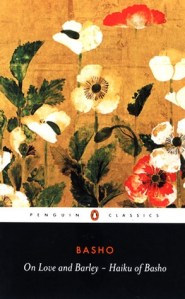
5.) On Love and Barley by Matsuo Basho [Japanese]: One doesn’t get better haiku [and other traditional Japanese poetry forms] than Basho.


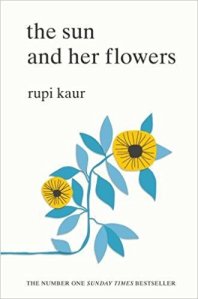
4.) The Sun and Her Flowers by Rupi Kaur [Indian-Canadian]: This isn’t the expected fair for an “around the world” post as it’s not blatantly infused with setting / geography, but culture does factor in prominently.


3.) Leaves of Grass by Walt Whitman [American]: Not only does Whitman explore the many dimensions of America, he also references other cultures and locales. [There was a fascination with the East brewing in Whitman’s day.]


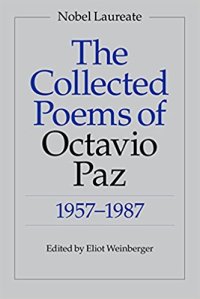
2.) Octavio Paz / Selected Poems by Octavio Paz [Mexican]: Paz was a diplomat as well as a Nobel Laureate, and his poems include many references to India (where he was posted) as well as Mexico.


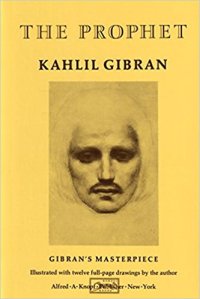
1.) The Prophet by Kahlil Gibran [Lebanese-American]: Featuring an intriguing melange of advice in poetic form.


NOTE: It’s not as global a list as I’d like. I’d love to hear what works others might include in the list. I don’t think poetry gets translated as much as fiction and so it’s a bit of a challenge. It’s much easier to find examples of novels & short story collections from far-flung corners of the world.

POEM: Dark Shantytown

walking in the street
after the sun has set

No streetlights
No porch lights
No headlamps
No torch lights
No box-lit sign for the butcher
No neon sign for the barber
just the dim hypnotic flicker of screens

like swimming a benighted sea
knowing other life teems unseen
sometimes a face drifts into view
and you pivot to avoid collision
or maybe just drift vaguely past

one word rattles in you brain:

SHARKS

Are there sharks?
Where are the sharks?
Will I see the shark,
before I feel the shark?


POEM: Running

Botswanans have a saying:
“only food runs”

I wonder how much that sentiment holds sway in India?

Because, as I was running in the park today
a man looked at me
and then looked back behind me
and then looked at me
and then looked back behind me

and then, smiling, he shouted something in Kananda
that could only have been:
“Whatever was chasing you is gone!”

POEM: That Particular Hole

I can’t find the fate beneath my feet.
It’s always just across the street.

Over there.
On the other side.
Where the demons slink and hide.
Follow me down.
For I must go.
I feel the falling of the snow.

The cold slows me to a creep.
Then trickle gives away to seep.
Evaporates ‘fore it hits the deeps.
By then I’d given up to sleep.


It’s a long way down
that particular hole.

POEM: Off the Rails

Rails of sanity. Rails of convention. People find it scary, being afloat on endless seas.They long for rails, and the further out the tracks are laid, the easier they rest.


teary for the lunatic
who ventured off the rails
sitting in a open sea
adrift, not hoisting sails


worry not for me, my friend
horse latitudes are past
when the drifting day is done
i can always raise the mast