POEM: Sacred & Profane

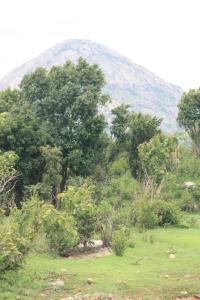
In that landscape people see the
sacred and the profane.
Under the thickest canopy,
they think the wild – insane.

In the bucolic glade, they think
the old saints of the soil.
It’s a scheme that’s clean and clear-cut —
except those are false foils.

If people do chase the sacred,
its uncharted country
is more likely where feet fear tread
than the hill with one tree.

POEM: Buzz – Buzz

If the buzzing of flies
at the moment one dies
drowns out the wailing cries,

one has lived many lies,
twisted the lows and highs,
mistaken what’s a prize,

or, maybe, died too wise.

POEM: How to Save a Life

Warm scents:

— baking bread

— roasting coffee

If you can conjure that scent to your mind,
it will defy the reality of your dank, hard cell.
For as long as you can hold that miracle
in your imagination.

I’ve conjured many things that weren’t,
and made them whir.

POEM: Shucking Crow

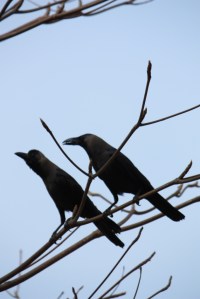
There’s a crow outside my window.
Can it see me through the muslin?
Could its feathered form be winnowed —
spirits shed by baker’s dozens

until remained only a faint dot?
Does it ask the same of me, or not?

South India Haiku

tall grass walking —
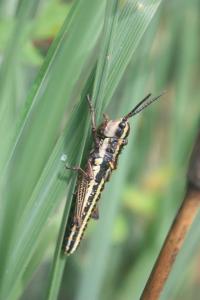
waves of grasshoppers
take the lead


one droplet
clings to the drooping point
of a leaf’s tip


red fire ball,
rising over broken
boulder lands


egret & ox,
patrolling the fields – a
baffling pair


when scale fades —
granite dome – forest-fringed,
becomes rock in grass

POEM: Good & Evil

Good & Evil —
Mankind’s most devastating invention.

Good & Evil
don’t feature in nature.

The rule of nature is:

SHIT HAPPENS!

Sometimes it’s nourishing shit that grows big ears of corn.
Sometimes it’s infected shit that cripples the village with E. coli,

but it’s all just days playing out.
-a big, indifferent system burning energy.

Nature doesn’t care that your worldview requires everything be the result of a reason.
Nature’s reason is that something must happen,
and anytime something happens it has effects —
it’s just that humans have to go sticking their labels
onto those effects: good / bad, naughty / nice, tall / grande.

Good & Evil
are cultural constructs,

but — oh my! —
what we haven’t done with them:

-global wars
-holocaust
-genocide
-hellscapes scraped into the world’s sensitive bits.

This may all sound unfair to GOOD.
Sure, EVIL is… well, evil,
“But why you gonna go crap on GOOD?”
one might ask.

Because GOOD is a line that can be hatefully drawn.

Or, if you prefer,
a box that can be hatefully placed
to separate what’s loved and hated —

or who is loved and who is hated.

POEM: Plato’s Cabin

On a weary winter’s eve,
sun long gone — the short day spent.
Cabin-clad, just one dared leave —
a son tired of being pent-

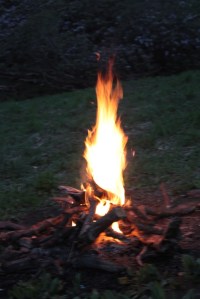
And, out front, he built a fire,
his silhouette danced the wall —
story Plato’s Cave inspired.
They saw the interloper crawl,

but he did not…

POEM: The Crossing

While, the sun, it shone.
I chilled at the bone,
and crossed.

Still as a cold stone,
in the glade alone,
I’m lost.

A teeth-gritting moan,
the known turns unknown.
What cost?

POEM: The Monster

“To freeze or flee?” Asks creatures terrified,
when monsters stomp through forests, glens, or fields.
I know what it’s like, standing stuck mid-stride.
Yet, I’m more oft the monster than he who yields.

Maybe you wonder on the monster’s life,
if the fact never occurred to you that you’re
the stomping monster of the chipmunk’s strife.
when you have that most pleasant hike or tour.

The screech, that call, that’s screamed to each and all
is not some passing fancy or fevered
dancing of critters seeking daytime prowls.
They’re warning others they feel beleaguered.

“You must be this tall to be a monster,”
reads a sign no taller than a lobster.

BOOK REVIEW: Sour Grapes by William Carlos Williams

Sour Grapes: A Book of PoemsSour Grapes: A Book of Poems by William Carlos Williams
My rating: 5 of 5 stars

Amazon.in page


This 1921 poetry collection is Williams’ fourth, coming out early in his career — shortly before his most well-known poem (“The Red Wheelbarrow” (1923)) and long before his most acclaimed collections — Paterson [National Book Award in 1949] and Pictures from Brueghel (1962) [Pulitzer, 1963.] Williams was a full-time physician, and in this part of his career composing poems would have been a secondary pursuit. The 50-some poems of the collection are mostly free-verse imagist poems. The experimental and improvisational nature of the included poems has been both criticized and lauded.

As I mentioned, imagism is the primary approach in this collection, focusing on vivid descriptiveness — particularly in the visual sense. The subject matter is largely natural, but it does include a not inconsequential venture into human activity. A recurring theme in the collection is seasonality. [While these poems aren’t haiku, haiku readers will recognize the importance of seasons in that form.] That’s not the only connection to the Japanese style. Much of William’s work features economy, a fundamental trait in haiku. Few of these poems have the verbal terseness of haiku (i.e. that few words) but they share that form’s austerity of meaning (i.e. sticking to description and not getting involved in analysis or judgement.)

I enjoyed this collection. It might not be William’s most polished work, but that doesn’t necessarily make it undeserving of reflection.

View all my reviews