
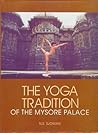
 The Yoga Tradition Of The Mysore Palace by N.E. Sjoman
My rating: 5 of 5 stars
Online
This book consists of a translation of The Śrītattvanidhi, a description of 122 Hatha Yoga postures (asana) that has been attributed to Krishnaraja Wodeyar III (Maharaja of Mysore – b.1794 – d. 1868,) as well as notes and commentary on the postures by the Sanskrit scholar, N.E. Sjoman, notes that serve to map said postures to their present-day counterparts. Sjoman also writes an extensive introduction that explores the evolution of the body of yogasana as we now know them, with discussion of varied sources, his research rooted in archival study in Mysore. A copy of the original The Śrītattvanidhi, (of varied readability) is included in the text.
Because India is top-heavy in terms of population and influence, outside of India yoga practitioners might be forgiven for failing to understand how important Mysore and the patronage of the Wodeyar royalty to T.T. Krishnamacharya was in the development of asana-centric yoga as we know it today. Krishnamacharya taught Pattabhi Jois (Ashtanga Vinyasa,) B.K.S. Iyengar (prop yoga,) and Indira Devi (Yogini to the stars,) among other prominent 20th century teachers. It is from these teachers onward that yoga practice would be recognizable to the average practitioner of today.
This book links the postures of The Śrītattvanidhi to the names / versions known today (typically linked by the names from B.K.S. Iyengar’s Light on Yoga.) Sjoman also maps these asana to other prominent sources like Hatha Yoga Pradipika, Gheranda Samhita, Krishnamacharya’s Yogamakaranda, Pattabhi Jois’s Yoga Mala, and Yogeshwaranand Parmahansa’s First Steps to Higher Yoga, linking them primarily through a series of indices.
If you’re interested in the evolution of yoga postures over time, I’d highly recommend this book as a quick way to get a basic grasp of the subject.
View all my reviews



 Tiger Riding for Beginners