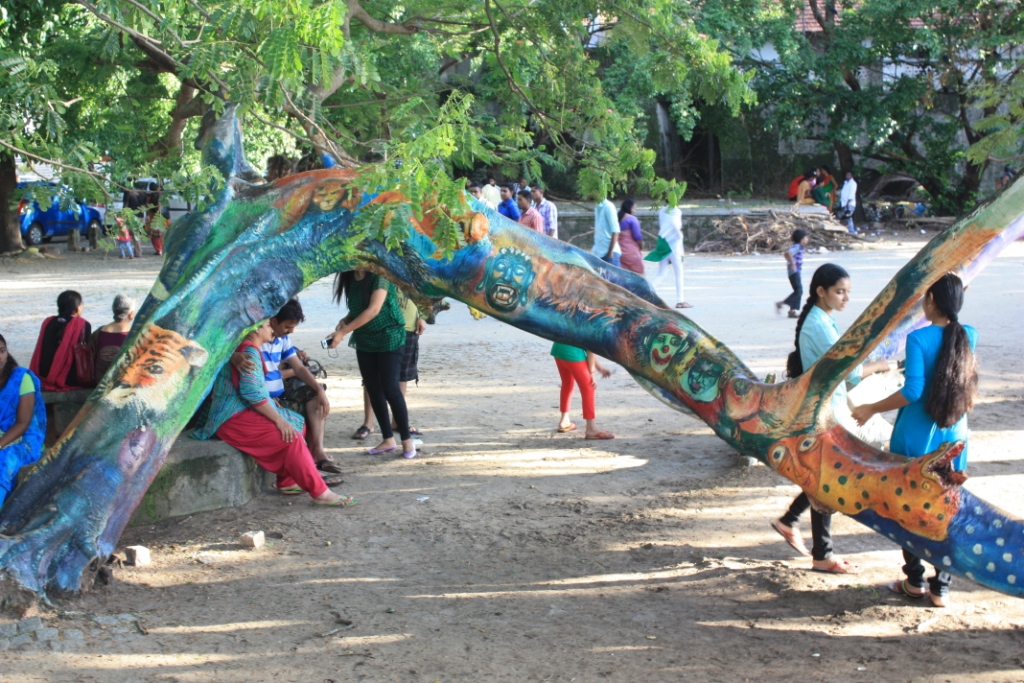
Taken in Kochi (Cochin) on July 7, 2014.

Taken in Kochi (Cochin) on July 7, 2014.
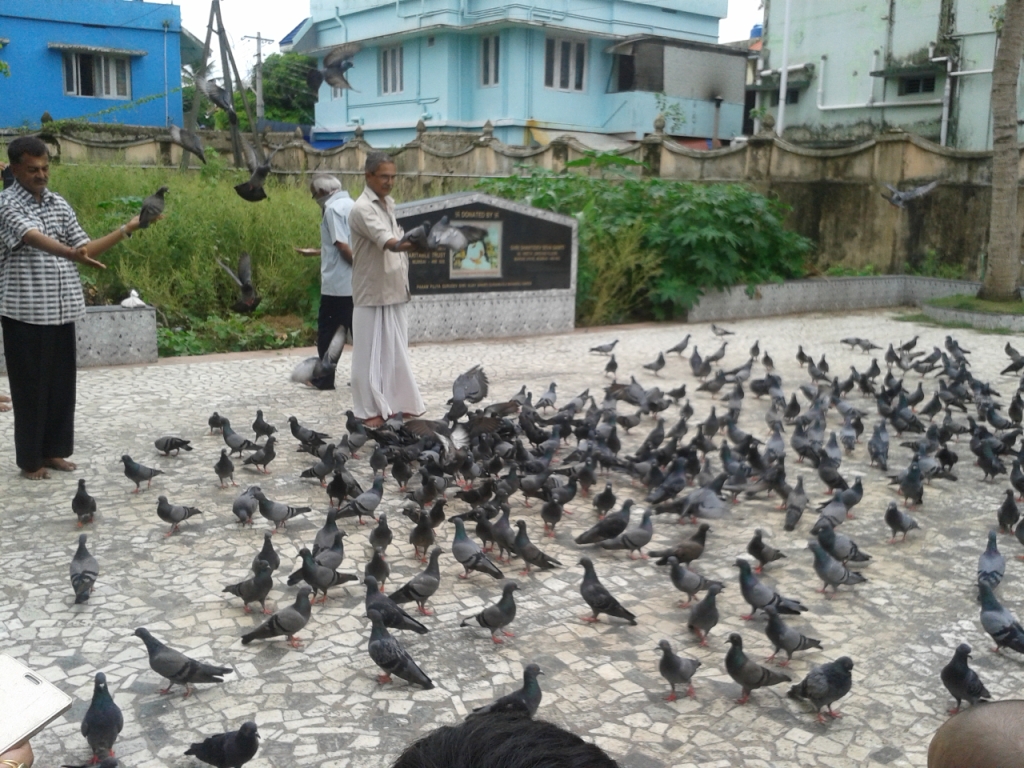
Taken in July 7, 2014 in Kochi.
Taken at the Cochin Shwetambar Murthipujak Jain Temple, this photo captures one of the feeding times during which members of the Jain congregation get up close and personal with the local pigeon population.
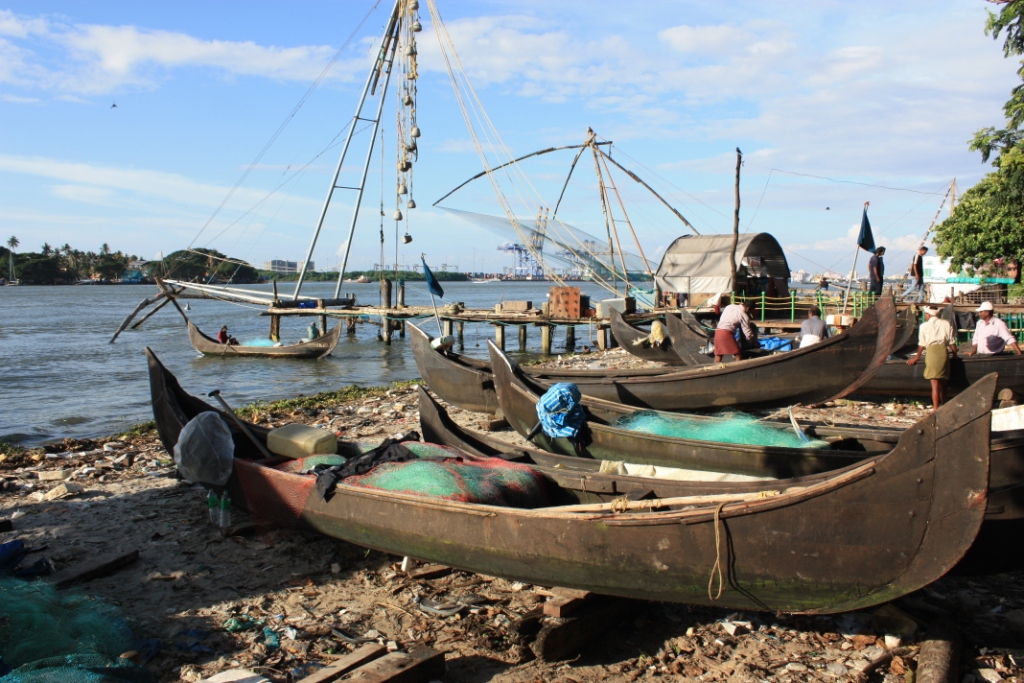
Taken July 7, 2014 in Kochi (Cochin.)
In the background are a couple of Kochi’s famous Chinese fishing nets. These particular nets are primarily a tourist attraction. They pull up tiny (shrimp-sized) fish and other aquatic life. They’re more about getting tips than selling fish. In the foreground are a couple of fishing boats with the nets visible within.
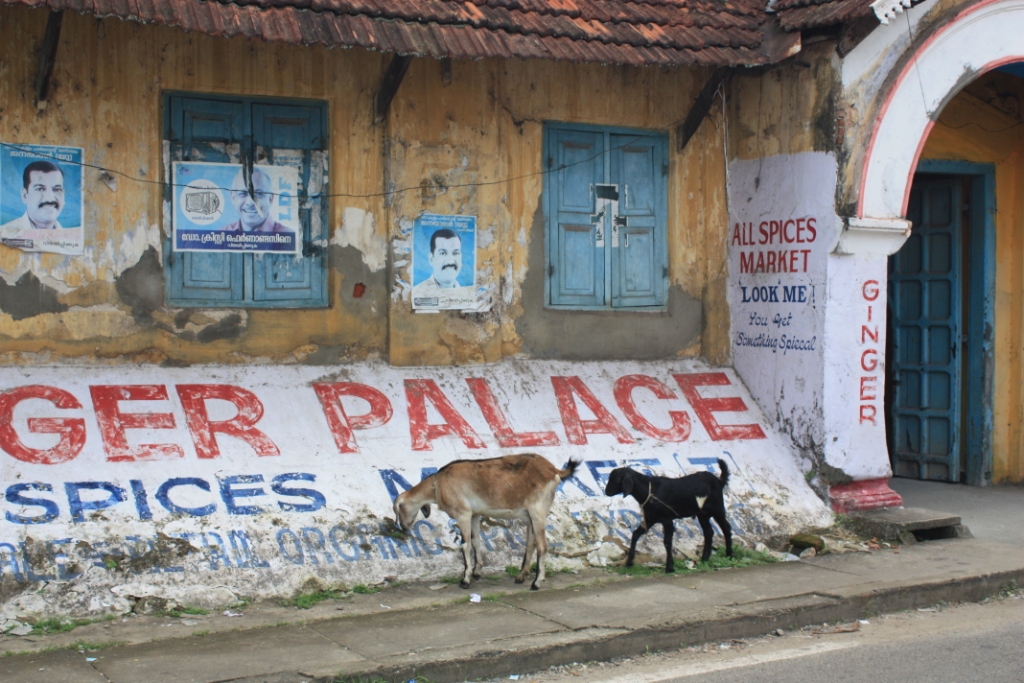
Taken July 7, 2014 in Kochi
On your visit to Kochi (Cochin) you’ll note a different mix of fauna than elsewhere in India. Urban bovines are rare, but roving flocks of goats roam the streets. Also, cats are much more prominent than in doggie-dominant Bangalore. I suspect the latter has to do with the large amounts of seafood that comes ashore here.
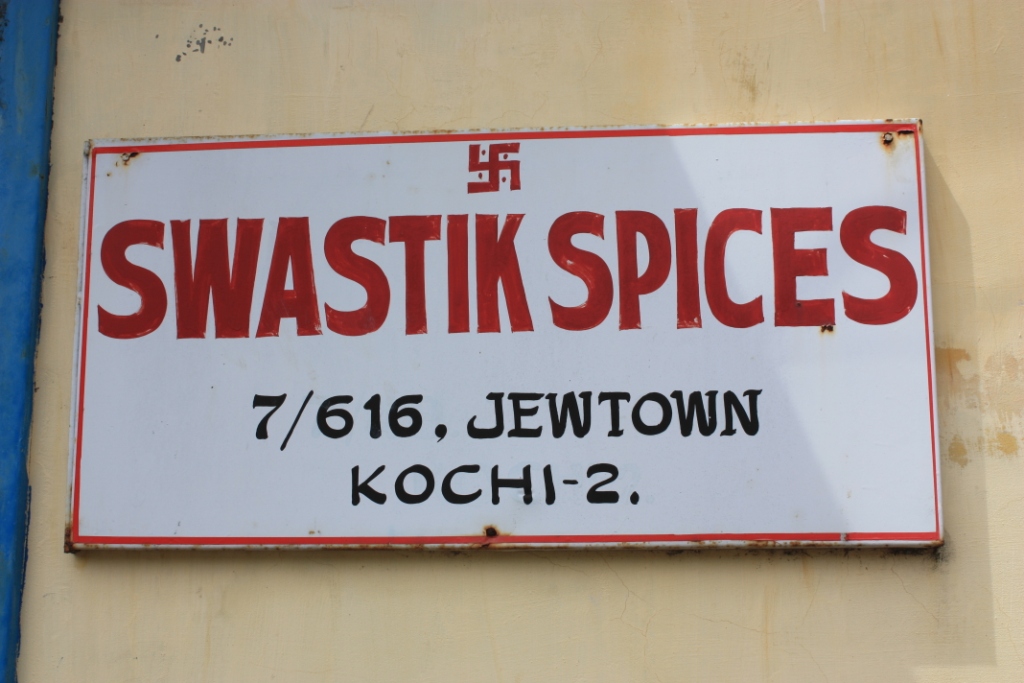
Taken on July 7, 2014 in Kochi (Cochin.)
Centuries before the Nazis hijacked the swastik “twisted cross” emblem, it was part of Hindu, Jain, and Buddhist iconography. Throughout South Asia, the symbol generally expresses a wish for well-being (the word “swastik” literally means “well-being” in Sanskrit.) Of course, there are specific religious meanings that vary with the belief system that is utilizing the symbol.
One has to remember this when one is in a Jewish neighborhood in South Asia–such as this one in Kochi–because, otherwise, the prominent swastikas can be disconcerting given the Nazi’s inexplicable expropriation of this symbol.
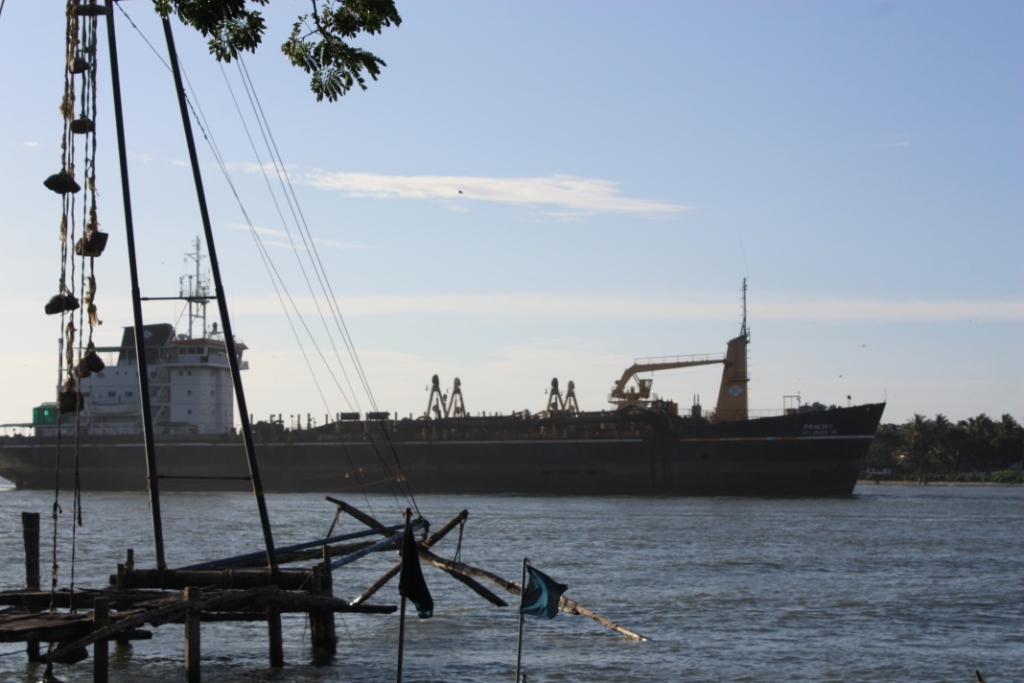
Taken on July 7, 2014 in Kochi
At the harbor at Fort Kochi, where ships enter the Arabian Sea, there are old Chinese Fishing Nets lining the coast. The nets don’t yield many fish in this area, but exist more as a tourist attraction. The fixed, lever-lowered nets were actually introduced by the Portuguese–albeit Portuguese who had spent time in southern China (i.e. Macau.)
The port at Kochi (Cochin) is one of India’s major transportation hubs (11th largest by tonnage and 8th largest by number of containers.) In addition to modern products, the port still handles a lot of the spice that made Kochi an important center of trade since ancient times.
The channel has to be dredged to keep a clear path for the large number of ships transiting in and out of port.


 Tiger Riding for Beginners