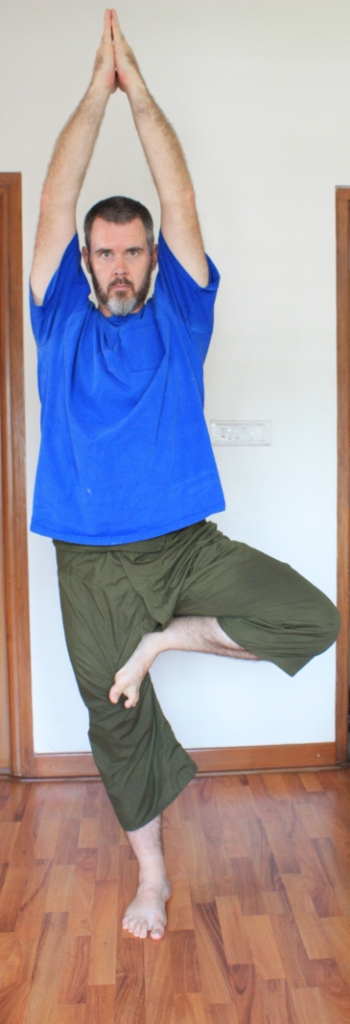
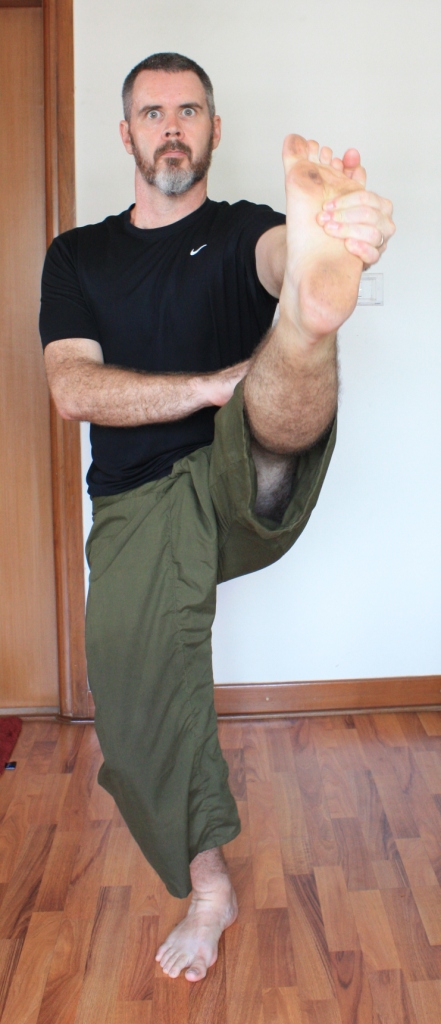
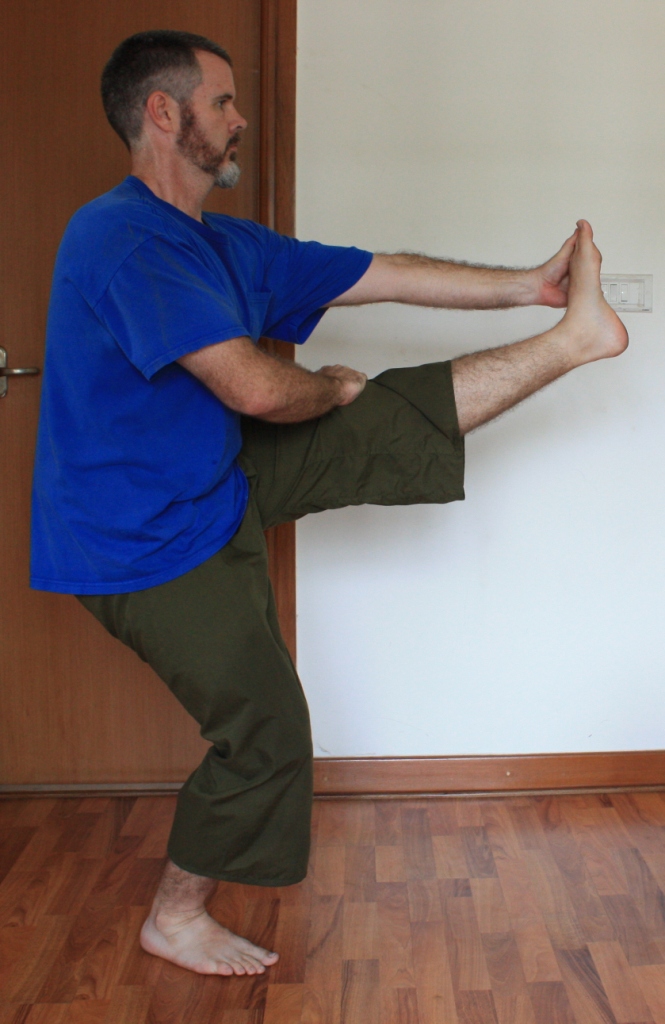
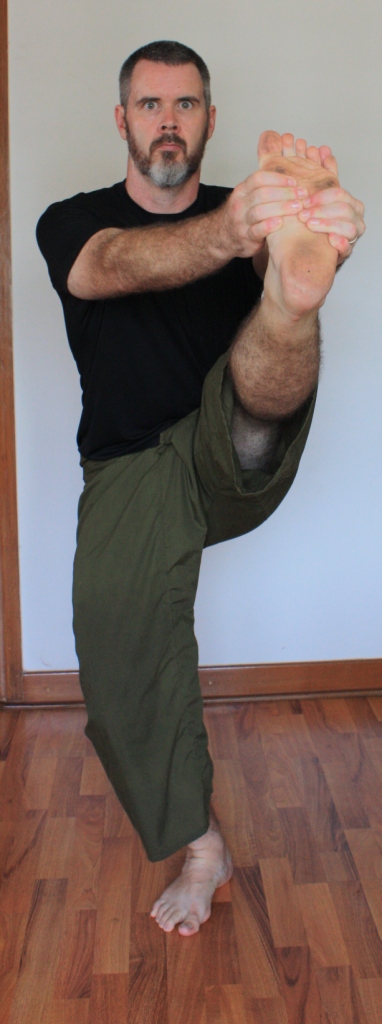
1.) Use your words. Don’t demonstrate unnecessarily. I came to teaching yoga in a backward way. It started with me doing my personal practice with my wife a few times a week. We were pretty much just practicing together, though I took the lead based on greater experience and knowledge of yoga. Eventually, a couple of other people began to join these makeshift sessions. I remember looking up and seeing a person doing parivrtta trikonasana (revolved triangle pose) in a dangerous manner. This was my first glimpse into the importance of keeping eyes up if you take on the role of helping someone with their practice.
Having a relatively high level of flexibility and many years of movement training (in the form of martial arts), I generally don’t have that much trouble mimicking postures and following corrective guidance. However, having gotten away from teaching for a little while, I quickly forgot how low the average level of bodily awareness is. Truth be told, I’d probably have been hard-pressed to explain what was so dangerous about that individual’s alignment at the time. I just had an intuitive notion that it wasn’t his skeleton or the correct muscles that were holding him up. I’ve since been working hard to move beyond an intuitive understanding. I’ve been voraciously reading everything about anatomy and body-reading that I can get my hands on–studies above and beyond the requisite anatomy instruction of the course–which itself was substantial.
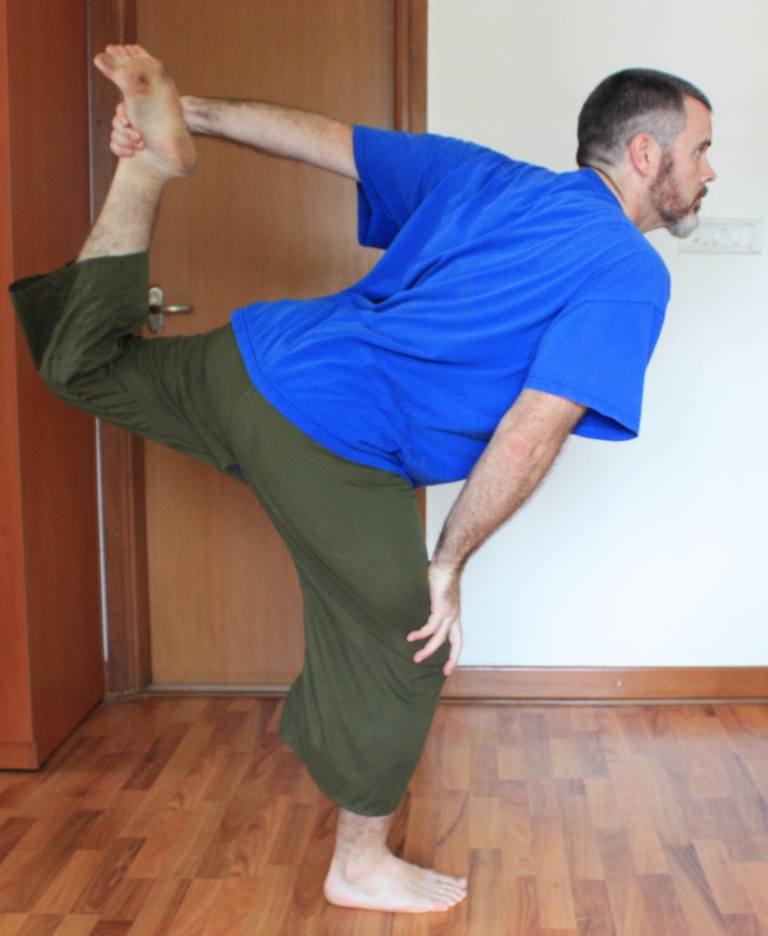
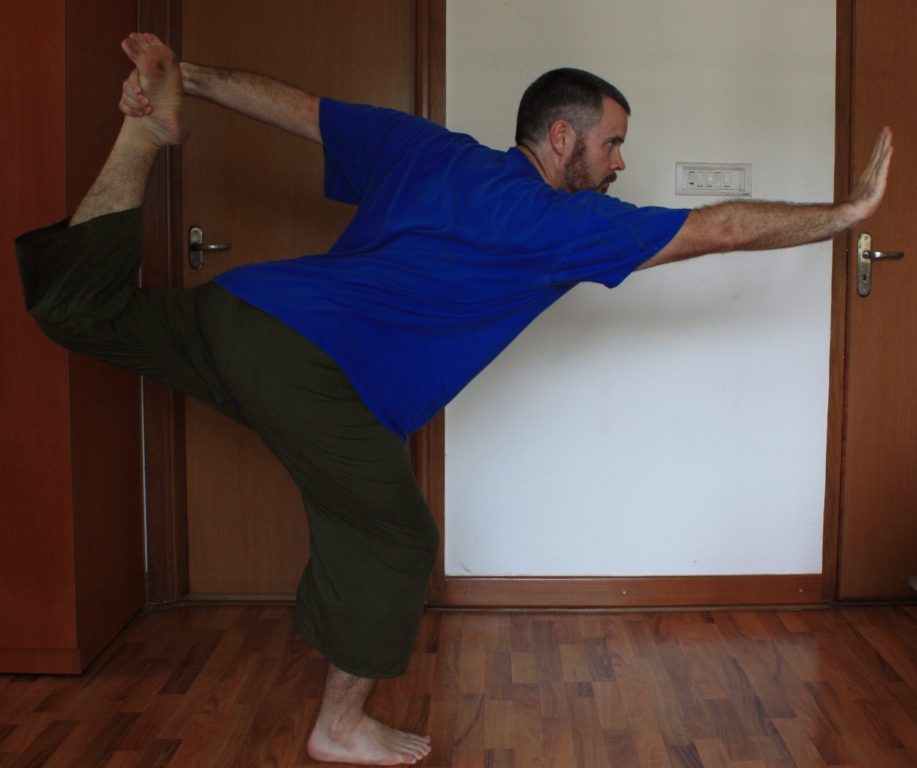
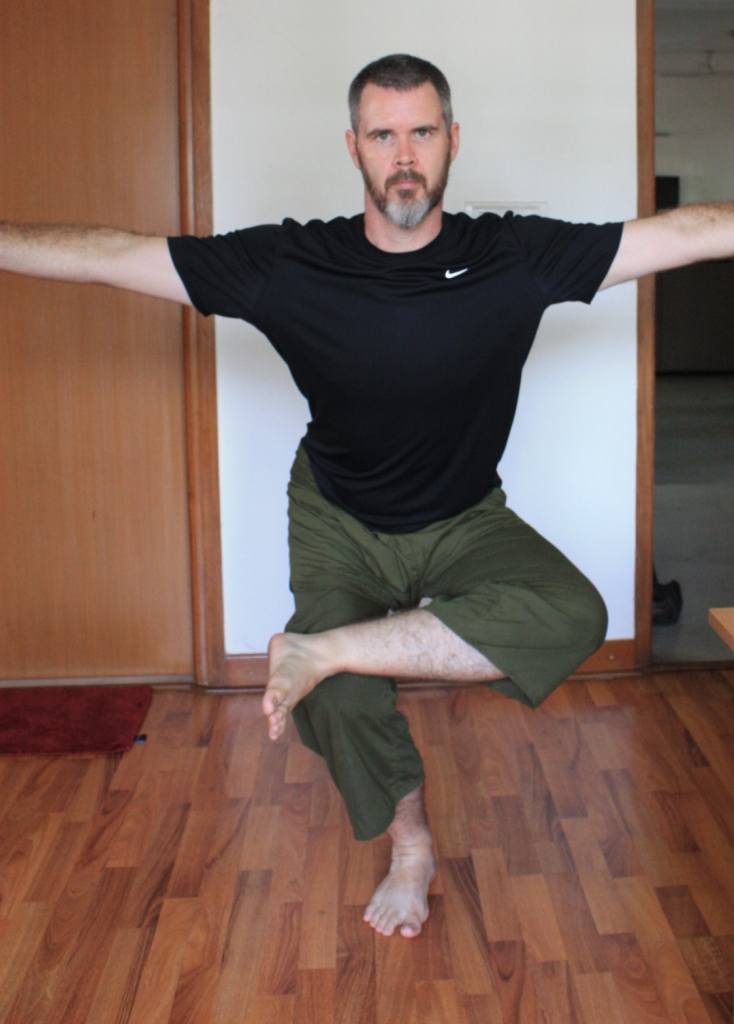
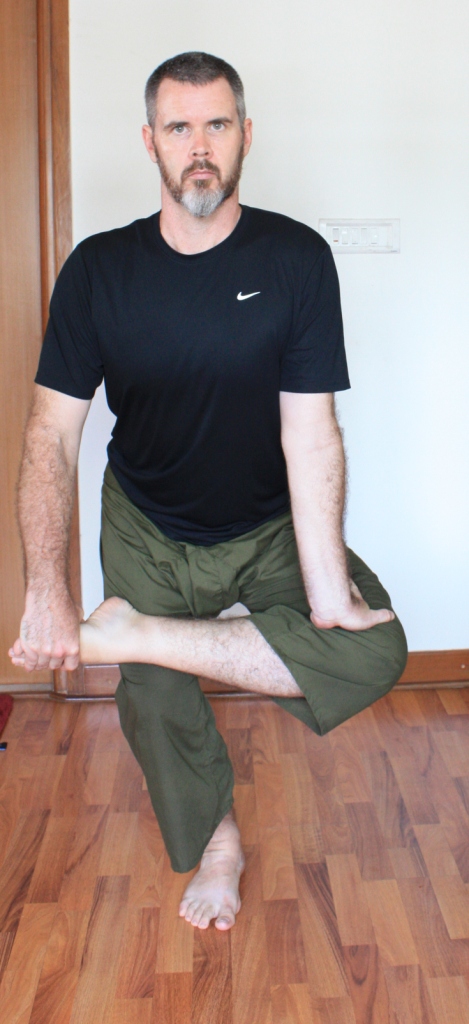
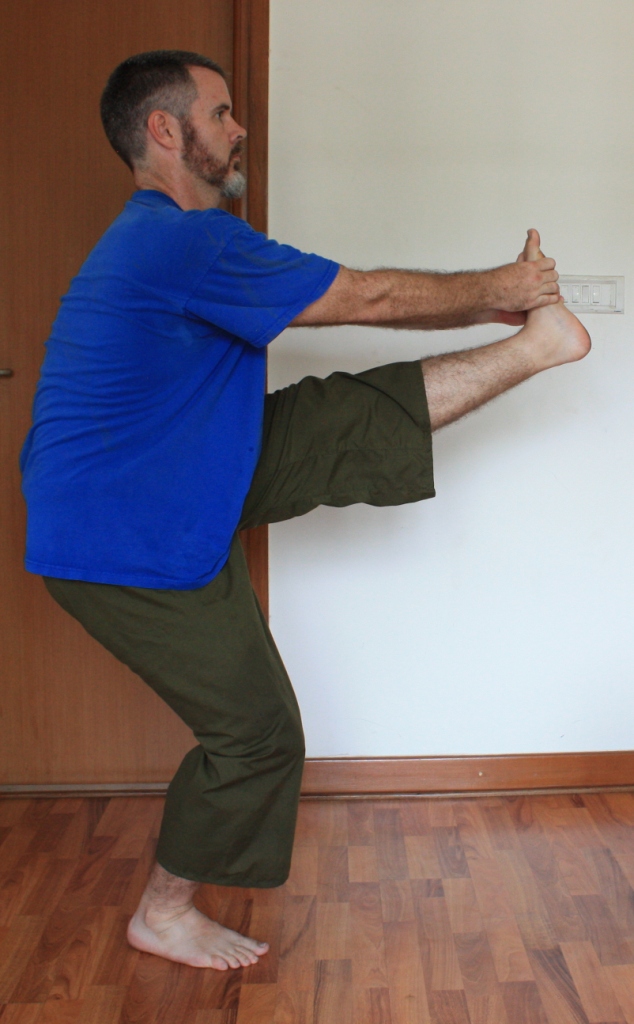
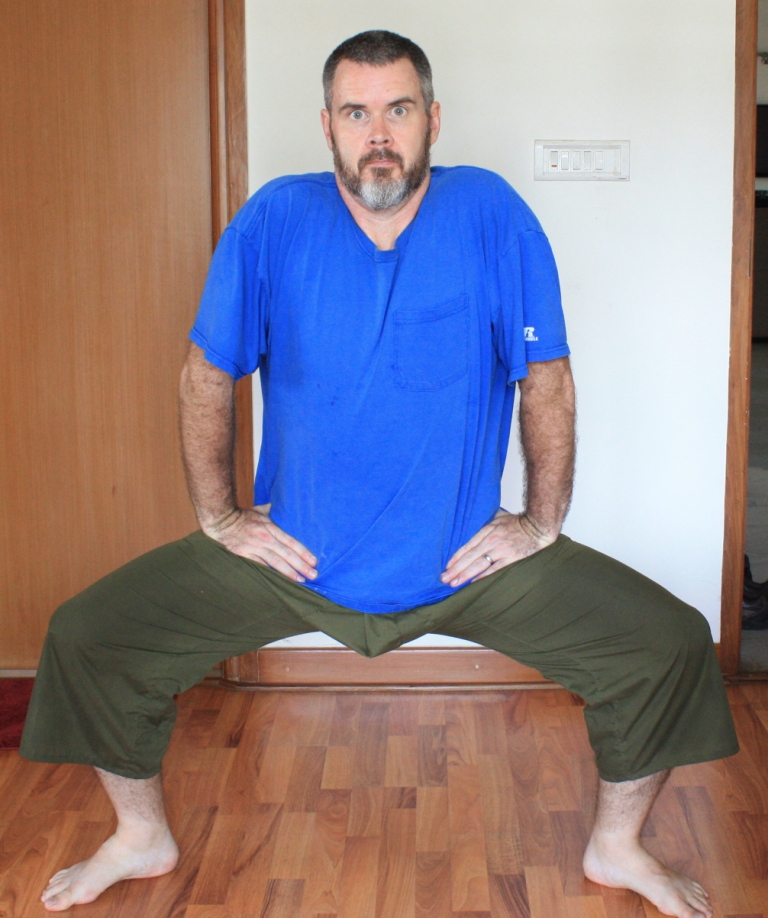
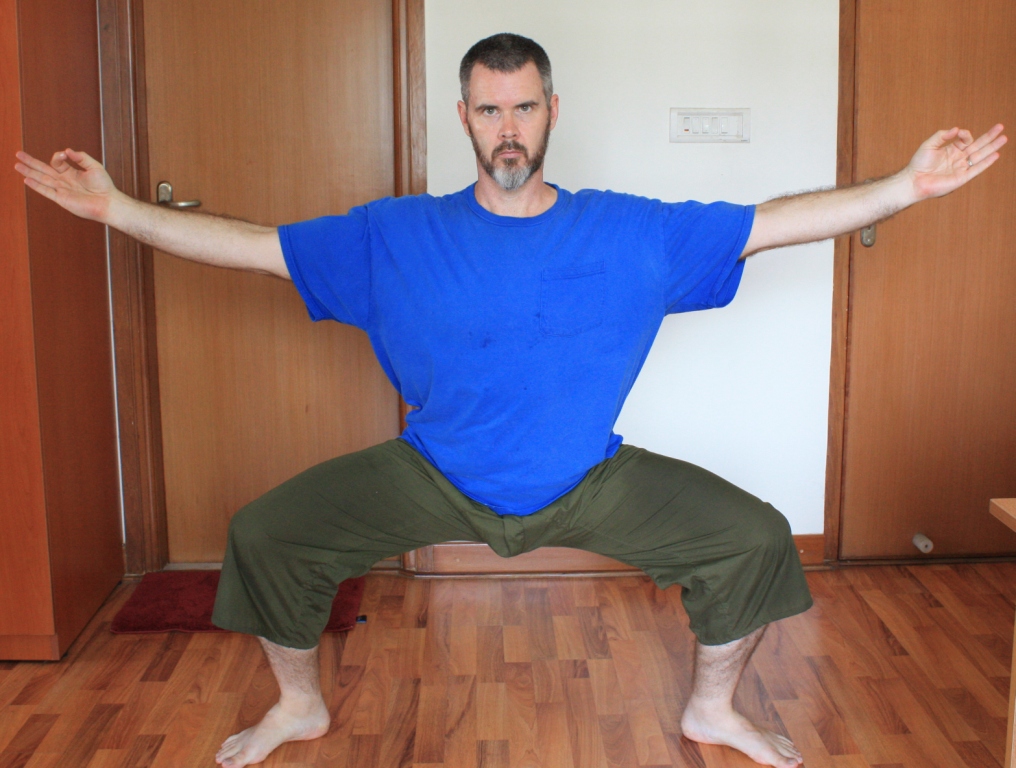
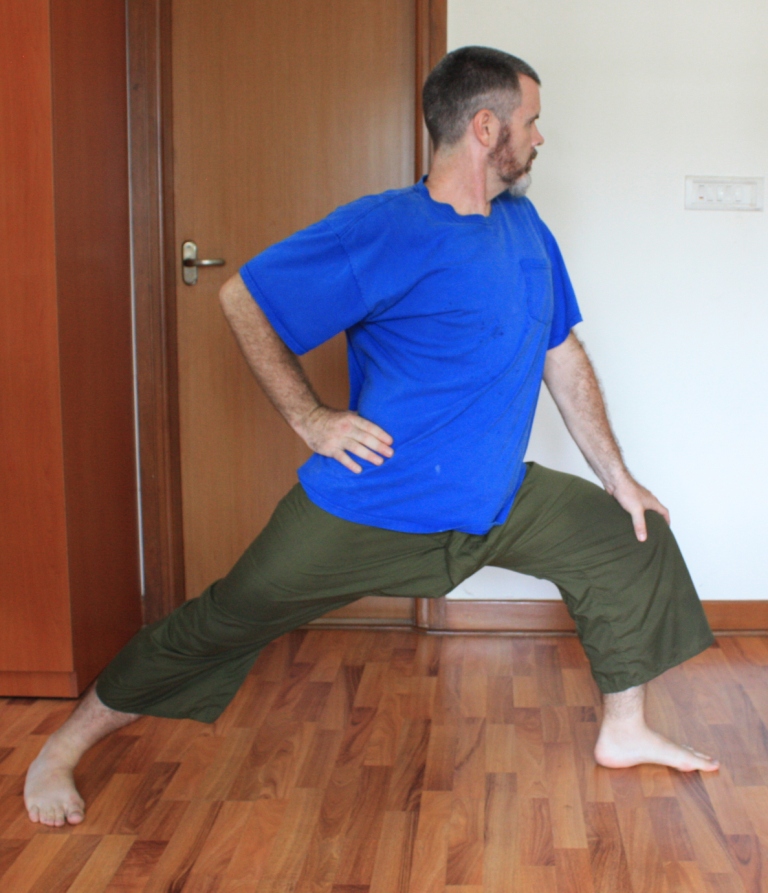
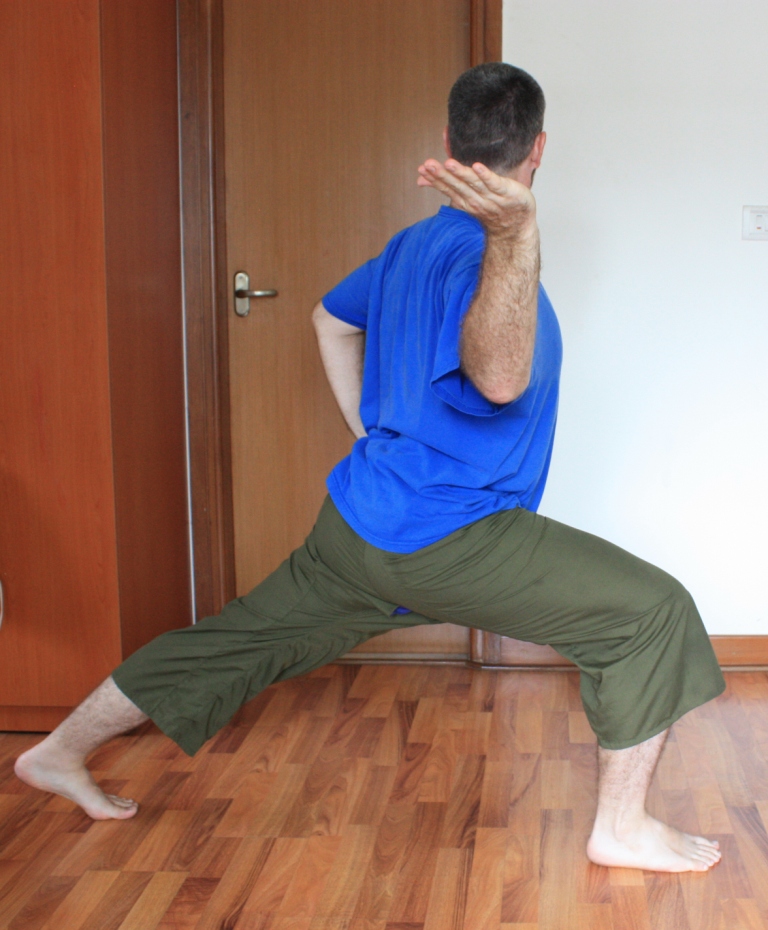
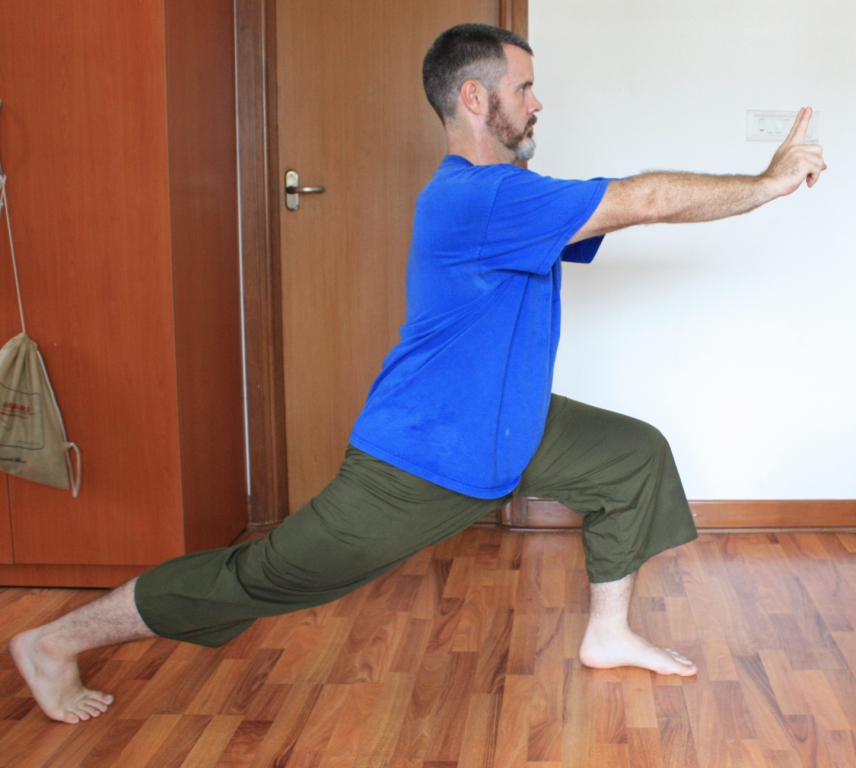
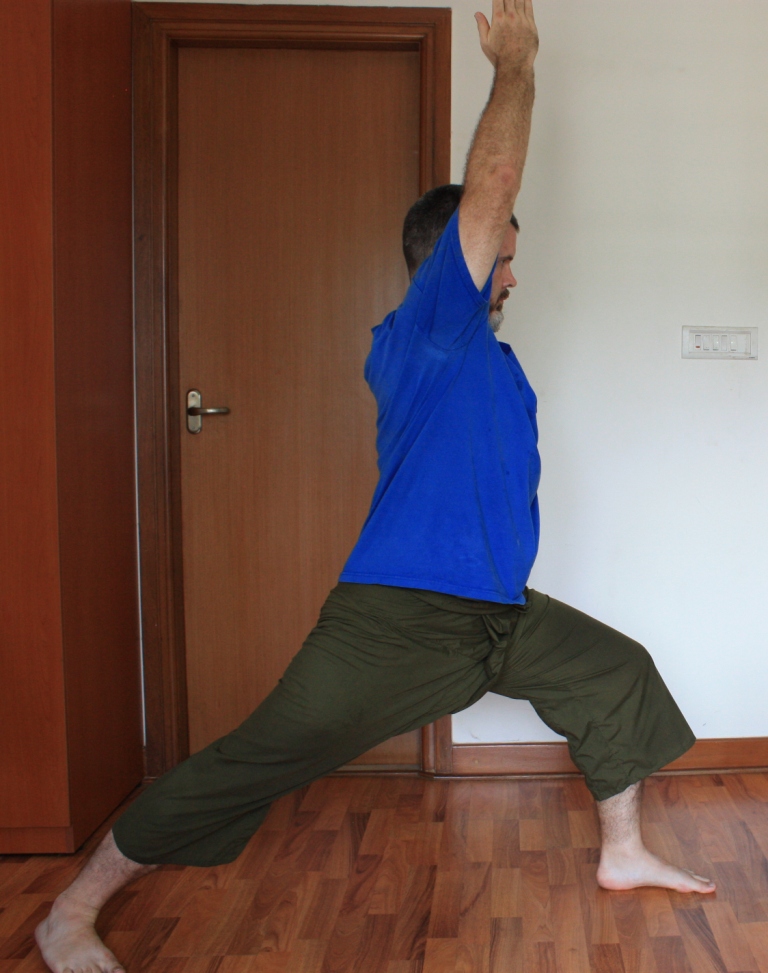
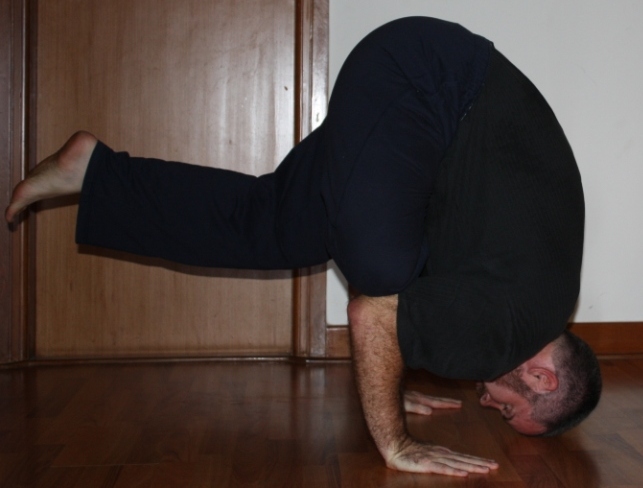
 2.) Demonstrate in a smart (and not narcissistic) manner. Of course, demonstration does have its role when you have individuals who’ve not seen the movement or posture before–and if it’s a difficult posture to explain or likely to result in injury if instructions are misinterpreted. Such demonstration is best done with students watching and before they begin to move into the posture. Having only a small, closed group, whose capabilities are known to me, I’ve learned that it’s better for me to demonstrate in a manner that the participants are capable of doing while maintaining safe and stable alignment.
Of course, if one has a class of students with wide-ranging capabilities–or unknown capabilities–one will want to demonstrate as close to the idealized form as one can, so that the more proficient students can work toward that ideal. However, having struggled to master difficult asana (postures), there can be an incentive to show off one’s capability for the sake of… well showing off. If one demonstrates an idealized form that one’s students are incapable of performing, there’s a risk they’ll do something dangerous in an attempt to emulate that form.
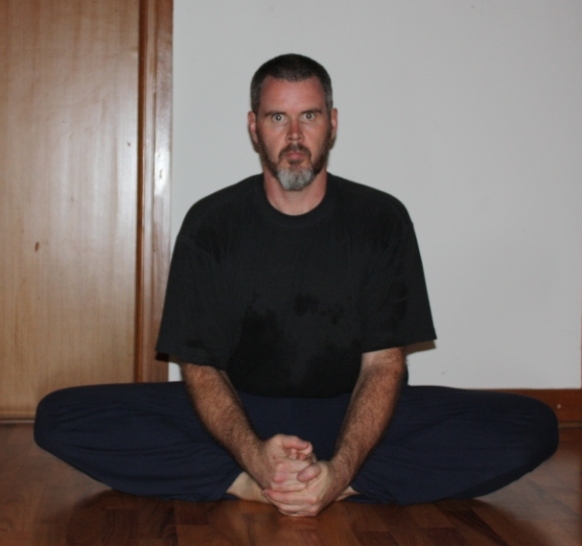
3.) Lazy yogis aren’t without virtue. The primary purpose of practicing asana could be said to build a body with which minimal effort is required to maintain a given posture–be it a meditative seated pose or simply standing. Most people have subtle misalignments in their bodies of which they aren’t even aware. They may have chronic or occasional pain that they aren’t remotely aware is tied to being out of alignment.These misalignments end up costing a person a lot of extra effort and pain over the course of a lifetime. Being conscientious about one’s posture is the first step to fixing these problems, and if one spends all one’s time driven to master the next piece of mega-contortionism or acrobatics without learning to be a little lazy, one is missing the point of yoga.
4.) Props aren’t just for old ladies with bad hips. When I started yoga teacher training, I’d never used a block, strap, or bolster, and chairs only for sitting. Since then, I’ve learned a lot from the asana with props training both in the teacher training course, and by attending and observing such courses of my own volition. I think there’s a widespread notion that props are for those who lack the flexibility to do proper yoga and that such classes are exclusively for those people trying to ease into yoga. What one might not realize is that one ends up holding postures much longer in such a class, that one is usually discouraged from using the prop any more than one has to, and that props don’t always make asana easier.
I’m pretty flexible in most of my musculature, but I found that there were areas in which my alignment could definitely be improved by using a prop now and again.

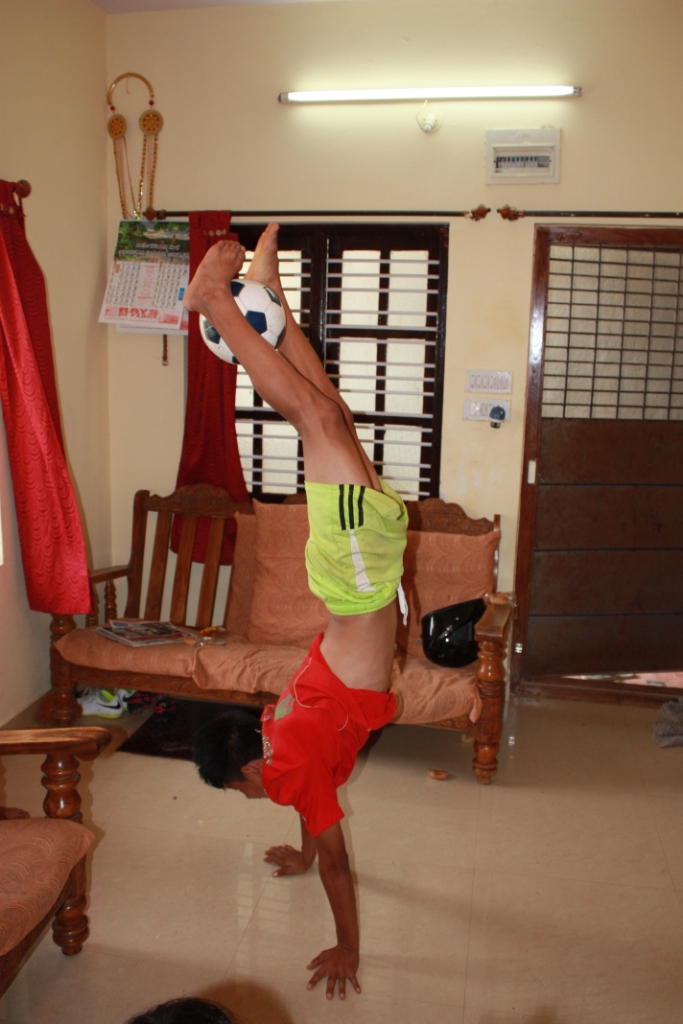
Obviously, this isn’t the aforementioned 4 year old boy, but rather one of the young men who could do a handstand while playing soccer.
5.) Kids are born yogis. Among the course requirements beyond the studio/classroom was charitable teaching for a nonprofit organization. Our group was fortunate to find an orphanage that was interested in having us. However, we were faced with a challenge. Kids weren’t exactly a demographic we were trained to teach–and yoga isn’t an activity one associates with childhood exuberance. We knew we’d have to make it exciting and challenging to keep their interest, but we also didn’t know what their capabilities would be. Furthermore, we had a wide age range with which to contend. Some of the kids went to elementary school and some to college, as well as those grades in between.
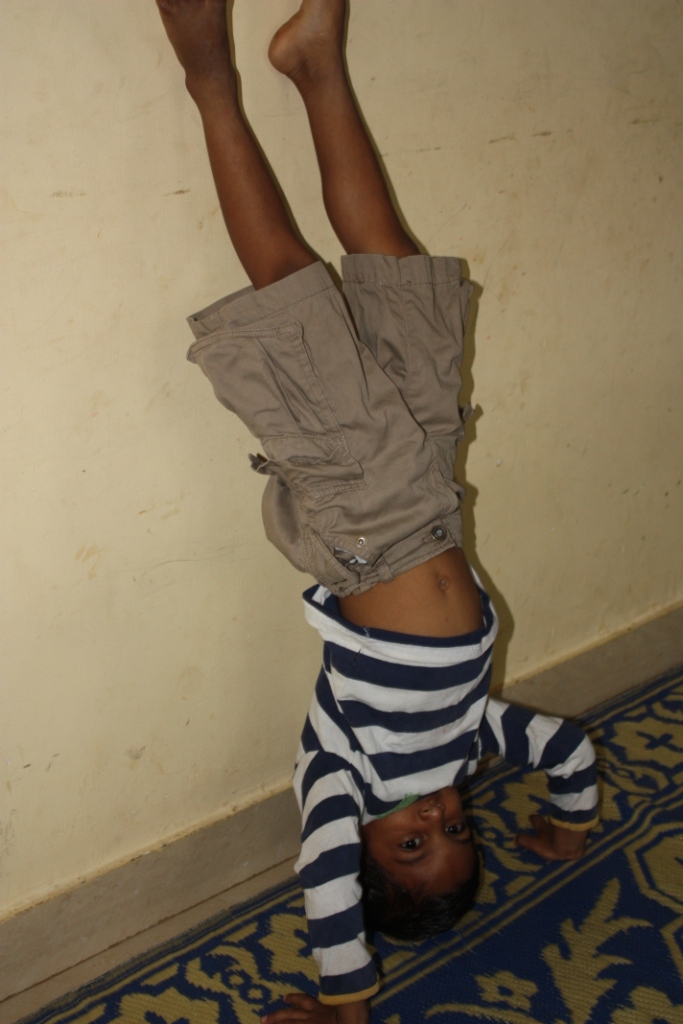
It turned out that even the youngest–a boy of four–was ready to take on all that we could throw at him. Before we even began teaching he eagerly showed us his headstand.
6.) Sadhana is most productive when it’s least cerebral. Sadhana is one’s personal practice–away from the studio. We have to report our experience of 50 hours of Sadhana as part of the “beyond the studio” requirement. It took me a while to get into the grove of this. The act of having to think about and record one’s personal practice can definitely be a buzz-kill. There’s a risk of it turning something fun into a bureaucratic chore. Ultimately, I gave up on trying to capture everything. I get the most out of sadhana when I experiment and play with the flow. Sometimes things flow; sometimes they don’t, but there’s a certain degree of playfulness to it. I don’t like either writing down a sequence and practicing it, or writing it down as it comes to me on the mat.
7.) Avoid teacher – student pitfalls. An instructor in any fitness domain is in a challenging position. One needs to push the student to be the best that they can be. Students expect as much. That’s why they come to gyms and studios rather than just working out at home. Being pushy is part of the instructor’s value added. At the same time, one doesn’t want to push a participant into an injury or even let them push themselves into an injury–if you can avoid it.
Here’s a common interaction. A new student comes to class. Testing the water, the teacher tells them to do a task or posture in a more intense way (i.e. lower, faster, deeper, longer, etc.) One of two things can happen. The student either appears to comply or they don’t. If they don’t comply, it could be because they really think they did comply (new students may have horrible body awareness and lack proprioception [it’s a word; look it up.]) It could be because they are scared to try (new students may have very poor understanding of what their bodies are capable of.) Or, it could be because they really can’t (i.e. they may have a skeletal constraint or a past injury, etc.)
If the student doesn’t appear to try, there’s a risk that the teacher will just forget about trying to challenge that person. Call this pitfall #1–giving up. That person may then come to feel ignored or molly-coddled if they do begin to gain bodily awareness and or confidence that they aren’t going to tear in half like wet newspaper. That is, if they haven’t quit by then.
If the student does give a good-faith effort, the teacher is pleased and will continue to try to keep pushing them harder. This works out great for all concerned until eventually the student does begin to run up against their limits. When they do, there’s the risk that the teacher will begin to think they’ve become lazy (Pitfall #2–mistaking the wall for laziness, which reverts to pitfall #1.) If one has a student that doesn’t seemed challenged at first, one can almost believe their potential is limitless, but they will hit walls eventually. It’ll take time for them to get over the walls they can, and some they never will.
 8.) People do yoga for many different reasons. Most yoga practitioners are at least vaguely aware why the true believers practice yoga. For the believers, it’s all a road to Samadhi, or liberation from suffering. Of course, there are others who just want to be in better shape and to de-stress, and don’t really believe in Samadhi. Most yogis and yoginis seem to do a good job of tolerating people with other goals, but they don’t necessarily understand each other and their optimal path to where they are going can be quite different.
There are some pretty doctrinaire approaches to yoga out there. Is Power yoga yoga? It has “yoga” right there in the name, but it’s a source of controversy–even though it’s probably among the more yoga-esque of the Western Yoga offshoots. If you’re Bikram Choudhary no one is doing proper yoga unless it’s his patented 26 asana sequence in a room with precise heat and humidity specifications. Some people think you should only practice one sequence until you’ve mastered it, and others believe variety is the spice of life.
I guess the point is to be honest about one’s views on yoga, so that students can make up their own minds about whether one’s objectives align with their own.
9.) Beware of blaming the usual suspects. I have a problem doing certain arm balances. The assumption might be that either a.) I lack the upper body strength, or b.) that I’m afraid of losing balance and falling on my face. Those are the usual problems. I probably wouldn’t be diagnosed with the former based on appearance and performance of other asana (e.g. planks and whatnot), but I might be of the latter. However, countless break-falls done over many years has left me pretty much unafraid of falling from six inches off the floor. The actual culprit? I have one wrist with a poor range of motion (90-degrees of extension on a good day.)
10.) Water in the nose is not nearly as horrible as it would seem. Most people know that there are breathing exercises (pranayama) in Hatha Yoga in addition to the asana. However, some may be unaware that there are a series of cleansing practices (shatkarma or kriya) associated with Hatha Yoga as well. We had to practice some of these, but the only unnerving one we had to learn was jala neti, in which water is poured in one nostril in such a way as to make it come out the other nostril. I imagined it being like the horrible experience of getting a nose-full of sea water while swimming in the ocean. However, I found it entirely harmless. There was no burning, stinging, or feeling waterlogged in the nasal cavity. I will definitely do it again, which is more than can be said for some of the shatkarma practices.
Share on Facebook, Twitter, Email, etc.