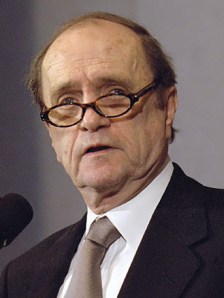
Attribution: Jim Wallace (Smithsonian Institution)
Bob, Bob! Why do you want to kill me? Bob.
In my dream I remember running, running away from Bob Newhart, a revolver gripped tightly in the comedic actor’s hand. I don’t know whether it was supposed to be Bob Newhart the person, or if my subconscious thought that Bob Newhart was the best actor to convey life’s dark comedy. I knew why Newhart was chasing me. I worked in a machine shop and had a less than reliable partner who had apparently made a wild promise that our little shop could never deliver upon. It must have been important to Newhart. So I understood why Bob Newhart was mad and I accepted it. If it was me, I might be homicidal too—because I just rage that way sometimes. Still, I didn’t want to die because I was associated with a dodgy rogue. I guess that’s what the dream was about.
There was a kid with me–not my kid–at least I don’t think the dream ran that far afield. I’m willing to accept that my subconscious would see me as a machinist—a career unlike any in my bookish résumé. Furthermore, I can fathom that my subconscious imagining Bob Newhart wanting to kill me with a snub-nosed revolver—even if for something that was not my fault. However, I can’t imagine my subconscious thinking I would have a kid.
Anyway, Newhart saw us as he was maniacally driving a car toward the machine shop. We, the kid and I, were walking down the sidewalk away from the shop, having just closed up for a glorious summer afternoon in the way of slackers everywhere. I don’t know where my shady partner was, the unreliable always escape unscathed—maybe that’s what the dream was about.
I saw the murderous gleam in Newhart’s eye, and turned to run back to the shop. I grabbed the kid by the arm and tugged him in that direction—maybe I do have some paternal instinct. My plan was to get into the shop, lock the door, and call the unreliable person to come and get shot by an enraged Bob Newhart. However, in the panic of thinking that Newhart, who had done a bootlegger-180 with his car and was now driving straight for us, was going to crush us under the car, I forgot to lock the door behind us. (Or maybe there are no working locks in dreamland.) Locking the door was, after all, the one good part of the plan. (I don’t know what I had been thinking about calling the unreliable person, unreliable people never show up when you call them–they show up at 2:30am on a Sunday morning wanting to borrow $20 and a condom.)
Anyway, Newhart parked legally, but when he got out I saw the snub-nosed revolver in his hand, framed perfectly in the window in a way that can only happen in dreams. I ushered the kid around a partition wall that separated the small storefront from the shop beyond.
Newhart was walking like one of those geriatric mall-walkers, or like a man who’d drunk a 32 oz. cola and driven six hours only to get to a rest-stop restroom that was probably locked. When Newhart threw open the door, the little bell tinkled cheerfully—the bell clearly didn’t know what was about to go down. As I rounded the partition wall, pushing the kid into the darkened shop, I picked up a steel pipe. Despite the perennial advice that one should never bring a steel pipe to a gunfight, I felt a cool calm wash over me. (Maybe it was that I knew gun-toting men Newhart’s age usually shot blanks in their dreams.) Anyway, I hid in wait.
Then I woke up. I’ll never know whether Newhart shot me or whether I bludgeoned one of America’s beloved comedic elder statesmen to death with a steel pipe. Maybe both would have happened. Maybe neither. I know if I go back to sleep, the dream won’t resume. They never do. I’ll never know. Maybe I don’t want to know. Maybe that’s the point of the dream.
Share on Facebook, Twitter, Email, etc.

 How to Fight Tough by Jack Dempsey
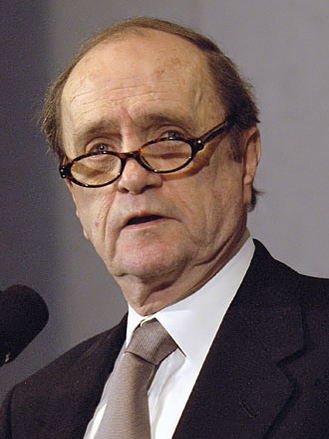

 Tiger Riding for Beginners