BOOKS: “Batman: Killing Time” by Tom King

Batman: Killing TimeBatman: Killing Time by Tom King
My rating: 5 of 5 stars

Amazon.in Page

Killing Time is a MacGuffin driven Batman story, though less Batman-centric than most of his eponymous titles. For any readers who might be unfamiliar with the term “MacGuffin,” it’s an object that motivates the characters to heroic and villainous extremes of behavior for reasons about which the reader is largely (or completely) left in the dark. Over the course of the story, the reader is teased information about the MacGuffin, but never with enough certainty or detail that it ever feels like it’s not a MacGuffin. On the other hand, it does feel as though there is self-awareness of the MacGuffin-esque nature of the story, and there are some strengths that I think more than offset what might otherwise be considered the laziest of storytelling.

What are these strengths of which I write? First of all, there is a disjointed, non-linear story presentation that facilitates revelations and maintenance of tension, but it is done artfully enough that one isn’t likely to lose the thread. Second, there are some intriguing characters (and some fascinating character development) in the story. Much of the story revolves around an uneasy alliance between Catwoman and the Riddler, and that is explored in detail. There is also a character known only as “the Help” who is both brought to life in a compelling way, but who also generates tension because he’s every bit a match for Batman in a slug-fest. Thirdly, while the book of epic proportions in some sense, with street criminal melees and the like, it’s quite street-level throughout, not veering into magic or god-tier superpowers. Finally, it is a complete and satisfying story arc. [My biggest pet peeve with comic volumes is that they often don’t feel concluded.]

I enjoyed reading this comic book. It’s fast-paced and isn’t afraid to give supporting characters some space to steal the show. If you’re a Batman fan, it’s definitely worth reading.

View all my reviews

BOOKS: “DCeased” by Tom Taylor

DCeasedDCeased by Tom Taylor
My rating: 5 of 5 stars

Amazon.in Page

It’s the zombie apocalypse in a world brimming with superheroes. Sort of. As is mentioned a couple of times throughout the story, it’s not really zombies as we know them, and there are a few crucial distinctions. But, basically, zombie apocalypse. What matters is that it is a threat that grows to inexorable proportions because it infects efficiently and spreads rapidly, and no one is immune. The threat is increasingly everyone and everywhere. The source is a viral bit of “programming” called the Anti-Life Equation.

This is about as dark as superhero comics get. The heroes that we are used to saving the day experience only victories of a short-lived and pyrrhic nature, while experiencing defeat after defeat. There are no ex machina saviors, at least not that amount to more than a blip in the scheme of things.

I found this story, depressing as it may be, to be intensely suspenseful. Full Disclosure: I also liked the Avengers “Infinity War” movie much more than “Endgame.” It’s not that I necessarily like seeing villains win, but that a story feels more compelling when there is strong and successful opposition and when costs accrue. And credible opposition and true stakes are often missing from superhero comic book stories.

I’d recommend this book for superhero comic book readers.

View all my reviews

BOOKS: “Saga of the Swamp Thing: Book One” by Alan Moore

Saga of the Swamp Thing, Book OneSaga of the Swamp Thing, Book One by Alan Moore
My rating: 5 of 5 stars

Amazon.in Page

This volume presents two separate and complete story arcs. The first features the Floronic Man (Jason Woodrue) as the main villain, and it deals heavily in the origins of Swamp Thing and the creature’s struggles to come to grips with who it is and why it experiences the world as it does. The second story makes a shift to a more supernatural threat and shows a Swamp Thing who is more comfortable in its… roots? twigs? foliage? — whatever Swamp Thing has in lieu of skin.

Alan Moore does his usual superb job of creating a clever and satisfying set of tales. Swamp Thing was groundbreaking in its cross-genre mélange of horror, supernatural, eco-fiction, and sci-fi. There is also a certain smartness about the comic. One is led to consider questions of consciousness and humanity’s role in nature through these stories. And solutions are rarely achieved by punching the villain into a stupor. This won’t be for everyone. In some ways, the comic elevates the wise old mentor to the role of hero.

I enjoyed reading this book and would highly recommend it for readers of comic books and graphic novels.

View all my reviews

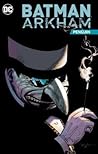
BOOKS: Batman Arkham: Penguin by Bill Finger, et. al.

Batman Arkham: PenguinBatman Arkham: Penguin by Bill Finger
My rating: 5 of 5 stars

Amazon.in Page

Drawing from 70 years of stories, this collection of issues involving the Penguin as Batman’s villain du jour really shows the shifting landscape of comic books over the decades. In the early issues, written with a young audience in mind, the Penguin is a skillful thief, but also kind of goofy, camp, and with not really much menace. By the last issue included, we see the hard edge of psychopathy and the gross deformity of this classic villain.

I was pleasantly surprised with this collection. Often these cobbled together comic collections lack coherent storytelling and feel as cheap and lazy as a sitcom clip show, but this volume shows several satisfying story arcs, and — while there is no overarching arc — it makes for a satisfying read.

I enjoyed reading this collection and seeing, through it, the evolution of comic books.

View all my reviews

BOOKS: The Batman Who Laughs by Scott Snyder

The Batman Who LaughsThe Batman Who Laughs by Scott Snyder
My rating: 5 of 5 stars

Amazon.in Page

This volume plays on the spookiness of buffoonery that has made the Joker not only one the most well-known and effective villains of Batman’s rogues’ gallery but in all of comic books. However, while the Joker does play a role in this book, he’s not the villain. Instead, the book employs the popular comic book scenario of having the villain be a version of the hero, a version without moral compunctions or constraints. In this case, the central villain is a demented and mutated version of Batman with Jokeresque qualities, assisted by a Batman who is a bit more malevolent and vengeful, one who goes by the moniker Grim Knight.

How are there multiple versions of Batman? The multiverse, of course. That makes this a sci-fi heavy Batman story. If you like your Batman of the Matt Reeves / Robert Pattinson variety — i.e. in a plausible world, with fully human enemies, and with no freaky supernatural happenings, then this one may not be for you. That said, I don’t think the sci-fi elements detracted from the story, and they did allow for some compelling story elements. Snyder, wisely, avoids a problem that can readily plague sci-fi intense Batman stories, which is reference to (or cameos of) the god-tier DC heroes. (An occurrence that always begs the question, why wouldn’t Superman use his god-like powers to fix this debacle before heading to lunch.)

I enjoyed this story. I especially enjoyed that it wrapped up the narrative arc in a tidy package. It is often the case that comic book volumes end with a speedbump on the way to the next volume. This story felt like the central issue was resolved, while still leaving potential for future stories. I should point out that, with flashbacks and multiple Batmen, it does require one’s full attention while reading, lest one get lost between backstory and the present.

I’d highly recommend this volume for comic book readers.

View all my reviews

BOOK REVIEW: The Sandman, Vol. 1: Preludes and Nocturnes by Neil Gaiman

The Sandman Vol. 1: Preludes & NocturnesThe Sandman Vol. 1: Preludes & Nocturnes by Neil Gaiman
My rating: 5 of 5 stars

Amazon.in Page

In this, the first, eight-issue volume of Sandman, we’re introduced to Morpheus / Dream – the king of dreams & nightmares and one of the seven Endless – when he’s captured by an amateur occultist who was trying to kidnap Death [the (not-so Grim) Reaper and also Dream’s sister.] The story told in “Preludes and Nocturnes” is one of Dream’s captivity, escape, and the subsequent missions to reacquire three magic artifacts that were stolen from him when he was captured (i.e. his bag of sand, helmet, and ruby-like jewel.) That last sentence makes it sound like a far-out fantasy, but it’s really a relatable and human set of stories.

This imaginative and compelling opening volume is at its best with “24 Hours” (as well as “Passengers,” the issue that precedes “24 Hours” and sets up its story.) In “24 Hours,” escaped villain, John Dee, torments the occupants of a smalltown diner by manipulating their reality (a capability he achieved when he came into possession of Dream’s “ruby.”) It’s a story that’s both horrifying and thought-provoking as Dee forces the diners to shed the masks of polite society and get to know the uncensored versions of each other.

Another favorite is the concluding issue, “The Sound of Her Wings,” which is really more of an epilogue, given the story has been brought to a successful and satisfying conclusion with the penultimate issue. “The Sound of Her Wings” introduces us to Death (the kinder, more charismatic, and more articulate Gaiman-version of the Grim Reaper) and shows us interaction between Dream and Death as Dream learns a crucial lesson from his sister.

“Sandman” is an excellent series, and the volume where it all began is no exception. I’d highly recommend it for readers in general.


View all my reviews

BOOK REVIEW: Batman: The Complete Hush by Jeph Loeb

Batman: The Complete HushBatman: The Complete Hush by Jeph Loeb
My rating: 5 of 5 stars

Amazon.in Page

Over the course of this twelve-chapter story, Batman is pitted against much of his rogues’ gallery, but they’re puppets to a shadowy unknown, a secret villain: Hush. Batman has to do his best detective work, and still faces twist after turn in uncovering this enemy that knows him all too well, who knows all his pressure points. Batman has to battle Killer Croc, Poison Ivy, Harley Quinn, Joker, Scarecrow, and Clayface – and even [due to mind control] Superman and Catwoman, but nothing is as it seems. One might expect that a book this packed with enemies would face problems of pacing and poignancy, but the way the story is crafted (and the villains are effectively subordinated) it’s quite the opposite.

This was one of the smartest comics I’ve read. It’s a mystery that offers foreshadowing, but also false flags. There’s a sub-plot love story between Batman and Catwoman in which the relationship matures, but the question of whether one can ever really trust someone in that world remains ever in the background.

I thought this was one of the best comics I’ve read, and if you’re a Batman fan, it’s definitely a must-read.


View all my reviews

BOOK REVIEW: Swamp Thing, Vol. 1 by Brian K. Vaughan

Swamp Thing by Brian K. Vaughan, Vol. 1Swamp Thing by Brian K. Vaughan, Vol. 1 by Brian K. Vaughan
My rating: 5 of 5 stars

Amazon.in Page

The first thing to be aware of is that the protagonist of this book is Tefé Holland, daughter of Swamp Thing, and the titular character is only in the book for a few frames of flashback. This has the advantage of making for a confused and tormented lead character, a sort of coming-of-age element. Tefé struggles with who she is, and this leads to some wonky behavior. At times, she doesn’t do what would be expected of a superhero, but at other times she does, and this makes her character feel constantly off-kilter. One doesn’t straight away develop an affinity for the character, or – if one does – it comes and goes as she responds to varied situations in various ways. However, this seems to be intentional, a reflection of the fact that she doesn’t know if she’s the protector of the plant world, of humanity, of both, or of neither. She’s at once a pretty and sweet young woman and a terrifying god-like Elemental. She has a couple of “sidekick” characters, Barnabas and Pilate that help lend humanity and provide contrast (given the hardcore nature of these two men, they tend to make Tefé seem even more extreme as they are the ones to talk her down.)

While the Swamp Thing and its extended character-verse is heavy with environmental message, the book is not written to bludgeon the reader with rebukes or preach to the choir. It keeps the lessons subtle enough that I didn’t feel the book swerving into preachy mode, and it remains entertaining throughout.

I enjoyed this volume. It can feel a little disjointed and might read more smoothly for someone who’d read previous Swamp Thing series, but with attentive reading, one can certainly follow the action. (Another potential advantage of it focusing on the daughter character.) [FYI- This is the third of seven series.]

View all my reviews

BOOK REVIEW: The Books of Magic by Neil Gaiman

The Books of MagicThe Books of Magic by Neil Gaiman
My rating: 5 of 5 stars

Amazon.in Page

Timothy Hunter is a young man faced with a big decision: take up magic and become the powerful sorcerer that he’s prophesied to become or live a magicless existence among muggles. The story’s structure is reminiscent of “A Christmas Carol,” except that instead of three ghosts showing the protagonist what a jerk he is, it’s the four members of the Trenchcoat Brigade (John Constantine, Mister E, Doctor Occult, and the Phantom Stranger) introducing Hunter to the good, the bad, and the ugly of the magical world. There’s much more adventure than in Dickens’s story, owing to the fact that there’re many who don’t want a powerful new magician coming on the scene, and so Hunter is being hunted.

This is a quick read and a straightforward story. It’s a little unusual in that Timothy, the protagonist, so often doesn’t have much agency, but in many ways it’s as much a Trenchcoat Brigade story as a Timothy Hunter story. Also, it’s hard to avoid with a character who is just a regular boy among powerful practitioners of magic.

There’s a lot of connection to the Sandman universe as well as references to the broader DC universe of characters.

I found it to be an intriguing story, and I thought the art captured the trippiness required of this kind of story. If you like Gaiman’s DC / Vertigo work, you’ll enjoy this book.


View all my reviews

BOOK REVIEW: Lucifer: Book One by Mike Carey

Lucifer, Book One (Lucifer, #1)Lucifer, Book One by Mike Carey
My rating: 5 of 5 stars

Amazon.in Page

This sixteen-issue collection consists of three issues of “The Sandman Presents: Lucifer” in addition to the first thirteen issues of “Lucifer.” As the former title suggests, this is based on a character from the vast cast of “The Sandman” comics, and this volume does occasionally touch upon the broader Sandman universe, though it largely sticks to the Abrahamic mythology bits.

Each of the five story arcs in the volume standalone, but the last three (i.e. “Born with the Dead,” [1 issue,] “The House of Windowless Rooms,” [4 issues,] and “Children and Monsters,” [5 issues]) form an epic arc with a young girl Elaine and a portal to an alternate dimension at its heart. This larger arc impressively works to biblical proportions, involving grandiose stakes. I will say the first arc [from “The Sandman Presents…] was harder to follow the motives driving the story, but I can imagine it would be much easier for those who’d followed The Sandman comics from the outset. [Also, it’s only fair to have some challenges in finding a direction when dealing with such a massive cast and sprawling over-universe.]


If you’re wondering how this Lucifer compares to the television version, this one is less neurotic (though flawed in many of the same ways) and is more serious and a tad more wrathful. The TV version is lighthearted and comedic to a larger extent, while the comic book version bumps up against horror a bit more, but that’s not to say the comics have no comedy or the television version lacks all intensity. From a broader perspective, the Lucifer comic also not only more frequently touches on the Sandman universe, but also on mythologies outside that of Abrahamic religion – e.g. Lucifer ventures into the realm of Japan’s Izanami / Izanagi in “The House of Windowless Rooms.” It’s always nice to see a show can diverge from the source material and still be good, and I think that’s very much the case here.


View all my reviews