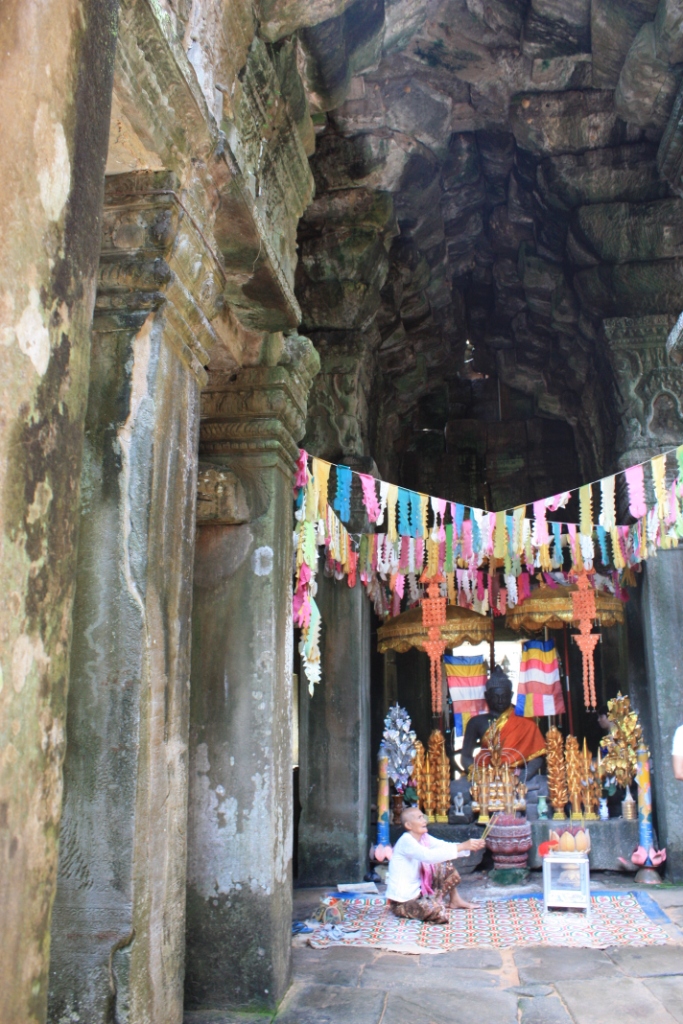
Prayer flags in the ruins
Traveling through the old earth-tone and mossy green temple building, one comes upon a festival of color.

Prayer flags in the ruins
Traveling through the old earth-tone and mossy green temple building, one comes upon a festival of color.
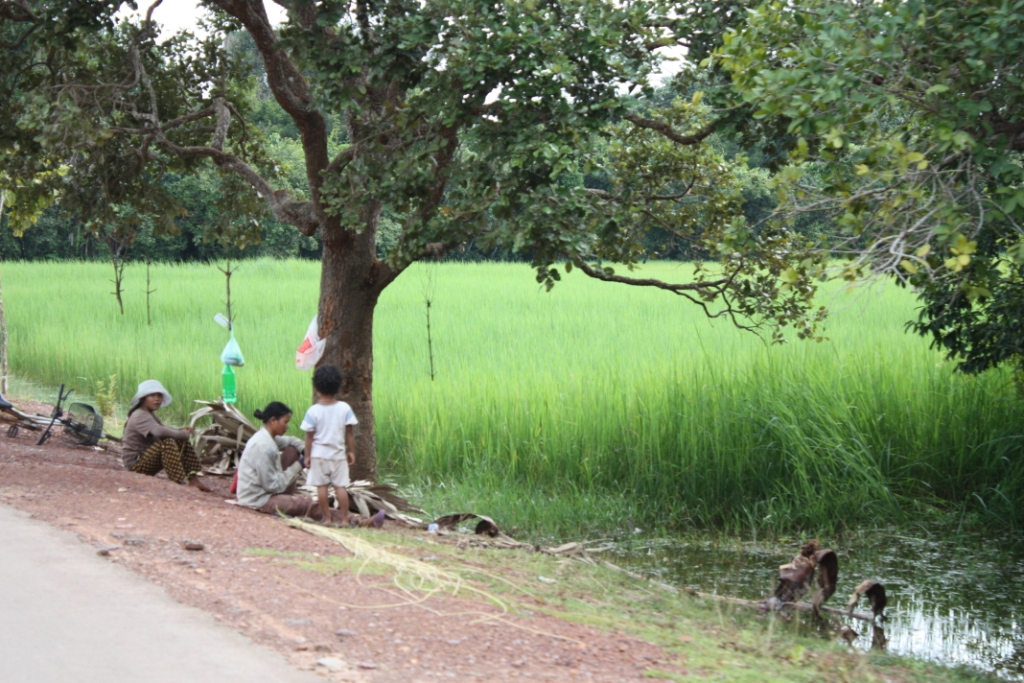
This is Cambodia
Traveling cross-country through Cambodia at the end of the wet season, the road seems to be just the Mac-daddy paddy dike, and the rest of the country is a flooded rice paddy. What once was jungle is now solitary trees, often palms, jutting out of a verdant sea. Farmers fish waist deep, casting nets, as emaciated oxen cool their bellies. Everyone lives and dies by water.

In the courtyard of the National Museum of Cambodia
The National Museum of Cambodia is picturesque. The collection is small and simple, but impressive in quality. For those of us who run out of “ooh” and “ahh” stamina after a few hundred artifacts, it’s just the right size. It’s also not stuffy in the usual way of museums– large barred windows are unshuttered while the museum is open. (This is probably less than ideal from both the perspective of security and artifact preservation, but it gives the place a certain ambiance, and maybe helped the exodus of the bats that took up residence during the museum’s dormant period)
It’s great to see what they’ve done with the place considering the state of disrepair it was said to be in after the Khmer Rouge period. With respect to my comment about it not being a large collection, it’s a wonder that any collection exists at all after the wave of lootings from the French through Vietnamese soldiers that took place in the country.
Be forewarned, once one is inside, one will be confronted by Buddhists from a monument preservation society seeking donations at about half a dozen different Buddhas around the museum. If you aren’t a Buddhist, this can be a bit of an annoyance. If you are a Buddhist, you may find their approach disconcertingly unBuddhist. They will try to press incense into one’s palm in order to corner one into paying homage to the Buddha so they can make some dough for their cause. However, they don’t follow one around once refused (as similar individuals have been known to do at Angkor.) It may be a great cause, but they’d probably do better if they restricted it to one per museum and not one per gallery, and just let people drop cash rather than insisting on the idol worship first. I’m nondenominationally happy-go-lucky myself, but I can imagine this being troublesome for some visitors. At any rate, it’s symptomatic of the country’s poverty and their inability to support their deity at the level to which he has apparently become accustomed.

Central Market
Phnom Penh’s Central Market is an art deco building that dates to the 1930’s. This “X”-shaped building has a circular, domed core. On the inside of the building one can find clothes, jewelry, sunglasses, and– sadly– ivory. Most of what you will find there is knock-offs, as should be apparent from the prices. The “V”-shaped spaces between the wings of the building are chock full of more mundane goods such as foodstuffs, hardware, and tourist T-shirts. In the market one can get anything from wriggling seafood to rice to produce (I’d recommend those with Western constitutions –cast-iron or not– stay away from the meat.) Refrigeration is not so common in Cambodia, a few places get large blocks of ice to put their meat on, but many just lay it out on cardboard until it sells.
 First They Killed My Father: A Daughter of Cambodia Remembers by Loung Ung
My rating: 5 of 5 stars
Warning: This is about as depressing a book as one can imagine reading. It is told from the author’s perspective as a child during the Khmer Rouge period of Cambodia’s history. Her father had been in the Lon Nol government, and this made life particularly perilous for their family. It follows the family from the day they are forced to leave their comfortable upper-middle-class existence in Phnom Penh through her move to the US. In between, you are shown what its like to be starving (literally), to be a child separated from one’s family, and to see a long string of man’s inhumanity to man.
While it is a sad story, it is well-written and candid.
I was often reminded about what Viktor Frankl wrote (much more eloquently than my paraphrase), that the sad fact that survivors have to live with is the knowledge that the best did not survive. The author tells of the actions that she was not proud of that she was driven to by starvation and life as an orphan.
I highly recommend this book, but be prepared to be sad.
This is the fourth and final installment of pictures from my October 2012 visit to Angkor in Cambodia.
These are all from the Bayon, a large temple in Angkor Thom. Unlike many of the sites that were originally Hindu and were later modified to meet the needs of Buddhist successors, this was built as a Mahayana temple — though later Hindu and Theravada Buddhist leaders made changes.
The Bayon is sometimes called the temple of a thousand faces. The reason will be clear.
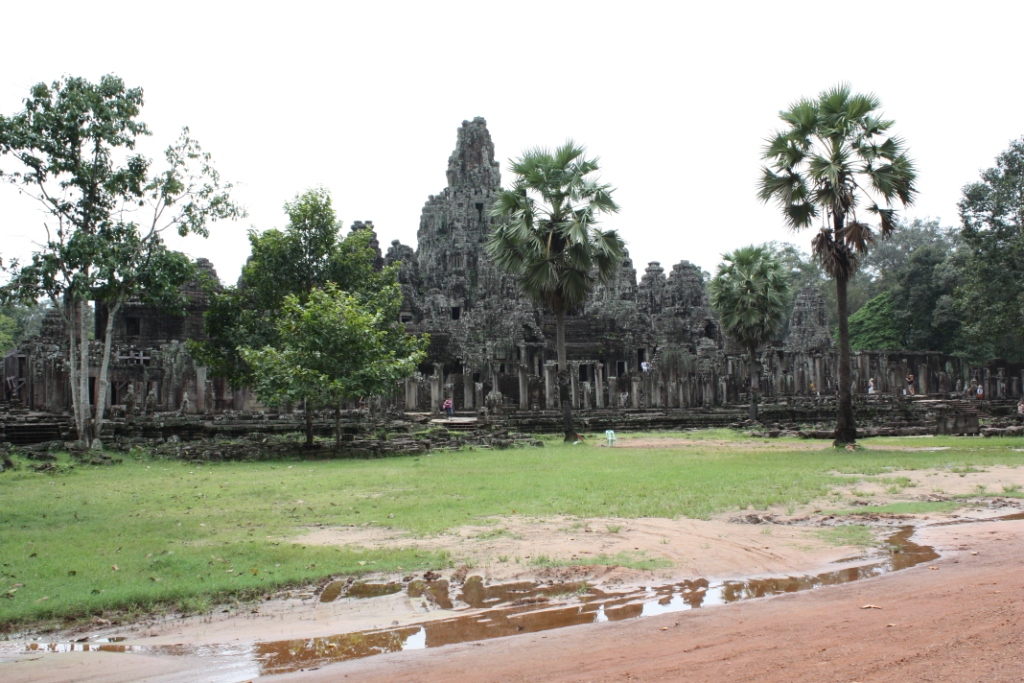
The site is circled by the road through Angkor Thom.
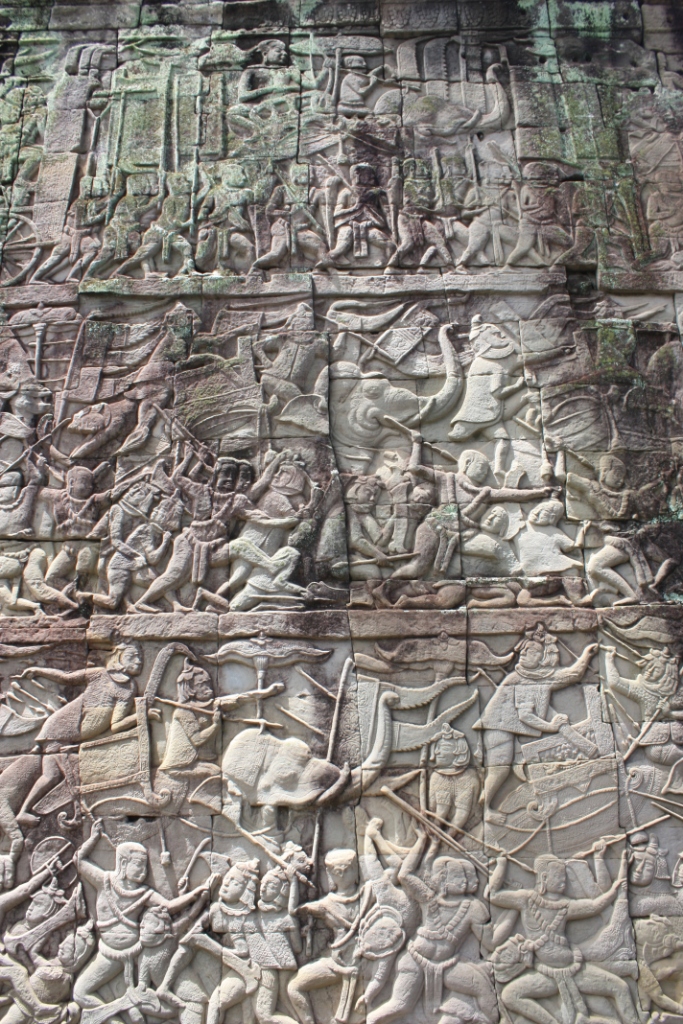
A three-tiered bas relief depicts battles with the Champa.
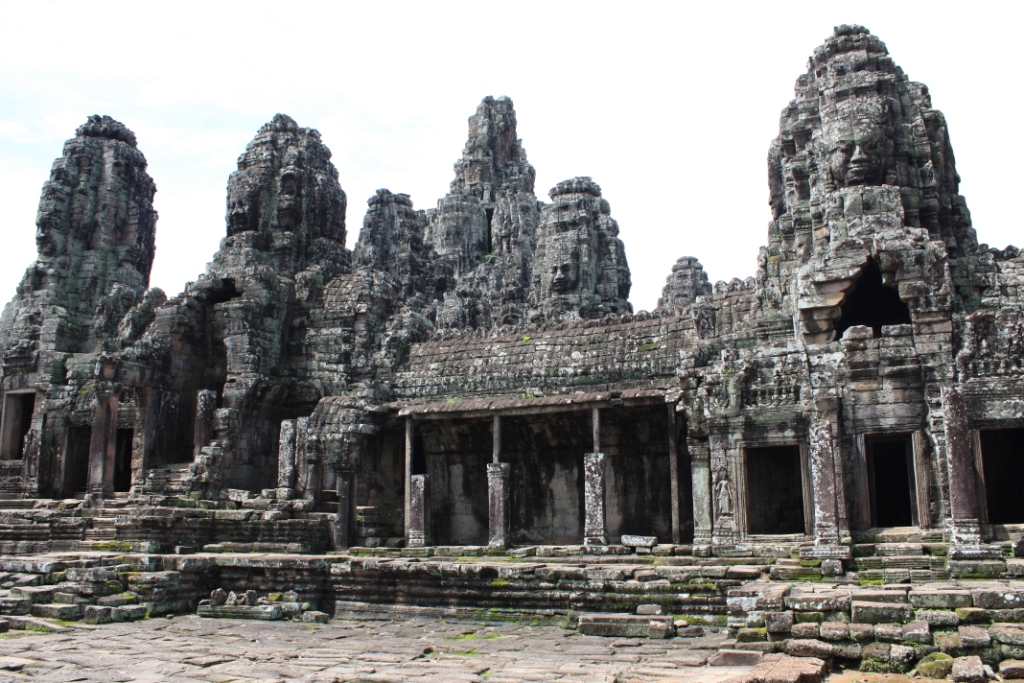
Northside facade
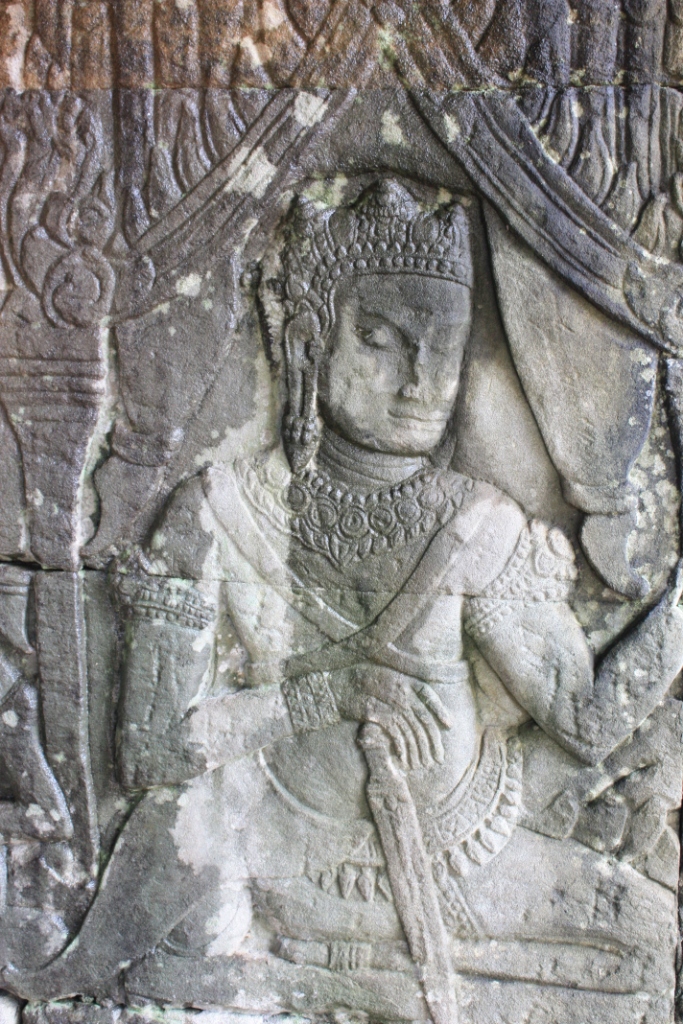
Wall carving
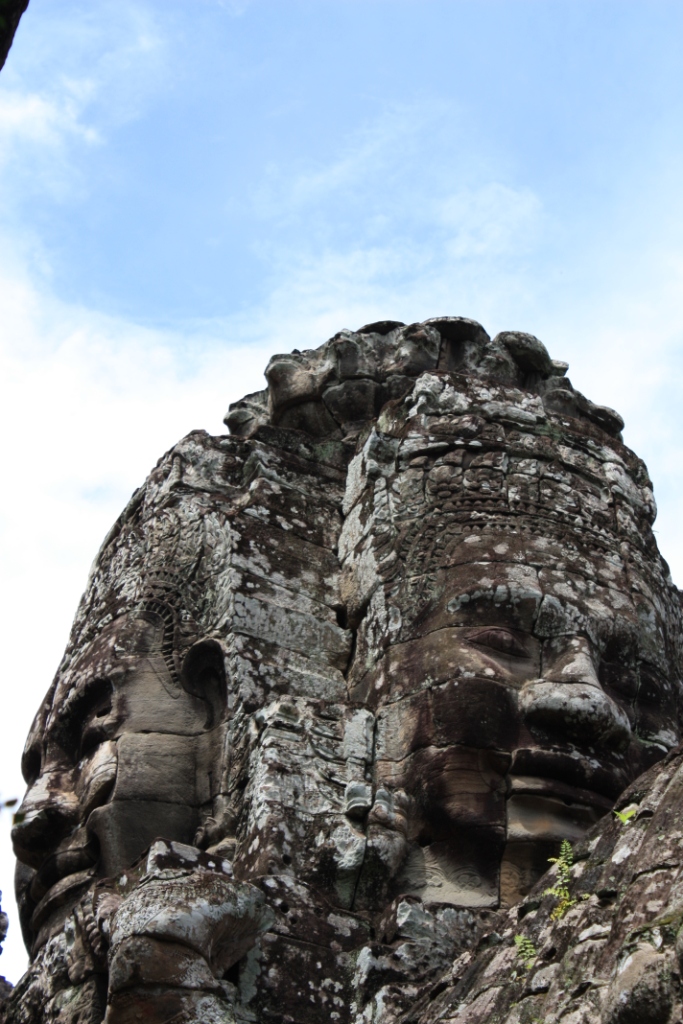
Janus-faced spire
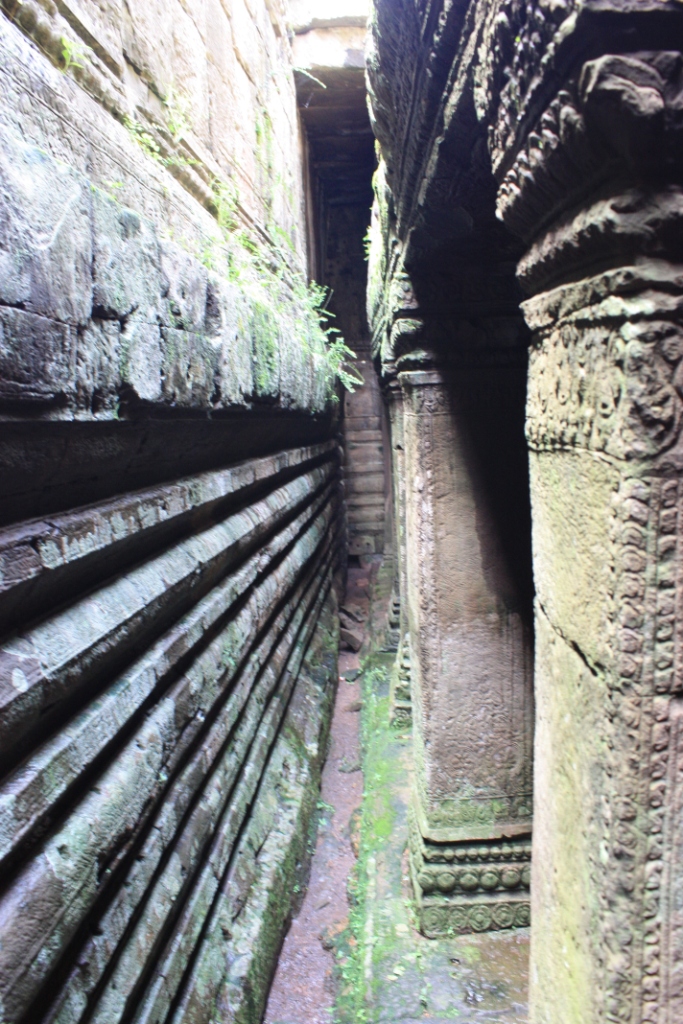
One can see what looks like old foundations that were built over.
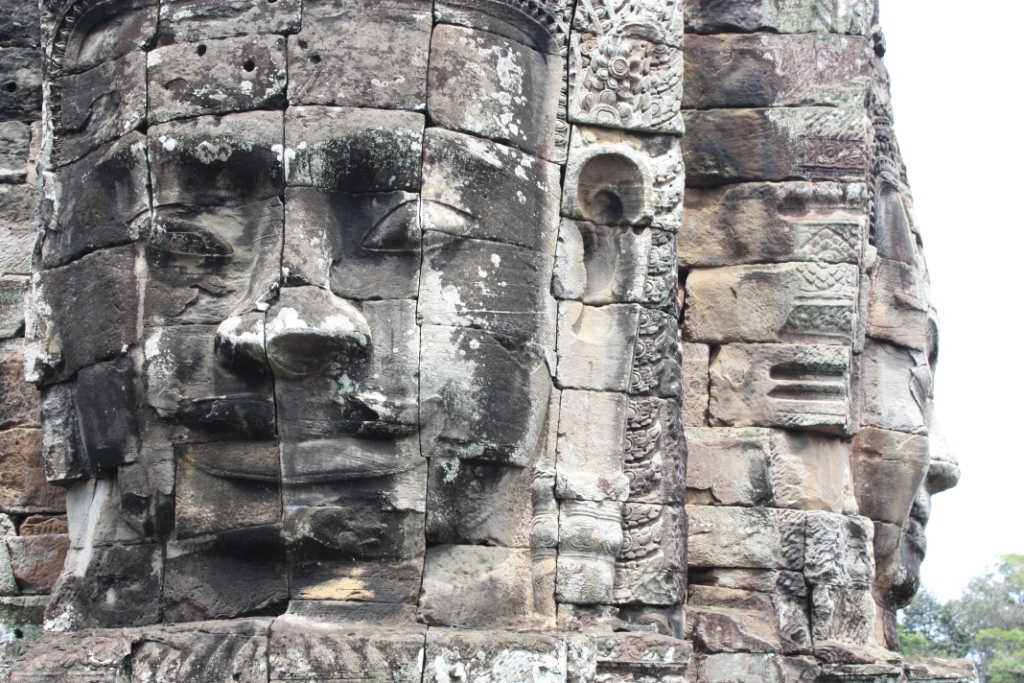
more faces
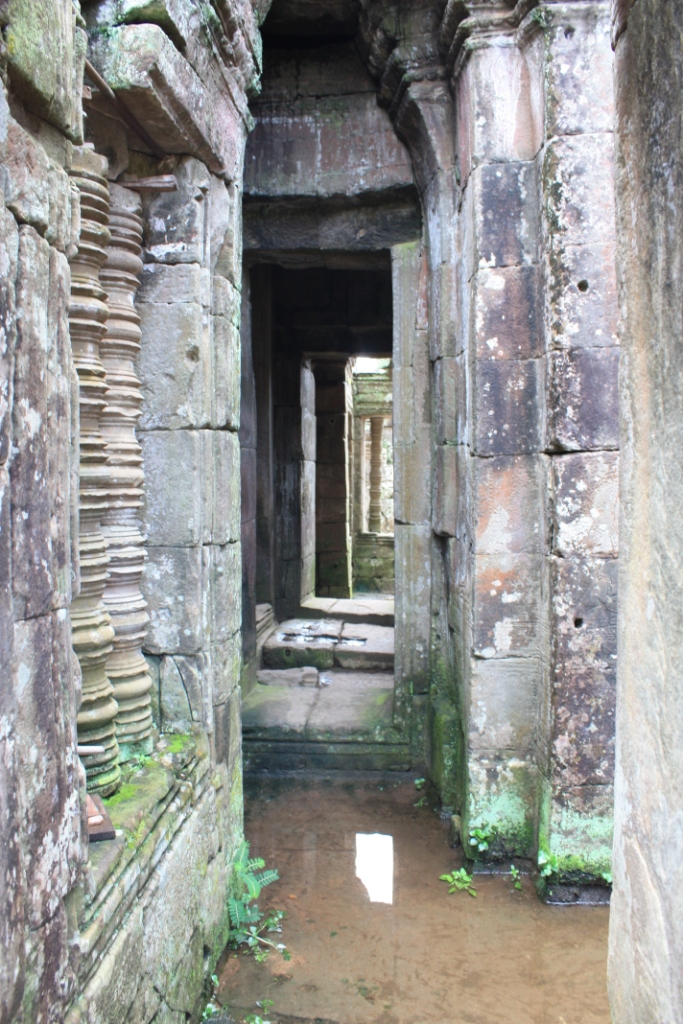
Water standing in the lower level of the temple.
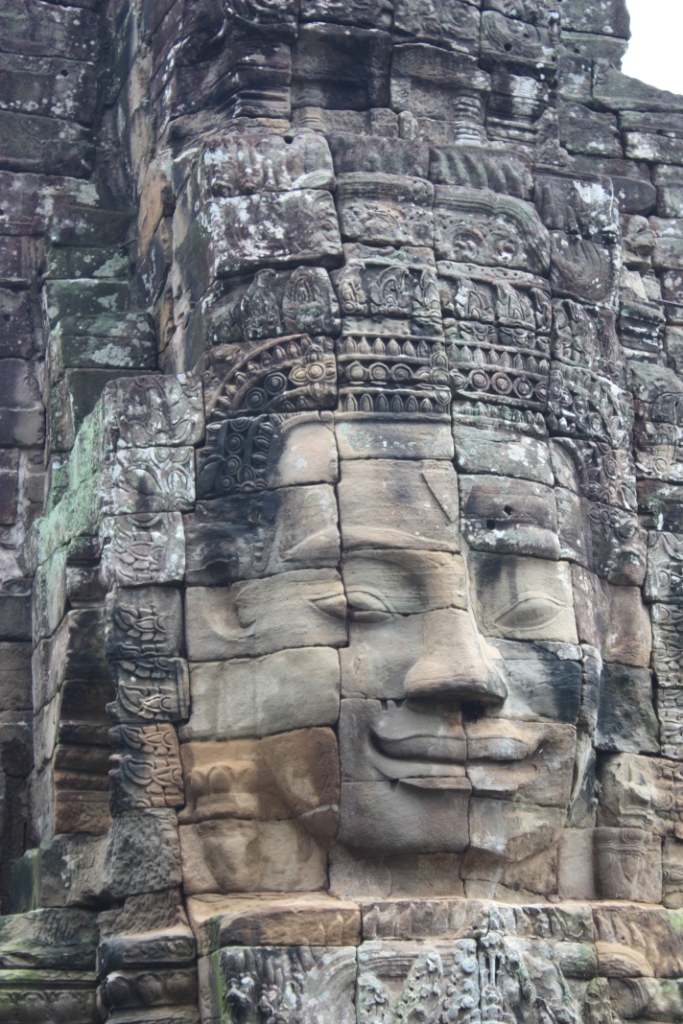
Another face, one can see the size of the blocks from which the sculptures were formed.
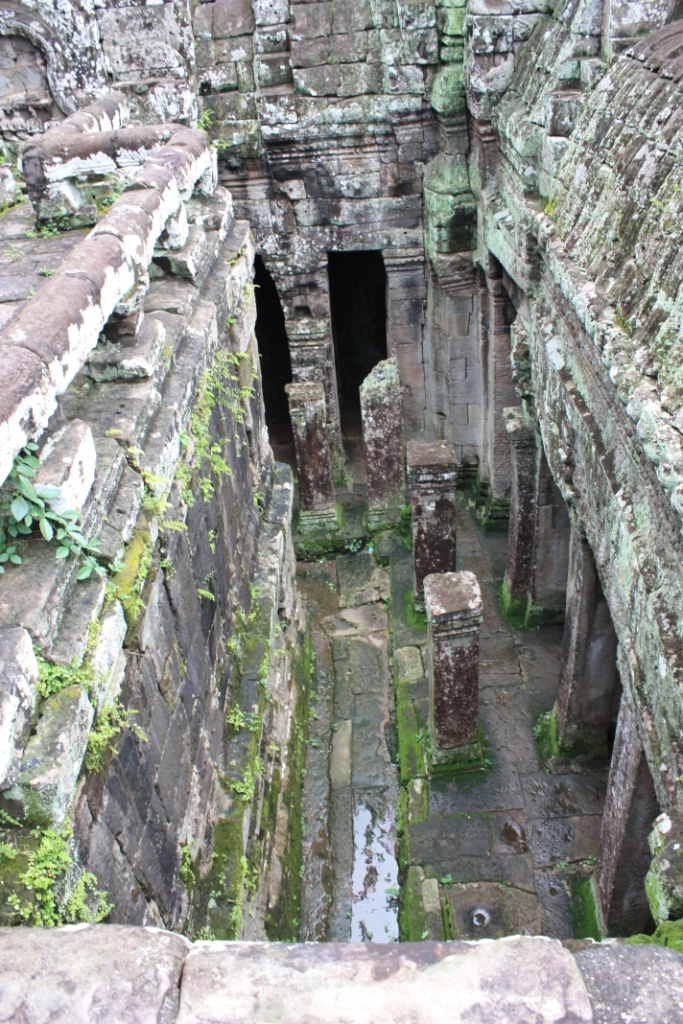
Looking down at the substructure from above
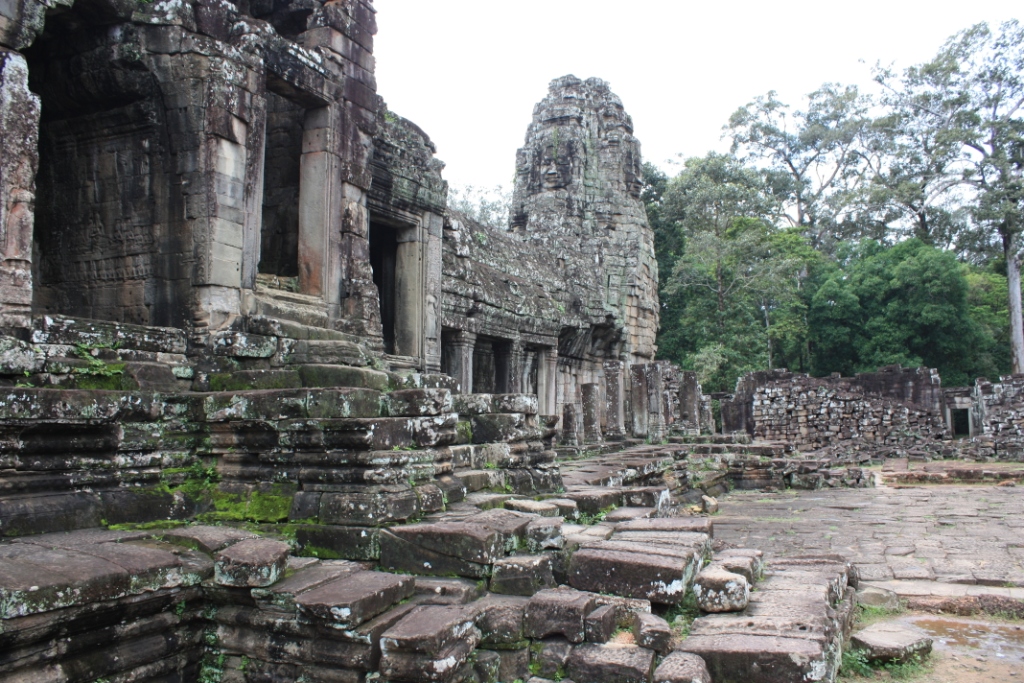
The south facade
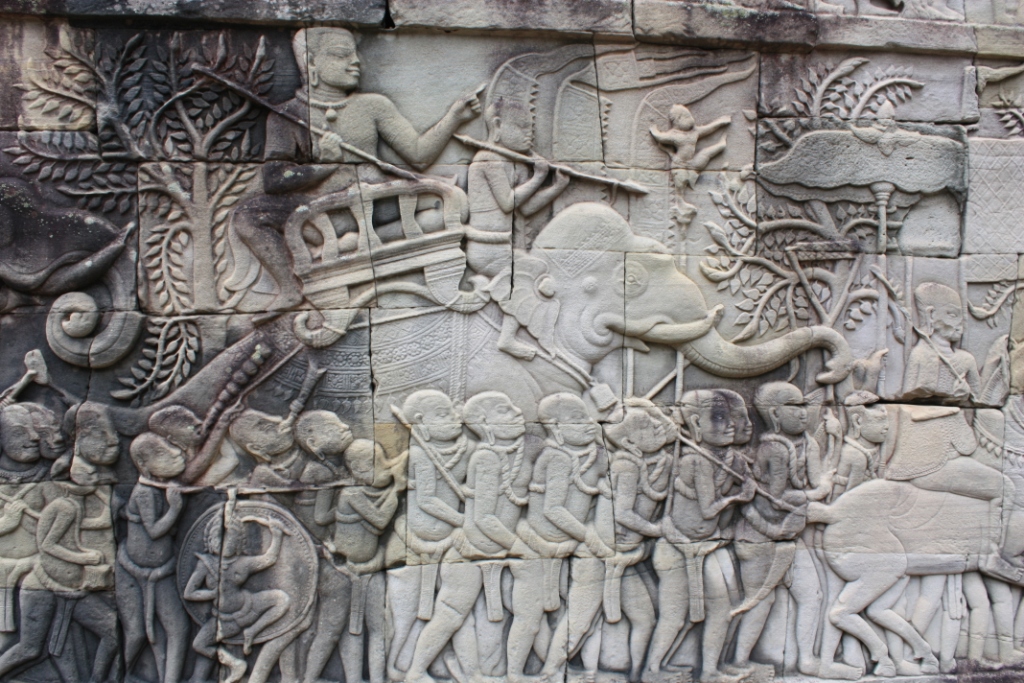
More bas relief.
This is the third installment of photos from Angkor that I took in October 2012. Unlike the previous two installments, each of which included photos from multiple sites, all of these photos come from the Angkor Wat. (While most people think of the entirety of the ancient city as Angkor Wat, in reality Angkor Wat is just a portion (granted a big and important portion) of what was the city of Angkor. “Wat” means temple, and this was the main (though by no means the only) temple in the ancient Khmeri capital.
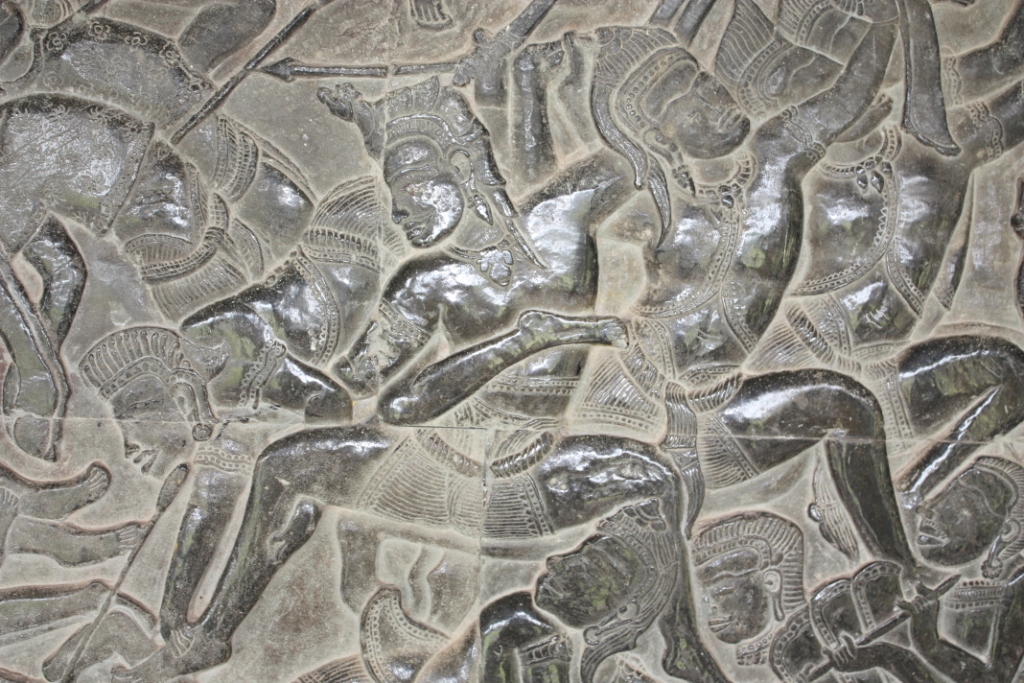
This is part of a massive bas relief battle scene
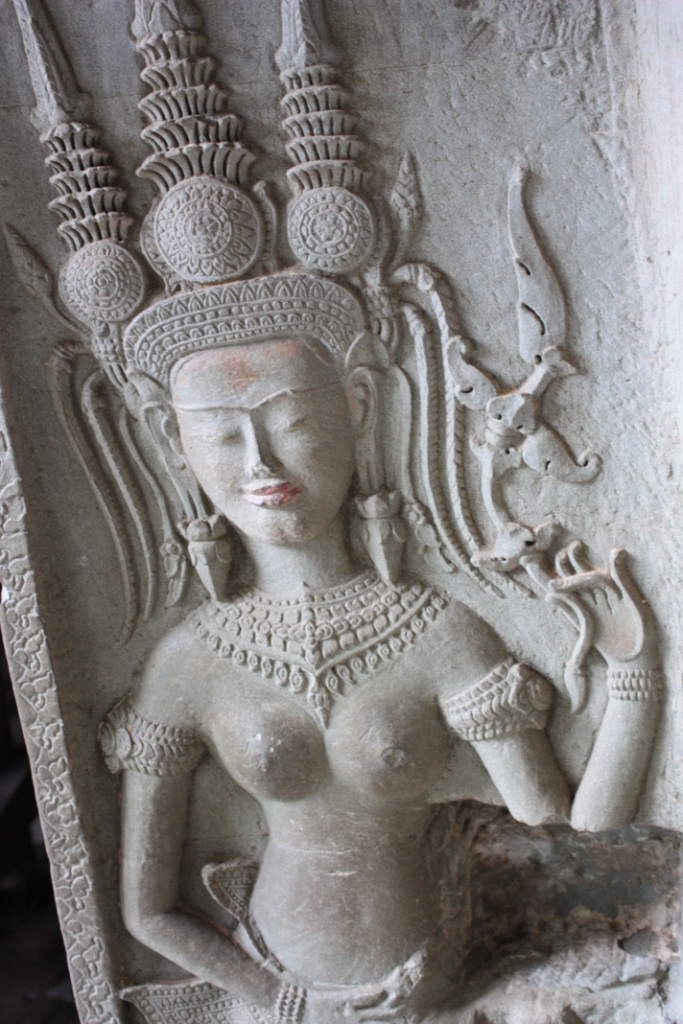
You can see where someone gouged out a cube of the wall (lower right.)

One of the courtyards of the main temple building
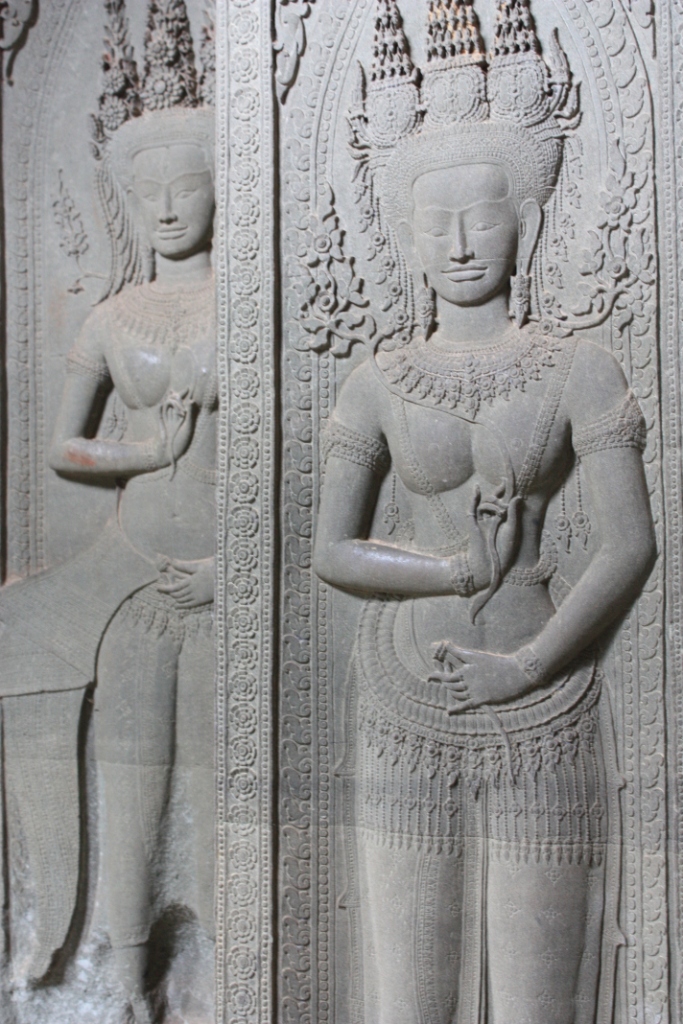
There are hundreds of these on the site.
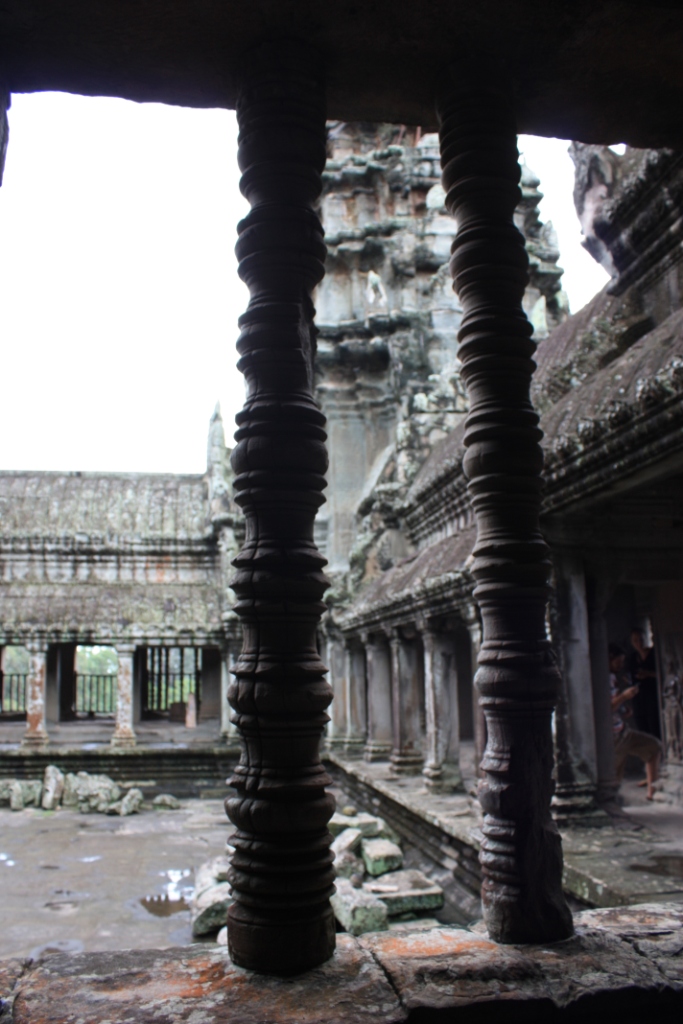
Courtyard as seen through a window with a couple pillars remaining
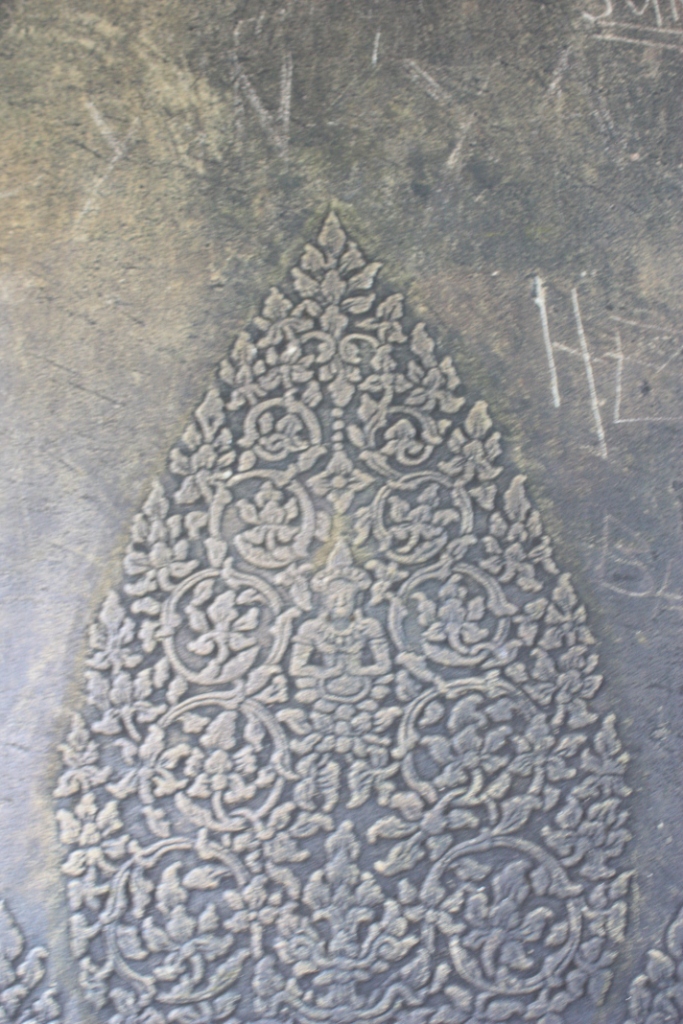
Ornate wall carvings abound
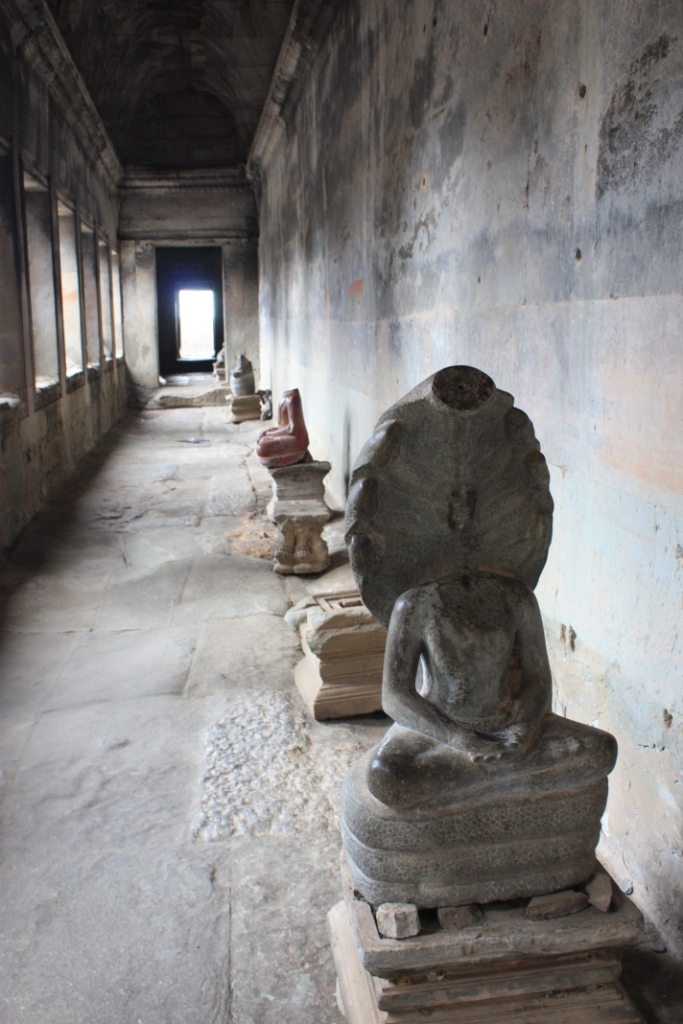
Between theft from the French, vandals, and the Khmer Rouge, most Angkor Wat Buddhas lack heads
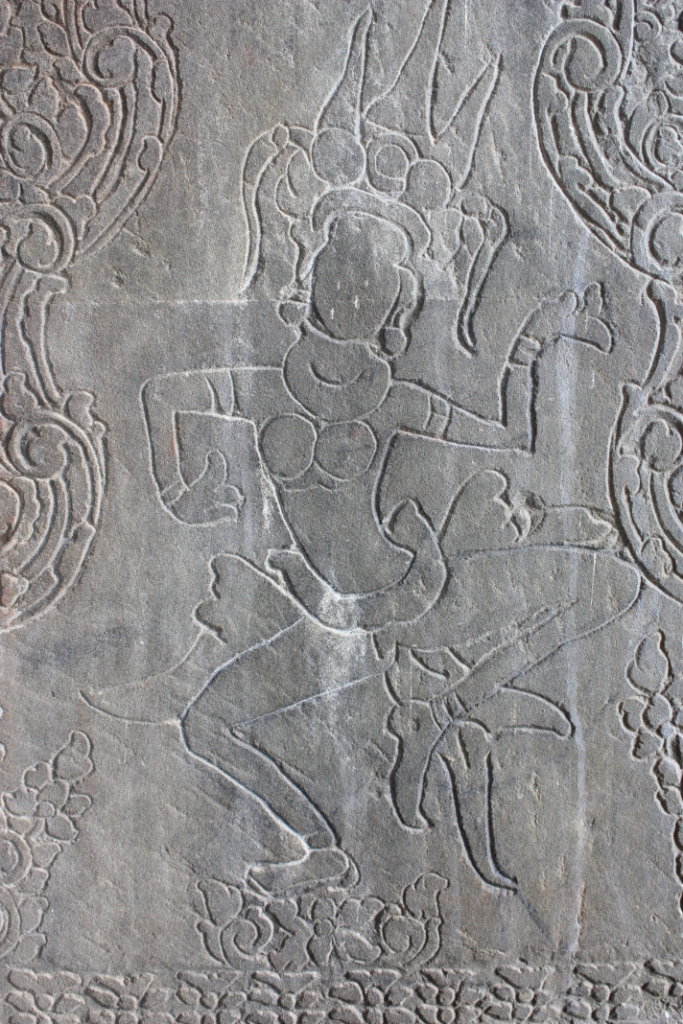
Another wall carving roughed out
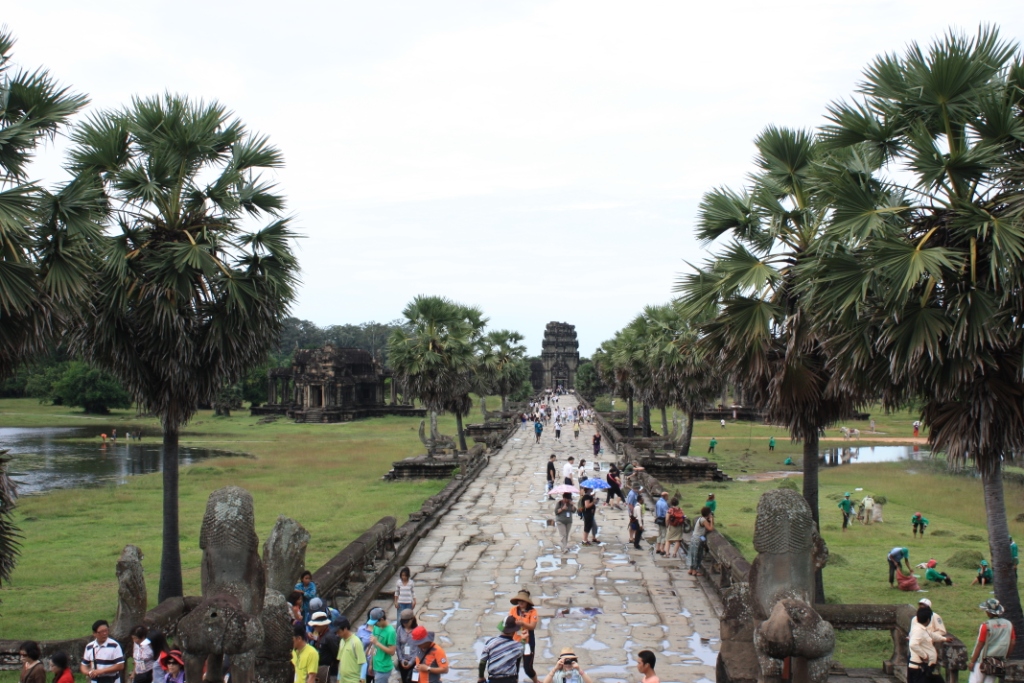
The main walk. There is a bridge across this moat which is contiguous with this grand walk.
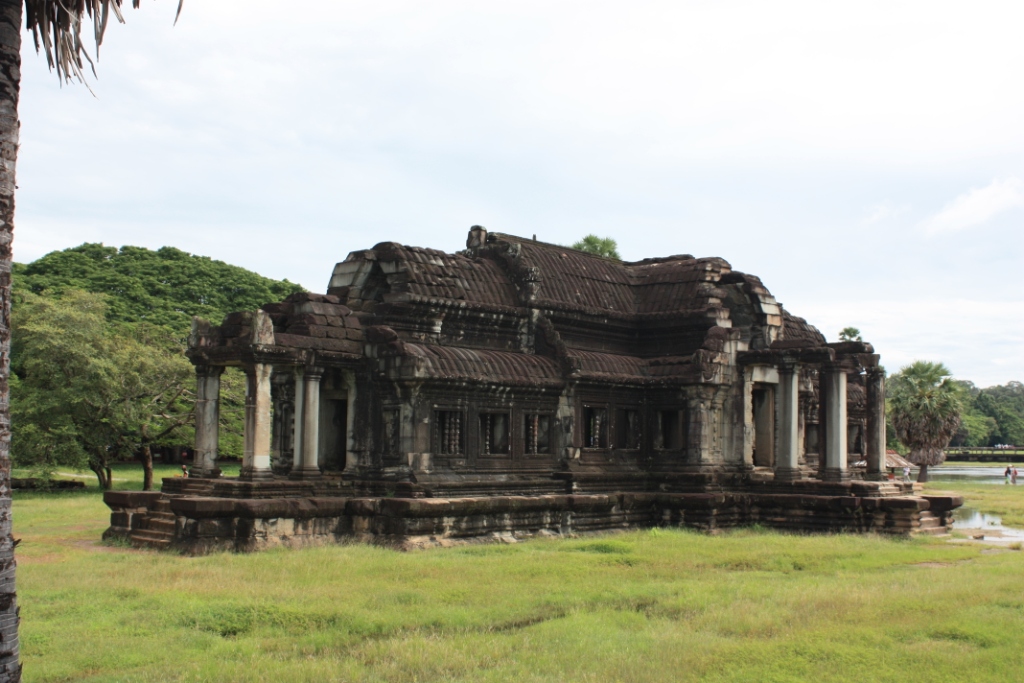
These are symmetrically located to either side of the main walk.
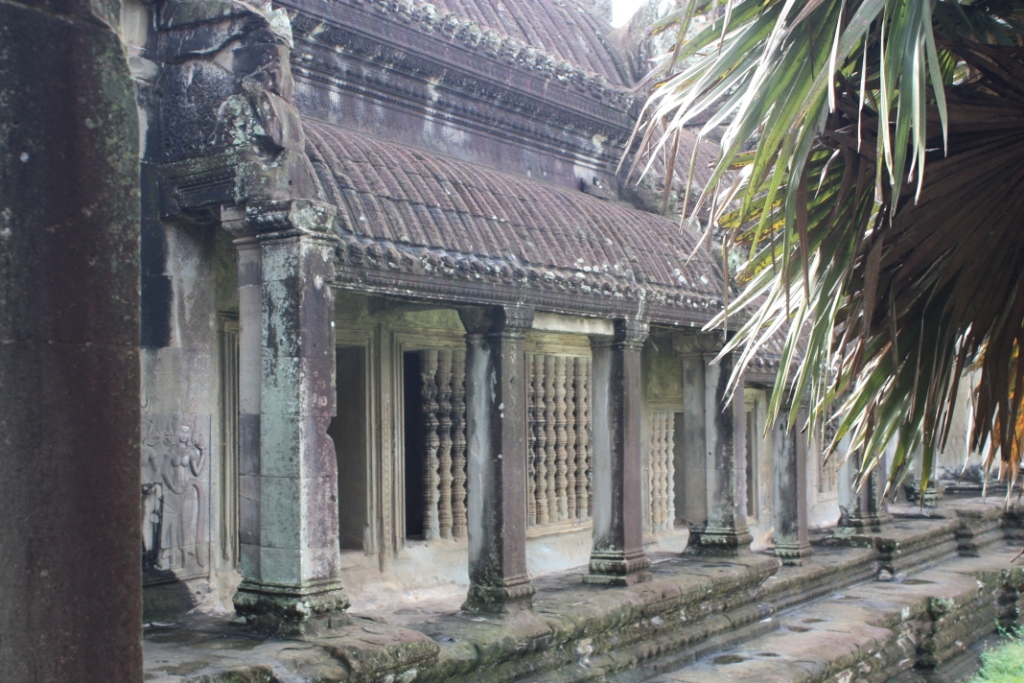
Temple facade
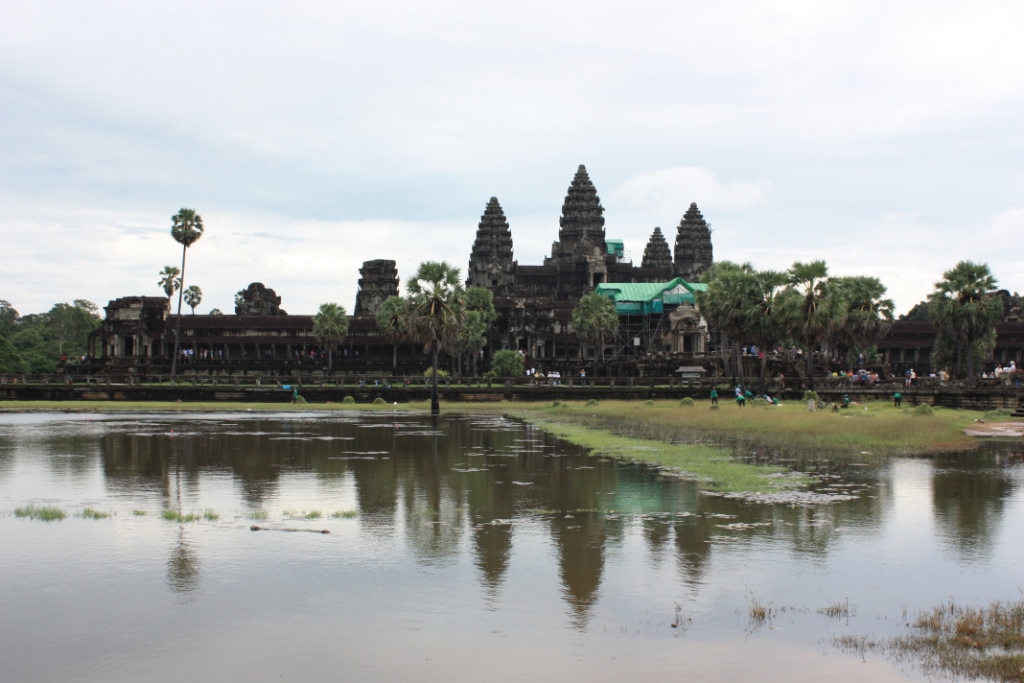
Wet season was just ending when we visited. Standing water was ubiquitous.
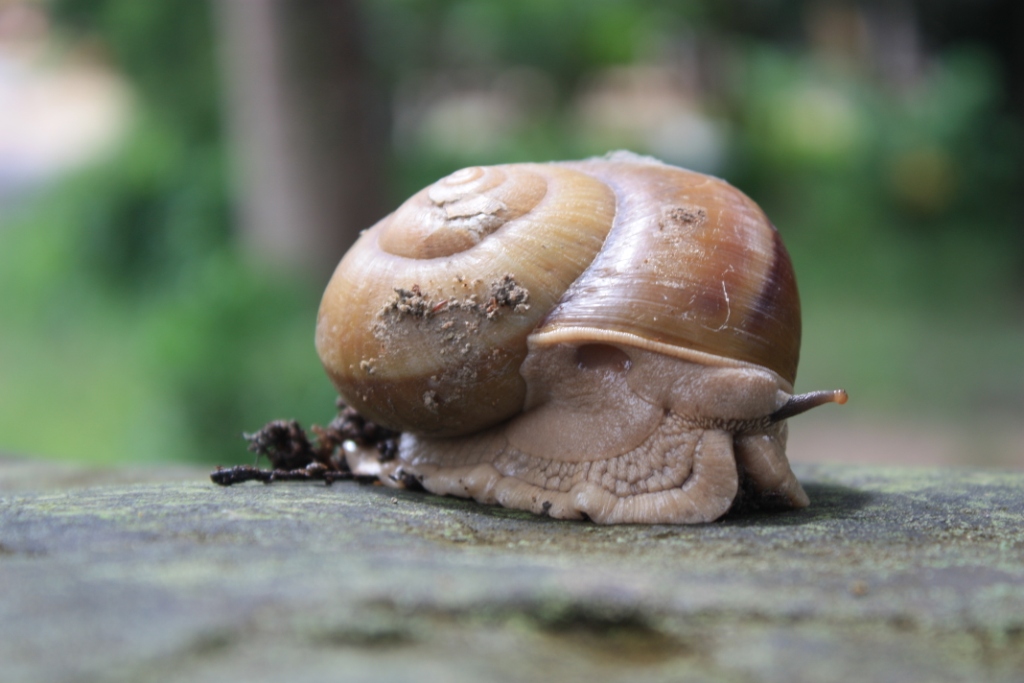
Escargot like these may have been why the French colonized this country.
More photos from my October 2012 visit to Angkor in Cambodia.
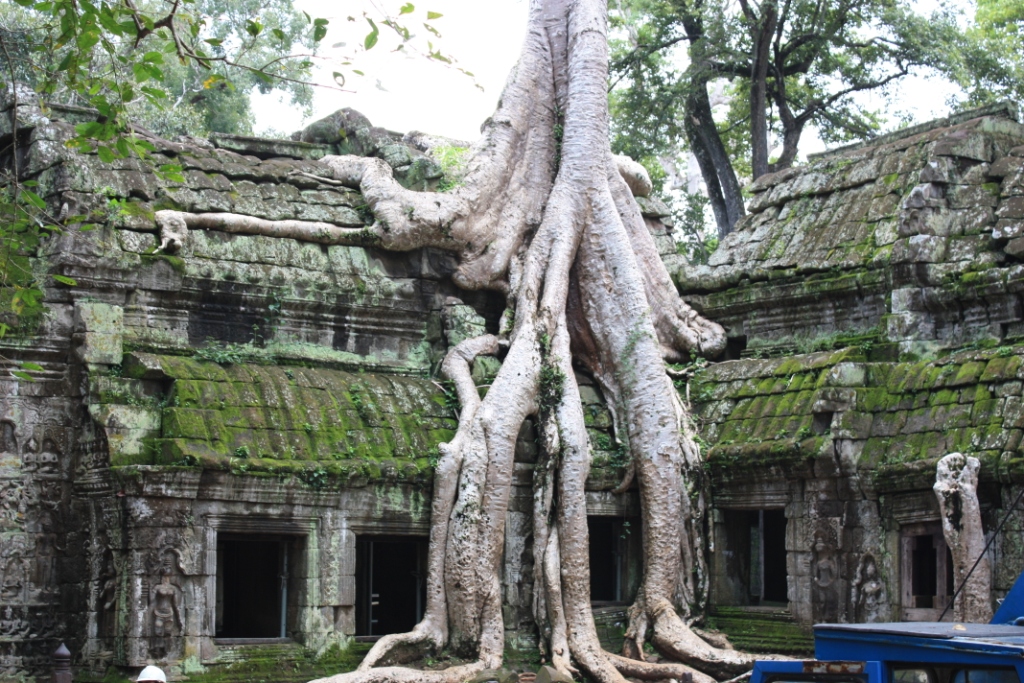
Ta Prohm
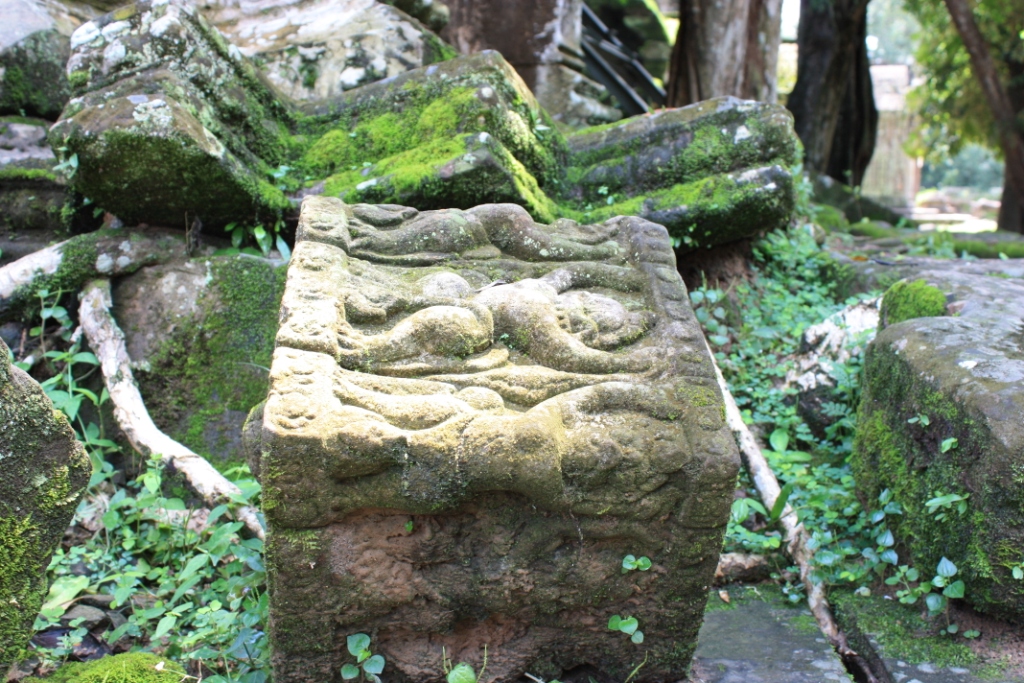
Ta Prohm
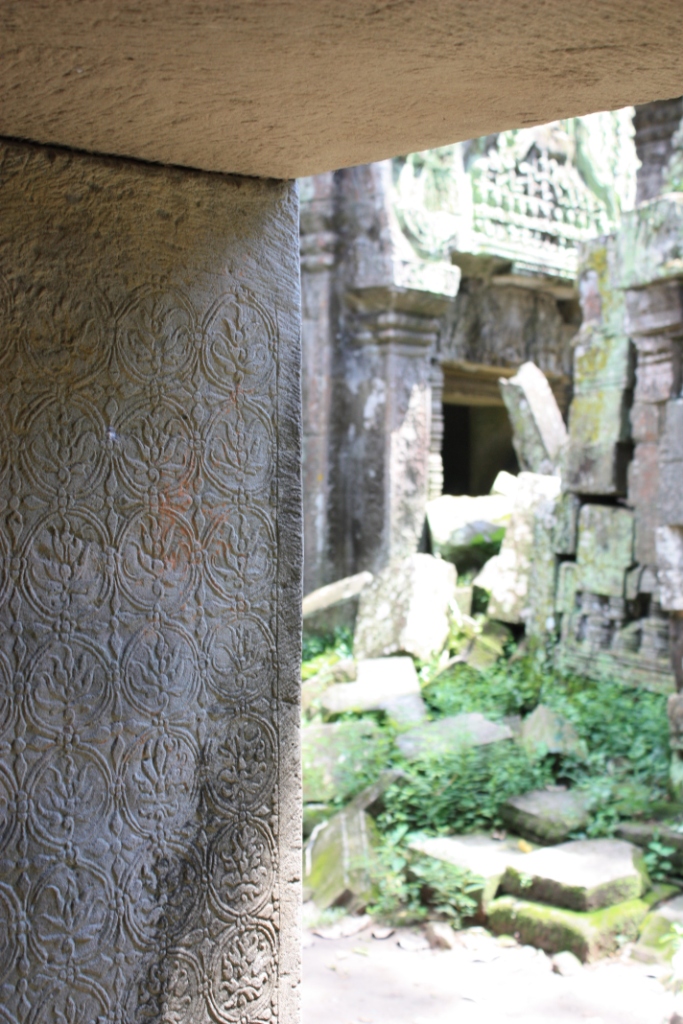
Ta Prohm

Ta Prohm
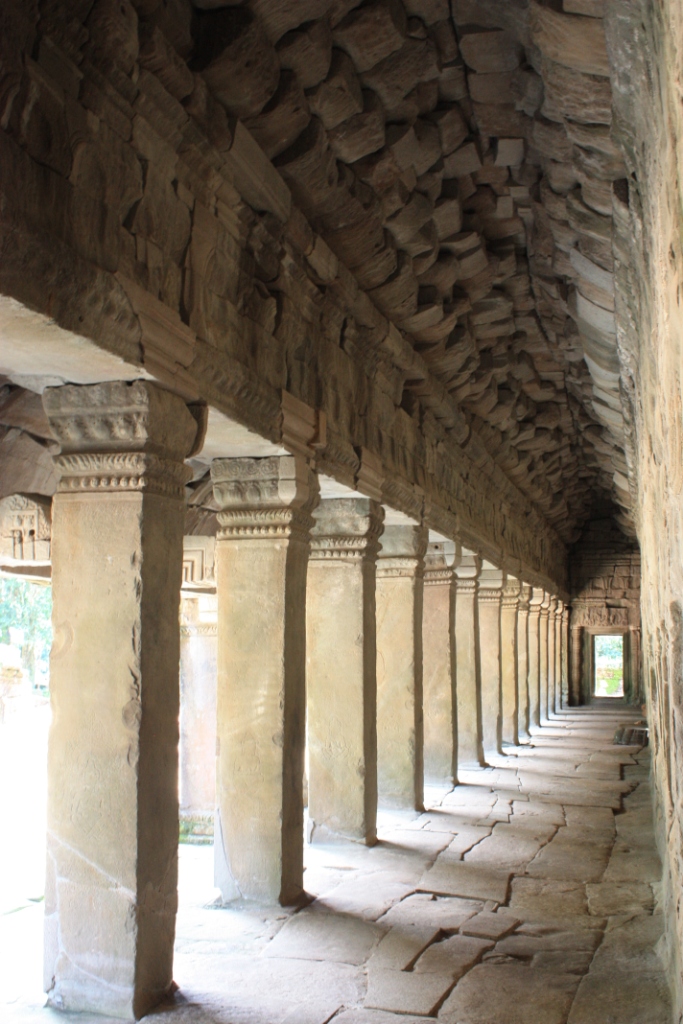
Ta Prohm
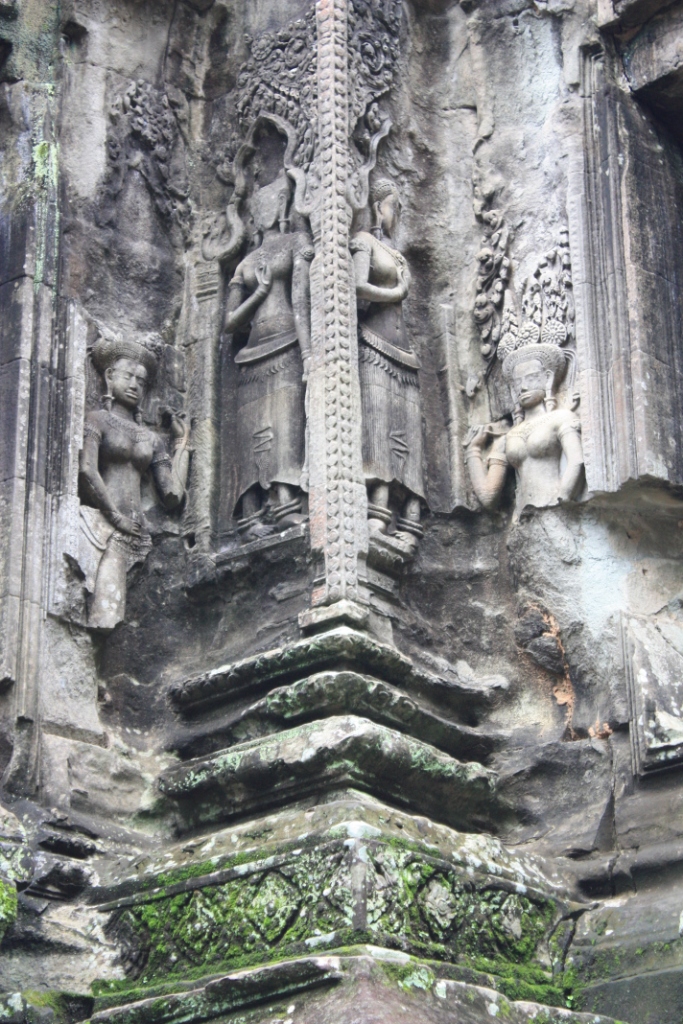
Thommanom

Ta Som
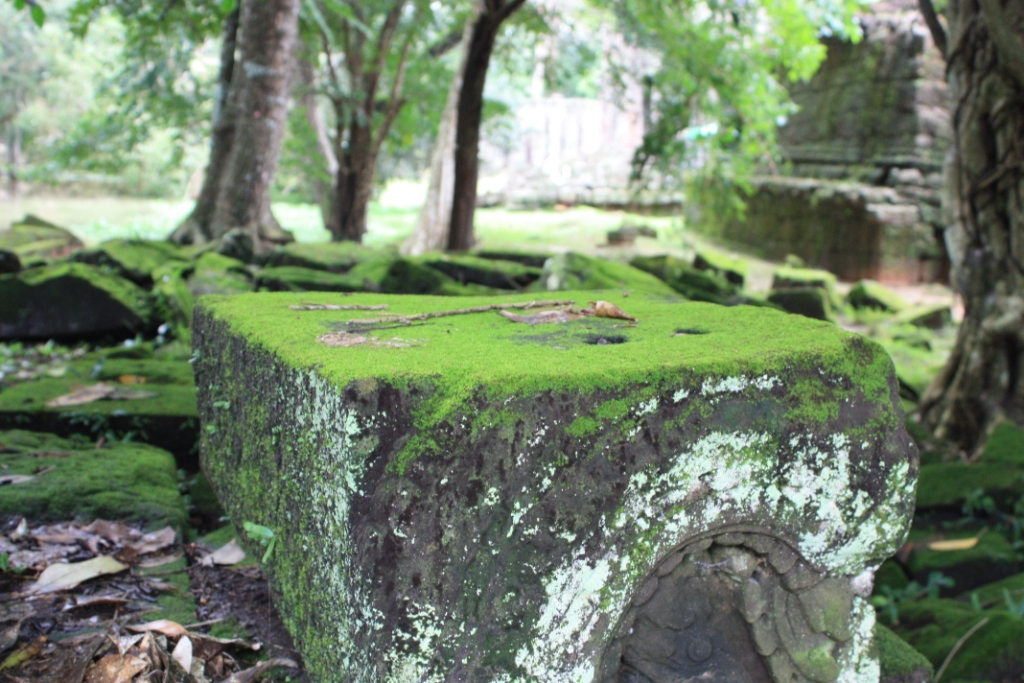
Ta Som? or perhaps Preah Khan

Neak Pean

Ta Som (I think)
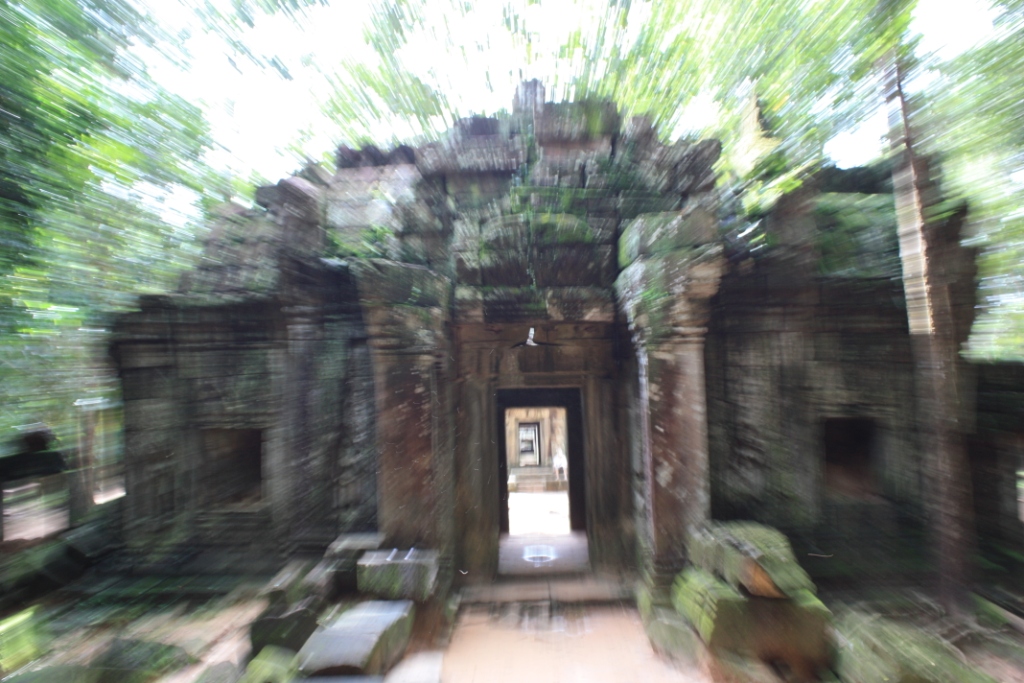
Ta Som (I’m not sure how this happened, it was a purely accidental effect.)

Ta Som
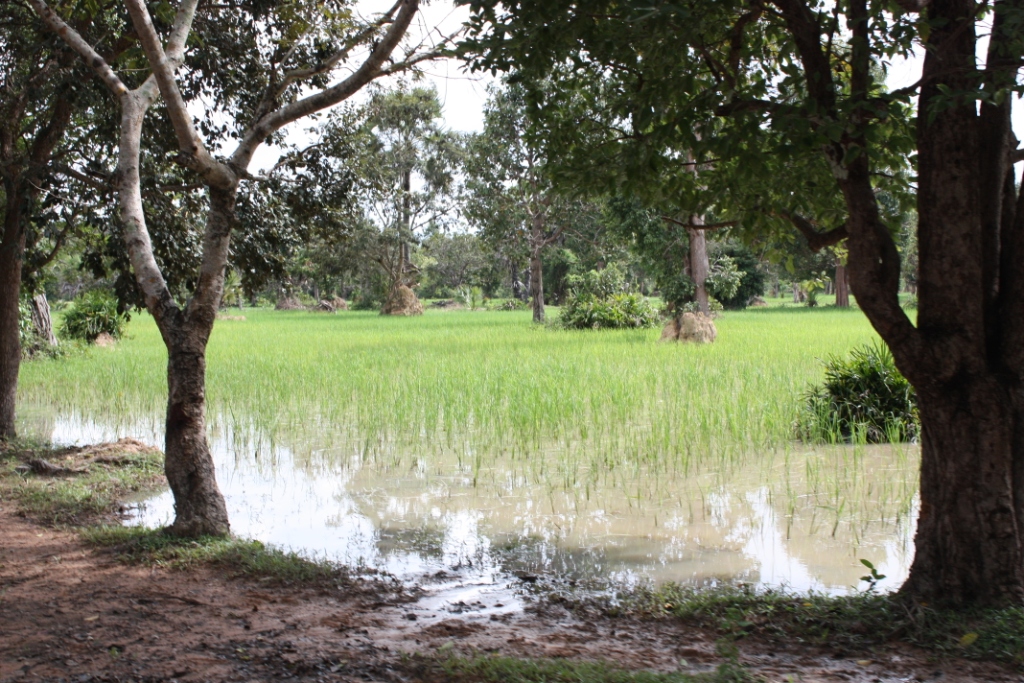
Rice paddies near the East Baray
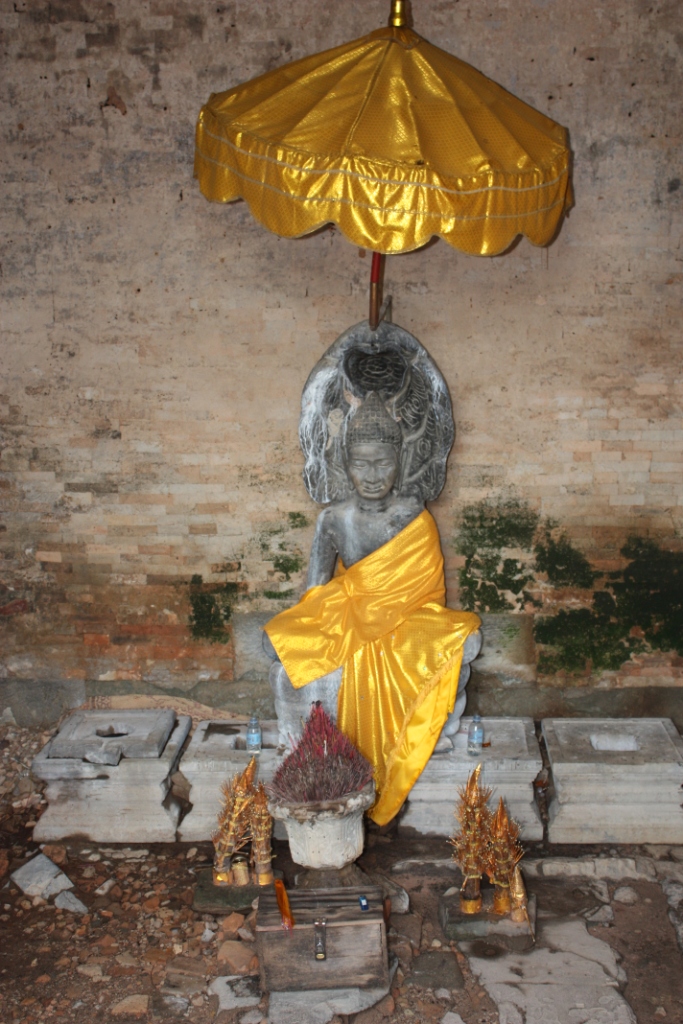
Buddha near Srah Srang

Pre Rup
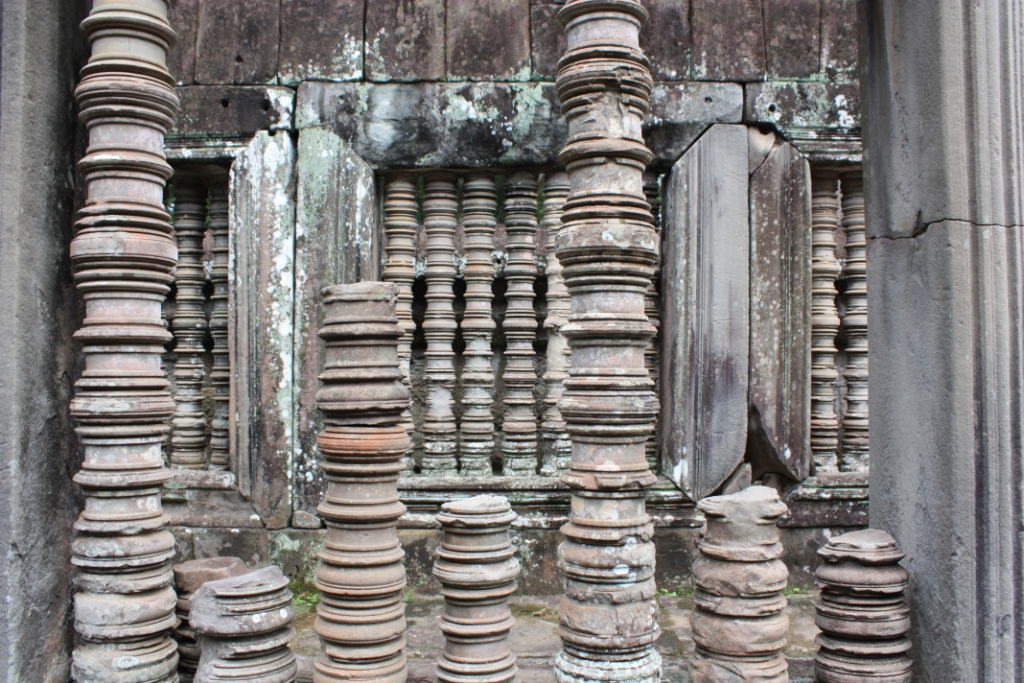
Ta Keo window pillars
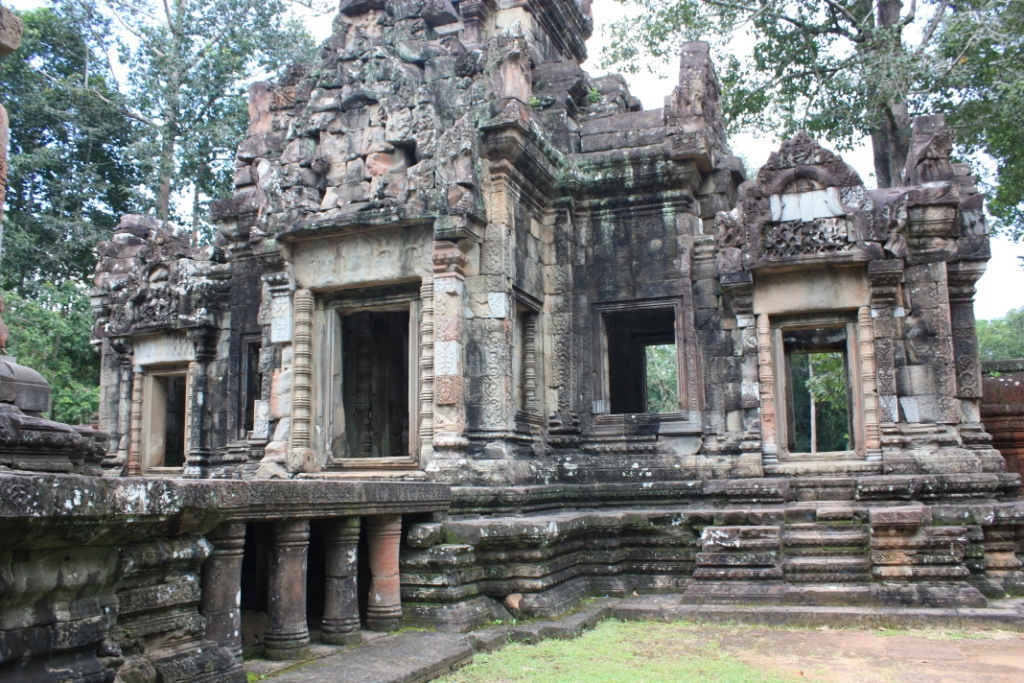
Chau Say Tevoda
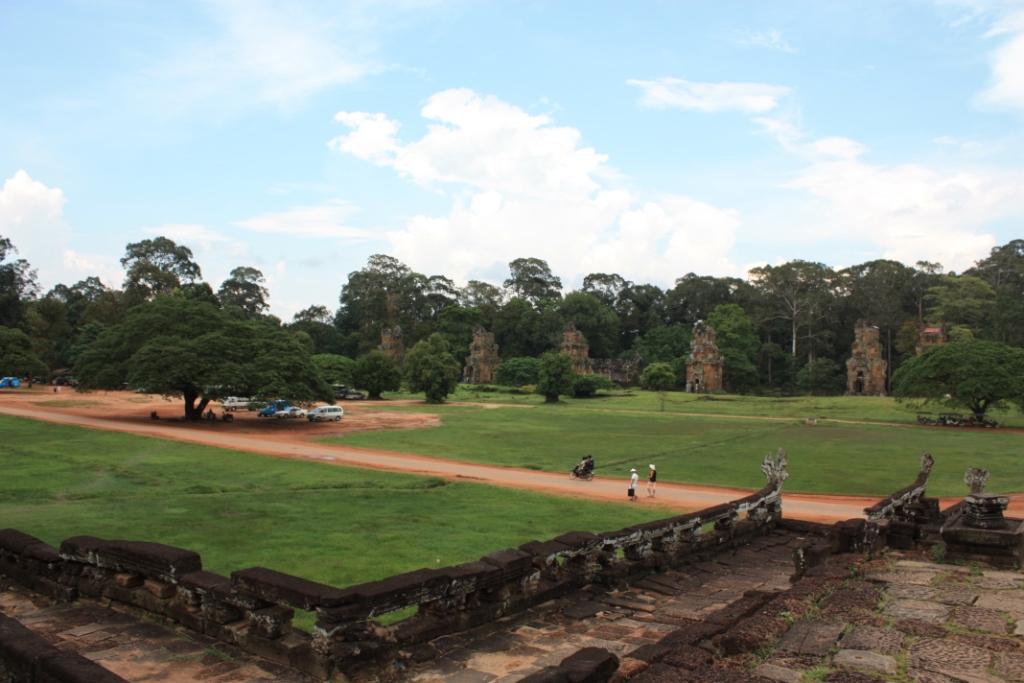
Ankor Thom from the Elephant Terrace
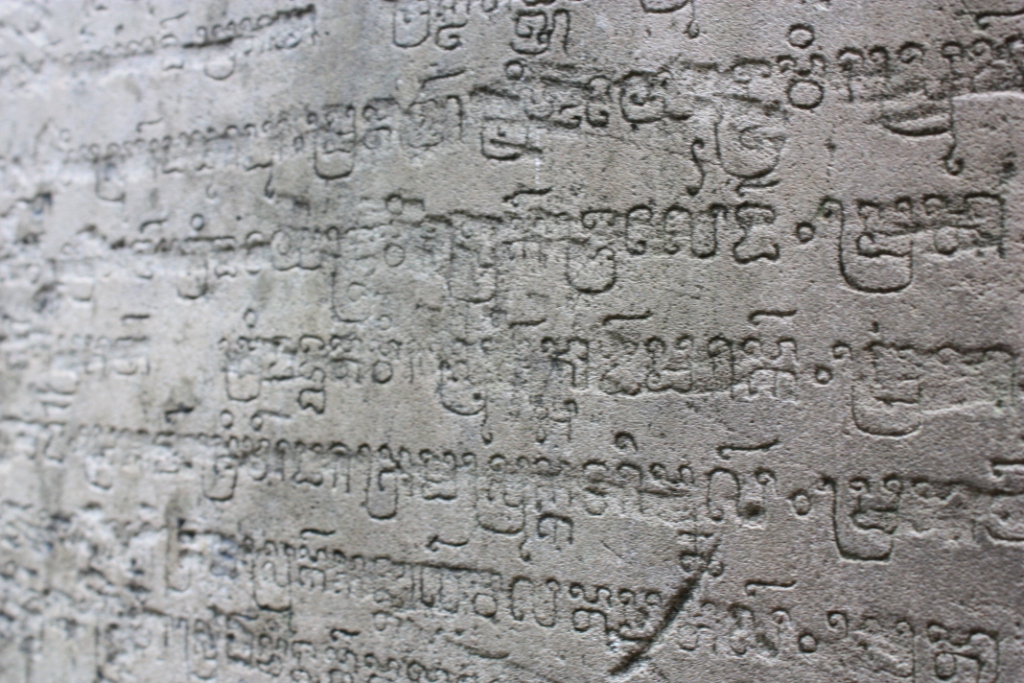
Phimeanaka writings on the wall
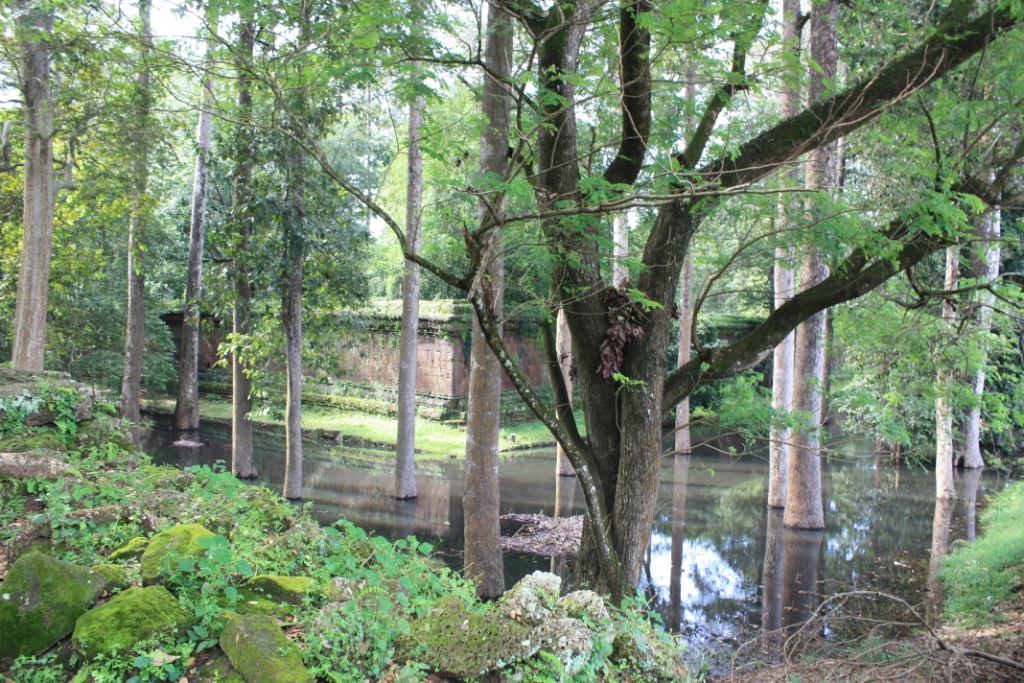
Baphuon
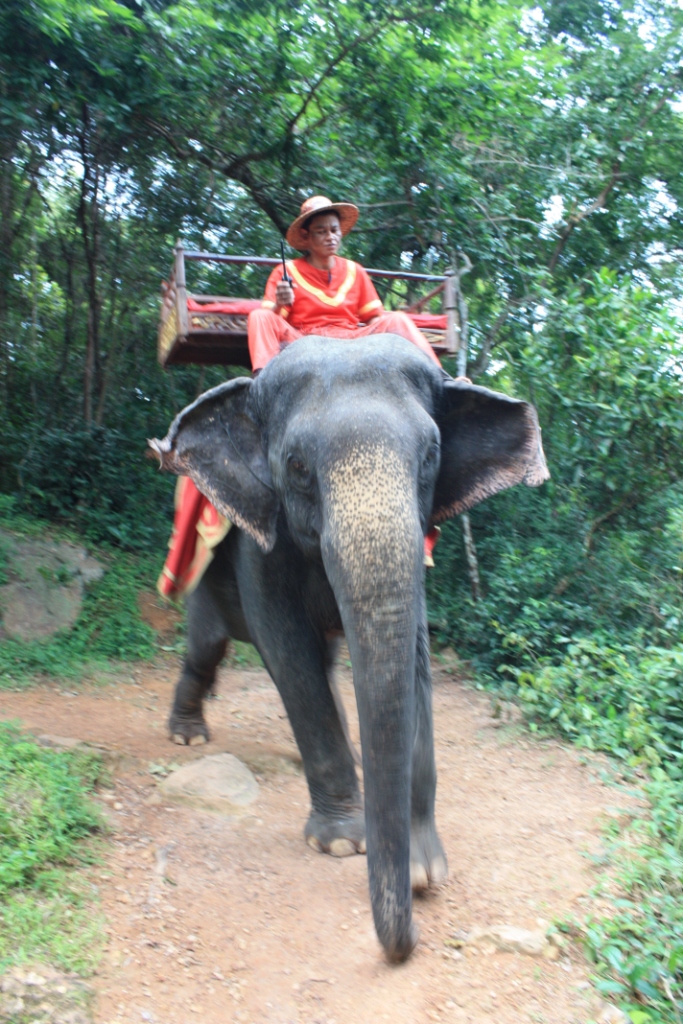
Elephant on the trail up to Phnom Bakhang
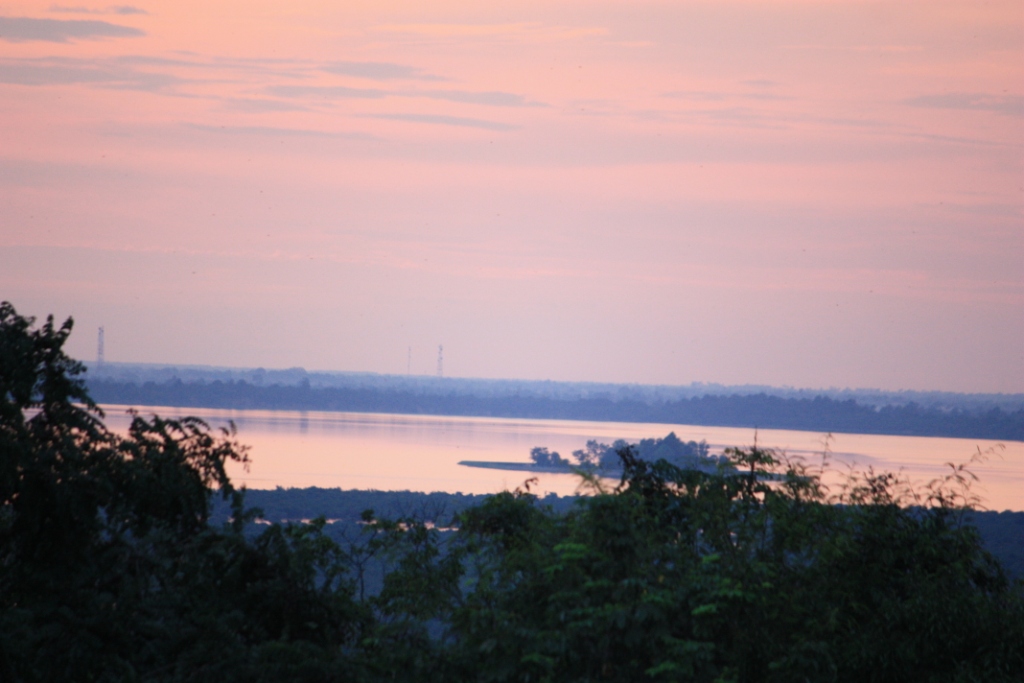
Sunset from Phnom Bakhang
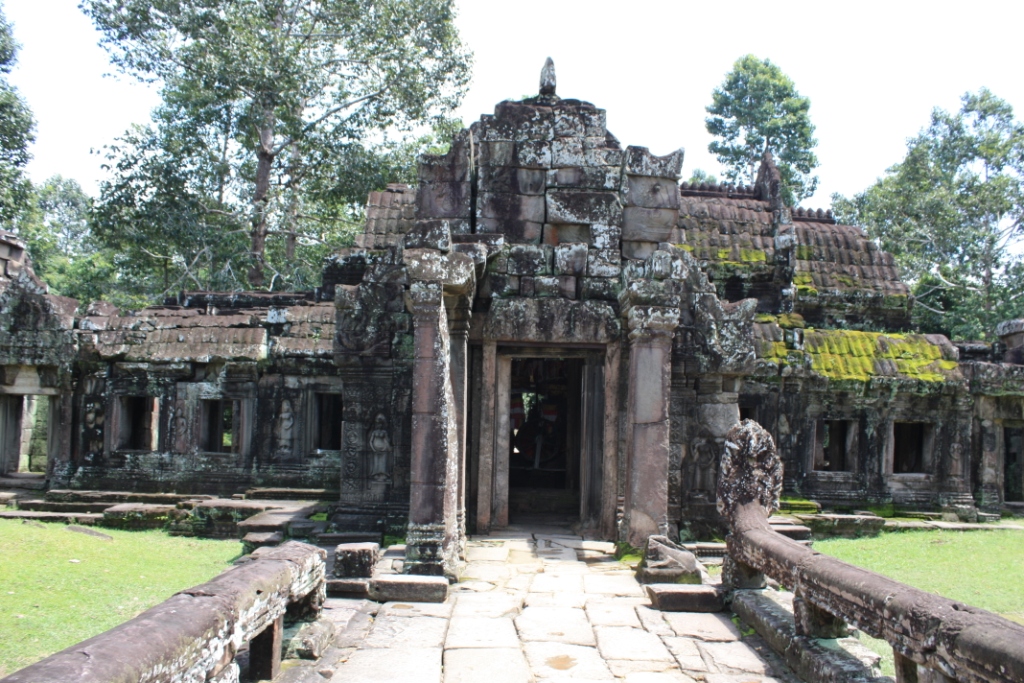
Bantey Kdei


 Tiger Riding for Beginners