BOOKS: Wonderful Wonderful Times by Elfriede Jelinek

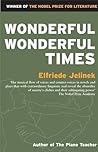
Wonderful, Wonderful TimesWonderful, Wonderful Times by Elfriede Jelinek
My rating: 5 of 5 stars

Amazon.in Page

If I said this book was A Clockwork Orange meets A Midsummer Night’s Dream it would be in some ways deceptive but in other ways, accurate. The book has none of the otherworldliness of those other stories and, instead, is set in a realistic 1950’s Vienna. Furthermore, those comparisons might confuse readers into not realizing this book is unambiguously a tragedy.

The book is set around four kids (Rainer, Anna, Hans, and Sophie) who like to beat up and rob adults, usually using a kind of catfishing scheme where they trick a middle-aged man into thinking he is about to have a getting lucky with Lolita moment before the other three gang up on the man in a moment of shock and awe. Here lies the “Clockwork Orange” comparison: youths enamored of violence as a means to combat the boredom and meaninglessness of their lives — possibly while passing on the abuse they receive in their own lives.

The “Midsummer Night’s Dream” part comes in with the book’s love geometry. Like that Shakespearean play, there are two boys and two girls and both boys are in love with the same girl (Sophie,) leaving the other girl (Anna) in a sad unrequited territory.

The book won’t be everyone’s cup of tea, and not only because it deals heavily in sex and violence. There are a couple factors that make the book feel strange. First of all, it is written in present tense. Secondly, it spends a lot of time in the minds of the characters and relatively little time with the action. Thirdly, the pacing of the conclusion and resolution of the book is abrupt and might feel forced — like the author was 245 pages in when the publisher told her that she had 250 pages, maximum, and that she’d better be wrapping it up. I didn’t find any of these factors to be problematic, but I can see how they would rub some readers the wrong way.

If the premise intrigues, you should definitely read this book – particularly if the previous paragraph’s warning didn’t turn you off.

View all my reviews

5 of my Favorite Banned / Challenged Classics

Banned Books Week runs from September 23 to 29 in 2018, offering a nice reminder about all of the books that are so awesome that some doofus doesn’t want you to read them.

Here are five of my favorites:

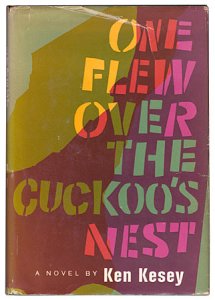
5.) One Flew Over the Cuckoo’s Nest by Ken Kesey: Randle McMurphy conducts a con to convince authorities that he’s insane and belongs in an asylum rather than doing hard time in a prison. It’s a commentary on how free-spirits are viewed by society and the pressures put upon them to conform. It’s been challenged many times on the usual grounds of sex and language, as well as for the “glorification of criminal activity.”

4.) A Clockwork Orange by Anthony Burgess: In a dystopian England, the head of a small band of thuggish teenagers is imprisoned and convinced to undergo operant conditioning that will make any future attempts to engage in violent behavior personally painful. The book is a critique on social engineering, though it should be pointed out that there are two different versions of the book in circulation, one with the final chapter written by the author and one without it, and the inclusion or deletion of that chapter has serious implications for the book’s message. Instances of sex and violence are the usual basis for challenges to this novel.


3.) The Satanic Verses by Salman Rushdie: Two men fall from a plane and survive, one archangel and one demon. The title of the book, and much of its controversy, is owed to a plot point about the Islamic prophet Muhammad (Mahound, in the book) receiving both angelic and demonic guidance and prophecy. This is the most explicitly banned book on the list with at least a dozen countries explicitly banning it — most of them were Islamic countries offended by the portrayal of events when Islam was first coming into existence, but a few banned it out of public safety fears over extremist activity. The author is under Fatwa, religious approval of Rushie’s execution, by Iranian authorities.

2.) Brave New World by Aldous Huxley: In this soft dystopia, people are kept in line by readily available drugs and promiscuous sex. Among the American Library Association (ALA) list of challenges to this book was one suggesting the book be banned because it: “makes [promiscuous] sex look like fun.” Which made me laugh a little.

1.) The Grapes of Wrath by John Steinbeck: A family, bankrupted by the one-two punch of the Dust Bowl and Great Depression, packs up and heads out to the promised land of California, only to discover that it wasn’t all that it promised. Objection to language is the most prevalent cause for challenges to this book.