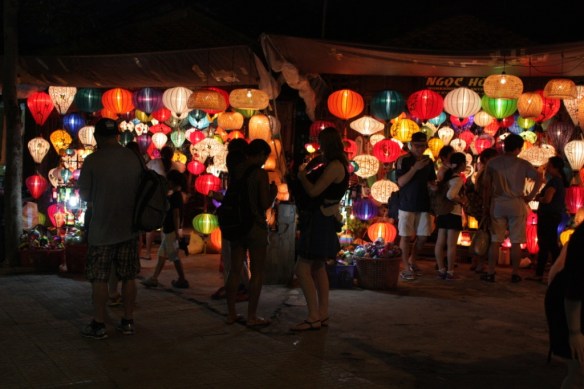
Taken on December 23, 2015 in Hoi An

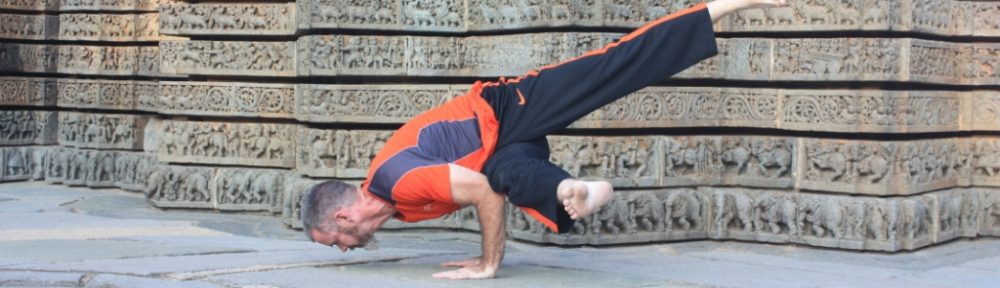

Taken in December of 2015 in the Mekong Delta
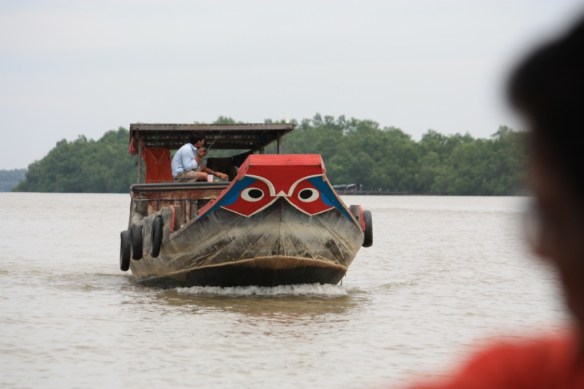

In the Mekong Delta, the ships have eyes. Well, many of them do anyway. The eyes painted on the bow of boats and ships are to ward off evil. Interestingly, the one class of boats that typically don’t have eyes are fishing vessels. Fishermen fear the eyes will scare away the fish, and they’re willing to take their chances with evil. Plus, we all know that evil fish are the most tasty.
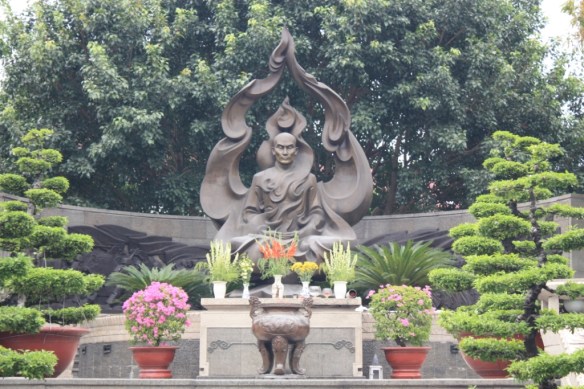
Taken on December 22, 2015 in Saigon

Taken on December 31, 2015 in Bai Tu Long Bay

Taken on December 27, 2015 in Hanoi

Taken on December 24, 2015 in Hue
This was the capital of Vietnam during the Nguyen Dynasty (1802 – 1945.) Inside there is a Forbidden City that, while not as large and impressive as Beijing’s, is beautiful and worth visiting nonetheless. (A Forbidden City is territory in which only royalty were allowed to tread.) Much of the Citadel has had to be rebuilt or repaired because in 1968 it was targeted after extended fighting in and around the city. (Initially, the Citadel was not fired upon because of its importance as a historic site, but eventually the battle became so intense that its protection was deemed no longer an option.
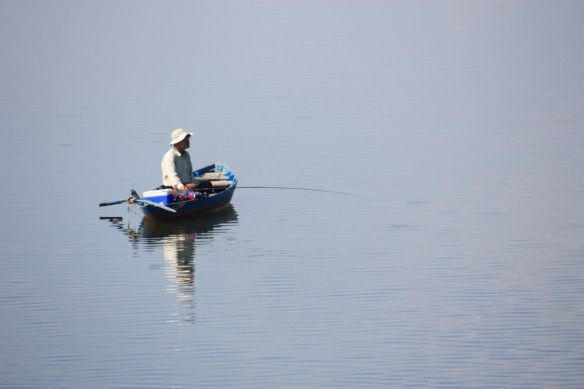
Taken on December 23, 2015 in Hoi An
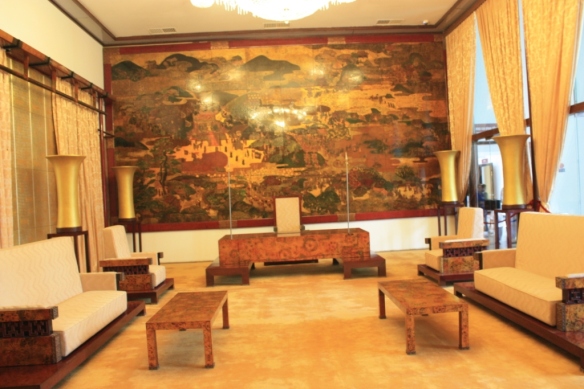
Taken on December 20, 2015 in Saigon
This room, featuring lacquered furniture and artwork, is located in the Independence Palace (a.k.a. Reunification Palace) in Saigon (i.e. Ho Chi Minh City.) The palace had been the home of the leader of South Vietnam during the war years, and its fall to the North Vietnamese Army in April of 1975 signaled the unambiguous end of the war. This room was used for meetings with high level dignitaries, Ambassadors, and the like. It’s arguably the most impressive room in the Palace.

Taken on December 31, 2015 in Bai Tu Long Bay
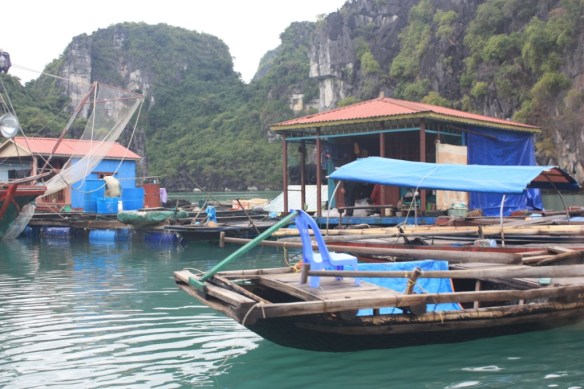
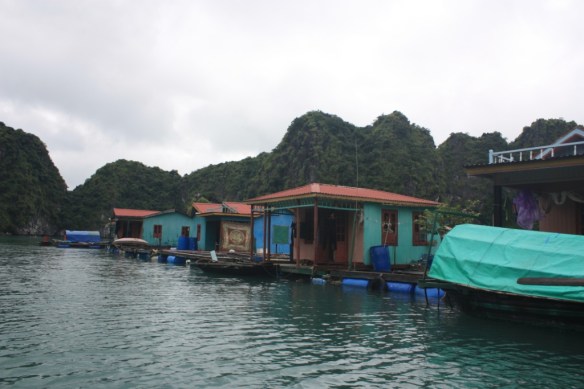

Vung Vieng sits scattered amid a dense cluster of skerries in Vietnam’s Bai Tu Long Bay.
This was the second floating village that my wife and I have visited. The first was located on Lake Titicaca in Peru. The two villages couldn’t be more different.
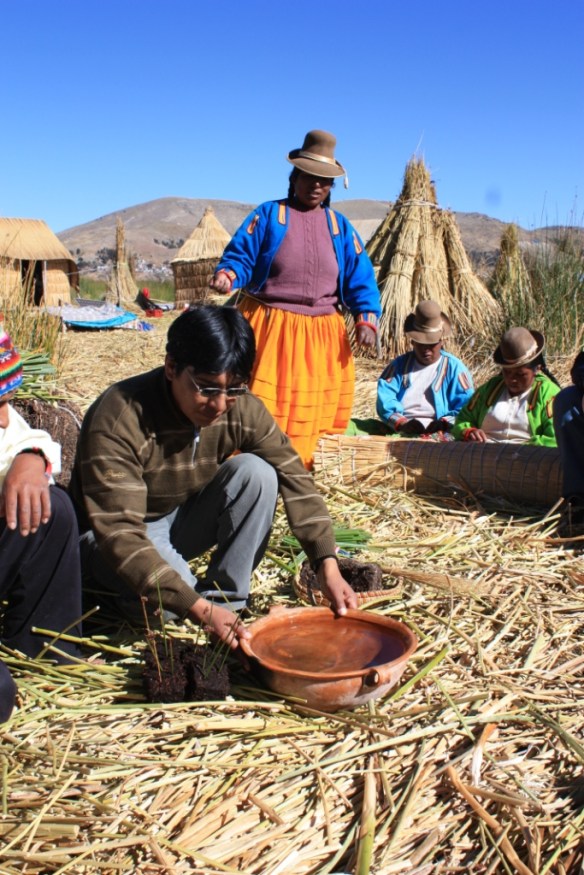
A Peruvian floating island for comparison purposes
There are similarities. Both villages are steadily shrinking (population-wise), and expected to one day disappear. Once upon a time, the villagers lived without daily tourist visits, but now tourists provide much (if not all) of the income earned by most villagers. (In Vietnam, it seemed like fishing might still be a viable income source for some at least. In Peru, it looked like if tourists disappeared tomorrow the islands would be completely abandoned the day after.)
In many ways the villages were different. On Titicaca, the islands and the structures on them are largely made of bundles of a reed that grows in the lake. In Bai Tu Long, the structures are small houses of modern design that are floating on synthetic materials. (They used to float them on polystyrene, or something similar, but that was an ecological wreck because pieces of it broke off to be consumed by the fish while floating ugly upon the sea in perpetuity. Now, the houses are buoyed with empty plastic barrels.)
The original villagers on Lake Titicaca are said to have been Pre-Incan native people who moved out there to evade the bellicose Incans. Part of why a few Peruvians have stayed is that a loophole makes life on the Lake tax-free. The Vietnamese villagers had a more mercantile motive. It was too expensive and time-consuming to go to and from the mainland each day.
Lake Titicaca is a placid high-altitude lake, and that makes it fairly safe for villagers. Bai Tu Long Bay is part of what much of the world calls the South China Sea, but which the Vietnamese call–simply–the Pacific Ocean. (The Vietnamese aren’t big fans of China’s attempts to make this part of ocean their sole domain–including the building of man-made islands. I suspect nothing has been better for building good relations between the governments of the US and Vietnam in the wake of a horrific war than the counterweight the US Navy provides to China’s ambitions.) Obviously, the Vietnamese villagers are subject to some pretty rough weather. The skerries provide protection up to a point, but historically the villagers used to hide out in caves on the islands when it got too tumultuous.


 Tiger Riding for Beginners