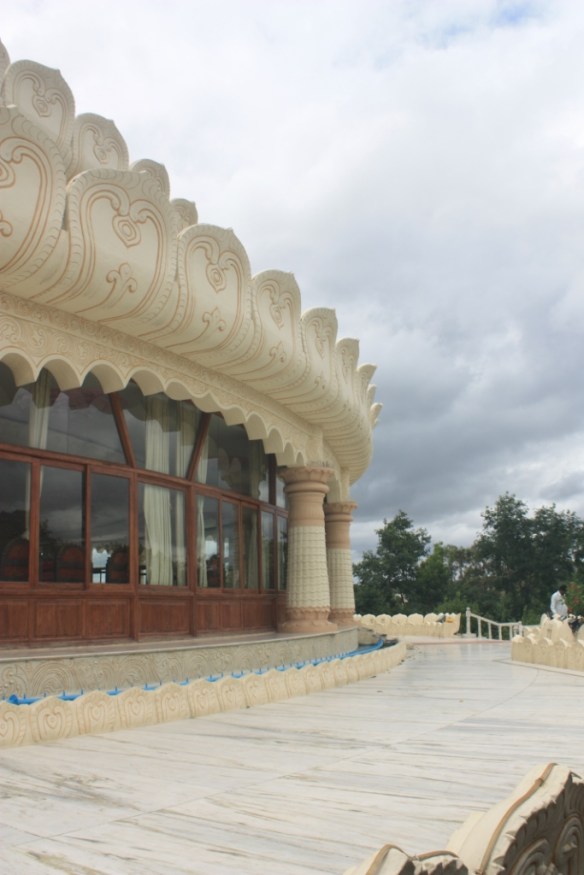
Vishalakshi Closeup Exterior

Vishalakshi Exterior

Vishalakshi Interior; Taken on September 18, 2017 in Bangalore
Vishalakshi Closeup Exterior
Vishalakshi Exterior
Vishalakshi Interior; Taken on September 18, 2017 in Bangalore
 Know Your Mind by Sri Sri Ravi Shankar
My rating: 4 of 5 stars
Sri Sri Ravi Shankar is an Indian guru headquartered in Bangalore, India. In addition to his work as a spiritual leader, he heads up an organization called the “The Art of Living,” which has both a philanthropic mission and a role in spreading knowledge of yoga. Among his most important accomplishments is the development of a breathing technique for helping to attain greater emotional well-being. However, he may be most broadly known for occasional appearances on television programs such as those of CNN International.
The slim volume K(no)w Your Mind contains a series of short chapters, many of which are partly in Q&A form–coming from talks he has given internationally. The common theme of these discourses are how one can understand one’s mind and learn to live in a way that maximizes happiness.
Sri Sri’s approach is quite mainstream when compared to more controversial gurus such as the late Bhagwan Shree Rajneesh (i.e. Osho.) There is little that would raise hackles of most people. It proposes nothing magical–though Shankar supports belief in some, broadly defined and mystical, deity. His approach doesn’t rely on said deity. The book is essentially just about training the mind to look at the world in a different way.
One example that the author uses in various permutations is that people dwell on the negative. As he says, “When you are healthy, you never ask the question, ‘Why am I healthy?’When you are sick you say, ‘Oh, why am I sick?'” Similarly he mentions that, if someone tells us they like us we don’t question it, but if they tell us they hate us, then we do.
When asked how to avoid stress, he states flatly that one shouldn’t avoid it, but rather learn hope to cope with it more effectively.
On the positive side, the book conveys a lot of good information in a highly readable format. Shankar explains the mind with humor and occasionally with a parable or narrative to help make the lessons more memorable.
However, if one is looking for a systematic approach, one won’t so much find that here. It’s clear that this is a series of snippets from talks combined together. If that’s what you’re expecting, then it shouldn’t be a problem. However, if one is expecting a step-by-step guide, this book may not suit one. Occasionally it’s helpful if on has some yoga terminology in one’s head like samadhi or pranayama, but context should make the meaning clear.
I’d recommend it for someone looking for food-for-thought on bite-sized pieces on issues like memory, emotion, and mindfulness.
1.) Mornings:
Bangalore (Bengaluru) isn’t an early riser, and that makes the mornings an idyllic time for those of us who are so inclined. The weather is cool; the pollution is tamped down by all that plant respiration, and the wailing horns are sparse. It’s the best time to take a walk. One can actually cross busy intersections with minimal delay and risk to life and limb. Cubbon Park is closed to vehicular traffic.
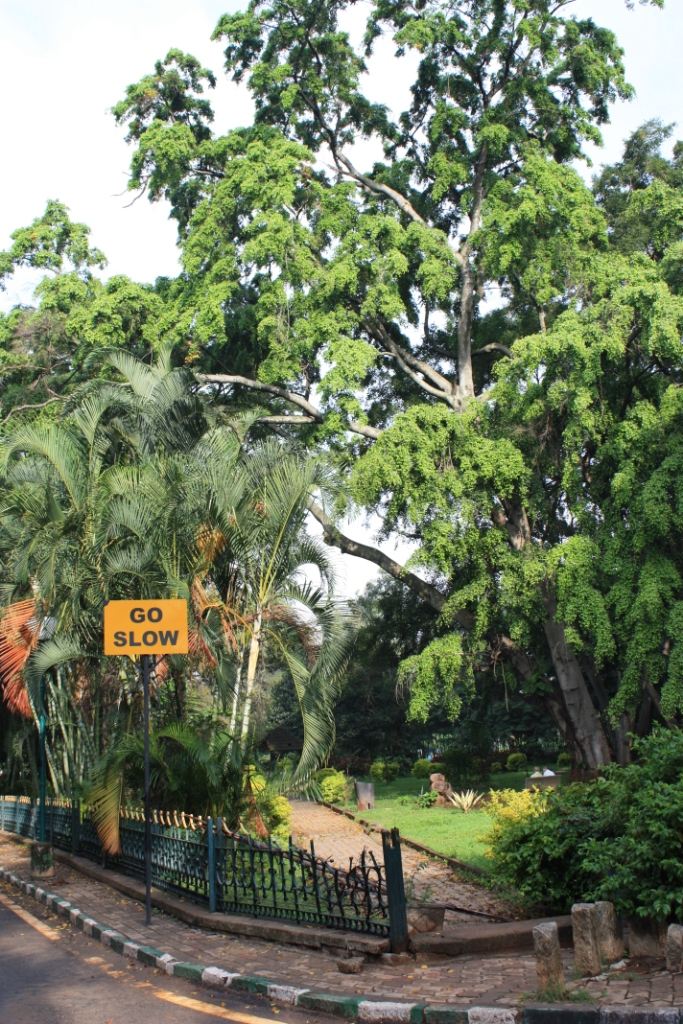
Words to live by
2.) Parks:
Bengaluru was once called the “Garden City.” While some refute this moniker in the face of the hyper-growth of this high-tech city, Cubbon Park, Lal Bagh Gardens, and numerous small parks offer aesthetically pleasing and relaxing oases.
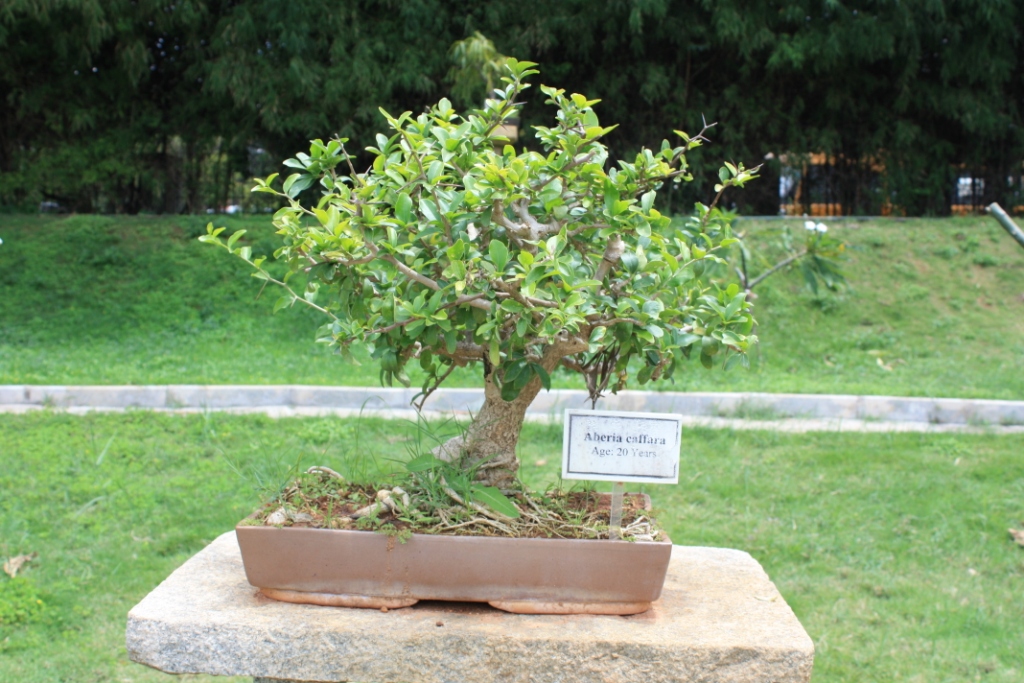
Lal Bagh Botanical Gardens displays a large collection of Bonsai.
3.) Restaurants:
The city offers a wide range of options for both South Indian cuisine as well as more cosmopolitan fare. I’ve sampled many local restaurants as we’ve been getting settled. The most iconic place I’ve eaten at in Bangalore is the Lal Bagh Road location of the Mavalli Tiffin Rooms (MTR.) I had the lunch thali. (For those unfamiliar, a thali is India’s answer to China’s dim sum, or what foodies might call a “tasting menu”– which is to say small portions of a large assortment of foods. MTR offers an interesting dining experience. One sits down at a large table, quite probably with a group of strangers, while bustling stewards come around to ladle up the thali’s various component dishes. MTR’s food was delicious, but, more importantly, it’s hygienically prepared as well. The restaurant was built on the idea of strict food sanitation standards. I have anecdotal evidence to support this claim as I made my sole slip thus far by drinking water whose origin I didn’t know from a cup that was placed before me at this restaurant. I was none the worse for the experience. I suspect MTR uses bottled water because there wasn’t any flat taste that I associate with boiled water, but–whatever they did– they did something. While I have a fairly robust system by Western standards, I’m under no illusions that I’d do well drinking untreated tap water here. (Time Out Bengaluru did a little piece in its “The City by Numbers” segment in the current issue. They say that 59% of Bangalore’s tap water is not potable, and 8.4% of borewell water is contaminated by E. Coli. Incidentally 0% of borewell water is potable.)
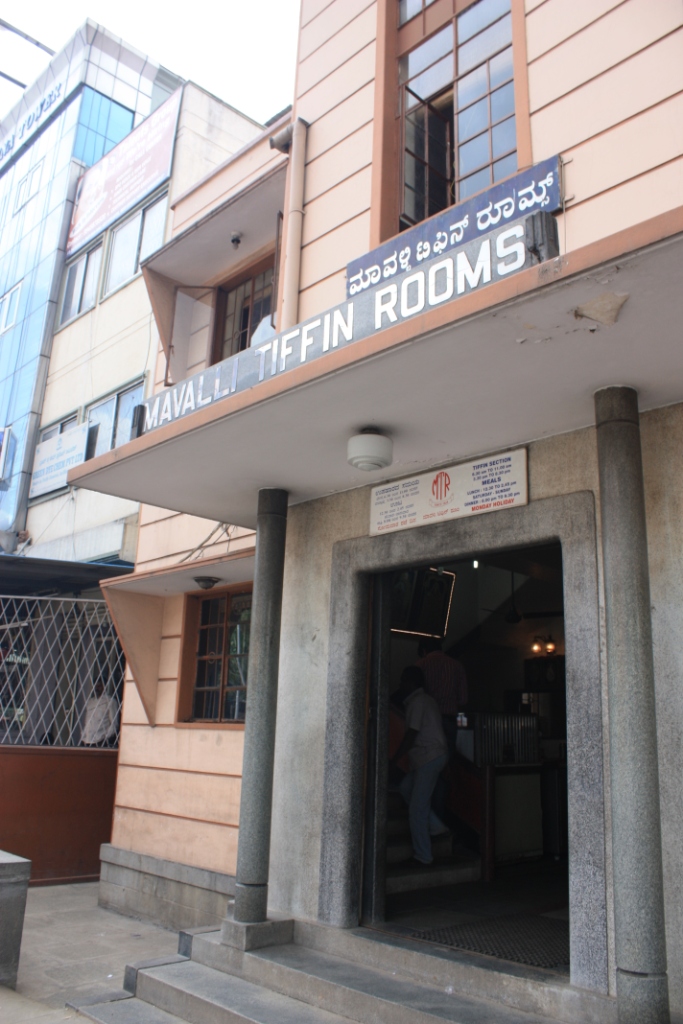
The Lal Bagh Road store, which is not the original location, but is the oldest of the existing locations.
While I have not yet tried any of the other locations, it should be noted that some of the newer restaurants appear to be more hip, trendy, and not so utilitarian. I saw the location below near Janata Bazaar. There is also a location blocks from where I live.
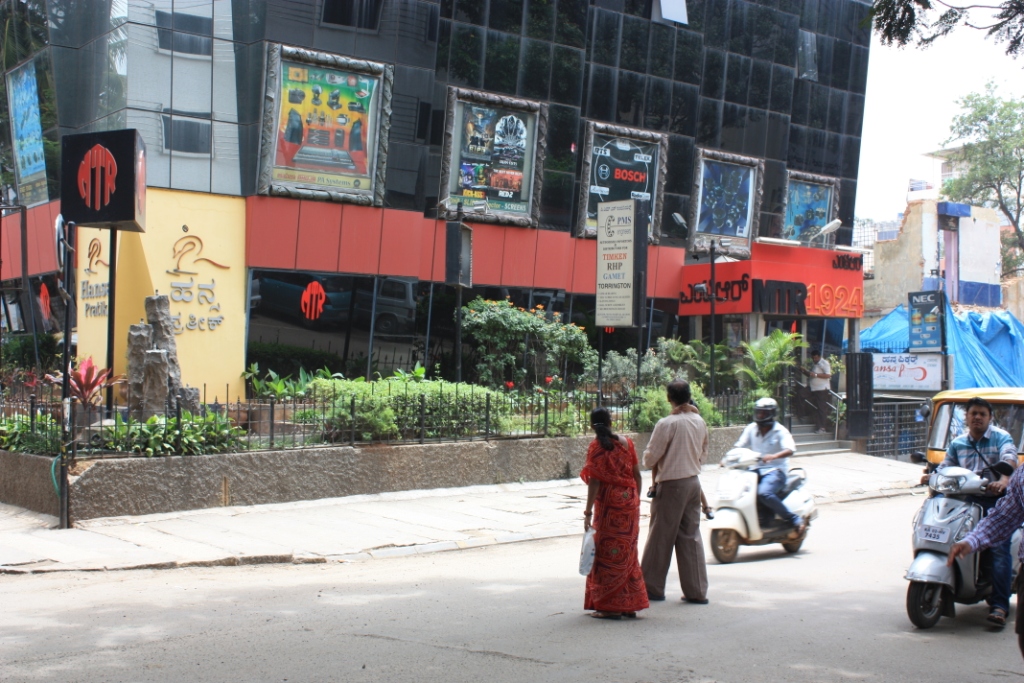
MTR Gandhi Nagar location.
4.) Serenity Against All Odds:
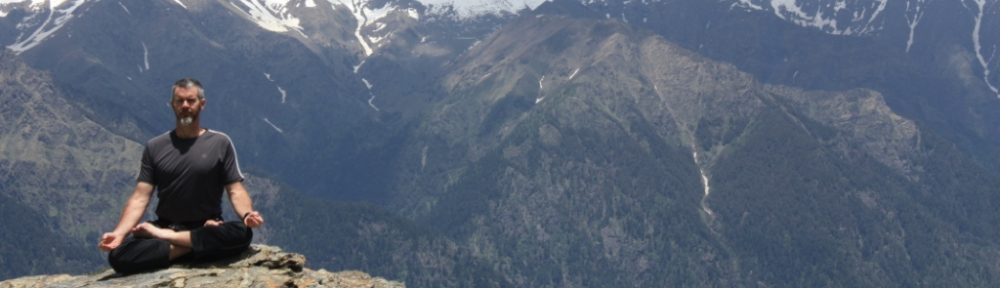
Despite the frenetic pace of this town, there are still many who manage to find some clarity and piece of mind. Besides the yoga practitioners in Cubbon Park and the adherents of various indigenous religions at temples and shrines throughout the city, there are large meditation centers headed by famous gurus. The most well-known of these are Sri Ravi Shankar’s Art of Living centers.
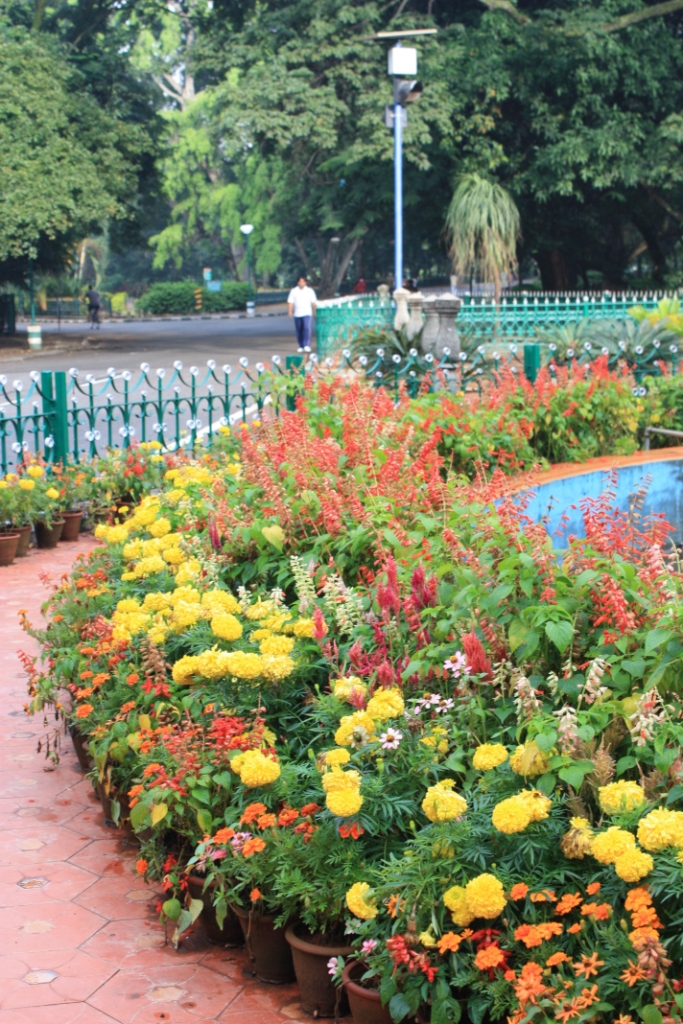
Cubbon Park with the roads closed to vehicles.
5.) Climate:
We’ve seen some heavy rains in the evenings and overnight since we’ve been here. This is apparently out of the usual as the rainy season should be over. However, even with nighttime rains, the weather has been great. Bangalore is the San Diego of India in that the climate doesn’t tend toward the extremes witnessed in many other parts of the country. This may have influenced the British decision to build a military base here. It most certainly influenced the wave of retirees who came here afterward. And it likely factors in to the calculus of all those IT firms that have converged here in recent years.
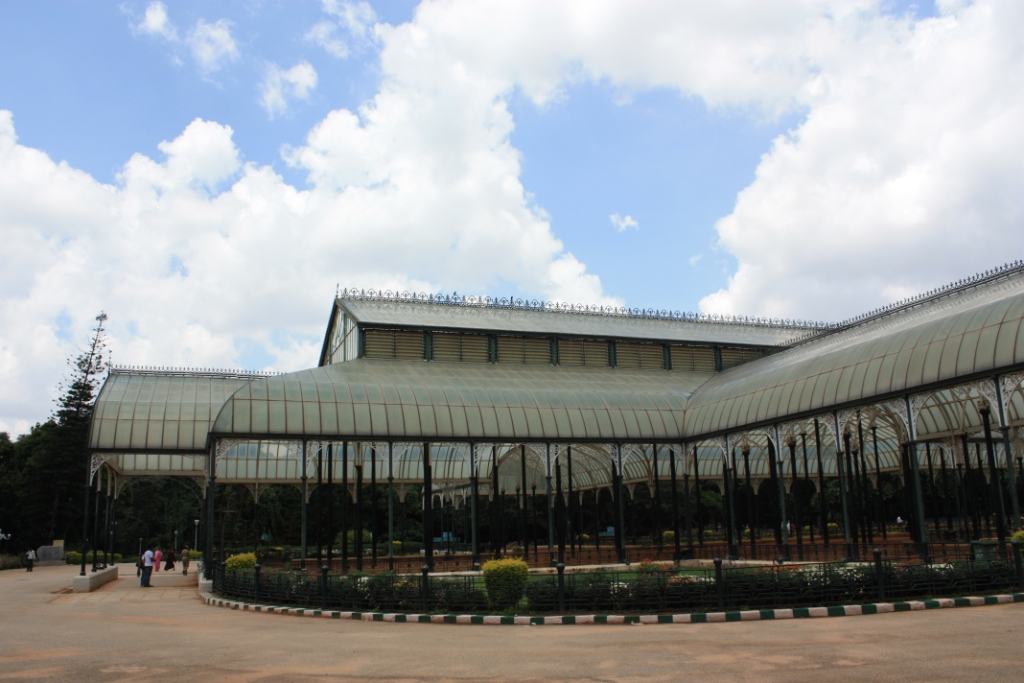
The Glass House of Lal Bagh gardens, and a typical Bangalorean sky.
6.) Stree Life:
In Atlanta, as in most of urban America, one won’t see wildlife bigger than a squirrel or animals bigger than a dog –at least not outside of the zoo. So large domesticated animals in the city is a big change, as is being able to go to the nearby countryside and see the likes of elephants. I’ve been surprised how freaked out some city dwellers in America got by the likes of a fox or a tomcat. It’s good to see people can move about in the presence of large animals without feeling the need to eliminate them.
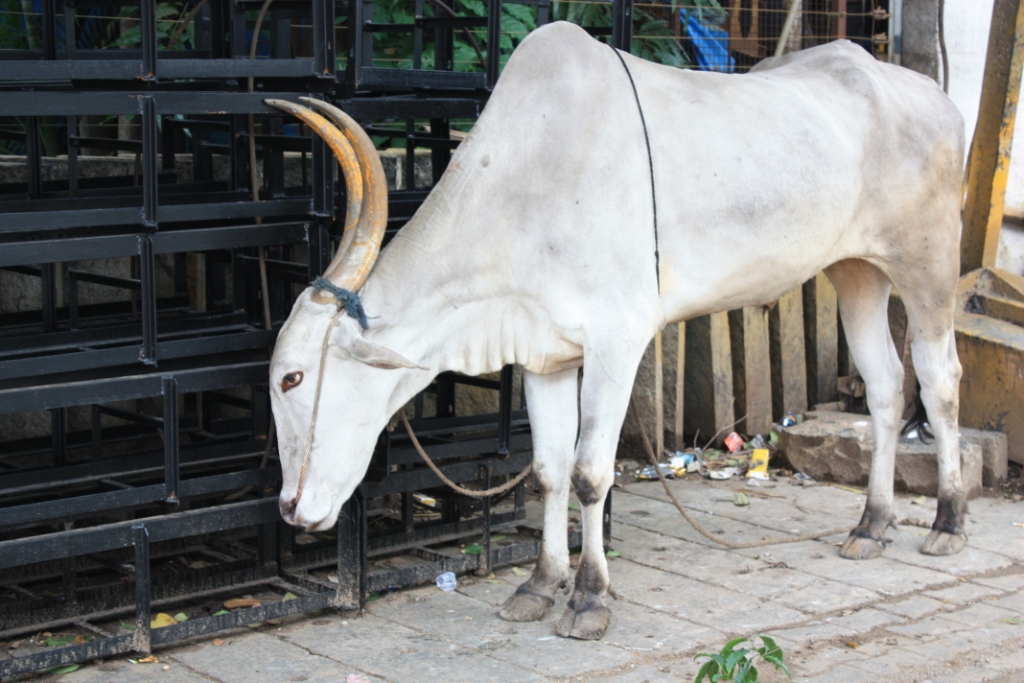
The well-known Indian street bovine.
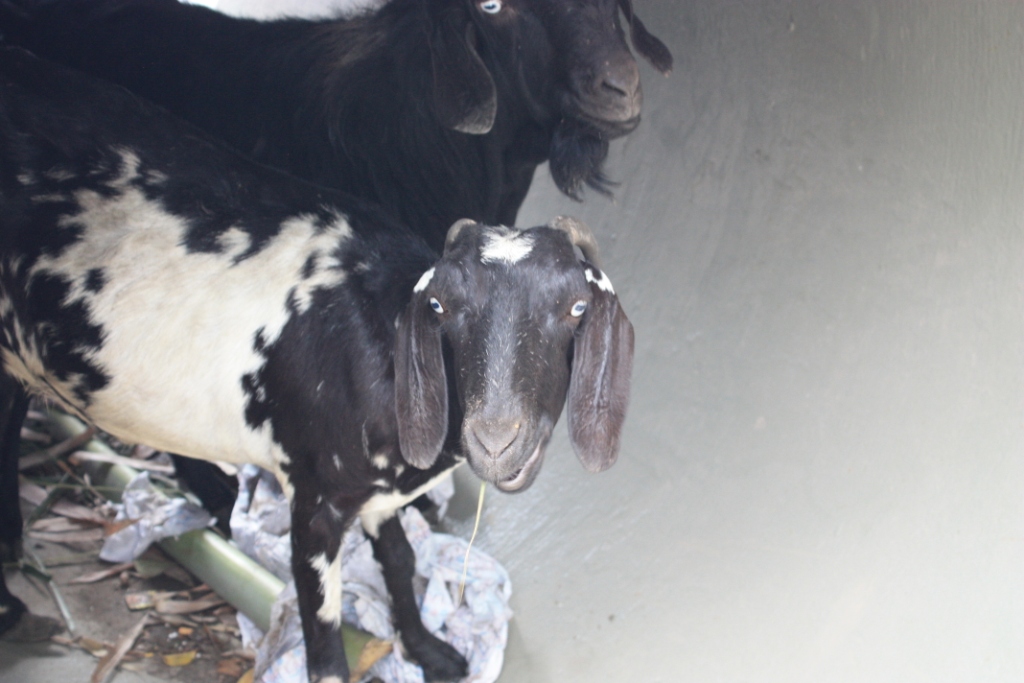
The lesser known Indian street goat.
7.) Markets:
I’ve been to the City (KR) Market, the Janata Bazaar, the Gandhi Bazaar, and everything from large, modern shopping malls to little neighborhood shops. Commerce thrives throughout the city in all its varied forms.
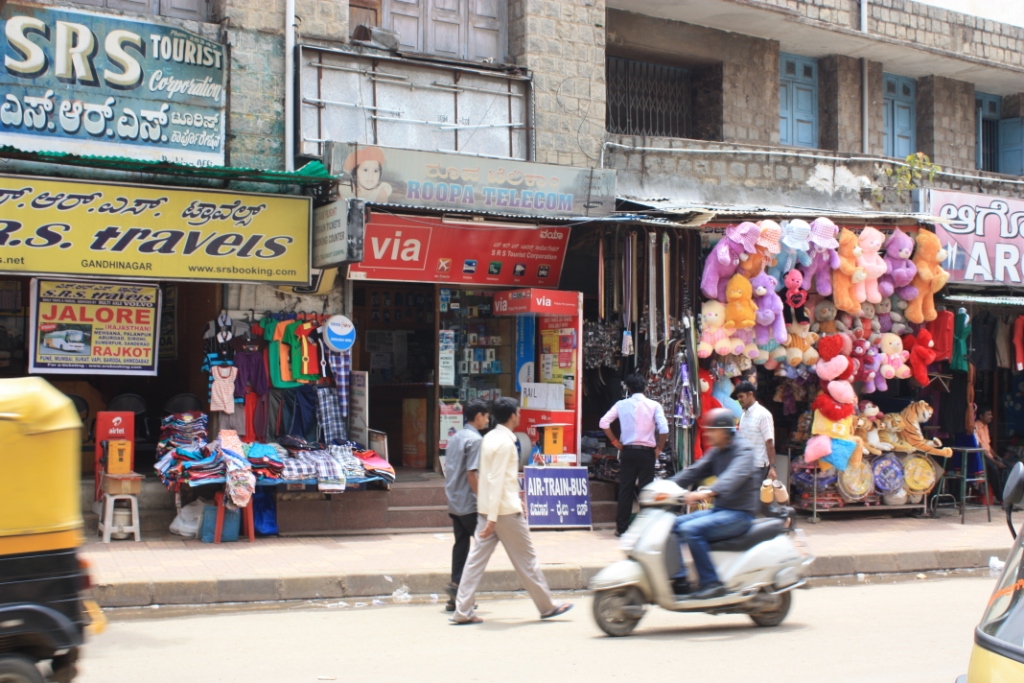
Near Janata Bazaar


 Tiger Riding for Beginners